Wet film gauges and mil checks are essential tools you can use to measure coating thickness during spraying. They help you guarantee the film is applied at the correct thickness, preventing issues like runs or insufficient coverage. By regularly checking with these gauges, you can adjust your spray technique for a smooth, uniform finish. mastering proper use and maintenance of these tools will boost your application skills—stay tuned to discover how to get the most accurate results.

Get business pricing on tools and workshop supplies
- Business-only prices and quantity discounts
- Tax-exempt purchasing
- Multiple users, one account, clear invoices
Key Takeaways
- Wet film gauges and mil checks ensure accurate measurement of coating thickness during spraying.
- Regular use of these tools helps maintain consistent application and prevent over- or under-coating.
- Proper technique involves pressing gauges smoothly against the wet surface for reliable readings.
- Mil checks provide precise measurements in mils or microns, aiding in quality control.
- Maintaining equipment and calibrating gauges optimize spray performance and ensure high-quality finishes.
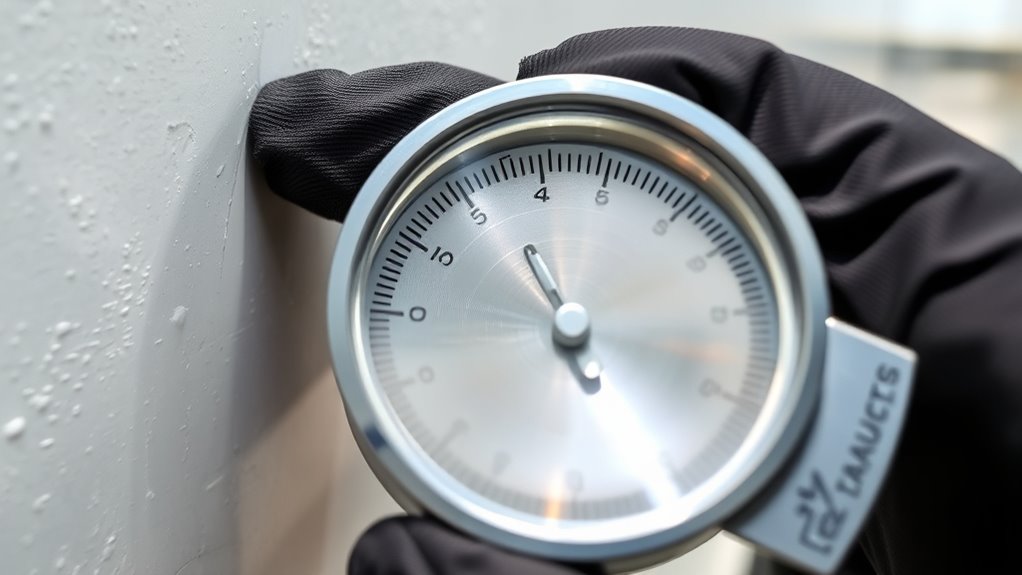
When applying coatings with a sprayer, accurately measuring wet film thickness is essential to guarantee proper coverage and quality. This step ensures that you meet the specified thickness, preventing issues like runs, sags, or insufficient coverage. To achieve this, you need reliable tools like wet film gauges and mil checks. These gauges help you monitor the thickness during application, so you can adjust your spray technique accordingly. Proper application techniques involve maintaining a consistent spray pattern, distance, and speed, all of which influence the wet film thickness. By regularly checking with gauges, you can fine-tune your approach, resulting in a uniform coating that adheres well and lasts longer. Using electric power, such as electric sprayers, can also improve consistency and efficiency in your coating process.
Accurately measuring wet film thickness ensures proper coating coverage and quality.
In addition to application techniques, regular maintenance procedures are indispensable for guaranteeing your spraying equipment performs at its best. Clean your sprayer thoroughly after each use to prevent clogs and buildup that can cause uneven spray patterns. Check your nozzle and filters for damage or blockages and replace or clean them as needed. Maintaining consistent pressure is also critical; fluctuations can lead to uneven coating thickness. When you use wet film gauges or mil checks, you’re not just verifying the quality of your current application but also identifying potential issues with your equipment or technique that could compromise future jobs. This proactive approach saves time and resources by reducing rework and ensuring each layer is applied correctly the first time.
Using these gauges correctly involves understanding how to interpret the readings accurately. When you press the gauge against the wet surface, it should smoothly conform to the coating, revealing the thickness in mils or microns. If your readings are consistently off, it might indicate issues with your sprayer’s calibration or application method. Adjusting your technique based on gauge feedback helps achieve the desired film thickness more precisely. Remember, maintaining proper application techniques combined with diligent maintenance procedures ensures that your coatings are uniform, durable, and meet project specifications. Regularly checking with wet film gauges and mil checks empowers you to deliver high-quality results while minimizing waste and rework.
Ultimately, integrating these measurement practices into your workflow enhances your control over the coating process. Whether you’re working on a small repair or large-scale project, understanding and applying the right application techniques, along with regular maintenance procedures, ensures consistent, professional finishes. Keep your tools calibrated, your equipment clean, and your gauges handy, so you can verify your work quickly and accurately. This attention to detail not only improves the quality of your coatings but also boosts your efficiency and reputation as a skilled professional.
wet film gauge for paint coating
As an affiliate, we earn on qualifying purchases.
As an affiliate, we earn on qualifying purchases.
Frequently Asked Questions
How Often Should Wet Film Gauges Be Calibrated?
You should calibrate your wet film gauges at least once every three to six months, depending on your maintenance schedule and usage frequency. Regular calibration guarantees accurate measurements and consistent results. If you notice any discrepancies or wear, it’s best to calibrate sooner. Incorporating calibration into your routine maintenance schedule helps maintain the gauges’ precision, preventing costly errors in your spraying process.
Can Wet Film Gauges Be Used for All Types of Sprayers?
Yes, wet film gauges can be used for most sprayers, but you should check sprayer compatibility first. Some gauges are designed specifically for certain spray types or viscosities, so confirm your gauge suits your sprayer’s application. Also, consider gauge durability—opt for sturdy, corrosion-resistant options to withstand frequent use and harsh conditions. Properly matching your gauge to your sprayer guarantees accurate readings and longer-lasting performance.
What Are Common Mistakes When Using Mil Checks?
Forget the classic “hold it like a fragile treasure” mistake—application errors and improper handling are the real culprits. You might forget to zero the gauge, rush through measurements, or apply too much pressure, skewing results. These slip-ups lead to inaccurate mil checks, making your spray job less than perfect. So, handle your mil checks with care, stay attentive, and don’t let sloppy technique sabotage your precision.
Are Digital Gauges More Accurate Than Analog Ones?
Digital gauges are generally more accurate than analog ones because of superior digital accuracy and consistent readings. You can rely on digital gauges for precise measurements, reducing human error. Analog gauges, while reliable, may experience wear and calibration issues over time, affecting their reliability. If you need high accuracy and quick readings, opt for digital gauges, but for simplicity and durability, analog gauges still do a solid job.
How Do Environmental Factors Affect Wet Film Readings?
Imagine you’re back in the days of dial-up internet; environmental factors like humidity interference and temperature variations can seriously skew your wet film readings. High humidity can cause moisture absorption, leading to overestimates, while temperature fluctuations affect the liquid’s viscosity and drying time. These variations make it harder to get accurate measurements, so always account for ambient conditions when checking your wet film to guarantee precise application.
Conclusion
Using wet film gauges and mil checks guarantees you’re applying coatings precisely, saving you time and resources. Did you know that proper mil measurement can improve coating efficiency by up to 15%? By regularly checking your sprayer’s wet film thickness, you not only achieve a smoother finish but also extend the lifespan of your equipment. Stay diligent with these tools, and you’ll see better results, fewer reworks, and more professional outcomes every time.
Fall Picks
fall essentials
As an affiliate, we earn on qualifying purchases.