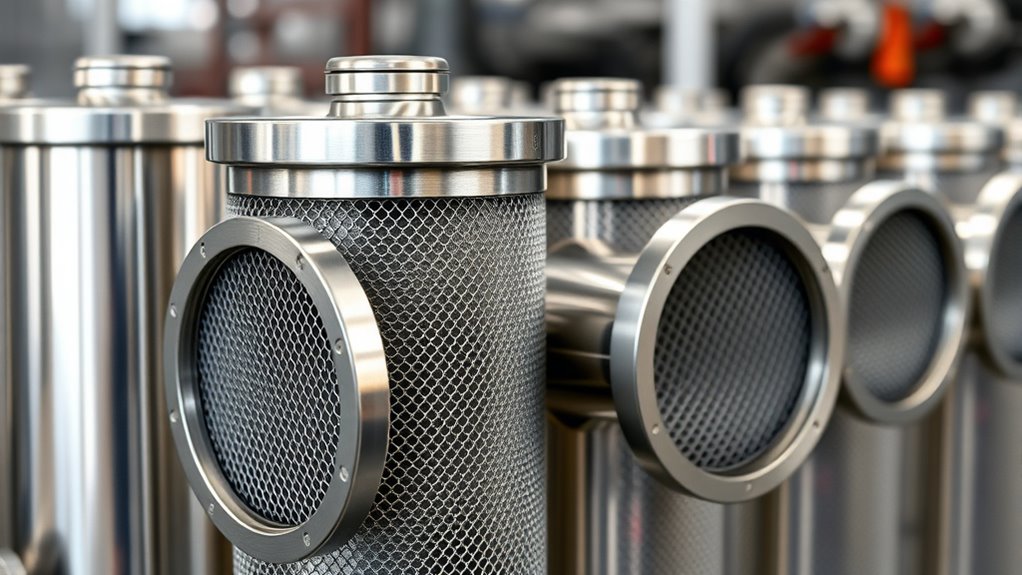

When choosing inline or manifold filters, understanding mesh numbers helps you select the right filtration level. The mesh number shows how many openings per inch the filter media has; higher numbers mean finer filtration, capturing smaller particles, while lower numbers allow more flow but filter larger contaminants. Balancing mesh size with your system’s needs guarantees ideal performance and protection. To discover how different mesh sizes impact filter effectiveness, keep exploring further.
Key Takeaways
- Mesh number indicates the number of openings per inch, reflecting filter fineness and particle removal capability.
- Higher mesh numbers mean smaller openings, providing finer filtration for microscopic contaminants.
- Mesh smoothing during manufacturing improves filter longevity, reduces turbulence, and enhances flow efficiency.
- Selecting the appropriate mesh balances filtration needs with flow rate and system pressure requirements.
- Proper mesh choice ensures reliable operation, minimizes maintenance, and protects system components from damage.
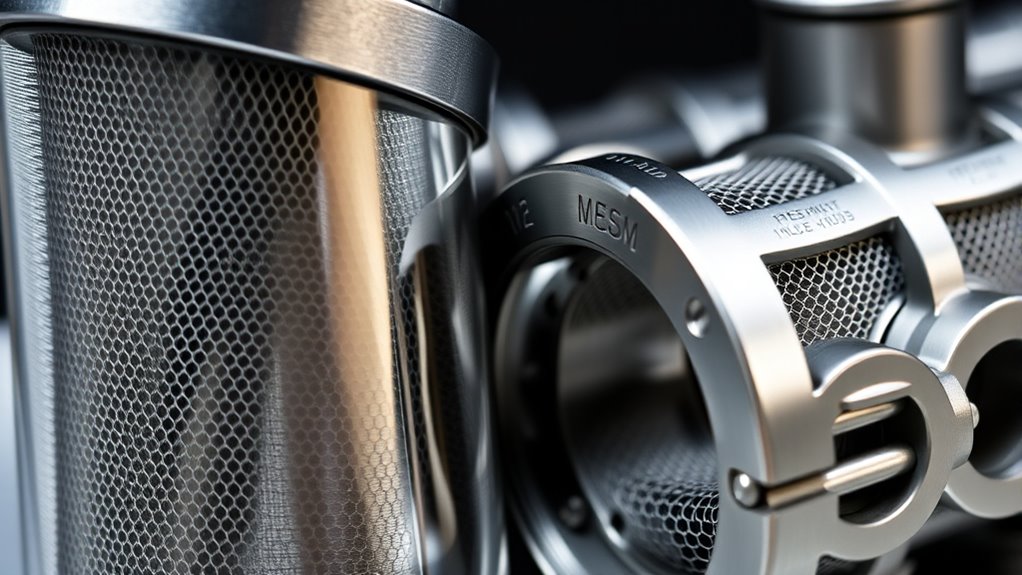
Inline filters and manifold filters are vital components in fluid and gas systems, guaranteeing clean and contaminant-free flow. They play a critical role in protecting equipment, maintaining system efficiency, and extending the lifespan of your components. A key aspect of their effectiveness lies in the mesh number, which directly influences how well these filters perform. Understanding what mesh numbers mean and how they relate to filter design can help you select the right filter for your specific needs.
Inline and manifold filters ensure contaminant-free flow, protecting equipment and boosting system efficiency.
When you look at mesh numbers, you’re fundamentally examining the size of the openings in the filter media. The mesh number indicates how many openings per inch are present in the filter screen. A higher mesh number means smaller openings, which translates to finer filtration. Conversely, a lower mesh number features larger openings that allow more fluid or gas to pass through but with less filtration precision. Your choice depends on what contaminants you need to remove and the flow rate you’re working with.
Mesh smoothing is a technique used during filter manufacturing to improve the filter’s performance. As you select a filter, consider how the mesh has been processed. Mesh smoothing helps eliminate rough edges and irregularities, which can cause turbulence or clogging. A well-smoothed mesh enhances the filter’s longevity and effectiveness by providing a more uniform surface. This means less pressure drop across the filter and better flow characteristics, especially in systems where precise filtration is critical. Mesh processing techniques can significantly impact filter durability and performance.
Filter design plays a significant role in how mesh numbers are implemented. Engineers carefully balance mesh size with flow rate and filtration needs. For example, a filter with a very fine mesh might provide excellent removal of small particles but could also cause increased pressure drop, reducing flow efficiency. On the other hand, a coarser mesh allows higher flow rates but may let larger contaminants slip through. When choosing filters, you should evaluate your system’s operating pressure, flow requirements, and the size of contaminants you need to trap.
In essence, the mesh number is a fundamental parameter that affects the filter’s performance in your system. Understanding how mesh smoothing and filter design influence the mesh number helps you make informed decisions. Whether you need a fine filter to remove microscopic debris or a coarser one for larger particles, selecting the right mesh number ensures ideal operation. By paying attention to these details, you can improve system reliability, reduce maintenance costs, and ensure your fluid and gas systems run smoothly and efficiently over time.

Inline Beer Filter, 100 Mesh 150 Micron Water Filter Plastic T Strainer Filtration Device, Gravity Feeding of Siphon Tube Brewing for Home Brewing Supplies (100 Mesh 150 Micron)
TASTE UPGRADE WITHOUT THE FUSS: This inline beer filter is your secret weapon for smoother sips. It traps…
As an affiliate, we earn on qualifying purchases.
As an affiliate, we earn on qualifying purchases.
Frequently Asked Questions
How Are Mesh Numbers Chosen for Specific Applications?
You choose mesh numbers based on your filter selection and application criteria. For finer filtration, select higher mesh numbers to trap smaller particles; for coarser needs, lower mesh numbers work better. Consider your fluid type, flow rate, and contamination level when making your decision. By matching the mesh size to your specific application, you guarantee effective filtration without restricting flow or missing critical debris.
What Are the Maintenance Requirements for Different Filter Types?
You need to regularly inspect and replace filters based on their filter material to maintain ideal performance. For inline filters, check the filter material for signs of clogging or wear, and replace them when the filter lifespan is reached. Manifold filters require cleaning or replacement of filter elements at recommended intervals. Keeping up with maintenance ensures your filtration system stays efficient and prevents damage caused by debris buildup.
Can Mesh Numbers Be Customized for Unique System Needs?
Yes, you can customize mesh numbers for your system’s unique needs. You simply select filter material and mesh size that matches your desired filter durability and particle removal efficiency. Customization allows you to fine-tune performance, ensuring your filtration system handles specific contaminants better. Just keep in mind that choosing the right mesh number depends on your system’s requirements, so consult with experts to get it spot-on.
How Do Mesh Numbers Affect Flow Rate and Pressure?
Mesh numbers directly impact your system’s flow rate and pressure regulation. A finer mesh (higher number) restricts flow, helping with flow rate optimization and preventing debris from passing through. Conversely, a coarser mesh (lower number) allows higher flow rates but may reduce pressure stability. Adjusting mesh size guarantees you balance efficient flow and pressure regulation, tailoring your filtration to meet specific system needs effectively.
Are There Industry Standards for Mesh Number Classifications?
Is there a secret code to the world of filters? Yes, industry standards do exist for mesh number classifications, guiding you in choosing the right filter material. These standards, set by organizations like ANSI and ISO, ensure consistent manufacturing standards, helping you determine the appropriate mesh size for your application. Following these guidelines guarantees your filter’s performance and reliability, making your selection process more precise and trustworthy.
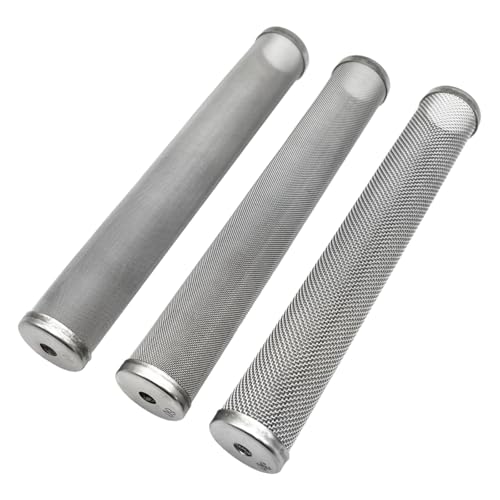
730-067 3 in 1 Fluid Manifold Filter (30 Mesh 60 Mesh 100 Mesh) for Titan Impact 440 740 1040i 640i 840i Elite 2000 PowrPin 3500 5500 and More Models Paint Sprayer Filter (3-Pack)
Replacement: for 730067 30 Mesh,60 Mesh,100 Mesh.
As an affiliate, we earn on qualifying purchases.
As an affiliate, we earn on qualifying purchases.
Conclusion
Don’t let complexity hold you back from using inline and manifold filters effectively. You might think they’re too technical or hard to implement, but with a clear understanding, you’ll see they simplify mesh processing and improve results. Whether you’re tackling challenging models or optimizing workflows, these filters are invaluable tools. Embrace their potential, and you’ll discover more efficient, accurate mesh numbering—no advanced expertise needed. Start experimenting today, and unseal better mesh management effortlessly.

Amwater Stainless Steel Cleanable Wire Mesh Filter Cartridge 10”Length,2.5"OD(50 Micron)
【Compatibility and Improved Design】Fits standard 2.5”x10” whole house filters,Incorporated feedback from our valued customers and fixed the height…
As an affiliate, we earn on qualifying purchases.
As an affiliate, we earn on qualifying purchases.

Camco Tastepure RV Water Filter – Advanced RV Inline Water Filter with Flexible Hose Protector – GAC & KDF Filtration – Made in USA – Camping Essentials for Fresh Drinking Water (40043)
Advanced 6-Step Filtration Technology: Discover the impressive power of the Tastepure RV water filter’s Hex-Flow Technology and its…
As an affiliate, we earn on qualifying purchases.
As an affiliate, we earn on qualifying purchases.

Franz came aboard the Paint Sprayer Zone team with a background in both journalism and home renovation. His articulate writing style, combined with a passion for DIY projects, makes him an invaluable asset. Franz has a knack for breaking down technical jargon into easy-to-understand content, ensuring that even the most novice of readers can grasp the complexities of paint sprayers.