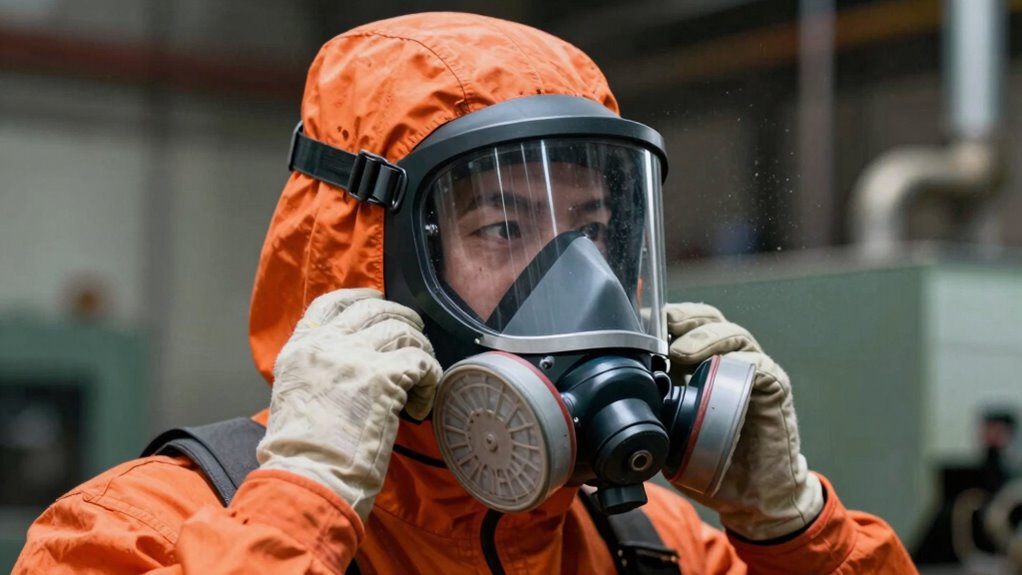
When facing highly contaminated environments, a cartridge mask alone might not provide enough protection, as it relies on filters that can become overwhelmed or fail. Supplied air systems deliver a continuous flow of clean, breathable air, ensuring your safety even in the most hazardous conditions. Proper airflow regulation and ongoing system maintenance are vital for these systems to work effectively. To discover how to optimize your safety equipment, continue exploring essential ventilation and system strategies.
Key Takeaways
- Cartridge masks may be inadequate in highly contaminated or toxic environments requiring continuous, reliable airflow.
- Supplied air systems provide a steady flow of clean air, ensuring safety when cartridge masks cannot filter all hazards.
- Proper airflow regulation and maintenance are essential for the effectiveness of supplied air systems in hazardous conditions.
- Relying solely on cartridge masks increases risk; supplied air systems offer enhanced protection and system integrity.
- Combining ventilation considerations with regular system inspections optimizes safety where cartridge masks alone are insufficient.
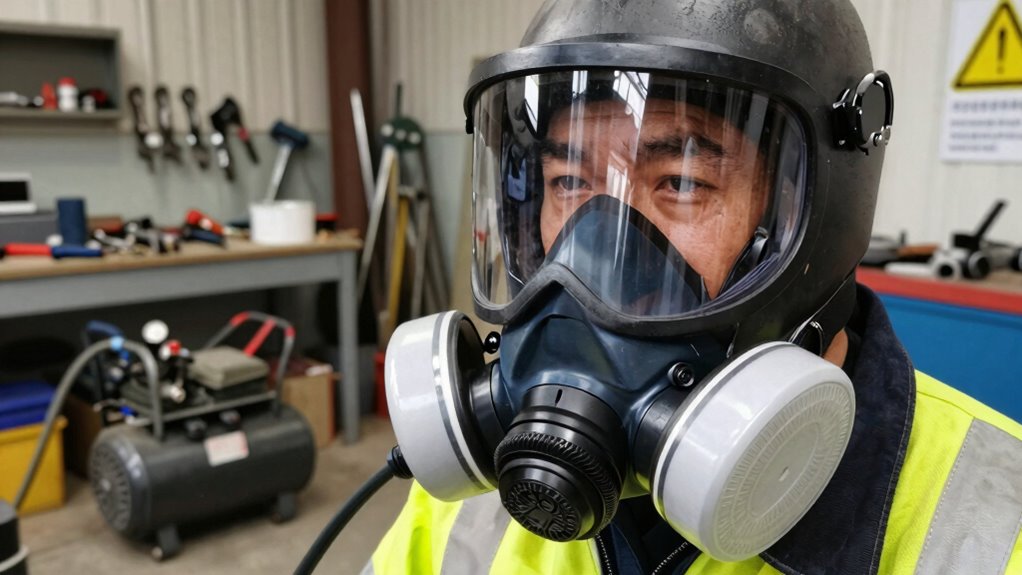
Supplied air systems provide a continuous flow of clean, breathable air to workers in environments where the atmosphere may be contaminated or unsafe. When you rely on these systems, you’re guaranteeing that you have a constant supply of fresh air, which is crucial for safety and performance in hazardous settings. Proper airflow regulation is critical here; it’s not just about having air flowing but about maintaining the right pressure and volume to keep contaminants out and fresh air in. If airflow isn’t properly regulated, you risk either under-pressurizing the system, which can allow contaminated air to seep in, or over-pressurizing, which can cause discomfort or unnecessary strain on the system. Regularly checking and adjusting airflow ensures your system functions at its best and provides the protection you need. Additionally, understanding the role of ventilation considerations can help optimize overall system performance and safety.
System maintenance plays an essential role in keeping supplied air systems reliable. You need to perform routine inspections to identify and fix issues before they compromise safety. This includes checking for leaks, ensuring all connections are secure, and verifying that filters and regulators are clean and functioning correctly. Neglecting maintenance can lead to system failures or reduced airflow, which directly affects your safety and comfort. Keeping a maintenance schedule and documenting inspections helps you stay ahead of potential problems and ensures your system remains compliant with safety standards. In environments where contaminants are present, even small issues can have serious consequences, so proactive maintenance isn’t optional — it’s a necessity.
Understanding how airflow regulation and system maintenance intertwine will improve your confidence in the supplied air system’s performance. When you guarantee proper airflow regulation, you create a stable environment that prevents the ingress of dangerous substances. Meanwhile, diligent maintenance preserves the system’s integrity over time, avoiding costly repairs and downtime. You should also be aware of the signs indicating that airflow might be compromised, such as unusual noises, decreased airflow, or pressure fluctuations. Address these issues promptly to maintain a safe working environment.
Frequently Asked Questions
What Industries Most Commonly Use Supplied Air Systems?
You’ll find supplied air systems most commonly used in industries like welding, chemical manufacturing, and pharmaceuticals, where respirator selection is vital. These industries demand high air quality testing to guarantee safety, especially in environments with toxic fumes or low oxygen levels. Using supplied air systems provides reliable protection, allowing you to work confidently in hazardous conditions where cartridge masks just aren’t sufficient.
How Do I Choose the Right Supplied Air System?
Imagine stepping into a foggy, hazardous environment—your choice of a supplied air system must guarantee pure, breathable air. To choose the right one, assess your work’s air quality and compare it against safety standards. Consider factors like flow rate, portability, and filter types. Prioritize systems that fit your specific needs, providing reliable protection and comfort. Doing so keeps you safe and compliant in even the toughest conditions.
Are Supplied Air Systems Cost-Effective Long-Term?
Supplied air systems are generally cost-effective long-term because they provide consistent air quality and durability. While initial costs might be higher, you save money over time by reducing health risks and equipment replacements. A durable system guarantees reliable performance and less downtime, which helps maintain safety standards and reduces maintenance expenses. Overall, investing in a high-quality supplied air system pays off by offering long-lasting safety and efficiency.
What Maintenance Do Supplied Air Systems Require?
Think of your supplied air system as a well-oiled machine that needs regular TLC. You must perform air filter maintenance to keep airflow clean and efficient. Additionally, compressor servicing is vital to guarantee it’s functioning properly and providing breathable air. Regular checks and replacements prevent breakdowns, extend system life, and keep you safe. Staying on top of maintenance turns a good system into a reliable partner in hazardous environments.
Can Supplied Air Systems Be Used Outdoors?
Yes, you can use supplied air systems outdoors. They’re suitable for outdoor applications, especially in environments with poor air quality or hazardous conditions. However, consider environmental factors like wind, dust, or moisture, which can influence system performance. Make sure your equipment is properly maintained and protected from weather elements. Always follow manufacturer guidelines for outdoor use, and regularly inspect and clean the system to ensure safe, reliable operation in outdoor settings.
Conclusion
When your safety depends on it, don’t settle for just a cartridge mask—think of it as relying on a haphazard patchwork quilt instead of a sturdy suit of armor. Supplied air systems offer the reliable protection you need, like having a trusted steed in a perilous joust. Remember, in the fight against hazardous environments, choosing the right gear isn’t just smart—it’s essential. Protect yourself with the best, because your safety’s worth more than a mere trinket.