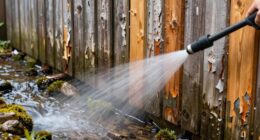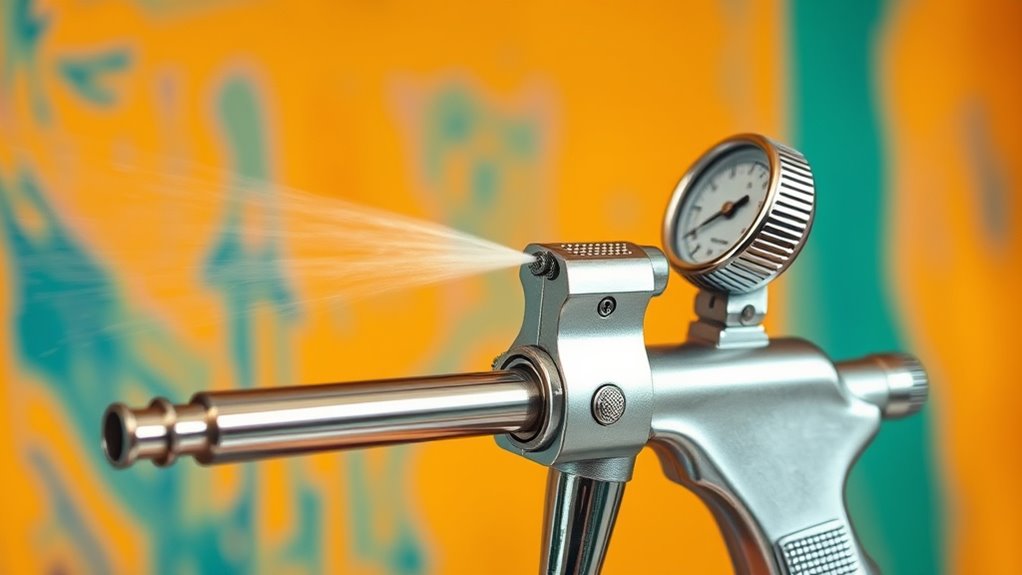

The ideal spray pressure depends on your project and equipment, but generally, you should set your PSI between 15 and 60. Light coats or delicate finishes often require 15-30 PSI, while thicker paints need 40-60 PSI for proper atomization. Always check your spray tip’s recommended pressure range and verify your compressor can handle it to avoid issues. Maintaining the right PSI boosts finish quality and minimizes waste—keep going to learn more about perfecting your spray setup.
Key Takeaways
- Match the spray tip to the recommended pressure range to ensure optimal atomization and finish quality.
- Use 15-30 PSI for light coatings or delicate surfaces, and 40-60 PSI for thicker or textured materials.
- Always verify your compressor’s maximum PSI capacity before setting your spray pressure.
- Adjust pressure based on material type and desired finish to minimize overspray and waste.
- Follow manufacturer guidelines for specific spray tips and materials to achieve professional results.
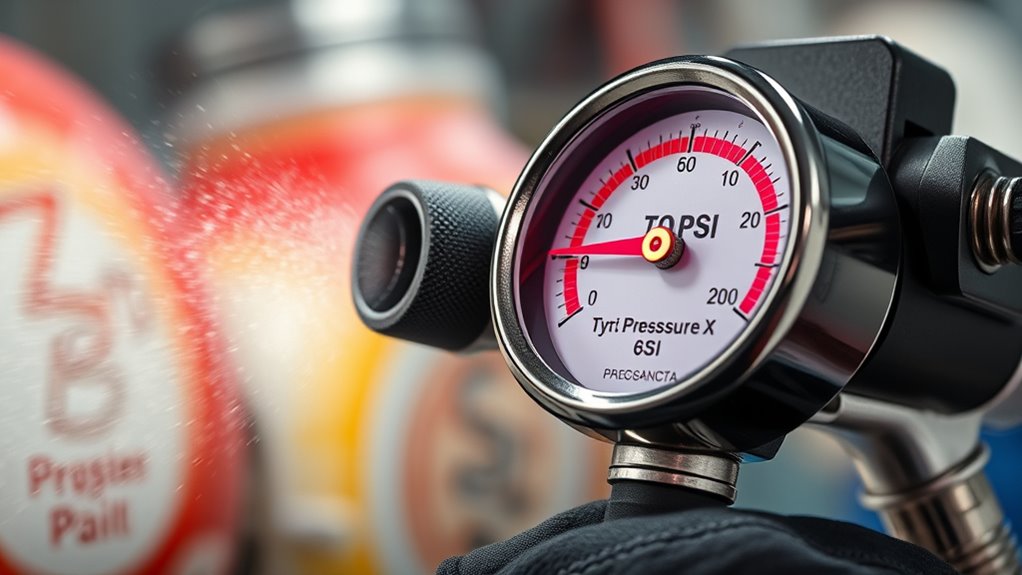
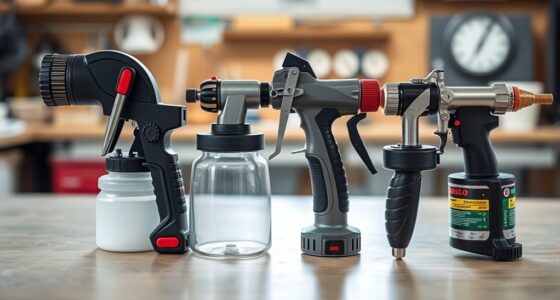
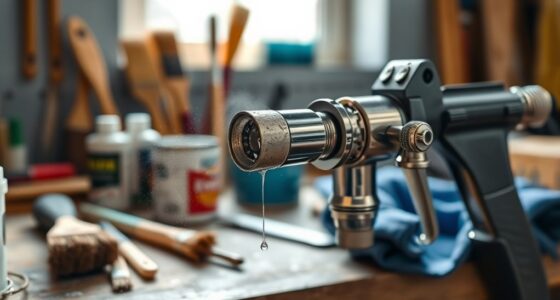
Have you ever wondered how spraying pressure PSI impacts the effectiveness of your equipment? The truth is, the pressure you use directly influences the quality of your finish, the efficiency of your workflow, and even the durability of your tools. When it comes to choosing the right PSI, a key factor to consider is spray tip selection. Different spray tips are designed for specific pressure ranges, and matching your tip to the correct PSI ensures ideal atomization and coverage. For instance, a narrow spray tip may require higher pressure to produce fine misting, whereas a wider tip might work better at lower pressures. Using the wrong tip at an improper pressure can cause uneven spray patterns, drips, and wasted material, so understanding the relationship between spray tip selection and pressure is essential.
Additionally, your compressor requirements play a crucial role in determining the appropriate PSI. Not all compressors can handle high pressures, and exceeding your compressor’s capacity can lead to reduced performance, overheating, or even damage. Before setting your spray pressure, check the manufacturer’s specifications for your compressor. Many compressors specify maximum PSI, which should never be surpassed. If you’re aiming for a particular spray pressure, ensure your compressor can maintain that consistently under load. For example, if you’re working with a high-flow spray tip that demands 50-60 PSI, your compressor needs to deliver that pressure reliably without dropping below the recommended range. Failing to match your spray tip with your compressor’s capabilities can result in inconsistent spray patterns and compromised finish quality.
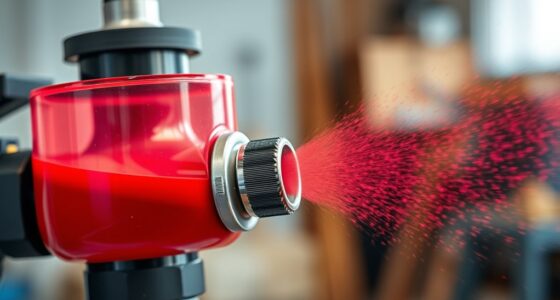
It’s also worth noting that different projects require different pressure levels. Light coatings or delicate finishes often need lower PSI, around 15-30, to avoid overspray and runs. Conversely, thicker materials like latex paint or textured coatings might require 40-60 PSI for proper atomization. Adjusting your pressure settings based on the material and desired finish helps you achieve professional results without wasting material or time. Keep in mind that increasing PSI doesn’t always mean better coverage; it can lead to excessive overspray and waste if not managed correctly. Furthermore, understanding the pressure range suitable for your project ensures optimal results and minimizes material waste.
Frequently Asked Questions
How Do I Adjust My Sprayer’s PSI Correctly?
To adjust your sprayer’s PSI correctly, start by checking your manufacturer’s recommended pressure settings and make certain your sprayer is well-maintained. Use the pressure regulator to increase or decrease PSI gradually, always adhering to safety precautions like wearing protective gear. Regularly inspect hoses and connections for leaks, and test spray on a small area to confirm proper pressure. Proper sprayer maintenance and safety focus help achieve ideal results and prevent accidents.
Does Higher PSI Mean Better Paint Coverage?
Higher PSI might seem like it offers better coverage, but it can actually cause uneven spray and paint waste. Think of it as a delicate balance like watering a plant—you want enough pressure for consistent spray, making certain good paint adhesion without overspray. Too high, and your spray becomes thin and inconsistent; too low, and coverage suffers. Finding the right PSI helps maintain spray consistency and ensures your paint adheres smoothly.
What PSI Should I Use for Different Materials?
You should adjust your PSI based on the material you’re spraying to guarantee ideal spray consistency and paint adhesion. For delicate surfaces like drywall or wood, use lower PSI around 1,500-2,000 to prevent overspray and uneven coverage. For tougher surfaces like metal or concrete, increase the PSI to 2,500-3,000 for better penetration. Always test on a small area first to achieve the best results without compromising the finish.
Can I Damage My Surface by Spraying at Too High PSI?
It’s easy to damage your surface by spraying at too high PSI, which can strip away surface preparation and compromise paint adhesion. When you push too hard, you risk gouging or chipping your material, leading to costly repairs. Always match your PSI to the surface type and project needs, ensuring proper surface preparation first. This way, you protect your surface and achieve a smooth, durable finish.
How Does Temperature Affect Optimal Spraying PSI?
Temperature impact profoundly influences your ideal spraying PSI. When it’s cold, your paint or cleaner may thicken, requiring a lower PSI to maintain spray consistency and prevent splattering. Conversely, hot weather can cause materials to thin, so you might need to increase pressure slightly for even coverage. Always adjust your PSI based on temperature to guarantee a smooth spray pattern and consistent finish, avoiding drips or uneven application.
Conclusion
Remember, the ideal spray pressure varies depending on your project, but generally, 40-60 PSI works well for most tasks. Did you know that improper pressure can waste up to 30% of your paint or coating? That’s a lot of money down the drain! To get the best results and save resources, always start at the lower end of the recommended range and modify as needed. Proper pressure ensures a smooth finish and efficient application every time.

Franz came aboard the Paint Sprayer Zone team with a background in both journalism and home renovation. His articulate writing style, combined with a passion for DIY projects, makes him an invaluable asset. Franz has a knack for breaking down technical jargon into easy-to-understand content, ensuring that even the most novice of readers can grasp the complexities of paint sprayers.