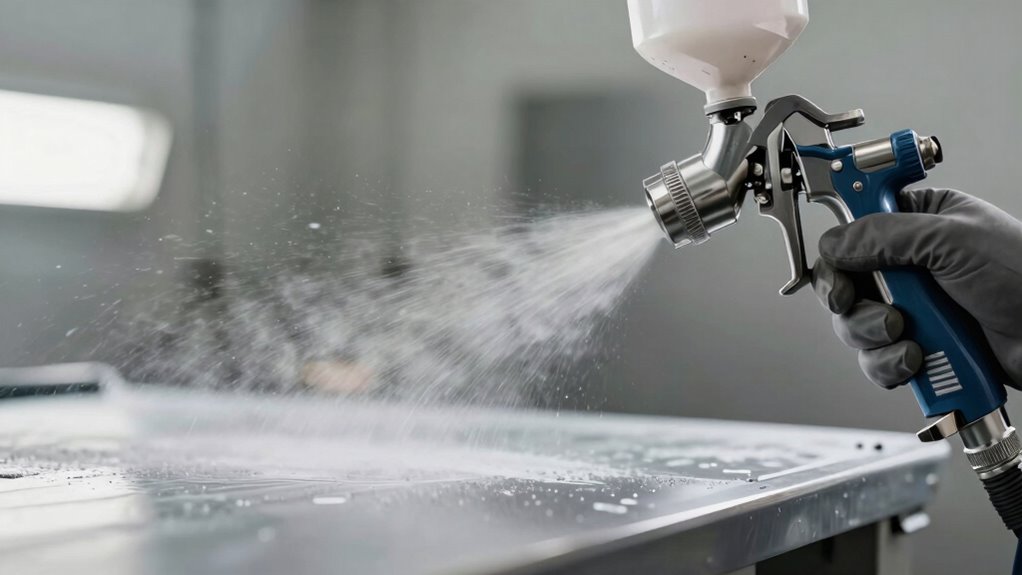

LVLP guns, which use less CFM, are perfect when you need precision, minimal overspray, and quieter operation—ideal for detailed work, touch-ups, or small projects. However, if you’re tackling large areas or applying thick paints, higher CFM guns deliver faster coverage and better results. Knowing when low CFM matters can save energy and improve control, but in some cases, it’s not the best choice. Keep exploring to understand the best situations for LVLP use.
Key Takeaways
- Low CFM in LVLP guns is ideal for detailed finishes, touch-ups, and small projects, reducing overspray and paint waste.
- When covering large areas or applying thick coatings, higher CFM spray guns are more effective than LVLP.
- LVLP guns operate efficiently with less compressed air, making them suitable for confined spaces and quieter work environments.
- For heavy-duty applications like primer or base coats, higher airflow guns provide better coverage and durability.
- Using LVLP is advantageous when precision, reduced noise, and energy efficiency are priorities over rapid large-area coverage.
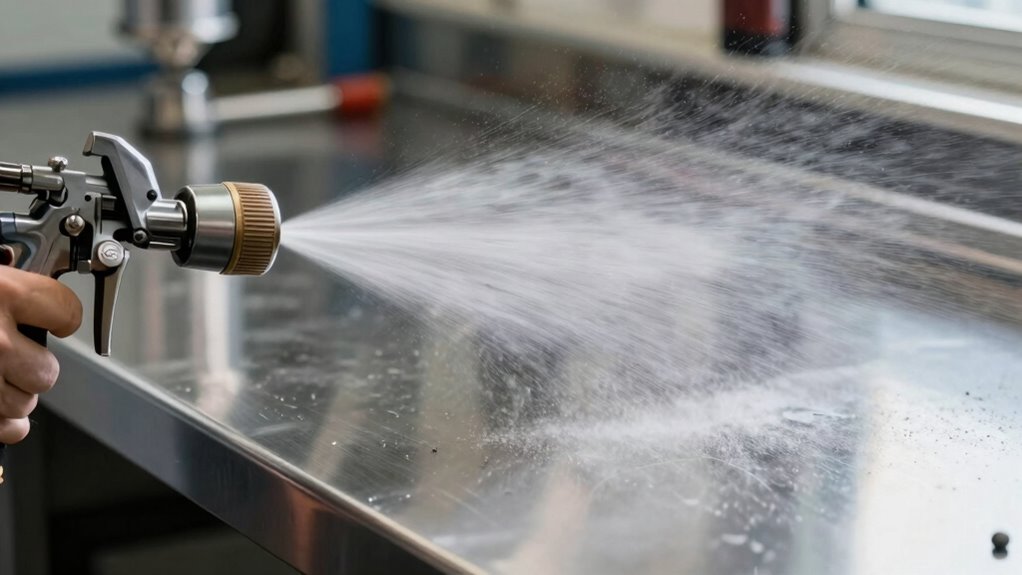
If you’re new to automotive painting, understanding LVLP can seem confusing at first. LVLP stands for Low-Volume Low-Pressure, a type of spray gun designed to use less air while still delivering quality finishes. One of the key aspects to grasp is how airflow efficiency plays into your painting process. Unlike traditional spray guns that require high CFM (cubic feet per minute), LVLP guns operate effectively with lower airflow. This means they’re designed to maximize the use of compressed air, allowing you to achieve a smooth, even coat without wasting excessive air. When you use an LVLP spray gun, you’ll notice that it focuses on delivering a fine mist rather than a heavy spray, which helps you control paint flow better and reduces overspray. This efficiency not only saves you compressor energy but also minimizes paint waste, making your work more economical and environmentally friendly.
Another important factor to regard is noise levels. Because LVLP guns require less air pressure, they tend to operate more quietly compared to traditional spray guns. If you work in a small shop or a confined space, this reduced noise can make a noticeable difference, making your painting sessions more comfortable and less disruptive. Lower noise levels also mean fewer distractions and a safer environment, especially if you’re working around others or in a shared workspace. Plus, quieter operation can help you concentrate better on your technique, leading to more consistent results.
However, it’s vital to remember that low airflow doesn’t always mean you should replace all your other tools with LVLP guns. For larger projects or thicker paints, such as primer or heavy base coats, high-volume guns might still be necessary. The lower airflow and pressure of LVLP guns are best suited for detailed work, touch-ups, or finishing coats where precision matters most. If you’re working on a small panel or doing intricate detailing, an LVLP gun will give you control and reduce the chance of runs and uneven coverage. Conversely, for broad coverage or thicker materials, a high-CFM gun might be more effective, regardless of noise levels or airflow efficiency.
Frequently Asked Questions
How Does LVLP Compare to HVLP in Terms of Paint Finish?
You’ll notice that LVLP typically provides a smoother, more even paint finish compared to HVLP, thanks to its finer spray pattern. This results in better paint quality and more consistent finishes, especially on detailed or intricate surfaces. While HVLP is great for larger projects, LVLP excels when you want precise control and a high-quality, professional-looking finish. So, if you prioritize finish consistency, LVLP is often the better choice.
Can LVLP Be Used for Large-Scale Industrial Painting Projects?
You can use LVLP for large-scale industrial painting projects, but it’s not always ideal. Its equipment durability might struggle under heavy-duty use, and it’s better suited for detailed or smaller jobs. For industrial applications, consider high-capacity sprayers with more robust equipment to guarantee consistent coverage and efficiency. LVLP’s low CFM limits might slow down your process, so choose equipment that matches the scale and demands of your project.
What Types of Paints Are Compatible With LVLP Sprayers?
You might be surprised, but LVLP sprayers work best with a variety of paints, including latex, oil-based, and enamels. However, for ideal paint compatibility, always check manufacturer recommendations. Keep in mind, thorough spray gun cleaning is essential to prevent clogs and guarantee smooth operation. If you switch between different types of paints, cleaning becomes even more critical, helping you achieve a flawless finish every time—and avoid costly mistakes.
Is LVLP Suitable for Applying Primer or Only Topcoats?
LVLP sprayers are suitable for applying primer as well as topcoats, thanks to their versatile spray gun compatibility. You can use them for primer application because they provide a fine, even spray, ensuring good coverage. Just make sure to adjust your settings properly for different materials. This flexibility makes LVLP sprayers a great choice for various painting tasks, whether you’re working on primers or finishing coats.
How Do I Maintain an LVLP Spray Gun for Optimal Performance?
Ever wondered how to keep your LVLP spray gun in top shape? You should regularly clean the spray gun parts and check for clogs to guarantee smooth spray patterns. Proper spray gun maintenance involves cleaning the nozzle, needle, and air cap after each use. Do you want your spray gun to deliver ideal performance? Maintaining it well guarantees consistent finishes and extends its lifespan. Keep it clean, and it’ll perform like new!
Conclusion
So, next time you see “low CFM,” remember it’s not just about numbers—sometimes, it’s about the right fit for your needs. Coincidentally, what seems insignificant might actually be essential in specific situations, revealing how little details often shape the bigger picture. Whether you’re optimizing your setup or just learning the basics, understanding when low CFM matters helps you make smarter choices. After all, sometimes the smallest factors leave the biggest impact.