
TL;DR

Get business pricing on tools and workshop supplies
- Business-only prices and quantity discounts
- Tax-exempt purchasing
- Multiple users, one account, clear invoices
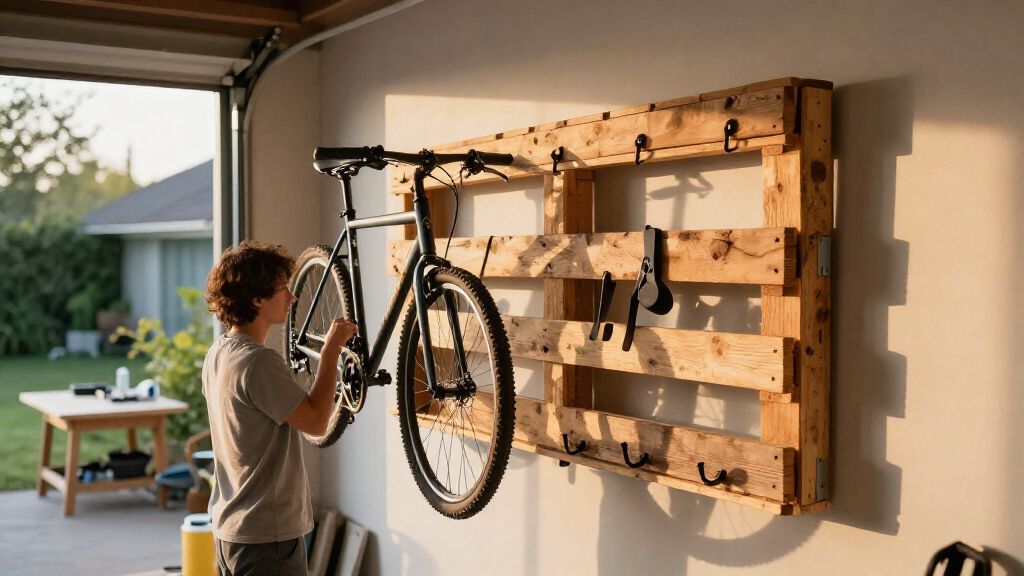
A Hunker report describes a DIY bike rack made by cutting an old wood pallet into a low, single-row organizer and repositioning its slats to hold bike tires. The design suits bikes with kickstands or training wheels; bikes without them need added vertical support and bracing.
A Hunker report describes a garage bike rack made from a reclaimed wood pallet, using adjusted slats to create individual spaces for bicycle tires. The low-cost design, demonstrated by YouTube user This Dad Goes to 11, can organize several bikes on the floor, while bikes without kickstands or training wheels require an added upright support.
The basic rack is made by cutting a pallet roughly in half lengthwise, close to one side of its center support, leaving a narrow, single-row frame. The existing deck slats are then removed and repositioned so the openings fit the tires. Hunker says the spacing should leave about a quarter of an inch of wiggle room: enough to place a tire without forcing it in, but not so much that the bike can tip or the wheel can turn freely.
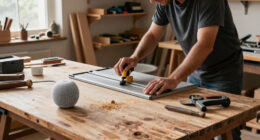
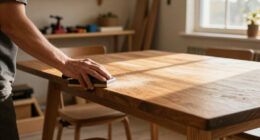
The demonstration described in the report used a wide pallet to hold five bikes, with a slat on each side of every tire. That count is an example, not a guaranteed capacity; the number of bikes depends on the pallet’s dimensions and the spacing chosen. The slats can be reattached with usable pallet nails or, if those are damaged or missing, with wood screws. Hunker recommends sanding the finished rack to reduce splinters. Sealing or finishing the wood is optional.
For bikes that cannot stand on their own, Hunker points to a separate tutorial by YouTuber Your Own Adventure. That version repurposes the other pallet half as an upright tire support, adds 2-by-4 lumber to reinforce the base, and joins the upright and floor sections with metal shelf brackets or other suitable brackets. Removed pallet slats can also serve as diagonal braces. The report presents this as a way to provide extra support, not as a tested load rating.
A Low-Cost Fix for Garage Clutter
The project offers households a way to give bikes separate parking spaces without buying a purpose-built rack, provided they have a suitable pallet and room to store the bikes on the floor. Keeping wheels in designated slots may make it easier to access bikes and return them to the same place, particularly in a busy family garage.
The design also has limits readers should weigh before building. It depends on the condition and dimensions of the pallet, the bikes’ stability, and careful adjustment of the slats. A floor rack takes up ground space, and the basic version is intended for bikes that already have a kickstand or training wheels. The upright variation needs extra lumber and bracing. Neither tutorial, as summarized in the source material, supplies a certified capacity or structural testing data.
Products Worth Considering

Dyson Car+Boat Cordless Handheld Vacuum

Sonos Era 100 SL Compact Microphone-Free Speaker, White

Shark Navigator Robot Vacuum with 30-Day Self-Emptying Base, White (AV2110S)
As an affiliate, we earn on qualifying purchases.
Two Versions of the Pallet Rack
The original Hunker report brings together two DIY demonstrations: This Dad Goes to 11’s low, single-row organizer and Your Own Adventure’s supported upright design. In the first, the pallet’s existing boards are rearranged to form tire channels. In the second, the removed pallet section is adapted to hold tires upright and connected to a reinforced base.
The projects rely on reusing pallet wood rather than on a standard kit or manufactured rack. That makes the finished dimensions and strength dependent on the materials available. The report advises adjusting the layout for the specific pallet and the number of bikes, and suggests labeling spaces with family members’ names as an optional way to make cleanup easier.
“The basic, free wood pallet was the answer to organizing the family’s bikes.”
— Hunker, summarizing This Dad Goes to 11’s demonstration
Capacity Depends on the Build
The supplied report does not give a tested weight limit, durability results or measurements that would apply to every pallet. It also does not specify the condition or prior use of the pallet used in either demonstration. Readers will need to inspect their materials and adapt the spacing and reinforcement to their own bikes; the source does not establish that every pallet or layout is suitable.
The reported five-bike arrangement belongs to one wide pallet example. It should not be treated as the capacity of a typical pallet. The report also does not state whether the rack was tested under repeated use or whether the upright version can safely support every heavy or unstable bike.
Inspect, Fit and Brace the Rack
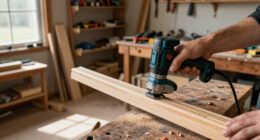
The next steps for anyone following the idea are to inspect the pallet, plan the tire spacing and decide whether the bikes can stand in the low rack or need upright support. The project uses a circular saw, hammer or crowbar, and possibly wood screws, 2-by-4 lumber and brackets. Work on a stable surface, wear appropriate eye and hand protection, and keep hands clear of cutting and prying areas. If a builder is unsure how to use power tools safely, they should seek help from someone qualified.
Before loading bikes, builders can check that the slats are firmly attached, the tire openings are not too loose, and any upright section is securely braced. The source provides no formal inspection standard, capacity test or follow-up performance information, so those points remain practical checks rather than a guarantee of safety.
Key Questions
How many bikes can a pallet rack hold?
It depends on the pallet’s width and the spacing between tire slots. Hunker describes one wide pallet holding five bikes, but that is an example, not a standard capacity.
Can the basic rack hold bikes without kickstands?
The report says the low version suits bikes with kickstands or training wheels. Bikes without either need an added upright tire support and a reinforced base.
What tools and materials does the project use?
The basic version uses a pallet, a circular saw and a hammer or crowbar to adjust the slats. Wood screws may be needed if the pallet nails cannot be reused. The upright version also uses 2-by-4 lumber and brackets.
Does the finished pallet need to be sealed?
Hunker says finishing or sealing is optional, depending on preference and expected wear. It recommends sanding the rack to reduce splinters.
Is there a confirmed weight limit for the rack?
No weight limit is provided in the supplied report. The rack’s strength will depend on the pallet, construction and bracing, and the source does not describe formal load testing.
Source: hunker.com