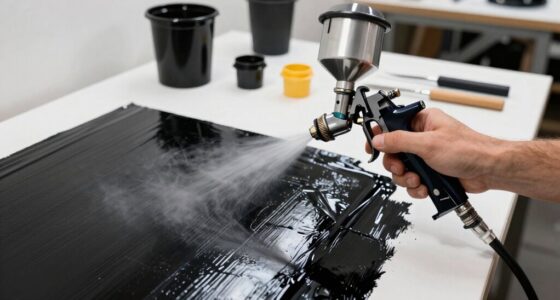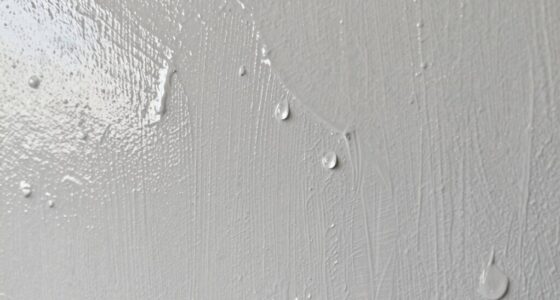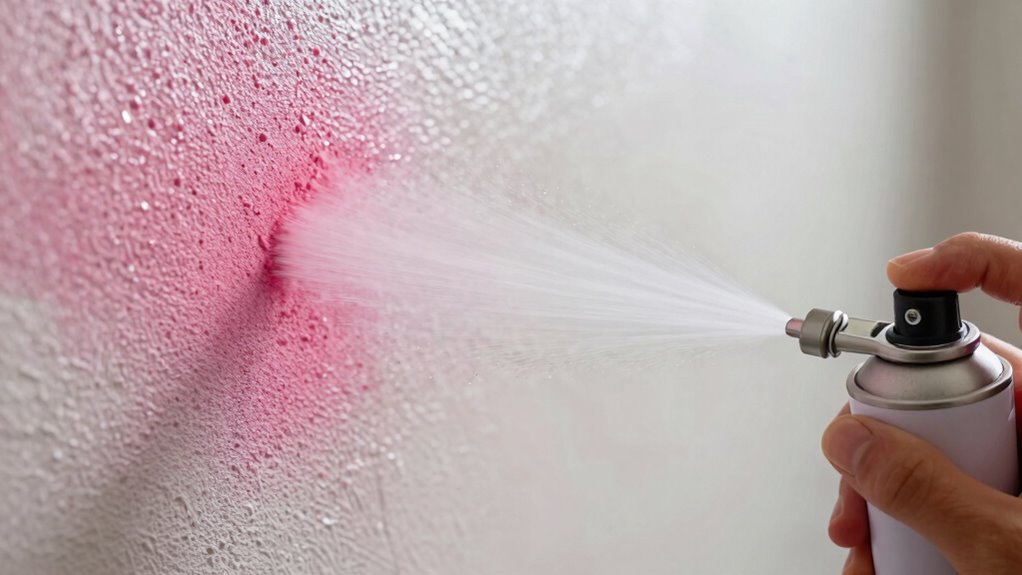

To spray texture without making a mess, focus on achieving the right mixture consistency. Aim for a pancake batter-like texture—thick enough to hold shape but not so thick that it clog your sprayer. Regularly check and adjust your mix for smoothness, and strain it to remove lumps or debris. Properly maintained equipment and steady technique also help avoid drips and splatter. Mastering this rule makes your job cleaner and easier; want to learn the key steps to perfect consistency?
Key Takeaways
- Achieve a pancake batter-like consistency to ensure smooth, even spray application without drips or clogs.
- Thoroughly mix the texture to eliminate lumps, testing on a small area before full application.
- Strain the mixture through a fine mesh screen to remove debris that can cause clogs during spraying.
- Adjust mixture thickness as needed, avoiding overly thick or thin blends for optimal spray flow.
- Regularly check and maintain equipment to prevent equipment-related inconsistencies affecting mixture delivery.
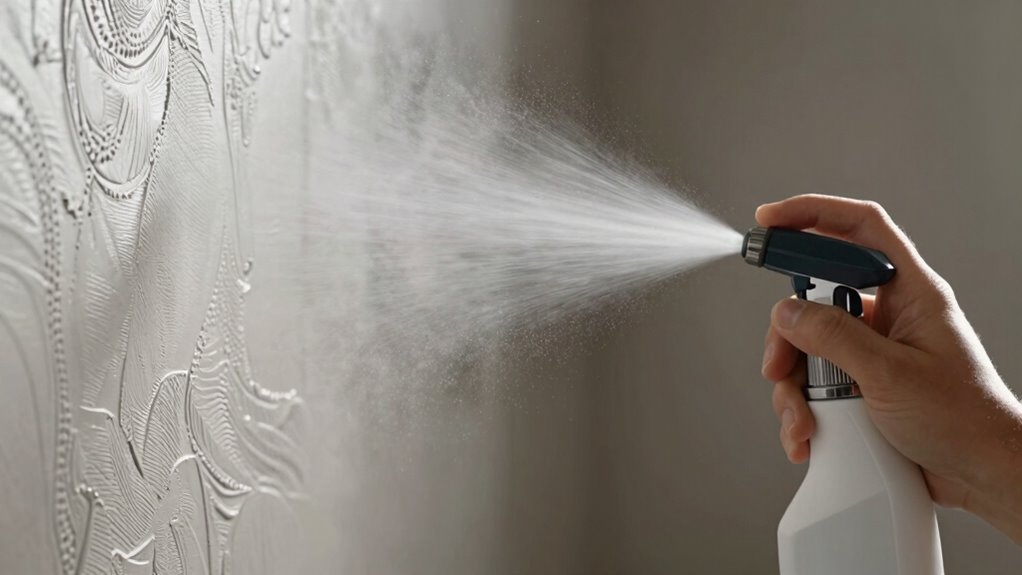
Have you ever struggled with texture spraying and ended up with a messy, uneven finish? That’s a common frustration, but it often comes down to how well you prepare and the consistency of your mixture. One of the most important steps is mastering the mix consistency rule, especially when using an airless spray. This equipment is powerful, but it requires the right mixture to perform at its best and avoid drips, runs, or uneven textures. Before you even pick up the spray gun, surface preparation is critical. Clean the wall thoroughly, removing dust, grease, and loose debris, and fix any cracks or holes. A smooth, clean surface ensures the texture adheres properly and helps you avoid uneven patchiness. Once your surface is prepped, focus on the mixture. Too thick, and it’ll clog the spray tip or produce a rough, uneven spray pattern. Too thin, and the texture may run or drip, wasting material and creating a mess. The goal is to achieve a consistency similar to pancake batter—smooth but thick enough to hold its shape. Use a drill mixer or paddle to blend the texture material thoroughly, ensuring no lumps or separation. Test the mixture by spraying a small area first; it should spray evenly without spattering or dripping. Adjust the mix by adding small amounts of water or texture compound to reach the ideal consistency. Remember, consistency is key to achieving a uniform coating that sprays smoothly from your airless sprayer. Proper equipment maintenance and regular inspection can prevent issues caused by equipment malfunction, ensuring a cleaner finish. Proper surface preparation combined with a correctly mixed texture ensures a cleaner spray process with fewer drips, overspray, or uneven patches. When you load your sprayer, strain the mixture through a fine mesh screen to catch any lumps or debris that could clog the nozzle. Regularly check the spray pattern and fluid pressure, adjusting as needed to maintain a steady, even spray. Keep your equipment clean and well-maintained, especially the nozzle and filter, to prevent blockages that could spoil your finish. When you’re ready to spray, use steady, overlapping passes, maintaining a consistent distance from the surface. This helps you control the texture’s appearance and prevents excessive buildup or splattering. The key to a mess-free finish is patience and precision at every step—from surface prep to mixture consistency and spray technique. With practice, you’ll find that sticking to the mix consistency rule and preparing your surface properly makes texture spraying a smoother, cleaner process, leaving you with a professional finish every time.
Frequently Asked Questions
Can I Use Different Spray Guns for Various Textures?
Yes, you can use different spray guns for various textures, but you need to guarantee spray gun compatibility. Each gun is designed for specific texture consistency, so using the right one helps achieve the desired finish. Switching guns allows you to handle different textures efficiently, but always check that the equipment matches the material you’re spraying. This way, you maintain control and get professional results without mess or hassle.
How Do I Prevent Overspray During Spraying?
To prevent overspray during spraying, you should control airflow and adjust paint viscosity. Use your spray gun’s airflow control to limit excess mist, focusing the spray precisely where needed. Make sure your paint’s viscosity is correct—thinner paint reduces overspray and improves application. Practice steady, even strokes, keeping the gun at a consistent distance. This combination of airflow control and proper paint viscosity guarantees a clean, mess-free finish.
What Safety Gear Is Recommended for Texture Spraying?
Did you know that wearing proper safety gear reduces inhalation of harmful particles by up to 90%? When texture spraying, you should always wear protective gloves and a respiratory mask. These safeguard you from skin irritation and inhaling dust or fumes. Make sure your mask fits snugly, and gloves are durable. Prioritizing safety gear keeps you protected and ensures a smoother, mess-free spray experience.
How Long Should I Wait Between Coats?
You should wait about 2 to 4 hours between coats, but always check the drying time specified on your spray product. Proper surface preparation helps guarantee each coat adheres well and dries evenly. Avoid rushing; giving each coat ample drying time prevents drips and uneven texture. If the surface feels dry to the touch and looks matte, you’re ready for the next coat. Patience ensures a smooth, professional finish.
Can Texture Spray Be Applied Over Wallpaper?
Will you want to work with wallpaper? Generally, it’s not recommended to apply texture spray directly over wallpaper. First, you’ll need to remove the wallpaper thoroughly. Proper surface preparation is essential for a smooth, successful spray. If you skip this step, the texture may peel or bubble. So, take your time removing wallpaper and prepping the surface to guarantee flawless, mess-free results with your texture spray project.
Conclusion
By mastering the mix consistency, you guarantee a smooth spray, a clean application, and a mess-free experience. When your mixture is just right, you avoid drips, minimize waste, and enjoy flawless results. Consistency becomes your key, your guide, and your guarantee. With the right technique, the right mixture, and the right mindset, you turn a messy task into a seamless process, transforming your project from chaos to clean, from frustration to satisfaction.