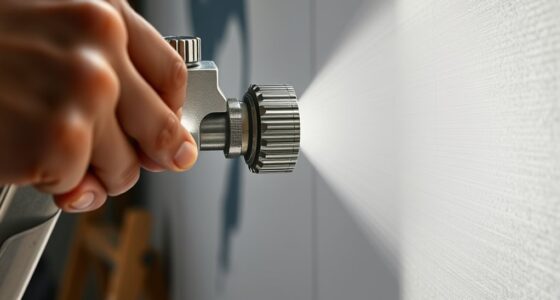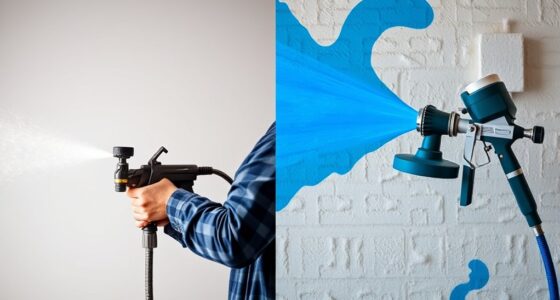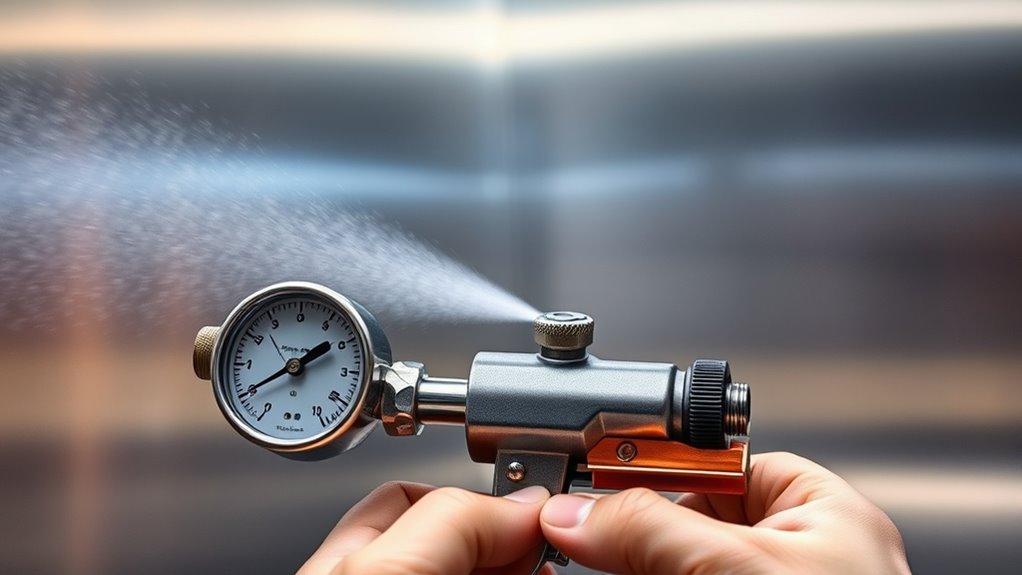

To test your spray pattern and adjust pressure, start by setting your nozzle at the recommended pressure, then spray onto a flat surface like cardboard to observe the pattern. Check for issues like uneven or inconsistent coverage. Use a calibrated pressure gauge to make precise adjustments, increasing or decreasing pressure gradually while monitoring the pattern. Fine-tuning ensures ideal coverage, and understanding nozzle type helps control spray behavior—keep going to learn more expert tips.

Get business pricing on tools and workshop supplies
- Business-only prices and quantity discounts
- Tax-exempt purchasing
- Multiple users, one account, clear invoices
Key Takeaways
- Calibrate your pressure gauge to ensure accurate readings before testing.
- Set the spray pressure to the recommended level and spray onto a flat surface like cardboard.
- Observe the spray pattern for consistency, coverage, and any uneven or irregular areas.
- Adjust the pressure gradually while monitoring the pattern, using a calibrated gauge for precision.
- Continue testing and fine-tuning until achieving a uniform, desired spray pattern for optimal coverage.

Testing your spray pattern and adjusting the pressure are essential steps to guarantee your equipment performs efficiently. When you start, it’s important to understand the various spray nozzle types, as each one produces a different pattern and flow rate. Whether you’re using a cone, fan, or hollow cone nozzle, knowing how it behaves helps you achieve the desired coverage and efficiency. Before testing, ensure your pressure gauge calibration is accurate; a miscalibrated gauge can lead to improper pressure settings, resulting in uneven spray patterns or wasted material. Take the time to verify your pressure gauge against a known standard, so you’re confident your readings are precise.
Once your gauge is calibrated, you can begin testing your spray pattern. Start by setting your pressure to the manufacturer’s recommended level or your desired operating pressure. Turn on your equipment and observe the spray pattern on a clean, flat surface like a piece of cardboard or a test target. If you notice a pattern that’s uneven, inconsistent, or lacks coverage, it’s time to make adjustments. Different spray nozzle types respond differently to pressure changes, so understanding how each behaves at various pressures helps you fine-tune your setup. For example, some nozzles produce a fine mist at high pressures, while others create a broader cone at lower pressures.
Adjusting pressure is straightforward. Gradually increase or decrease the pressure and monitor the resulting spray pattern. Use your calibrated pressure gauge as a guide to ensure you’re making precise adjustments. Keep in mind that increasing pressure generally produces a finer spray with a wider coverage, but too much pressure can cause overspray or drift. Conversely, reducing pressure can lead to a more concentrated pattern but may result in incomplete coverage. Continually check the pattern after each adjustment to find the best balance for your application. Additionally, understanding the best pressure settings for your specific sprayer model can improve application consistency and reduce paint waste.
As an affiliate, we earn on qualifying purchases.
Frequently Asked Questions
What Tools Are Best for Testing Spray Pattern?
You should use a paint nozzle and a spray gauge to test your spray pattern effectively. Attach the spray gauge to your spray gun to measure pressure accurately, while the paint nozzle helps you observe the spray pattern directly. By adjusting the nozzle and monitoring with the gauge, you can fine-tune your spray for even coverage and ideal results, ensuring your project looks professional and consistent.
How Often Should I Check Spray Pattern Accuracy?
Think of spray pattern maintenance like checking your tire pressure—regular checks keep everything running smoothly. You should inspect your spray pattern weekly or after significant use, especially when changing chemicals or weather conditions. Regular calibration frequency guarantees even coverage and prevents costly errors. Skipping these checks is like ignoring a warning light on your dashboard—small issues can turn into big problems, so stay proactive for ideal results.
Can Temperature Affect Spray Pressure and Pattern?
Temperature effects can influence spray pressure and pattern, so you should be aware that colder conditions may cause the fluid to thicken, reducing spray consistency and pressure. Conversely, higher temperatures can make the fluid thinner, potentially increasing pressure and altering the spray pattern. To maintain ideal performance, regularly check your spray pattern and pressure, especially when working in varying temperatures, and make adjustments as needed for consistent results.
What Common Mistakes Cause Inconsistent Spray Patterns?
Did you know that over 60% of spray pattern issues stem from simple mistakes? You might cause inconsistent spray patterns if you don’t check the spray nozzle for clogs or damage. Also, neglecting to properly adjust the pressure regulator can lead to uneven spray. Always make sure your nozzle is clean and correctly fitted, and set your pressure regulator to the recommended level for ideal results.
How Do I Troubleshoot Uneven Spray Distribution?
To troubleshoot uneven spray distribution, start by checking your nozzle calibration to make certain it’s accurate. Next, examine the spray angle; if it’s off, your spray may be uneven. Clean the nozzle thoroughly to remove clogs. Adjust the pressure if needed, as inconsistent pressure can cause irregular spray. Regularly inspect and maintain your equipment, and test the spray pattern to confirm even coverage before starting your project.
Conclusion
Now that you know how to test your spray pattern and adjust the pressure, you’ll be ready for a smooth, even application every time. Think of it like tuning a guitar—small tweaks make all the difference. With a little patience and practice, you’ll achieve professional results, turning your project into a masterpiece. Remember, perfecting your spray technique is just like fine-tuning an instrument—worth the effort for that flawless finish.
Halloween Picks
halloween
As an affiliate, we earn on qualifying purchases.