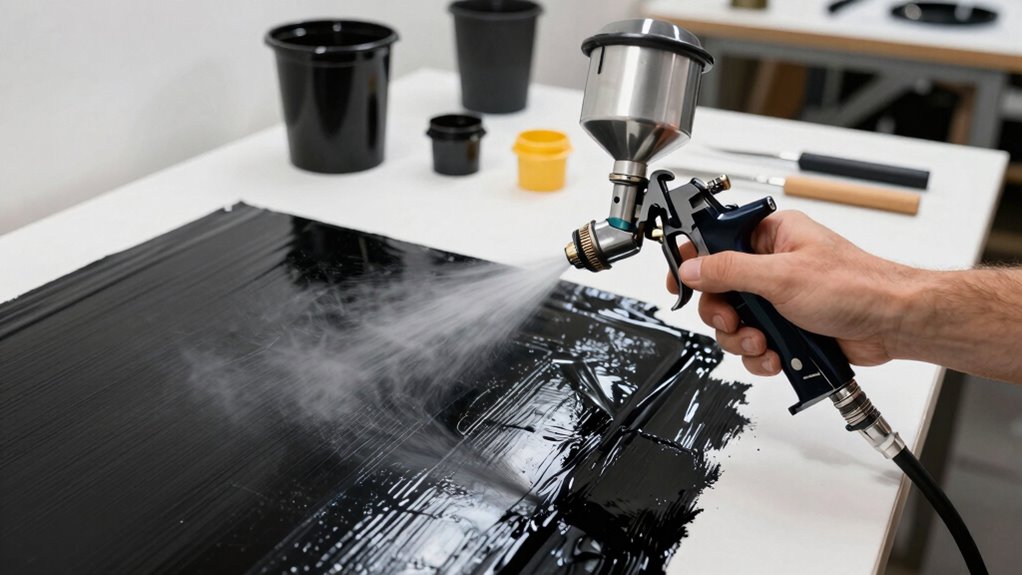

To spray thick latex paint safely, choose an airless sprayer with a larger tip size (0.017 to 0.021 inches) and guarantee it’s well-maintained. Stir the paint thoroughly, thin only if necessary, and test spray on a scrap surface first. Maintain steady, overlapping passes, keep the tip 12-18 inches from the surface, and adjust pressure appropriately. Proper equipment setup and technique will help you avoid clogs and drips—continue to learn more for a smooth finish.
Key Takeaways
- Use an airless sprayer with appropriate nozzle tips (0.017-0.021 inches) and maintain proper pressure settings for thick latex.
- Thoroughly stir and properly thin latex paint only if necessary, avoiding over-thinning to maintain adhesion and finish quality.
- Test spray on scrap surfaces to adjust technique, maintaining steady passes and consistent distance (12-18 inches).
- Regularly clean and maintain equipment, including filters and tips, to prevent clogs and ensure smooth operation.
- Consider environmental factors like temperature and humidity to optimize flow, drying, and avoid application disasters.
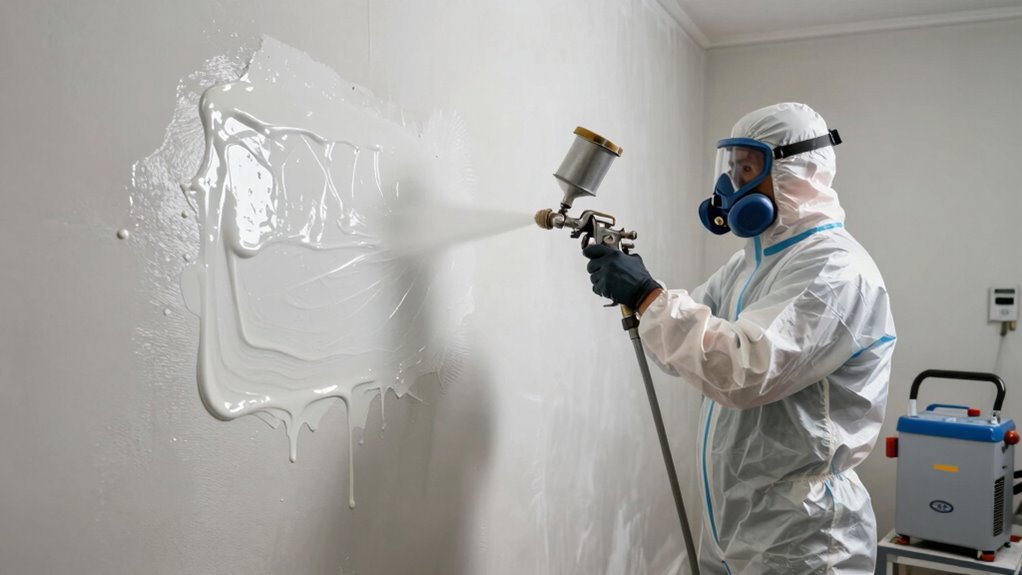
Have you ever wondered how to effectively spray thick latex paint for a smooth, professional finish? If so, understanding the right equipment and techniques is essential. An airless sprayer is your best tool for this job because it’s designed to handle high-viscosity paints like latex. Unlike traditional sprayers, an airless model uses a high-pressure pump to force paint through a small nozzle, producing a fine, even spray without the need for thinning the paint excessively. This makes it ideal for maintaining the original latex consistency, which is crucial for achieving a uniform coat and avoiding drips or uneven coverage.
When working with thick latex, the key is to optimize the sprayer setup to accommodate the paint’s viscosity. Start by choosing the right tip size—usually a 0.017 to 0.021-inch nozzle works well—since smaller tips can clog easily with thick paint, while larger tips handle thicker coatings better. Before spraying, ensure your latex paint is at the proper consistency; it should be stirred well and thinned only if necessary, but avoid over-thinning, which can compromise adhesion and finish quality. Some sprayers come with built-in filters, so make sure to clean or replace these regularly to prevent clogs caused by latex’s thicker nature.
Adjust your pressure settings on the airless sprayer to match the viscosity of the paint. Higher pressure helps push thick latex through the nozzle smoothly, but be cautious not to set it too high, which could cause overspray or uneven atomization. Always test spray on a scrap surface first to check the flow and finish. Keep the sprayer moving in steady, overlapping passes to ensure even coverage, and maintain a consistent distance from the surface—typically 12 to 18 inches—to avoid sags or thin spots. Additionally, understanding the viscosity of latex paint can help you better manage application conditions and equipment settings.
If you encounter resistance or clogging, don’t force the equipment; instead, pause and clean the tip and filters thoroughly. Proper maintenance of your airless sprayer is vital for handling thick latex efficiently. Also, consider the temperature and humidity, as cooler or more humid conditions can affect the paint’s flow and drying time. Remember, patience and proper setup are your allies in spraying thick latex. By tailoring your equipment and technique to the latex’s consistency, you’ll achieve a smooth, professional finish without disaster. With the right approach, spraying thick latex becomes a straightforward process that saves time and delivers excellent results.
Frequently Asked Questions
What Safety Gear Is Essential for Spraying Thick Latex?
You should wear protective clothing and a respirator mask when spraying thick latex. Protective clothing shields your skin from splashes and fumes, while a respirator mask prevents inhaling harmful particles and vapors. Make sure your gear fits well and is rated for chemical protection. Always check your equipment before starting, and verify your workspace is well-ventilated to stay safe and comfortable during the process.
Can I Mix Latex With Other Paints or Additives?
You can mix latex with certain paint additives to improve its properties, but you should verify latex compatibility first. Not all additives work well with latex, and some can cause issues like poor adhesion or latex separation. Always read label instructions carefully, test small amounts first, and avoid mixing incompatible paints or additives. This ensures your thick latex spray remains effective and safe, giving you a smooth finish without surprises.
How Long Does Thick Latex Take to Dry Completely?
Ever wondered how long thick latex takes to dry completely? Typically, it takes about 24 to 48 hours for the drying time, but the curing process can extend up to two weeks for full hardness. Factors like humidity and temperature influence drying, so guarantee proper ventilation. Patience is key—rushing the process might compromise the finish. Always follow manufacturer guidelines for ideal results and durability.
What Are Common Troubleshooting Tips for Uneven Application?
To fix uneven application, first check your spray gun for nozzle clogging, which can disrupt application consistency. Make certain you’re maintaining a steady speed and consistent distance from the surface to achieve even coverage. Adjust your pressure settings if needed, and always stir the latex thoroughly before spraying. Practicing on a test surface helps you identify issues early, leading to smoother, more uniform results in your final project.
How Do I Clean Spray Equipment After Using Thick Latex?
Imagine you just finished spraying thick latex on a project; now, you need to clean your equipment. To do this, immediately disassemble your spray gun, rinse all parts with water, and verify compatibility with latex. Proper equipment maintenance prevents clogs and prolongs tool life. Always check latex compatibility, use warm water, and avoid harsh chemicals to keep your spray equipment in top shape and ready for the next job.
Conclusion
By following these safe spraying workflows, you reduce the risk of accidents and guarantee a smooth application process. Remember, proper preparation and technique are key. Did you know that incorrectly sprayed latex can lead to up to 30% material wastage? That’s a lot of money wasted and potential mess to clean up. Stay cautious, work methodically, and you’ll achieve flawless results without disaster, saving time and resources along the way.