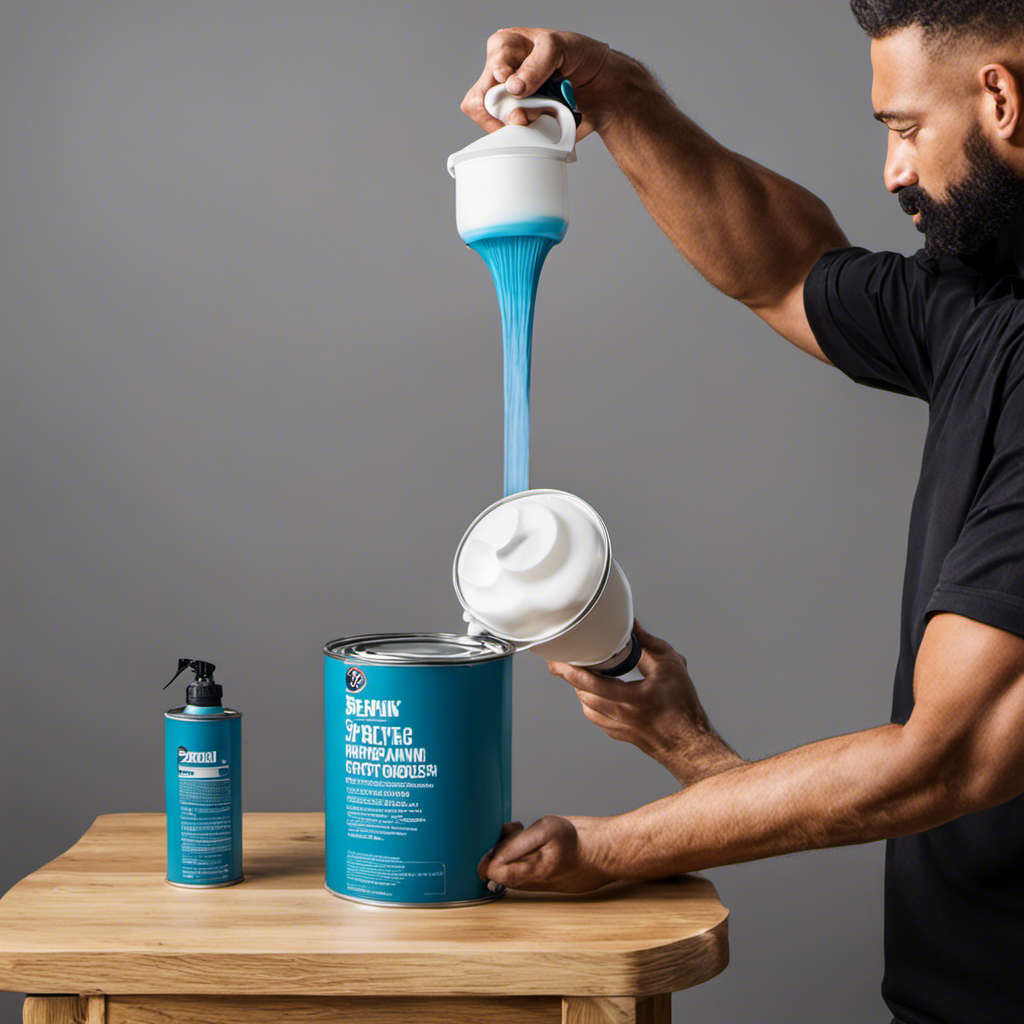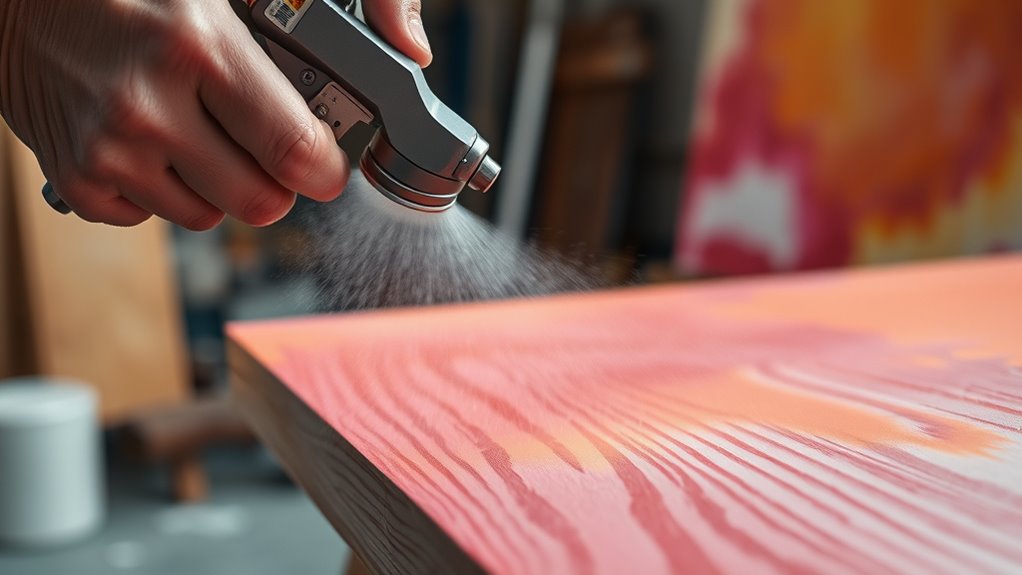

Before spraying over oil-based paint, you need to properly prepare the surface by cleaning and lightly sanding it to improve adhesion. Always wear protective gear like masks and goggles, and work in a well-ventilated area to stay safe from fumes. Use compatible primers if necessary, and guarantee your spray equipment is clean and functional. Following these steps helps achieve a smooth, durable finish and prevents common issues—if you want to learn more, keep exploring the best techniques and safety tips.
Key Takeaways
- Properly clean and sand the oil-based paint surface to improve adhesion for spraying.
- Use a compatible primer designed for oil-based paints before applying new coating.
- Choose the right spray equipment and adjust settings for smooth, even coverage.
- Ensure adequate ventilation and wear protective gear to minimize fumes and health risks.
- Follow safe disposal practices for leftover paint and solvents to protect the environment.
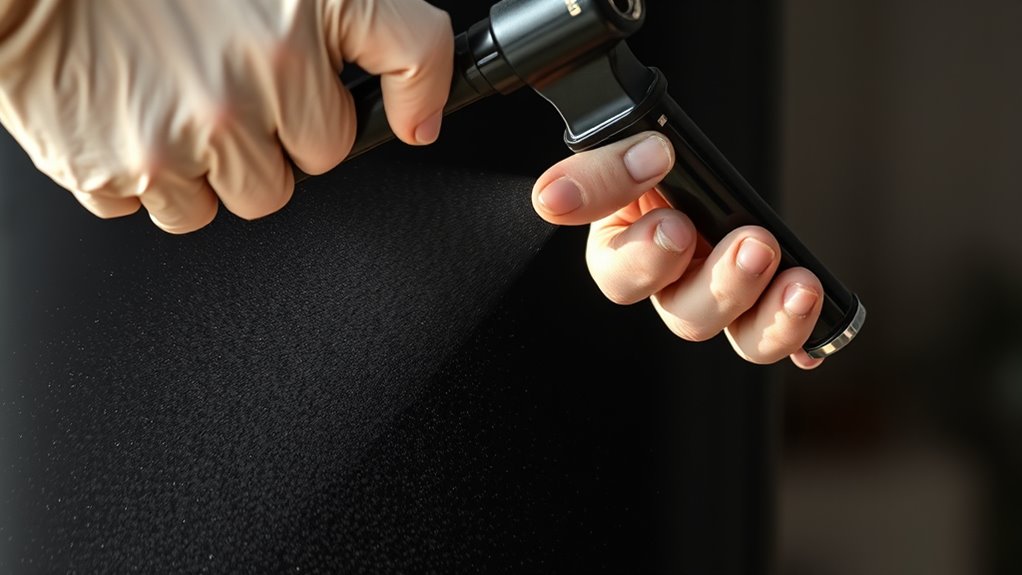
If you’re planning to spray paint over oil-based paint, understanding the proper preparation and techniques is crucial for a smooth, lasting finish. One of the first steps involves carefully preparing your brushes and spray equipment. Proper brush preparation ensures that your tools are clean and free of any residue that could interfere with the new coat. You should thoroughly wash brushes and spray nozzles with mineral spirits or a suitable solvent to remove oil-based paint. This prevents old paint from mixing with the new layer, which can lead to uneven texture or adhesion problems. When preparing your equipment, inspect all nozzles and hoses for clogs or damage, replacing any worn parts to ensure a consistent spray pattern. Proper brush preparation not only improves the quality of your finish but also helps avoid costly mistakes during application.
Safety precautions are equally critical when working with oil-based paints and spray equipment. These paints contain volatile organic compounds (VOCs) and other chemicals that can be hazardous if not handled properly. Always work in a well-ventilated area to prevent inhaling fumes, which can cause dizziness, headaches, or more serious health issues over time. Wearing protective gear such as gloves, goggles, and a respirator mask is essential to shield your skin, eyes, and respiratory system from harmful vapors and splatters. Keep the workspace free of open flames, sparks, or heat sources, as oil-based paints and their solvents are highly flammable. Before starting, read the safety instructions on the paint and solvent labels, and ensure you have all necessary protective equipment on hand. If you’re spraying in an enclosed space, consider using a portable fan or exhaust system to improve airflow and reduce fume buildup.
Additionally, follow safe disposal procedures for leftover paint, brushes, and solvents. Never pour leftover oil-based paint down the drain or onto the ground. Instead, store unused paint in a sealed container and take any waste to a proper disposal facility. Proper safety precautions extend beyond personal protection, encompassing environmental responsibility as well. Taking these measures not only helps you avoid health risks and accidents but also ensures your project proceeds smoothly from start to finish. Being aware of resource availability can help you access the necessary tools and disposal options for a safe project. By paying attention to brush preparation and adhering to safety precautions, you set a solid foundation for a professional-looking finish when spraying over oil-based paint. This preparation minimizes problems like peeling, cracking, or uneven coverage, saving you time and money in the long run.
Frequently Asked Questions
Can I Spray Over Oil-Based Paint With Latex Paint Directly?
You can spray latex paint over oil-based paint, but surface preparation is key. First, clean the surface thoroughly to remove dirt and grease. Then, lightly sand the oil-based paint to improve paint adhesion. Applying a primer designed for bonding latex over oil-based surfaces helps guarantee durability. Skipping proper prep may cause peeling or chipping, so take these steps seriously for a smooth, lasting finish.
How Long Should I Wait Before Spraying Over Oil-Based Paint?
You should wait at least 24 hours before spraying over oil-based paint, but it’s best to check the drying time for your specific paint. Make certain proper adhesion preparation by lightly sanding the surface and cleaning off dust, which helps the new coat stick effectively. Rushing the process can cause peeling or uneven finish, so patience pays off. Always follow manufacturer recommendations for the best results.
What Safety Precautions Are Necessary When Spraying Over Oil-Based Paint?
When spraying over oil-based paint, you need to prioritize safety. Wear protective gear like a mask, goggles, and gloves to avoid inhaling fumes or skin contact. Make sure proper ventilation by working in a well-ventilated area or using fans to circulate air. Avoid open flames or sparks, as fumes are flammable. Taking these precautions helps protect your health and minimizes fire risks during the painting process.
Will Spraying Over Oil-Based Paint Affect the Finish Quality?
Spraying over oil-based paint can impact the finish quality if you don’t prepare properly, leading to adhesion concerns. To guarantee a smooth, durable finish, you need to clean and lightly sand the surface first. Skipping these steps can cause peeling or uneven coverage. When done correctly, spraying over oil-based paint maintains a high-quality finish, but neglecting prep work may compromise the overall look and longevity of your project.
Are There Any Specific Spray Equipment Settings Recommended?
You should start by investigating whether your spray equipment can handle oil-based paints, as this impacts your spray settings. Generally, you’ll want to set your spray equipment to a medium or slightly higher pressure to guarantee even coverage. Adjust the spray pattern for a smooth, consistent application, and keep the nozzle at a steady distance—about 10-12 inches. Testing on a scrap piece helps dial in the ideal spray settings for a flawless finish.
Conclusion
Remember, when spraying over oil-based paint, preparation is key. Use the right primer, guarantee proper drying, and choose compatible spray products. Patience and attention to detail make all the difference. As the saying goes, “A stitch in time saves nine”—taking the time now prevents future touch-ups. With careful steps, your project will turn out smooth and professional-looking. So, don’t rush; a little effort today ensures lasting, beautiful results tomorrow.

Franz came aboard the Paint Sprayer Zone team with a background in both journalism and home renovation. His articulate writing style, combined with a passion for DIY projects, makes him an invaluable asset. Franz has a knack for breaking down technical jargon into easy-to-understand content, ensuring that even the most novice of readers can grasp the complexities of paint sprayers.