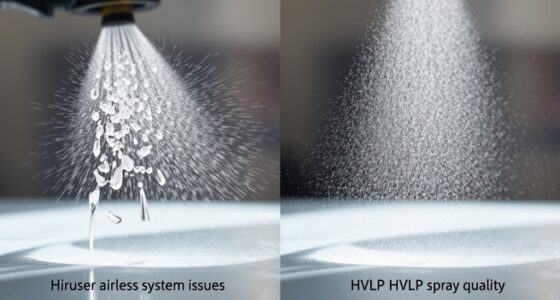
If your sprayer surges or pulses, start by checking for fuel system issues like debris in the tank, clogged filters, or damaged fuel lines that disrupt steady flow. Clean or replace nozzles to prevent clogging, and test pressure regulators and relief valves for proper operation. Also, inspect hoses for leaks and make sure all connections are secure. Worn pump parts can cause irregular pressure pulses. Staying aware of these common causes can help keep your sprayer running smoothly; more tips await if you continue.
Key Takeaways
- Check for fuel system blockages, sediment, or stale fuel causing inconsistent engine pressure.
- Inspect nozzles for clogs or debris to ensure even spray and pressure stability.
- Test pressure regulators and relief valves for proper function and replace if faulty.
- Examine hoses and connections for leaks, cracks, or damage that can cause pressure drops.
- Regularly service the spray pump to prevent worn parts that lead to irregular pressure pulses.

If your sprayer starts surging or pulsing during operation, it can be frustrating and may compromise your application’s effectiveness. One common culprit is issues within the fuel system. When the fuel flow is inconsistent, your sprayer can’t maintain steady pressure, causing surging or pulsing. Start by inspecting the fuel tank for debris, sediment, or stale fuel that might clog filters or obstruct flow. Sometimes, a simple fuel filter replacement can resolve the problem. If the fuel system is clogged or restricted, the engine struggles to draw the proper amount of fuel, leading to uneven operation. Make sure all fuel lines are clear, and check for any cracks or leaks that could disrupt flow.
Another frequent cause of surging is nozzle clogging. Over time, dirt, debris, or chemical buildup can block the nozzle openings, restricting or unevenly distributing the spray. When nozzles clog, the pressure builds up behind the obstruction, then suddenly releases as the clog clears or shifts, producing that pulsing effect. To address this, remove the nozzles and clean them thoroughly with a soft brush or compressed air. For stubborn clogs, soaking nozzles in a cleaning solution designed for spray equipment can help break down deposits. Always ensure nozzles are properly reinstalled and aligned to maintain even spray patterns.
Beyond fuel and nozzles, check the pressure regulator and relief valves. If these components malfunction, they can cause fluctuations in pressure that manifest as surging. A faulty pressure regulator may not maintain a steady pressure, leading to pulsing spray patterns. Test these parts and replace if necessary. Also, inspect the entire spray system for leaks or damaged hoses, which can cause pressure drops. When pressure isn’t consistent, the engine compensates by surging, which affects application quality.
Finally, consider the condition of your spray pump. Worn or damaged pump components can create irregular pressure pulses. Regular maintenance, including lubrication and parts replacement, can prevent this. If you’ve checked all these areas—fuel system, nozzles, pressure regulation, hoses, and pump—and still experience surging, it might be time to consult your equipment’s manual or a professional technician. Proper diagnosis and timely repairs ensure your sprayer operates smoothly, delivering even, effective coverage every time you use it. Additionally, ensuring your equipment has proper calibration can help maintain consistent spray patterns and prevent surging issues.
Frequently Asked Questions
Can Surging Indicate a Serious Mechanical Problem?
Yes, surging can indicate serious mechanical issues that might lead to safety concerns. When your sprayer surges, it often signals problems like clogged filters, worn pumps, or fuel delivery issues. Ignoring these signs can cause further damage or accidents. You should inspect the system promptly, check for blockages or leaks, and verify all components are functioning properly to prevent safety hazards and costly repairs.
How Often Should I Service My Sprayer to Prevent Surging?
Think of your sprayer like a well-tuned orchestra—regular maintenance keeps everything harmony. You should follow a consistent maintenance schedule, inspecting it at least every 25-50 hours of use or monthly, depending on workload. Regular inspections catch issues early, preventing surging. By staying proactive with your inspection frequency, you guarantee smooth operation, reduce surges, and extend your sprayer’s lifespan—keeping your work efficient and trouble-free.
Are There Specific Brands More Prone to Pulsing Issues?
Some brands are more prone to pulsing issues, often due to their reputation for inconsistent quality. You should consider brand reputation and guarantee product compatibility with your sprayer to avoid surging problems. Cheaper or lesser-known brands might save you money upfront but can lead to pulsing or surging down the line. Stick with reputable brands known for reliability and verify that their parts or products match your sprayer’s specifications.
What Safety Precautions Should I Take During Troubleshooting?
Ever thought about safety when troubleshooting your sprayer? You should always wear protective gear like gloves, goggles, and a mask to shield yourself from chemicals and debris. Before starting, review emergency procedures in case of spills or accidents. Make sure the equipment is turned off and depressurized before inspection. Have a fire extinguisher nearby if working with flammable substances. Prioritizing safety keeps you protected throughout the troubleshooting process.
Is It Safe to Operate the Sprayer With Surging Problems?
It’s not safe to operate the sprayer with surging problems because it poses risks to your safety and equipment. You should perform a thorough risk assessment first, identify the cause of the surging, and fix the issue before using the sprayer again. Always prioritize operational safety by ensuring the sprayer functions correctly and follows safety guidelines to prevent accidents or damage during operation.
Conclusion
To keep your sprayer running smoothly, regularly check the fuel filter, clean the nozzle, and inspect the fuel lines. Think of your sprayer like a well-tuned engine—when all parts work together seamlessly, it performs reliably. Surging or pulsing can be frustrating, but with a little troubleshooting, you can get back to spraying effortlessly. Staying attentive to these issues is like tending a garden—it guarantees everything stays healthy and productive.

Franz came aboard the Paint Sprayer Zone team with a background in both journalism and home renovation. His articulate writing style, combined with a passion for DIY projects, makes him an invaluable asset. Franz has a knack for breaking down technical jargon into easy-to-understand content, ensuring that even the most novice of readers can grasp the complexities of paint sprayers.