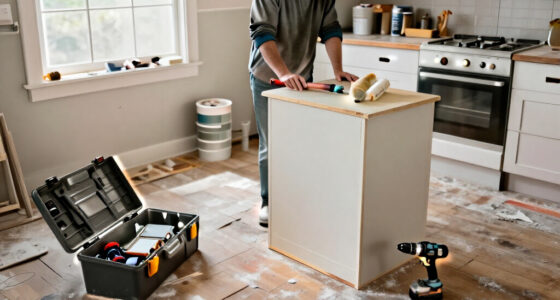
To spray paint safely in a small apartment, guarantee proper ventilation by opening windows and doors, and use fans or portable exhaust units to direct fumes outside. Wear safety gear like a respirator mask, goggles, and gloves, and cover furniture and floors with drop cloths. Keep the space ventilated during and after painting, and take breaks outside if fumes become overwhelming. If you want to learn more about maintaining fresh indoor air, keep exploring these tips.

Get business pricing on tools and workshop supplies
- Business-only prices and quantity discounts
- Tax-exempt purchasing
- Multiple users, one account, clear invoices
Key Takeaways
- Maximize ventilation by opening windows and doors, and use exhaust fans to remove fumes during and after painting.
- Always wear a high-quality respirator mask, goggles, gloves, and protective clothing to prevent inhalation and skin contact.
- Cover furniture and floors with drop cloths, and mask off edges with painter’s tape to prevent overspray on unintended surfaces.
- Keep the space well-ventilated for at least 30 minutes post-painting, and continue wearing protective gear if fumes persist.
- Monitor air quality and wait until fumes dissipate before resuming normal activities, using online resources for safety assurance.

Spray painting in small spaces can be challenging, but with the right precautions, you can do it safely and effectively. One of the most important factors is ensuring proper ventilation. Without good airflow, fumes can quickly build up, posing health risks and increasing fire hazards. To improve ventilation, open windows and doors to create cross-breezes. Use fans to direct airflow outward, helping to push fumes outside and clear the air inside. If possible, set up a portable exhaust fan near the work area to increase air circulation. Avoid sealing the room completely, as stagnant air traps fumes that can be harmful. Keep the space well-ventilated throughout the entire painting process and even afterward until the fumes dissipate.
Ensure proper ventilation with open windows, fans, and exhaust systems to stay safe during spray painting in small spaces.
Equally critical is wearing the right protective gear. A high-quality respirator mask designed for spray painting filters out harmful fumes and particles, preventing you from inhaling toxic vapors. Never skip this step, even if you think the fumes are minimal. Pair your mask with safety goggles to shield your eyes from overspray and splatters, and wear gloves to protect your skin from paint contact. Long sleeves and pants can add an extra layer of defense, reducing skin exposure. Remember, your safety gear isn’t just an accessory; it’s essential for protecting your health during and after the project.
When applying spray paint in a confined space, always start by prepping the area carefully. Cover nearby furniture, floors, and any surfaces you don’t want to paint with drop cloths or plastic sheeting. Use painter’s tape to mask off edges and details. This not only helps achieve a cleaner finish but also minimizes unnecessary cleanup and exposure. Before you begin, shake the spray can thoroughly and test spray on a scrap piece to gauge the spray pattern and flow. Maintain a consistent distance from the surface—usually about 6 to 12 inches—and use smooth, even strokes to avoid drips and uneven coverage.
Throughout the process, stay aware of your surroundings. Take breaks to step outside and get fresh air, especially if you start feeling lightheaded or overwhelmed. After finishing, keep the space ventilated for at least 30 minutes or until the fumes are gone, and continue wearing your mask if fumes linger. Proper ventilation techniques combined with protective gear make all the difference in ensuring your spray painting project is safe, efficient, and successful in a small enclosed space. Additionally, understanding the importance of air quality can help you better assess when it’s safe to resume normal activities after painting.
best respirator mask for spray painting
As an affiliate, we earn on qualifying purchases.
As an affiliate, we earn on qualifying purchases.
Frequently Asked Questions
Can I Spray Paint Without Protective Gear in Small Spaces?
You shouldn’t spray paint without protective gear, even in small spaces. Protective gear like masks and goggles shield you from harmful fumes and particles. Good indoor ventilation is essential to clear out fumes quickly. Without proper protective gear, you risk inhaling toxic chemicals, which can cause health issues. Always wear your safety equipment and make sure proper ventilation to keep your space safe while spray painting.
How Long Should I Wait Before Ventilating After Painting?
You should wait at least 24 to 48 hours before ventilating after spray painting, depending on the type of paint used. Proper ventilation timing is vital to guarantee fumes dissipate and the drying period completes safely. Avoid rushing this process; ventilate gradually by opening windows and using fans. This helps clear out toxic fumes and ensures your paint is fully dry, reducing health risks and preventing damage to your space.
Is It Safe to Spray Paint Near Pets or Children?
You shouldn’t spray paint near pets or children because it poses serious pet safety and child hazards. The fumes contain harmful chemicals that can cause respiratory issues or poisoning if inhaled or ingested. Always make certain the area is well-ventilated, keep pets and kids away during and after painting, and wait until fumes dissipate completely before allowing them back. Prioritizing safety helps prevent accidents and health problems.
What Types of Spray Paint Are Safest for Indoor Use?
When choosing spray paint for indoor use, you should look for low VOC and water-based options, as they emit fewer harmful fumes. These paints dry quickly, reduce odors, and are safer for you and your environment. Always read labels carefully to confirm the product is suitable for indoor projects. Using low VOC, water-based spray paint helps you minimize health risks while achieving quality results in your apartment DIY projects.
How Do I Prevent Paint Fumes From Lingering?
To prevent paint fumes from lingering, you should prioritize good ventilation techniques, like opening windows and using fans to circulate fresh air during and after painting. Additionally, consider using odor neutralizers, such as activated charcoal or air purifiers, to absorb lingering fumes. Keep the space well-ventilated for at least 24 hours post-painting, and avoid closing windows too quickly to ensure fumes escape effectively.
Conclusion
Remember, spraying paint in a small space isn’t just about convenience—it’s like releasing a tiny hurricane of fumes without proper precautions. Always ventilate thoroughly, wear protective gear, and choose the right environment. If you ignore these steps, you risk turning your apartment into an uninhabitable zone faster than you can say “paint disaster.” Stay safe, stay smart, and you’ll transform your project into a stunning masterpiece without turning your home into a hazardous battlefield.
Halloween Picks
halloween
As an affiliate, we earn on qualifying purchases.