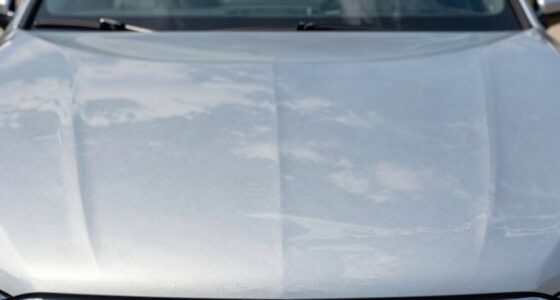
Solvent pop occurs when tiny craters form on a freshly painted surface as trapped solvents escape during drying. Rapid evaporation, high temperatures, and humidity can cause bubbles to push through the coating, leaving these flaws. Proper surface prep, using compatible paints and thinners, and controlling environmental conditions help prevent it. If you want to learn more about how to avoid and repair solvent pop, you’ll find helpful tips below.
Key Takeaways
- Solvent pop appears as tiny craters on a dried painted surface caused by trapped solvents escaping during drying.
- Rapid solvent evaporation increases vapor pressure, creating bubbles that push through the coating.
- Environmental factors like high temperature and humidity accelerate solvent vaporization, promoting solvent pop formation.
- Proper surface preparation, application techniques, and environmental control help prevent these small craters.
- Repair involves sanding affected areas and reapplying the paint with controlled drying to avoid future solvent pop.
What Is Solvent Pop and Why Does It Occur?

Have you ever noticed small bubbles or blisters forming on a freshly painted surface? That’s what we call solvent pop. It happens when trapped solvents escape from the paint as it dries, creating tiny craters. This process involves chemical reactions within the paint, where solvents evaporate at different rates. Surface tension plays a key role here: as solvents vaporize, their changing surface tension causes the paint film to weaken locally. When the vapor pressure surpasses the surface tension’s holding force, bubbles form and push through the coating. These bubbles then pop or leave craters once the paint dries. Understanding how chemical reactions and surface tension interact helps explain why solvent pop occurs, especially under certain conditions like rapid drying or high temperatures. Additionally, controlling factors like temperature and drying time can significantly prevent solvent pop from forming. Implementing proper application techniques and environmental controls can further minimize the risk of defects during the drying process. Proper surface preparation can also reduce trapped air or contaminants that contribute to bubble formation.
What Causes Solvent Pop in Paints and Coatings?

Solvent pop in paints and coatings is primarily caused by rapid evaporation of solvents during the drying process. When solvents escape too quickly, they create bubbles beneath the surface, disrupting the paint’s smooth finish. Understanding paint chemistry helps you see how solvents interact within the coating, influencing how evenly they evaporate. If solvents vaporize faster than the paint film can release them, pressure builds up, leading to solvent pop. This issue also affects coating adhesion, as the tiny craters weaken the bond between the coating and the substrate. Proper formulation, controlled application, and adequate drying time are essential to prevent these bubbles. Controlling evaporation rates is vital for minimizing defects like solvent pop. By managing solvent evaporation rates, you can guarantee a flawless finish and strong adhesion in your coatings. Understanding evaporation rates is crucial for optimizing coating performance and preventing defects like solvent pop. Additionally, proper drying conditions such as temperature and humidity control can significantly reduce the occurrence of solvent pop. Implementing temperature regulation and ensuring consistent environmental conditions can help maintain uniform solvent evaporation, further reducing the risk of bubble formation.
How Do Temperature and Humidity Lead to Bubbles?

When temperature rises, it causes solvent to evaporate faster, forming vapor bubbles beneath the surface. Humidity introduces moisture that gets trapped, making bubbles more likely to appear. Fluctuating temperatures can expand and contract the material, further encouraging bubble formation. Additionally, art conservation techniques can help mitigate the formation of these tiny craters over time. Understanding material properties can also assist in predicting and preventing bubble development in various substances. Furthermore, studying sound healing science reveals how vibrations can influence material integrity and stability. Incorporating environmental monitoring can provide real-time data to better manage conditions that lead to bubble formation.
Vapor Formation During Evaporation
As evaporation occurs, temperature and humidity play crucial roles in vapor formation that leads to bubbles. When the surface isn’t properly prepared, trapped pockets of air can worsen this effect. Environmental control is key: higher temperatures increase vapor pressure, encouraging bubbles, while humidity levels influence how much moisture remains in the air. To minimize vapor-related issues, consider these points:
- Ensure thorough surface preparation to remove excess moisture.
- Keep temperature consistent to prevent sudden vapor pressure changes.
- Control humidity levels to reduce moisture availability during drying.
- Maintain a stable environment to prevent rapid evaporation spikes that cause bubbles.
- Incorporating innovative materials can also help reduce the tendency for vapor formation during the drying process.
Moisture’s Impact on Surface
Temperature and humidity directly influence how moisture interacts with a surface during drying, often leading to bubble formation. Higher temperatures can accelerate evaporation, trapping moisture beneath the surface, especially if the surface porosity is high. Humidity levels affect moisture control; excessive humidity slows drying, increasing bubble risk. To understand this better, consider the table below:
| Condition | Effect on Moisture | Resulting Surface Impact |
|---|---|---|
| High temperature | Rapid evaporation | Increased bubble formation |
| Low temperature | Slow evaporation | Fewer bubbles, more surface porosity |
| High humidity | Slowed drying | Moisture trapped, bubbles form |
| Low humidity | Faster drying | Reduced bubble risk |
| Surface porosity | Moisture retention | Bubbles more likely to appear |
Managing these factors is key to controlling solvent pop and achieving a smooth surface.
Temperature Fluctuations Create Bubbles
Fluctuations in temperature can cause moisture within a coating to expand and contract rapidly, leading to bubble formation on the surface. When paint isn’t properly prepared or applied under ideal conditions, these temperature swings can worsen bubble development. Here’s what you should keep in mind:
- Rapid temperature changes cause trapped moisture to expand, forcing bubbles to form.
- Inconsistent surface temperature affects paint adhesion, making bubbles more likely.
- Proper surface preparation helps minimize moisture pockets that can expand during temperature shifts.
- Maintaining stable ambient temperatures during application reduces the risk of solvent pop and surface imperfections.
- Understanding filtration systems can help ensure the environment remains consistent, preventing moisture buildup that contributes to bubbling.
How Can You Prepare Surfaces to Prevent Solvent Pop?

To prevent solvent pop, start by choosing the right solvent types suited for your project. Make certain you thoroughly clean the surface to remove any contaminants that can cause bubbling. Additionally, proper application techniques are essential, including maintaining optimal environmental conditions to ensure a smooth, even finish without trapping air or solvents. Proper toilet maintenance and repairs can also help prevent issues that might affect surface preparation and application. Furthermore, understanding appliance maintenance plans can help ensure your tools and equipment are properly calibrated and functioning correctly during application. Implementing safety protocols is also crucial to prevent accidents and ensure a high-quality finish.
Choose Appropriate Solvent Types
Choosing the right solvent type is essential for preventing solvent pop during surface preparation. Using compatible solvent types guarantees proper evaporation rates and minimizes trapped air causing tiny craters. To select the best solvents, consider these factors: 1. Check paint compatibility to avoid reactions or poor adhesion. 2. Use solvents with appropriate evaporation rates for your application. 3. Opt for low-VOC or fast-evaporating solvents when working in hot or dry conditions. 4. Match solvent types to the surface material for better adhesion and surface finish. Additionally, understanding thermal behavior can help optimize drying times and reduce the risk of surface defects.
Ensure Proper Surface Cleaning
Proper surface cleaning lays the foundation for applying a smooth, defect-free coating and preventing solvent pop. You need to guarantee the surface is free of grease, dust, and contaminants that can interfere with paint compatibility. Use the right cleaning agents for your surface type, and thoroughly clean before painting. A clean surface promotes better adhesion and consistent drying time, reducing the risk of trapped solvents that cause pop. Avoid residual oils or residues that can alter drying behavior, leading to uneven evaporation and bubbles. Inspect the surface carefully after cleaning to confirm it’s spotless. Additionally, surface preparation plays a crucial role in achieving a high-quality finish. When surfaces are properly prepared, your paint bonds better, dries uniformly, and minimizes the chances of solvent pop forming after application. Proper cleaning is essential for a flawless finish, especially considering surface porosity, which can affect how coatings adhere and dry. Ensuring the surface is free of contaminants and has the appropriate porosity levels helps in preventing solvent entrapment and achieving a smooth, durable coating.
Optimize Application Techniques
Preparing your application technique is essential for preventing solvent pop. To achieve a smooth finish, focus on proper spray methods and brush techniques. Here are four tips to optimize your approach:
- Maintain consistent spray pressure and distance to prevent uneven layers.
- Use light, even coats, allowing each to dry before applying the next.
- Practice smooth, overlapping brush techniques to avoid thick buildup.
- Adjust your spray pattern to ensure uniform coverage without over-application.
- Consistent application is key to preventing surface imperfections like solvent pop.
What Paints and Thinners Help Minimize Bubbles?

To minimize bubbles during painting, selecting the right paints and thinners is essential. Use high-quality, slow-drying paints designed for better paint adhesion, which helps reduce trapped air and solvent release. These paints promote a smoother surface and improve coating durability, preventing tiny pockets of gas from forming. When choosing thinners, opt for compatible, low-volatile options that evaporate steadily, allowing the paint to settle evenly without sudden outgassing. Avoid fast-evaporating solvents, as they increase the risk of solvent popping and bubbles. Additionally, using additives that improve flow and leveling can help create a uniform film, further reducing bubble formation. Properly matched paints and thinners ensure a smoother finish and more durable coating, minimizing the risk of solvent pop. Ensuring proper application techniques can also significantly reduce the likelihood of solvent pop and surface imperfections.
How Do You Apply Paint Properly to Avoid Solvent Popping?

Applying paint correctly is crucial for preventing solvent popping. To do this, focus on proper techniques that promote even drying and minimize trapped solvents. First, use smooth brush techniques, applying thin, even coats rather than thick layers. Second, allow sufficient drying times between coats; rushing this step traps solvents and causes popping. Third, maintain a steady hand to avoid uneven application, which can create pockets for bubbles. Fourth, guarantee proper surface preparation—clean and dry the surface thoroughly before painting. These steps help control how the paint layers cure, reducing the risk of solvent popping. Remember, patience and attention to application details make a big difference in achieving a smooth, bubble-free finish.
How Can You Fix and Sand Out Bubbles and Craters?

When you notice bubbles or craters forming in your painted surface, addressing them promptly can save your project from extensive rework. To fix these imperfections, gently sand the area with fine-grit paper once it’s dry enough to ensure good paint adherence. Be careful not to sand too aggressively, which could damage the underlying layer. Use a filler if necessary to level out deep craters before sanding smooth. Keep in mind that longer drying times improve paint adhesion and reduce solvent pop, making repairs easier.
| Issue | Fixing Tip |
|---|---|
| Bubbles in paint | Sand lightly after drying, then recoat |
| Craters in surface | Fill, sand smooth, reapply paint |
| Uneven surface | Sand and feather edges |
| Poor adhesion | Clean thoroughly before repainting |
What Are Proven Tips for a Bubble-Free, Flawless Finish?

Achieving a bubble-free, flawless finish requires careful preparation and technique. Environmental factors like temperature and humidity can cause bubbles, so work in a controlled environment with stable conditions. Proper surface preparation is vital; clean, dry, and sand the surface thoroughly to guarantee good adhesion and minimize imperfections. To improve your results:
- Control environmental factors by working in a well-ventilated, climate-controlled space.
- Clean your surface with a suitable solvent to remove dust, grease, and old coatings.
- Sand the surface smoothly to promote even application and better adhesion.
- Apply thin, even coats, allowing each layer to dry completely before adding the next.
Following these tips helps prevent bubbles, guaranteeing a smooth, flawless finish every time.
When Should You Call a Professional for Persistent Bubbles?

Even with careful surface preparation and patience during drying time, persistent bubbles can still appear despite your best efforts. If bubbles remain after multiple coats and sufficient drying, it’s time to consider calling a professional. Persistent bubbles often indicate underlying issues like improper surface prep, contamination, or excessive solvent application. Attempting to fix these yourself can sometimes worsen the problem or damage the finish. Professionals have the expertise and tools to identify hidden causes and apply advanced techniques to eliminate bubbles effectively. If you notice bubbles that won’t smooth out or reappear after sanding and recoating, don’t delay seeking expert help. Addressing these issues early ensures a smooth, flawless finish and saves you time and frustration in the long run.
Frequently Asked Questions
Can Solvent Pop Occur With All Types of Paints and Coatings?
Solvent pop can occur with many types of paints and coatings, but not all. You need to contemplate paint compatibility and coating variations, as some formulas are more prone to trapping solvents. To prevent this, choose the right paint for your surface and application, follow manufacturer instructions, and avoid applying thick coats or in high humidity. Proper surface prep and drying time also help reduce the risk of solvent pop.
How Does Aging or Storage Affect the Likelihood of Solvent Pop?
Aging or improper storage increases the likelihood of solvent pop because paint’s components can break down or separate over time. When you store paint improperly or it ages, the volatile solvents may evaporate or change, leading to trapped gases during application. To reduce this risk, keep your paint in a cool, dry place, tightly sealed, and use it within the recommended storage period. Proper storage preserves paint quality and minimizes solvent pop.
Are There Specific Brands or Formulations Less Prone to Solvent Pop?
You might think all paints are equally prone to solvent pop, but some brand formulations are designed for better solvent resistance. Look for products labeled as “high solids” or “solvent resistant,” as these tend to minimize solvent pop issues. While no paint is completely immune, choosing the right brand formulations can markedly reduce the risk, especially in challenging conditions or thick coats. Always follow manufacturer recommendations for best results.
What Safety Precautions Should Be Taken When Dealing With Bubbles in Paint?
When dealing with bubbles in paint, you should wear protective gear like gloves and goggles to avoid skin and eye contact. Make certain proper ventilation in your workspace to reduce fumes and improve air quality. Before painting, stir the paint thoroughly and avoid shaking it vigorously to minimize air bubbles. If bubbles form, gently pop them with a pin or brush before drying. Taking these precautions keeps you safe and helps achieve a smooth finish.
How Long Does It Typically Take for Solvent Pop to Develop After Painting?
You’ll usually see solvent pop develop within 24 to 72 hours after application, depending on environmental factors and application timing. If you apply paint in high humidity or low temperatures, it can take longer for the bubbles to surface. Quick drying conditions might cause it to appear sooner. To minimize this, guarantee proper environmental control and follow recommended application timing, allowing each coat to cure adequately.
Conclusion
To prevent solvent pop, you might think waiting longer between coats or using the right materials is enough. However, understanding that even tiny temperature shifts or trapped solvents can cause bubbles shows how delicate paint finishes truly are. By carefully preparing your surface, controlling environment conditions, and choosing proper paints, you can achieve a flawless look. Remember, sometimes trusting a professional guarantees your project turns out smooth and bubble-free, proving experience and knowledge really make all the difference.