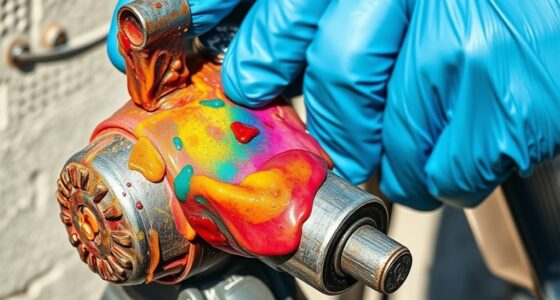
To safely dispose of flush water and waste paint, you should use dedicated treatment systems to filter out harmful chemicals and secure proper recycling methods for paint containers. Confirm your materials are free of residual paint and follow local regulations for hazardous waste disposal. Proper management helps prevent environmental contamination and protects public health. Continuing to follow guidelines ensures you’re doing your part for a cleaner, safer community; there’s more you should know to stay compliant and eco-friendly.

Get business pricing on tools and workshop supplies
- Business-only prices and quantity discounts
- Tax-exempt purchasing
- Multiple users, one account, clear invoices
Key Takeaways
- Treat flush water with specialized systems to filter out chemicals before disposal or reuse.
- Use local recycling programs for waste paint containers and leftover paint.
- Avoid pouring flush water or paint waste into drains, water bodies, or landfills without proper treatment.
- Follow regional regulations and guidelines for hazardous waste disposal to ensure legal compliance.
- Regularly maintain and monitor disposal systems to prevent environmental contamination and health hazards.

Proper disposal of flush water and waste paint is vital to protect the environment and prevent health hazards. When dealing with waste paint, you have a responsibility to guarantee it doesn’t end up in places where it can contaminate soil, water sources, or harm wildlife. One of the most effective ways to do this is through paint container recycling. Instead of throwing empty paint cans in the trash, look for local recycling programs that accept paint containers. Recycling not only keeps hazardous materials out of landfills but also allows for the safe processing of leftover paint and metal cans. Before recycling, make sure the containers are completely dry and free of residual paint. If you have leftover paint, consider donating it or using it up instead of discarding it. Properly stored paint can be reused or recycled, reducing waste and environmental impact.
Flush water treatment is another vital step in managing waste water generated during cleaning brushes, equipment, or spills. When you flush paint or cleaning tools, the water can contain harmful chemicals, pigments, or solvents that pose risks to water supplies if released untreated. To prevent this, you should have a dedicated flush water treatment system in place. This system filters out dangerous substances, allowing the treated water to be safely disposed of or reused. Proper flush water treatment minimizes the risk of contaminating local waterways and groundwater, safeguarding public health and ecosystems. It’s important to regularly maintain and monitor your treatment setup to guarantee it functions correctly, preventing any untreated water from leaking into the environment.
Be mindful of local regulations related to waste paint and flush water disposal. Many regions have strict guidelines on how to handle hazardous waste, including requirements for paint container recycling and flush water treatment. Familiarize yourself with these rules to stay compliant and protect your community. If you’re unsure about the proper procedures, contact your local waste management authority or environmental agency for guidance. Investing in proper disposal methods might seem inconvenient initially, but the long-term benefits—cleaner water, healthier ecosystems, and adherence to legal standards—are well worth the effort.
hazardous waste paint container recycling kit
As an affiliate, we earn on qualifying purchases.
As an affiliate, we earn on qualifying purchases.
Frequently Asked Questions
Can Household Flush Water Be Safely Reused?
You can reuse household water if it’s free from harmful chemicals or contaminants. Always assess the water’s quality before reuse, especially for non-potable purposes like watering plants or cleaning. Keep in mind that not all household water has reuse potential—if it contains soap, chemicals, or waste, it’s best to avoid reusing it to prevent health or environmental issues. Proper testing and filtration can enhance safe reuse options.
What Are the Legal Penalties for Improper Waste Paint Disposal?
If you dispose of waste paint improperly, you face serious legal consequences, including hefty fines and potential criminal charges. Disposal regulations are strict to protect the environment, and violating them can lead to costly penalties. Authorities enforce these laws to prevent pollution and health hazards. To avoid legal trouble, always follow disposal regulations, use designated disposal facilities, and seek proper guidance for waste paint disposal.
Are There Eco-Friendly Alternatives to Traditional Paint Disposal?
Did you know that switching to eco-friendly paints can reduce hazardous waste by up to 80%? You can opt for eco-friendly paints made from natural or biodegradable ingredients, which are safer for the environment. Additionally, using biodegradable solvents helps break down paint residues more easily. These alternatives minimize harmful chemicals, making disposal less risky and more sustainable, so you’re doing your part to protect the planet while creating beautiful projects.
How Often Should Waste Paint Containers Be Emptied?
You should empty waste paint containers whenever they’re full or nearing capacity, typically every few months, but it depends on your usage. Regular disposal schedule planning helps you stay on top of paint container recycling and prevents spills. Always follow local regulations for disposal, and don’t wait too long to empty containers, as stored paint can become unusable or hazardous. Consistent disposal guarantees safe, eco-friendly waste management.
Can Flush Water Disposal Impact Local Water Treatment Facilities?
Think of your actions as a ripple in a pond—you can impact far beyond your immediate surroundings. When you dispose of flush water improperly, it can overwhelm local water treatment facilities, disrupting flush water treatment processes. Follow paint disposal regulations carefully to prevent contamination. Proper disposal helps maintain the integrity of water treatment systems, ensuring safe, clean water for everyone and preventing harmful pollutants from entering local waterways.
Conclusion
Now that you know how to handle flush water and waste paint, think of yourself as a guardian of the environment, gently guiding pollutants to their rightful resting place. By disposing of these materials responsibly, you’re planting seeds for a cleaner, healthier planet—like tending a delicate garden where every action blooms into a brighter future. Remember, your small acts of care create ripples that reach far beyond, turning everyday choices into powerful waves of positive change.
Fall yard work Picks
leaf blowers
As an affiliate, we earn on qualifying purchases.