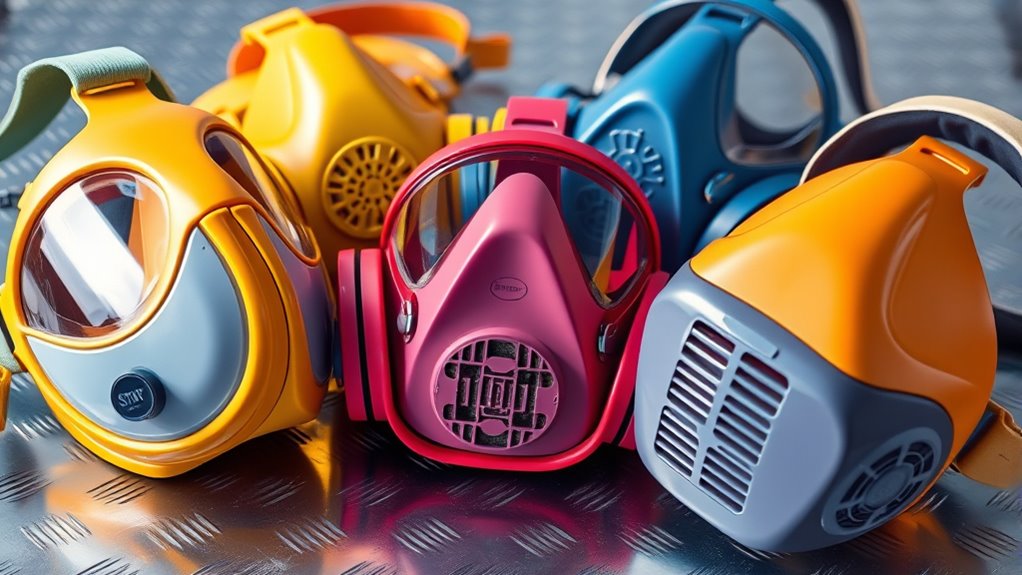

When spraying chemicals or particles, it’s crucial to wear the right respirator or mask to protect your lungs from hazardous fumes and dust. Choose filters based on what you’re spraying—particulate filters for dust and biological particles, or gas and vapor filters for chemicals like solvents. Make certain a proper fit, inspect filters regularly, and replace them as needed. Using the correct respirator can considerably reduce health risks—discover more about selecting and maintaining the right equipment to stay safe.
Key Takeaways
- Choose respirators with appropriate particulate and gas/vapor filters based on the spraying materials used.
- Ensure proper fit testing and seal to prevent airborne particle leaks during spraying.
- Use filters labeled P100 for high-efficiency protection against dust, fumes, and oil-based aerosols.
- Regularly inspect and replace filters or cartridges as per manufacturer instructions or when airflow is restricted.
- Combine respirators with additional PPE like gloves and goggles for comprehensive safety during spraying activities.

When spraying paints, pesticides, or other chemicals, wearing the right respirator or mask is essential for protecting your lungs from harmful particles and fumes. Choosing the appropriate equipment involves understanding filter types and following safety guidelines to ensure maximum protection. Different filters are designed to target specific hazards, so it’s crucial to select the right one for your task. For example, particulate filters are effective against dust, paint fumes, and biological particles, while gas and vapor filters protect against chemicals like solvents and pesticides. Some respirators combine multiple filter types, offering thorough protection in environments with varied hazards.
Choosing the right respirator filters is vital for effective protection against specific hazards.
Before you start spraying, always check the filter ratings and specifications. Look for labels like N95, P100, or P3, which indicate the efficiency of the filter in capturing airborne particles. N95 filters, for instance, are excellent for dust and non-oil-based particles, but P100 filters provide higher filtration efficiency, including protection against oil-based aerosols. Gas and vapor cartridges, on the other hand, are essential when working with chemicals that produce hazardous fumes, such as solvents or pesticides. Many respirators feature replaceable filters and cartridges, so you can swap them out as needed to maintain their effectiveness.
Adhering to safety guidelines is key when using respirators and masks. Always perform a proper fit test to ensure a tight seal, preventing unfiltered air from leaking in. Inspect your equipment regularly for damage or dirt, and replace filters or cartridges according to the manufacturer’s recommendations or if you notice reduced airflow. Use your respirator in well-ventilated areas whenever possible, but don’t rely solely on ventilation to protect you—your respirator acts as the primary defense. Remember to wear your mask correctly, covering both the nose and mouth completely, and secure straps snugly without causing discomfort.
It’s also vital to understand the limitations of your respirator and filters. No mask offers 100% protection against all hazards, so always work within recommended guidelines and recognize when additional safety measures are necessary. Keep your filters dry and stored in a clean, dry environment when not in use, as moisture can compromise their effectiveness. In high-exposure situations, consider double protection with both a respirator and other personal protective equipment, like gloves and goggles, to minimize risks. Additionally, understanding filter types and their specific uses helps ensure you select the best protection for your task.
Frequently Asked Questions
How Often Should I Replace My Respirator Filters?
You should replace your respirator filters when they become visibly dirty, clogged, or after the recommended replacement timing, usually every 30 to 90 days depending on use. Regular filter maintenance is vital for your safety and efficiency. Always check manufacturer guidelines, and replace filters promptly when they show signs of wear or after exposure to hazardous substances. This guarantees maximum protection and proper respirator function during spraying tasks.
Are Cloth Masks Effective for Spraying Applications?
You might wonder if a cloth mask can handle spray particle filtration, but the truth is, it falls short. Cloth masks have significant limitations—they can’t block tiny spray particles effectively, leaving you exposed. For spraying applications, relying on a cloth mask is risky. Instead, opt for proper respirators designed for spray particle filtration, ensuring your safety and preventing inhalation of harmful substances. Don’t compromise—your health depends on it.
Can I Wear a Mask for Extended Periods Safely?
Wearing a mask for extended periods can be safe if you prioritize extended wear safety and mask comfort. Make certain your mask fits well without causing discomfort or restricting airflow. Take regular breaks to prevent fatigue and ensure proper ventilation. Choose masks made of breathable materials, and stay attentive to signs of difficulty breathing. Properly fitted, comfortable masks help you stay protected while maintaining safety during long-term use.
What’s the Best Storage Method for My Respirator?
Oh, absolutely, just toss your respirator in the laundry basket—what could go wrong? For proper storage, follow these tips: keep it in a clean, dry place away from sunlight, dust, and chemicals. Use a breathable container or a designated bag to prevent contamination. This way, you prevent contamination and maintain its effectiveness. Remember, a little care keeps your mask ready for when you need it most!
Are There Specific Certifications to Look for in Masks?
You should look for masks with certification standards like NIOSH approval or OSHA compliance, which make certain mask effectiveness and safety. These certifications verify that the mask meets specific performance criteria for filtration and fit. Always check the packaging for clear labels indicating compliance, so you know your mask provides the necessary protection for spraying tasks. Choosing certified masks guarantees you’re using PPE that’s tested and trusted for safety.
Conclusion
Remember, wearing the right respirator or mask is vital for your safety during spraying tasks. Did you know that improper protection can lead to health issues in over 50% of users? By choosing the correct gear, you greatly reduce exposure to harmful fumes and particles. Stay vigilant, always follow safety guidelines, and prioritize your health. Protecting yourself isn’t just smart — it’s essential for long-term well-being.

Franz came aboard the Paint Sprayer Zone team with a background in both journalism and home renovation. His articulate writing style, combined with a passion for DIY projects, makes him an invaluable asset. Franz has a knack for breaking down technical jargon into easy-to-understand content, ensuring that even the most novice of readers can grasp the complexities of paint sprayers.