When replacing packings, seals, and O-rings, it’s vital to choose materials compatible with your fluid, temperature, and pressure conditions to prevent early failure. Make certain proper installation by cleaning surfaces, applying suitable lubricants, and tightening fittings to the correct torque. Regular inspections help catch signs of wear or damage early, while proactive replacements maintain system reliability. Mastering these best practices can greatly extend seal life and prevent costly leaks, guiding you toward continued success.
Key Takeaways
- Select materials compatible with system fluids, temperatures, and pressures to prevent early deterioration.
- Thoroughly clean mating surfaces and use appropriate lubricants during installation for proper seating.
- Inspect seals regularly for signs of wear, cracking, or hardening, and replace as needed.
- Avoid twisting or pinching O-rings during installation to prevent damage and leaks.
- Follow manufacturer torque specifications and maintain proactive maintenance for optimal seal longevity.
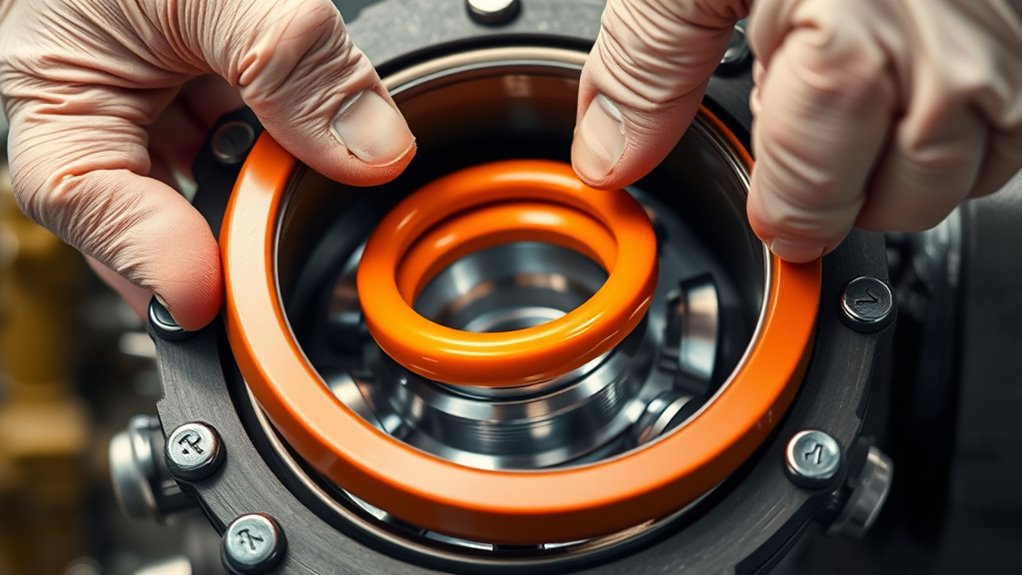
When it comes to maintaining equipment, replacing packings, seals, and O-rings is a crucial step to prevent leaks and guarantee peak performance. Proper selection and installation are essential for ensuring these components function effectively over time. One critical aspect to take into account is material compatibility. You need to choose materials that are compatible with the fluid, temperature, and pressure conditions of your system. For instance, if you’re working with aggressive chemicals or high temperatures, rubber or elastomer O-rings might degrade quickly, leading to leaks. In such cases, materials like Viton, Teflon, or PTFE are better options because they resist chemical attack and withstand harsh conditions. Neglecting material compatibility can result in premature failure, increased downtime, and costly repairs. Always verify specifications and consult manufacturer data to guarantee your chosen packing or seal material aligns with your application’s demands.
Once you’ve selected the appropriate material, focusing on installation techniques becomes your next priority. Proper installation minimizes the risk of damage and ensures maximum sealing effectiveness. Start by thoroughly cleaning the mating surfaces to remove dirt, debris, or old sealant residues. This will prevent any imperfections or contaminants from compromising the seal. When installing O-rings or packings, lubricate them with a compatible lubricant to reduce deformation and ease installation. Be gentle during the process—forcing a seal into place can cause cuts or tears, which could lead to leaks later. When fitting O-rings, make sure they sit evenly in their grooves without twists or pinches. Misalignment can create weak spots and jeopardize the seal’s integrity. Additionally, tighten fittings to the specified torque; overtightening can deform seals, while under-tightening might cause leaks. Following these installation techniques ensures a tight, reliable seal that can withstand operational pressures. Proper attention to seal design and material properties plays a vital role in ensuring long-term system integrity.
Regular inspection and maintenance are equally important. Over time, even well-installed seals can wear out, especially if subjected to extreme conditions. Keep an eye on signs of deterioration such as cracking, hardening, or deformation. If you notice leaks or performance issues, it’s often better to replace the seal rather than try to repair it. Remember, using the correct material and applying proper installation techniques from the outset can extend the lifespan of your seals and prevent costly malfunctions. Replacing packings, seals, and O-rings isn’t just about maintenance; it’s about proactively safeguarding your equipment’s reliability and efficiency. Proper attention to material compatibility and installation techniques makes all the difference in maintaining a leak-free, high-performing system.
Frequently Asked Questions
What Are the Signs Indicating a Seal or O-Ring Needs Replacement?
You’ll notice signs like visible cracks, tears, or deformities during a visual inspection, which indicate your seal or O-ring needs replacing. Leak detection is another key sign—you might see fluid escaping or experience a drop in pressure. If you detect unusual noises or vibrations, it’s also a warning. Address these issues promptly to prevent further damage and maintain ideal equipment performance.
Can I Reuse Old Packings or Seals After Cleaning?
Ever consider reusing old packings or seals after cleaning? It’s generally not recommended because seal material compatibility can be compromised, leading to leaks or failure. Even if they look clean, degraded material or tiny damages might go unnoticed. Proper seal installation techniques are vital for a reliable seal, so replacing old seals guarantees peak performance. Would you risk a costly failure by reusing worn or damaged components? Usually, it’s best to replace them.
What Tools Are Essential for Replacing Seals and O-Rings?
You’ll need specialized torque wrenches to guarantee proper tightness and seal removal tools to safely extract old seals and O-rings. These tools help prevent damage to delicate surfaces and ensure a proper fit for the new components. Make sure you have the right size and type of seal removal tools, as well as a calibrated torque wrench, to make the replacement process efficient and effective.
How Do Temperature and Pressure Affect Seal Selection?
Think of your seal as a brave explorer facing fierce elements. Temperature affects its ability to adapt; you need temperature compatibility to prevent failures in extreme heat or cold. Pressure tolerance is like armor, ensuring it withstands high-pressure environments without bursting. If you ignore these factors, your seal might fail when you need it most. Choose wisely, matching your seal to the demands of temperature and pressure for lasting performance.
Are There Environmentally Friendly Alternatives to Traditional Sealing Materials?
Yes, environmentally friendly alternatives exist, like biodegradable materials and non-toxic compounds. You can choose seals made from plant-based or recycled materials that break down naturally without harming the environment. These options reduce your ecological footprint and promote sustainability. When selecting seals, make sure they meet your application’s chemical and temperature requirements while prioritizing biodegradable and non-toxic options for a greener, safer solution.
Conclusion
So, there you have it—your crash course in keeping things tight and leak-free. Because nothing says “fun weekend project” like wrestling with tiny rubber parts that seem to vanish into thin air. Just remember, when all else fails, pretending you’re a professional will do wonders. Or at least make your neighbors think you are. Happy sealing, and may your o-rings never betray you… unless you enjoy surprises.

Franz came aboard the Paint Sprayer Zone team with a background in both journalism and home renovation. His articulate writing style, combined with a passion for DIY projects, makes him an invaluable asset. Franz has a knack for breaking down technical jargon into easy-to-understand content, ensuring that even the most novice of readers can grasp the complexities of paint sprayers.