
To spray without overspray dust settling on your fresh coats, you should first prepare your workspace by cleaning, covering nearby surfaces, and controlling airflow with proper ventilation and filters. Use consistent spray techniques, keep the environment calm and dry, and choose the right equipment settings to minimize overspray. Timing your spray sessions during ideal weather conditions also helps prevent dust from settling. For more detailed strategies, keep exploring how to maintain a dust-free finish.
Key Takeaways
- Prepare the workspace by cleaning and covering surfaces to prevent dust from settling during spraying.
- Use proper airflow management with filtration systems and strategic vent placement to minimize airborne dust.
- Spray in calm, dry weather conditions, avoiding high humidity or windy days that increase dust movement.
- Maintain consistent spray technique, distance, and pressure to reduce overspray and dust dispersal.
- Schedule spraying sessions during times of low environmental dust and ensure good ventilation to keep dust levels down.
How Overspray Affects Your Finish and Why It Matters
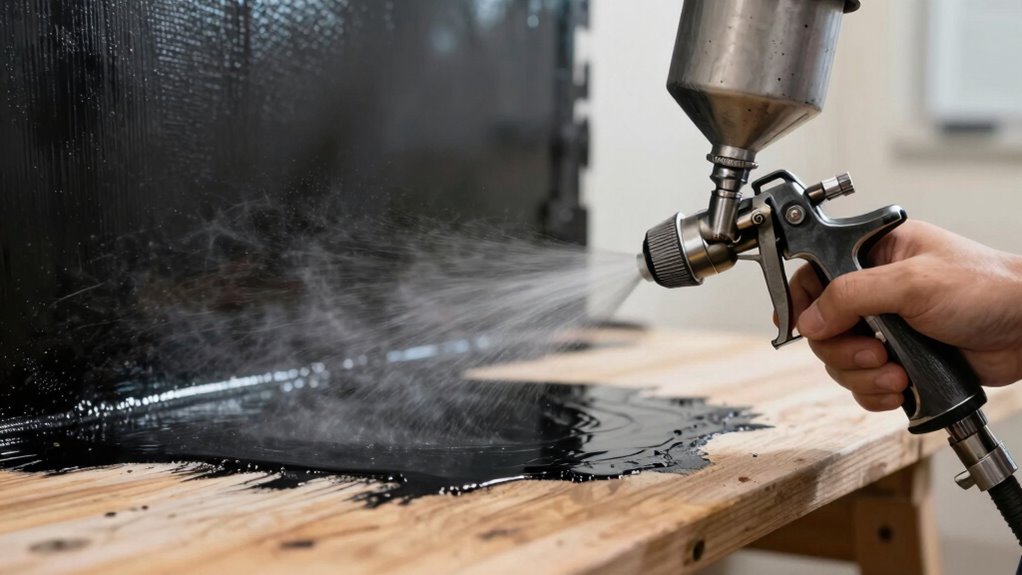
Overspray can considerably damage your finish by creating rough, uneven surfaces and unwanted texture. Dust contamination from overspray settles on wet paint, leading to visible particles that mar the smoothness of your coat. These tiny dust particles can cause finish imperfections, such as bumps, rough patches, or a dull appearance. When dust settles into fresh paint, it disrupts the evenness you’re aiming for, forcing you to sand and reshoot sections, which extends your project time. Overspray also makes cleaning up more challenging, as dust can become embedded in subsequent layers. To achieve a flawless finish, controlling overspray and preventing dust contamination is essential—otherwise, your effort may be compromised by these subtle yet impactful flaws. Proper ventilation and air filtration can significantly reduce airborne dust, helping to keep your new paint layers clean and smooth. Implementing dust control methods during painting can further minimize the risk of dust settling on your fresh coats. Additionally, understanding the importance of airborne dust control can contribute to maintaining a cleaner work environment and better finishing results. Incorporating airflow management techniques can help direct dust away from your work area and improve overall finish quality.
Preparing Your Equipment and Workspace to Prevent Dust
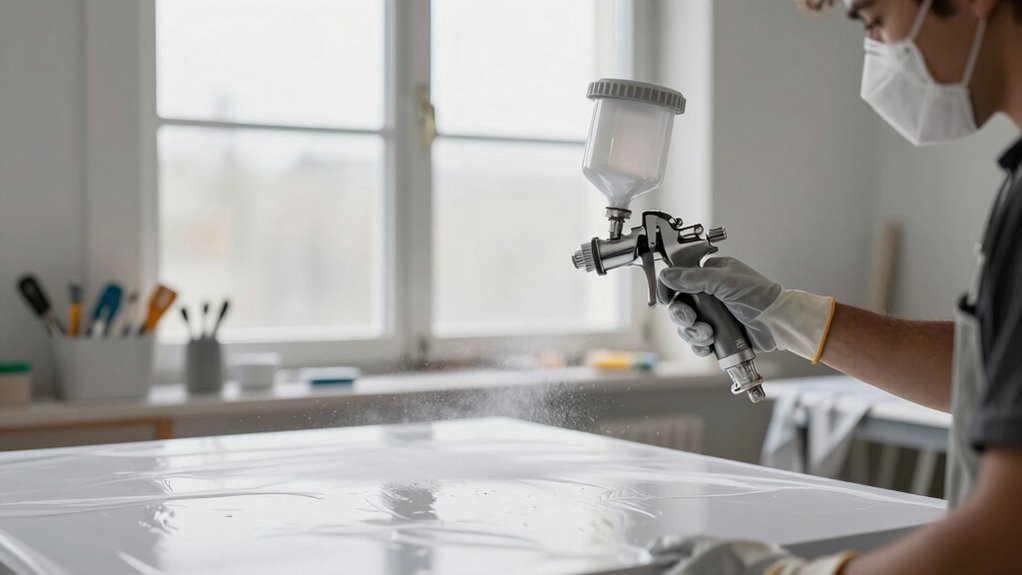
Before you start spraying, make sure to clean and cover nearby surfaces to catch dust and debris. Control your workspace environment by reducing airflow and keeping it as dust-free as possible. Proper preparation helps make certain your finish stays smooth and free of overspray dust. Incorporating dust control techniques can further minimize airborne particles during your project. Additionally, maintaining a controlled environment aligned with European regulations on airborne pollutants can help ensure safety and compliance throughout your process. Using air filtration systems can also significantly improve air quality and reduce dust settling on your fresh coats. Employing high-quality projector filters can also help in maintaining a clean environment by trapping airborne dust particles effectively. Implementing proper ventilation practices is essential for managing dust levels and ensuring a safe workspace during your spraying projects.
Clean and Cover Surfaces
To guarantee a clean spray job and prevent dust contamination, start by thoroughly cleaning your workspace and equipment. Proper surface preparation is essential; wipe down all surfaces to remove dust, dirt, and grease that could settle on your fresh coats. Cover nearby furniture, floors, and anything that can’t be moved with protective coverings like plastic sheeting or tarps. This creates a barrier against dust and overspray that might drift into your work area. Ensure your spray area is free of debris and dust particles before you begin. Additionally, controlling your ventilation environment helps reduce airborne dust and overspray settling on your freshly painted surfaces. Using a dust-free environment with proper airflow can significantly improve the quality of your finish. Incorporating air filtration systems can further help in maintaining a cleaner workspace. Maintaining a consistent airflow pattern throughout your workspace helps prevent dust from settling on your wet paint. Implementing proper lighting also aids in detecting dust particles that might settle on your surface during painting. By taking these steps, you minimize the risk of dust settling on your freshly painted surfaces, resulting in a smoother, professional finish. Proper surface preparation and protective coverings are key to a successful spray project.
Control Workspace Environment
Ensuring your equipment and workspace are properly prepared is essential for minimizing dust during spraying. Dust particles can settle on your fresh coats, ruining your finish. Start by cleaning the entire workspace thoroughly, removing any debris or loose dust that could become airborne. Keep the area well-ventilated with filtered air to reduce dust particles in the air. Cover nearby surfaces and objects with plastic or drop cloths to prevent dust settling on them. Use a clean, dedicated spray area free from clutter. Regularly check your equipment for leaks or contamination to avoid introducing dust into your spray. Maintaining workspace cleanliness and controlling the environment ensures dust particles stay minimized, giving you a smoother, cleaner finish. Additionally, understanding airflow management can help optimize your workspace to prevent dust intrusion during spraying. Proper ventilation techniques can also help control dust levels, improving overall spray quality. Incorporating HVAC filtration methods can further reduce airborne dust and improve your spray environment. Implementing dust control measures such as air purifiers or exhaust systems can significantly enhance your workspace cleanliness and spray results. Using airflow control techniques effectively directs dust away from your project area, ensuring a cleaner finish.
Picking the Best Spray Technique and Settings for a Smooth Coat
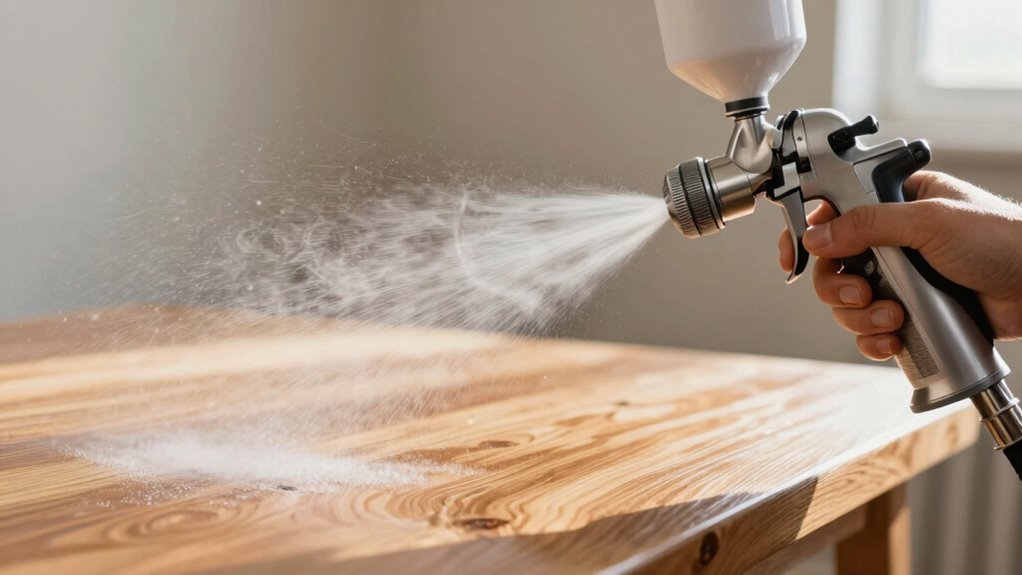
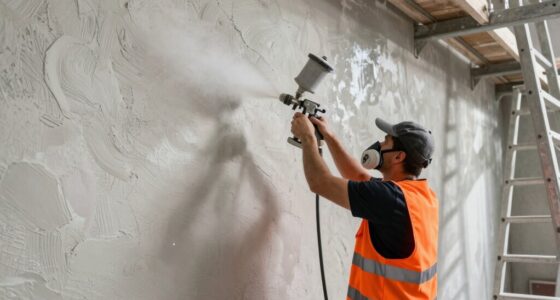
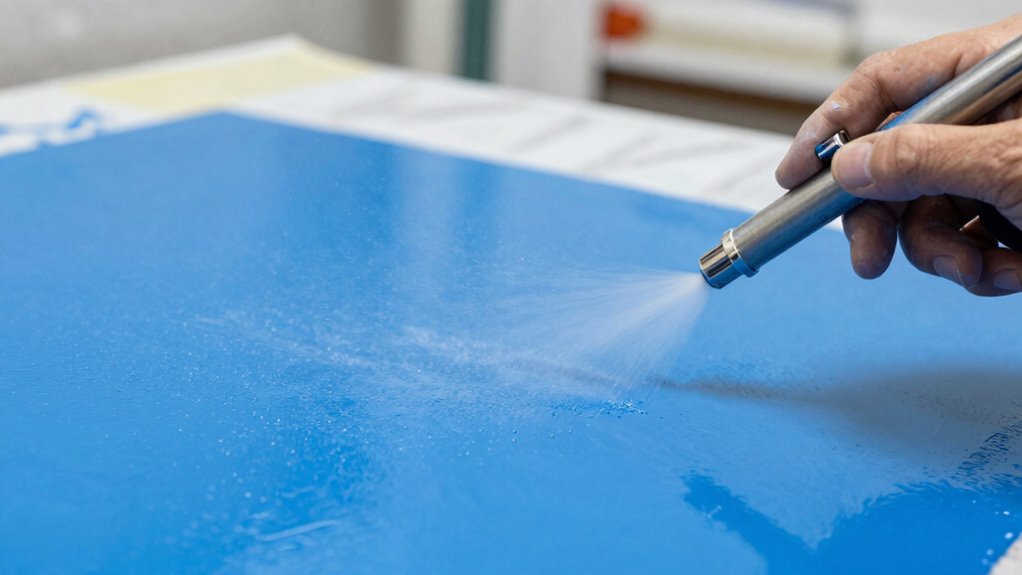
Choosing the right spray technique and settings is crucial for achieving a smooth, even coat without overspray dust. Start by selecting a consistent brush technique to ensure even application and reduce uneven buildup. When using a spray gun, adjust the settings carefully: set the pressure low enough to control the spray pattern without creating excessive overspray, but high enough to achieve proper atomization. Keep your spray distance consistent, typically about 6-12 inches from the surface, to avoid drips or uneven coverage. Practice on scrap material to fine-tune your technique and settings before working on your project. Proper spray technique and well-adjusted gun settings help you create a flawless finish while minimizing dust and overspray. Additionally, choosing the right tip size ensures optimal spray pattern and coverage for your specific project needs. Paying attention to airflow control can further improve your results by reducing dust settling and overspray. Using proper ventilation methods can also help disperse overspray particles and keep your workspace cleaner. Implementing techniques for overspray reduction can make a significant difference in achieving a professional look.
Controlling Airflow and Humidity to Minimize Dust Drift
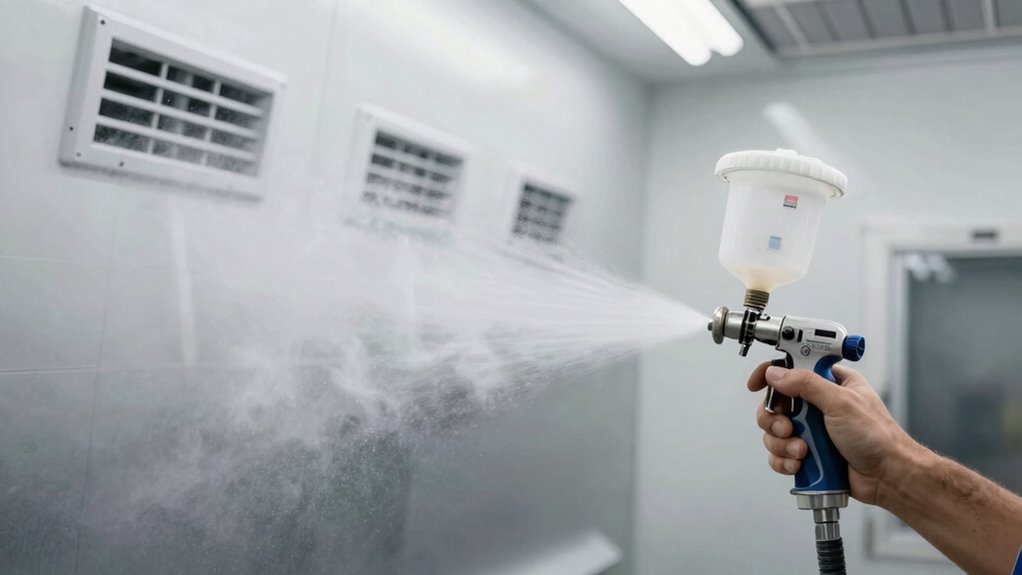
Controlling airflow and humidity is key to reducing dust drift during spraying. You should optimize your ventilation systems and manage ambient humidity levels to prevent dust particles from spreading. Using proper spray techniques also helps maintain a clean environment and ensures a smooth finish.
Optimize Ventilation Systems
Optimizing your ventilation system is essential for reducing dust drift during spraying. Proper airflow optimization ensures dust particles are carried away from your work area, preventing overspray from settling on fresh coats. Use high-quality filtration systems to trap dust before it escapes into the environment. Adjust vents and exhaust fans to create a controlled airflow pattern that pulls dust away from your spray zone. Regularly inspect and maintain filters to keep airflow unimpeded. Here’s a quick overview of key ventilation elements:
| Element | Purpose | Tips |
|---|---|---|
| Exhaust Fans | Remove airborne dust | Use high-capacity units |
| Air Intake Vents | Supply clean air | Position for optimal flow |
| Filtration Systems | Trap dust particles | Replace filters regularly |
| Vent Placement | Guide airflow direction | Avoid drafts on the spray zone |
| Airflow Adjustment | Fine-tune for best dust removal | Use dampers or adjustable vents |
Additionally, understanding airflow patterns can help you better design your ventilation setup to maximize dust removal efficiency.
Manage Ambient Humidity Levels
Managing ambient humidity levels plays a key role in reducing dust drift during spraying. Proper humidity control helps maintain consistent moisture levels in the air and on surfaces, which minimizes airborne dust particles. If the air is too dry, dust becomes more likely to become airborne and settle on your fresh coat. Using a humidifier or adjusting the ventilation system can help keep moisture levels steady, preventing static buildup and dust attraction. Conversely, overly humid environments can cause paint to dry too slowly, increasing dust chances. Aim for a balanced humidity level, typically around 40-50%, to keep dust in check. Monitoring and adjusting humidity during spraying ensures a cleaner finish and reduces overspray dust settling on your work.
Use Proper Spray Techniques
To effectively minimize dust drift during spraying, you need to use proper spray techniques that focus on controlling airflow and humidity. Start by adjusting your spray pressure to ensure a smooth, even mist—high pressure can cause overspray and dust, while too low may lead to uneven coverage. Select the right nozzle for your project; a narrower spray pattern helps keep dust and overspray confined. Keep the nozzle at a consistent distance from the surface, moving steadily to avoid uneven coats and excessive dust. Maintain a steady hand and avoid flicking the spray trigger, which can create turbulence and dust. By fine-tuning spray pressure and choosing the correct nozzle, you regulate airflow and reduce airborne dust, ensuring a cleaner finish.
Using Barriers and Coverings to Protect Your Fresh Paint
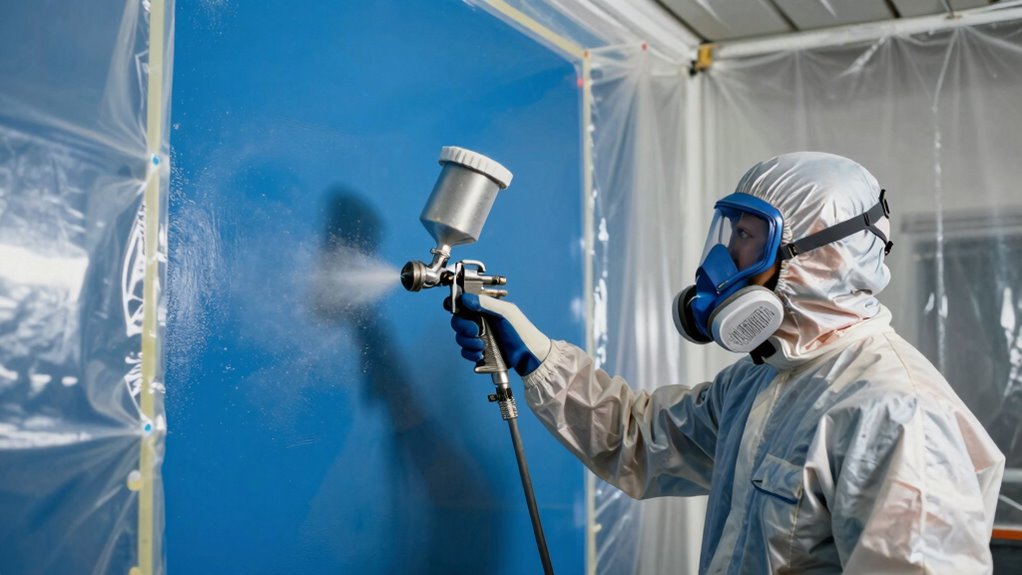
Protecting your fresh paint from overspray is essential, and using barriers and coverings is one of the most effective methods. You can prevent dust settling on your wet coats by employing decorative masking and strategic coverings. Use painter’s tape for clean lines and plastic sheeting to shield nearby surfaces. Properly sealing edges minimizes overspray spread. For detailed work, combining paint roller techniques with masking ensures sharp boundaries without mess. Here’s a quick guide:
| Surface Area | Covering Method |
|---|---|
| Windows | Plastic sheeting & painter’s tape |
| Floors | Drop cloths or old sheets |
| Furniture | Plastic covers or tarps |
| Edges & Corners | Decorative masking tape |
These steps keep overspray off your work and maintain a professional finish.
Timing Your Sprays for Better Results and Less Dust Settling
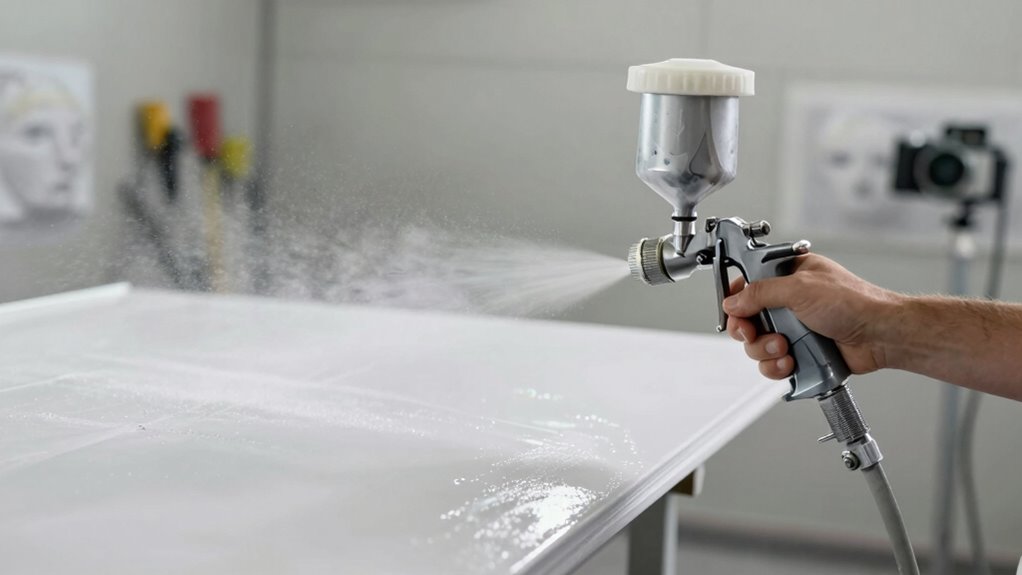
Timing your spray application carefully can substantially reduce dust settling on your fresh paint. Proper spray timing means choosing the right moments when environmental conditions minimize airborne dust and overspray. Avoid spraying during high humidity, strong breezes, or when dust particles are likely to become airborne. Aim for calm, dry days with stable temperatures to help your paint dry evenly and prevent dust from settling prematurely. Consistent, controlled spray timing allows each coat to cure properly, reducing the chance of dust settling on wet surfaces. By monitoring weather conditions and planning your work during ideal times, you ensure cleaner finishes. Good spray timing is crucial for reducing dust settling, resulting in a smoother, professional-looking paint job.
Common Overspray Problems and How to Fix Them
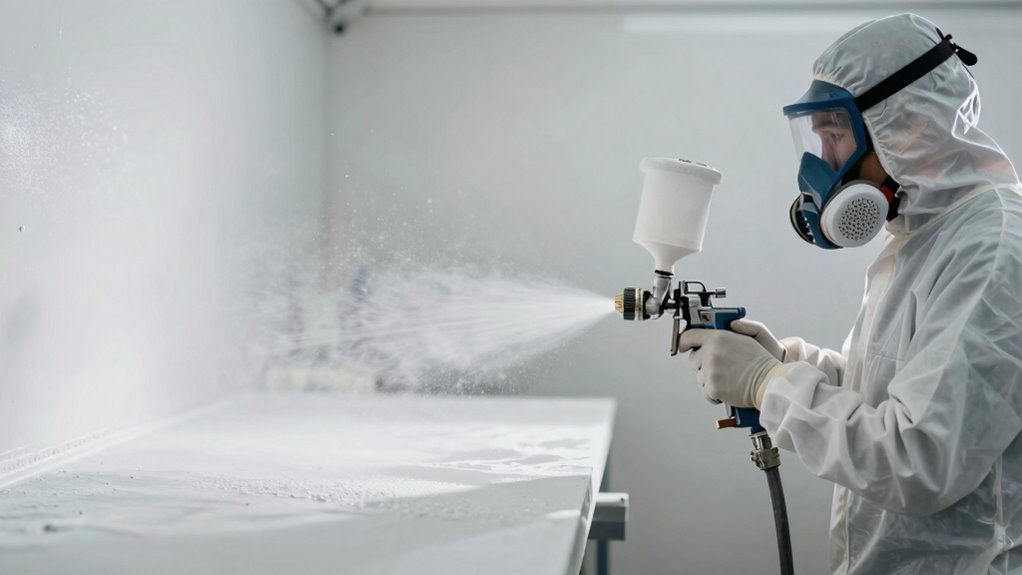
Even with careful spray timing, overspray can still pose challenges that affect your finish. Common problems include paint splatter, which creates uneven textures and wastes material. To reduce splatter, ensure your spray gun is maintained and your nozzle is properly adjusted. Nozzle clogging is another frequent issue, caused by dried paint or debris blocking the flow. Clogged nozzles lead to uneven spray patterns and increased overspray dust settling on nearby surfaces. To fix this, regularly clean your nozzle and use filtered paint to prevent debris buildup. Adjusting your spray distance and speed also helps minimize overspray and dust fallout. Staying attentive to equipment maintenance and technique guarantees a smoother spray process and a cleaner, more professional finish.
Frequently Asked Questions
How Can I Tell if My Spray Gun Is Calibrated Correctly?
You can tell if your spray gun is calibrated correctly by checking the spray pattern accuracy and ensuring consistent coverage. Adjust the pressure regulation to achieve a smooth, even spray without sputtering or uneven edges. Test on a scrap surface first—if the spray pattern is uniform and the paint atomizes well, your gun is properly calibrated. Regularly inspecting and fine-tuning these settings helps maintain peak performance.
What Types of Protective Gear Are Best to Prevent Dust Contamination?
To prevent dust contamination, you should wear protective gear like a high-quality protective mask to filter out dust particles and coverall suits to keep your clothing and skin protected. These items help minimize dust settling on your work surface. Make certain your mask fits snugly, and your coveralls are clean and sealed properly. Wearing the right gear creates a barrier against dust, keeping your spray job smooth and professional.
How Does Paint Viscosity Affect Overspray and Dust Settling?
Paint viscosity critically impacts overspray and dust settling. When your paint has the right consistency, it allows better spray penetration, creating finer droplets that reduce overspray. Thicker paint tends to produce larger droplets, increasing the chance of dust settling on fresh coats. To minimize dust issues, verify your paint is properly thinned to ideal viscosity, which promotes smooth spray penetration and helps keep overspray and dust settling under control.
Can Ambient Noise Influence Spray Quality or Overspray Control?
Ambient noise is like static on a radio—disruptive and distracting. It can definitely affect your spray consistency, causing you to rush or make uneven passes. When the environment is noisy, you might lose focus, leading to inconsistent spray patterns and increased overspray. To maintain control, try to work in a quiet space or use noise-canceling gear, ensuring your spray remains smooth and precise, free from unwanted dust or overspray.
What Are the Signs of Equipment Malfunction Causing Excess Overspray?
If your equipment malfunctions, you’ll notice signs like inconsistent spray patterns, which indicate nozzle clogging, and irregular paint flow. Air pressure fluctuation also causes excess overspray, making your coat uneven. These issues often lead to uneven application and waste. To fix this, regularly check and clean the nozzle, and ensure your compressor maintains steady pressure. Addressing these problems promptly helps control overspray and improves your spraying results.
Conclusion
By following these tips, you can greatly reduce overspray and dust settling on your fresh coats. Did you know that improper spraying can lead to up to 30% of paint material wasted due to overspray? Staying mindful of your technique, environment, and timing helps guarantee a smooth, professional finish. Keep these strategies in mind, and you’ll achieve flawless results with less mess and frustration. Your perfect paint job is just a spray away!