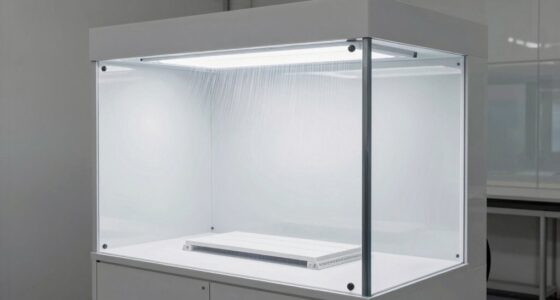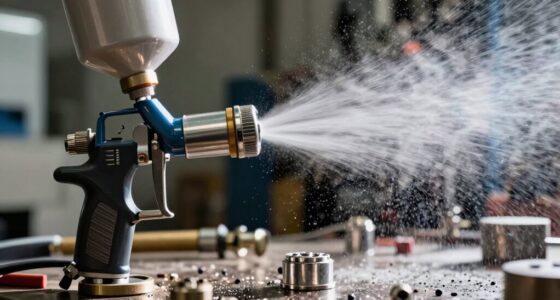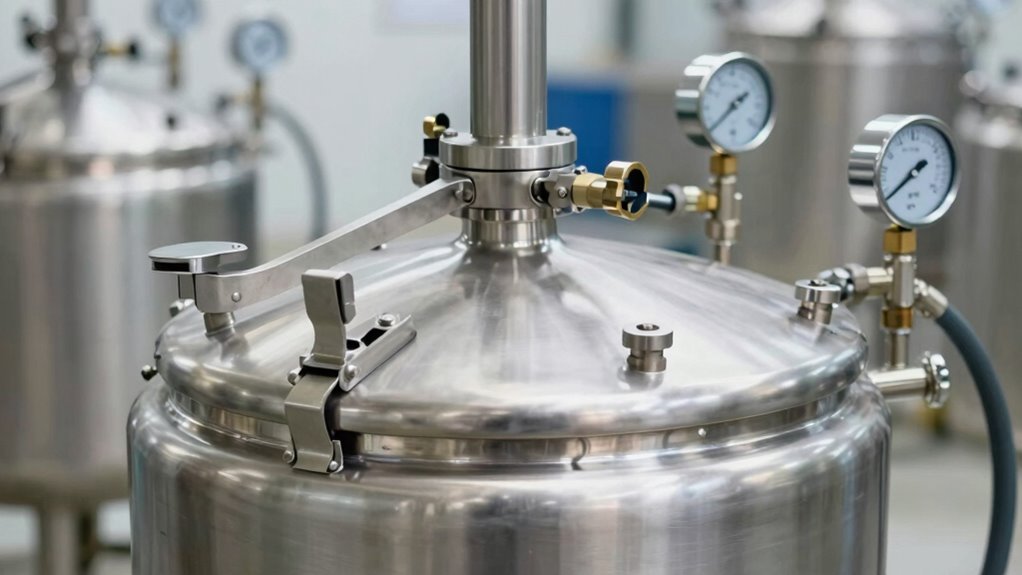

Pressure pot systems are tools you use to pressurize liquids like paint, epoxy, or cleaning solutions for consistent, precise application. They help you achieve smooth finishes, efficient casting, and thorough cleaning while reducing waste and uneven coverage. By maintaining a controlled pressure environment, you minimize safety risks and ensure professional results. If you want to understand how to maximize these benefits safely and effectively, keep exploring what these systems can do for your projects.

Get business pricing on tools and workshop supplies
- Business-only prices and quantity discounts
- Tax-exempt purchasing
- Multiple users, one account, clear invoices
Key Takeaways
- Hold and pressurize liquids like paint, epoxy, or cleaning solutions for efficient application.
- Enable uniform coating and finish quality by delivering steady, controlled flow.
- Support batch processing, allowing multiple items to be pressurized simultaneously.
- Facilitate casting, spraying, and cleaning tasks in industrial and hobbyist settings.
- Improve workflow efficiency, reduce waste, and ensure safety through proper handling and maintenance.
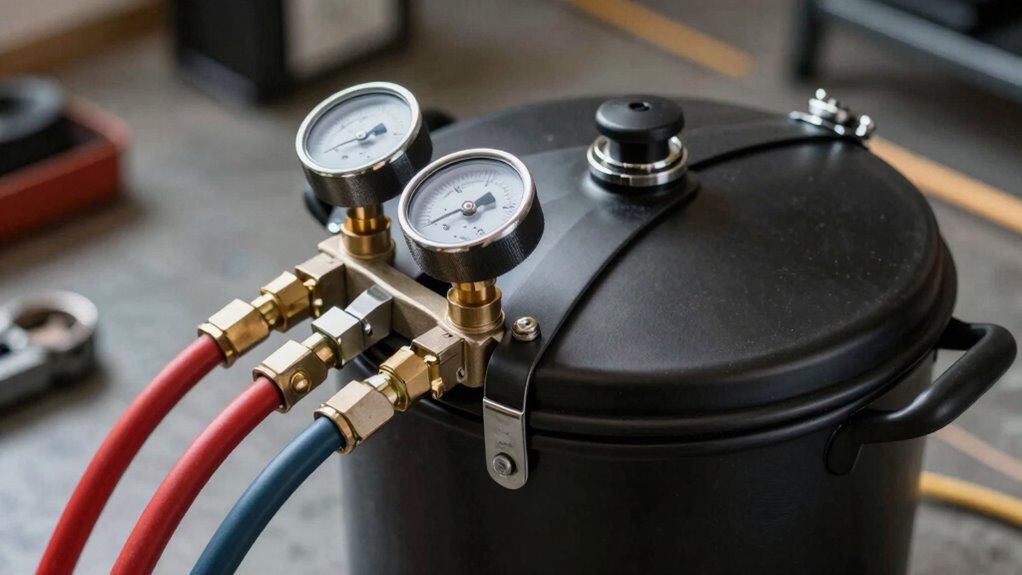
Pressure pot systems are indispensable tools in various industrial and hobbyist applications, especially when it comes to coating, casting, or cleaning processes. You use them to hold and pressurize liquids, such as paint, epoxy, or cleaning solutions, allowing you to apply or transfer these materials efficiently. These systems are designed to deliver a steady, consistent flow, making them irreplaceable for tasks that require uniform coverage or precise application. Whether you’re spray painting a large surface or casting materials in a controlled environment, pressure pot systems help you achieve professional results with less effort and waste.
Pressure pot systems enable efficient, uniform application of liquids in industrial and hobbyist projects.
One of the key advantages of pressure pot systems is their ability to facilitate batch processing. When you need to work with multiple items or large quantities of material, a pressure pot lets you load everything at once and pressurize the entire batch. This approach saves time and ensures consistency across all your projects. Instead of manually applying material in stages or constantly refilling containers, you simply pressurize the system and let the pressure do the work. This not only accelerates your workflow but also reduces the chances of uneven application or contamination, which can happen when handling materials in smaller, separate containers. Additionally, understanding the importance of color accuracy in related applications can help you achieve more precise coloration in your coatings or finishes.
However, working with pressure pot systems demands strict adherence to safety procedures. These systems operate under high pressure, and neglecting safety guidelines can lead to serious accidents, including leaks, bursts, or even explosions. You need to regularly inspect your equipment for signs of wear or damage, especially pressure relief valves and seals. Always follow manufacturer instructions for pressurizing and depressurizing the system, and never exceed recommended pressure limits. Wearing proper personal protective equipment—like gloves, goggles, and respirators—is essential to protect yourself from splashes or fumes. Additionally, make sure your workspace is well-ventilated and free of hazards that could ignite or cause a spill.
Proper training on safety procedures is critical before operating a pressure pot system. Understand how to safely pressurize and depressurize the system, recognize warning signs of malfunction, and know how to respond in an emergency. Regular maintenance and cleaning of the pressure vessel also play an important role in guaranteeing safe operation over time. Remember, pressure pot systems are powerful tools that can make your work more efficient and precise, but only if you prioritize safety and handle them responsibly. Following these safety procedures minimizes risks, allowing you to focus on your task and achieve the best possible results without unnecessary hazards.
pressure pot system for painting
As an affiliate, we earn on qualifying purchases.
As an affiliate, we earn on qualifying purchases.
Frequently Asked Questions
Can Pressure Pot Systems Be Used for Food Processing Safely?
Yes, you can use pressure pot systems for food processing safely if you guarantee proper cleaning and maintenance. Focus on food safety by preventing contamination through regular sanitization and using food-grade materials. Always verify that the system is designed for food contact and complies with safety standards. This way, you prevent contamination, maintain product quality, and ensure consumer safety during your food processing activities.
What Are the Maintenance Requirements for Pressure Pot Systems?
You need to regularly clean your pressure pot system to prevent buildup and ensure safety. Follow proper cleaning protocols after each use, and inspect the system at least monthly for any signs of wear or corrosion. Check seals, valves, and pressure gauges to maintain peak performance. Keeping up with these maintenance routines helps extend your equipment’s lifespan and guarantees safe, efficient operation every time you use it.
How Do Pressure Pots Differ From Other Pressure Vessels?
You’ll notice that pressure pots differ from other pressure vessels mainly in their design for specific tasks like coating or blasting. They have specialized pressure vessel design features to handle consistent pressure regulation, ensuring safety and efficiency. Unlike larger industrial tanks, pressure pots are built for portability and precise control, making them ideal for small-scale, high-pressure applications where maintaining steady pressure is vital.
Are There Industry-Specific Standards for Pressure Pot Safety?
You need to follow industry-specific standards for pressure pot safety, like OSHA regulations in manufacturing, to guarantee regulatory compliance and hazard mitigation. Imagine a factory accident resulting from neglecting these standards—it’s a stark reminder of their importance. These standards set the safety protocols for design, maintenance, and operation, helping you prevent dangerous failures. Staying compliant safeguards your team and keeps your operations running smoothly.
What Are Common Signs of Pressure System Failure?
You should watch for signs of pressure system failure like pressure leaks around fittings or valves, which indicate a potential breach. Also, check if safety valves are functioning properly—if they don’t release pressure when needed, it’s a serious hazard. Unusual noises or a sudden drop in pressure can also signal issues. Regular inspections and maintenance help prevent failures and keep your system safe and operational.
Conclusion
Remember, a pressure pot system isn’t about hype; it’s about precision. When you understand its true purpose—controlling airflow and improving finish—you make smarter choices. Think of it like a well-oiled machine: everything works smoothly when each part serves its purpose. Don’t get caught up in the buzz, focus on what truly matters. With the right system, you’ll get professional results and avoid costly mistakes. Trust the process, and success will follow.
Fall yard work Picks
leaf blowers
As an affiliate, we earn on qualifying purchases.