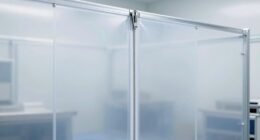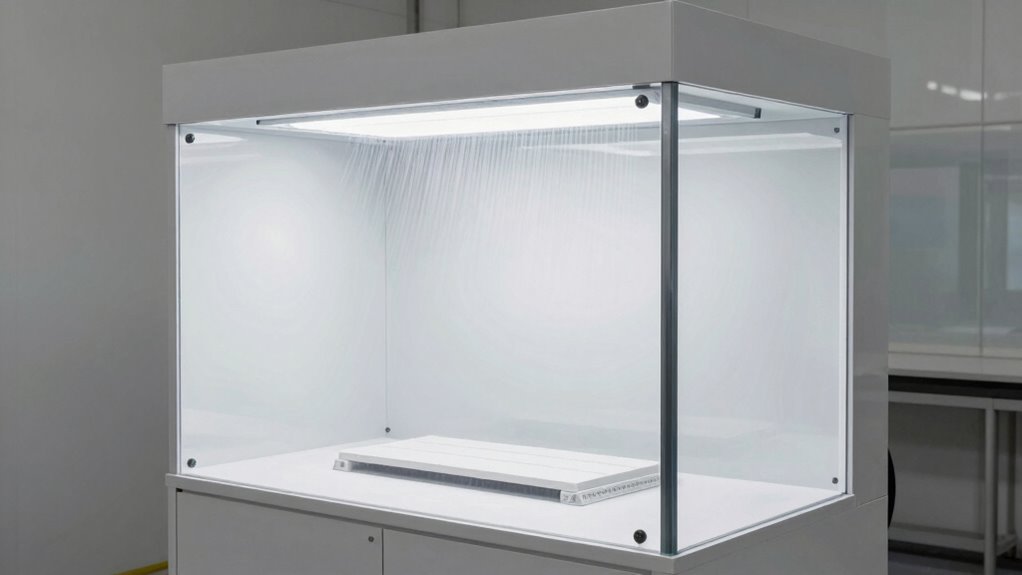
To establish an effective airflow pattern in your portable spray booth, position intake vents at the front and exhaust vents at the rear or top. Aim for a laminar flow that gently pulls fumes and overspray away from your work area without creating turbulence. Maintain proper filter maintenance to keep airflow consistent. When airflow moves smoothly and efficiently, it ensures a safer environment and a high-quality finish—if you keep exploring, you’ll discover how to optimize every detail.
Key Takeaways
- Position intake vents at the booth’s front and exhaust vents at the rear or top to create a controlled, laminar airflow.
- Ensure airflow is gentle enough to prevent paint blow-off while effectively removing fumes and overspray.
- Use high-quality filters, including pre-filters and HEPA or activated carbon, to trap airborne contaminants and overspray.
- Maintain consistent airflow direction to pull fumes away from the operator and workpiece, reducing contamination risk.
- Regularly inspect and replace filters to sustain optimal airflow, filtration efficiency, and a high-quality finish.
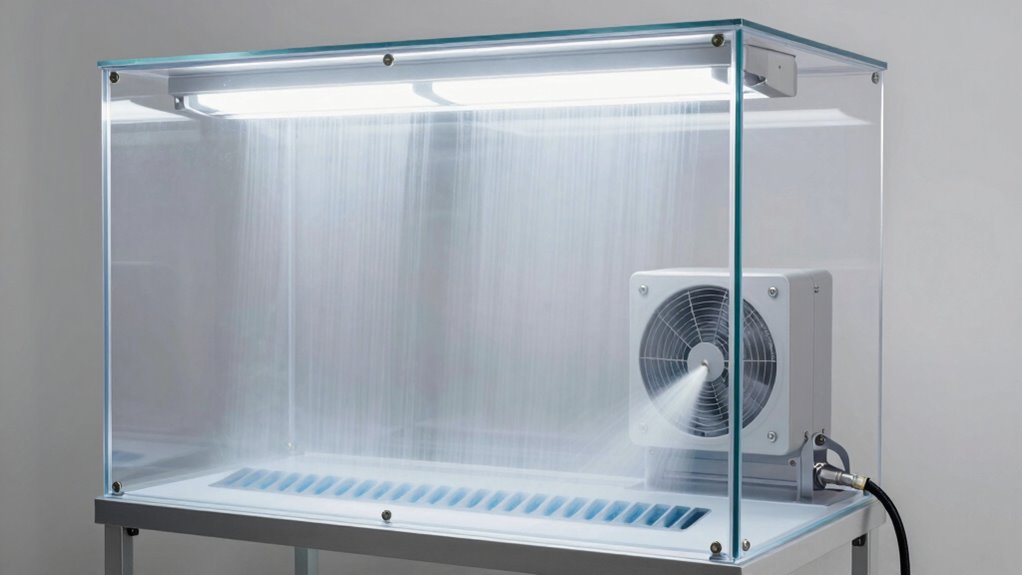
Setting up a portable spray booth is vital for achieving professional paint finishes while keeping your workspace clean and safe. One of the most critical aspects of this setup is designing an effective airflow pattern that ensures proper ventilation and minimizes overspray. Your ventilation design must prioritize a consistent, controlled airflow that pulls fumes and particles away from your work area, preventing contamination and health hazards. To accomplish this, you’ll need to plan a ventilation system that provides a steady intake of fresh air and exhausts contaminated air efficiently. Proper airflow direction helps prevent overspray from settling on your workpiece and ensures a smooth, high-quality finish.
A well-thought-out ventilation design depends heavily on the placement of intake and exhaust vents. Typically, you’ll want the airflow to enter at the front of the booth and exit at the rear or top, creating a laminar flow that moves uniformly across the work surface. This configuration reduces turbulence that could disturb the paint application or cause dust to settle on the freshly coated surface. Keep in mind that the airflow should be gentle enough to prevent paint blow-off but strong enough to carry away fumes and particles. Adjusting the airflow velocity according to the size of your booth and the type of paint you’re using is vital for ideal results.
Filtration systems are equally important in maintaining a safe and clean environment. High-quality filters trap overspray, dust, and other airborne contaminants, preventing them from recirculating or escaping into your workspace. Start with a pre-filter to catch larger debris, then use a finer filter—like a HEPA or activated carbon filter—to remove smaller particles and fumes. Regularly replacing or maintaining these filters is essential to keep airflow unobstructed and filtration effective. A good filtration system not only improves the quality of your finished work but also protects your health by reducing exposure to hazardous fumes and particles. Additionally, integrating advanced filtration technologies can further enhance air quality and safety in your workspace.
Incorporating these elements—ventilation design and filtration systems—into your portable spray booth setup creates a safer, more efficient environment for painting. The airflow pattern you establish should be consistent and controlled, moving in a way that directs fumes away from you and your workpiece. Proper filtration ensures that airborne contaminants are captured, preventing them from settling on your paint or being inhaled. When you focus on these details, you’ll find that achieving a professional finish becomes much simpler, and your workspace remains cleaner and safer throughout the painting process.
Frequently Asked Questions
How Do I Choose the Right Fan Size for My Spray Booth?
You should choose a fan size based on your spray booth’s airflow capacity needs. Consider fan size considerations like the booth’s dimensions and the required airflow rate to guarantee proper ventilation. A larger fan provides higher airflow, which helps remove fumes and overspray efficiently. Measure your space and consult manufacturer recommendations to select a fan that offers adequate airflow capacity, ensuring safe and effective spray booth operation.
Can I Customize Airflow Patterns for Specific Projects?
You can definitely customize airflow patterns for your projects—think of it as “the right tool for the right job.” To achieve project-specific airflow, adjust your fan speed, vent placement, and filters accordingly. This guarantees ideal paint coverage and safety. By tailoring airflow customization, you get better results and reduce overspray. Always test and tweak your setup to match your project’s unique requirements, making your spray booth versatile and efficient.
What Safety Precautions Are Necessary During Setup?
You should wear personal protective equipment like masks, gloves, and goggles to stay safe during setup. Make certain your workspace is well-ventilated and free of sparks or flames to prevent fire hazards. Check electrical safety by inspecting cords and outlets for damage before plugging in equipment. Keep a fire extinguisher nearby and follow manufacturer instructions carefully. Taking these precautions helps ensure a safe and successful spray booth setup.
How Often Should I Replace or Clean Filters?
You should replace or clean your filters regularly to guarantee ideal airflow and safety. Typically, filter maintenance involves checking filters weekly and cleaning or replacing them every one to three months, depending on usage. If you notice reduced airflow, excessive dust buildup, or paint overspray leaks, it’s time for a change. Staying proactive with filter maintenance keeps your spray booth efficient and safe, preventing costly repairs and health hazards.
Is There a Portable Spray Booth Suitable for Outdoor Use?
Yes, you can find portable spray booths suitable for outdoor use. Look for models with weather-resistant features like sealed panels and corrosion-resistant materials to withstand rain and wind. guarantee the booth has portability features such as lightweight frames, foldable designs, or wheels, making it easy to move and set up outdoors. These features help you work efficiently while protecting your equipment from outdoor elements.
Conclusion
Now that you’ve cracked the airflow code, your portable spray booth becomes a well-orchestrated dance floor for perfect finishes. With the right setup, you’re guiding a gentle breeze that whispers away overspray and dust, leaving your work shining like a star. Think of it as your personal symphony of cleanliness and precision—every element harmonizing to turn your project into a masterpiece. Trust this airflow pattern to keep your process smooth and your results flawless.