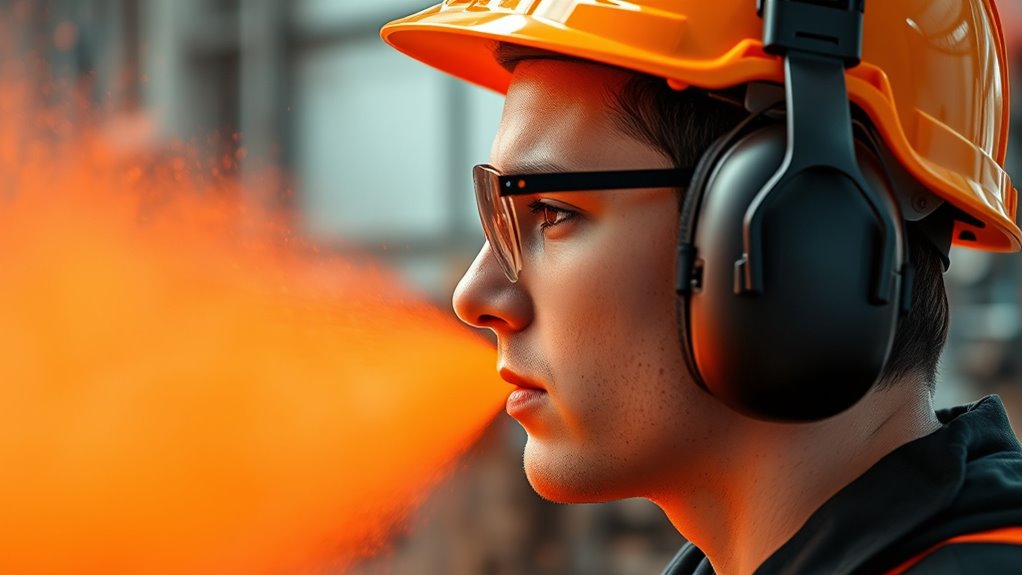

When spraying near loud equipment, wearing proper ear protection is essential to prevent permanent hearing damage. Use earmuffs with high Noise Reduction Ratings (NRR) for maximum sound Attenuation, and consider adding earplugs for extra protection in high-decibel environments. Proper fit and consistent use are critical for effective hearing conservation. Ensuring your gear is well-maintained and exploring additional noise control methods will help keep your hearing safe. Keep going to find out more about protecting your ears effectively.
Key Takeaways
- Use high NRR earmuffs and earplugs, or combine both, for maximum noise reduction during spraying tasks.
- Ensure proper fit and comfort of ear protection to maintain effective sound attenuation throughout work.
- Regularly inspect ear protection for damage or wear to guarantee consistent noise reduction.
- Implement additional noise control measures like barriers or soundproofing to reduce overall sound exposure.
- Provide training on correct ear protection use to promote safety and prevent hearing damage.
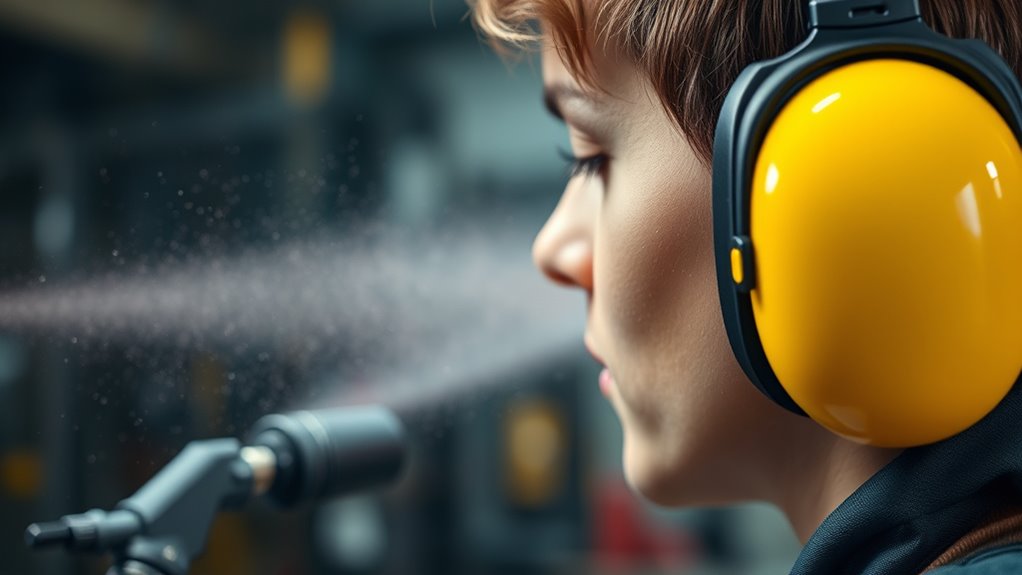
Spraying tasks can produce loud noises that pose serious risks to your hearing if you’re not properly protected. When you’re working with spray equipment, the noise often exceeds safe levels, making sound attenuation essential. Without proper ear protection, you risk irreversible hearing damage, which can affect your ability to communicate and enjoy everyday sounds. Fortunately, selecting the right ear protection can considerably reduce noise exposure, helping you maintain hearing conservation over the long term.
Sound attenuation is the key factor in choosing ear protection for spraying tasks. Different types of earplugs and earmuffs offer varying levels of sound reduction, so it’s crucial to select gear suited to the noise levels you encounter. For high-decibel environments, such as industrial spraying, earmuffs with high Noise Reduction Ratings (NRR) are often the best choice because they provide a snug fit and superior sound attenuation. Earplugs, on the other hand, are discreet and portable, but they need to be properly inserted to achieve ideal noise reduction. Combining earplugs with earmuffs can sometimes provide even greater attenuation, especially in exceptionally loud conditions.
Choosing the right ear protection with high NRR is essential for effective noise reduction during spraying tasks.
Your focus should be on hearing conservation—protecting your ears from cumulative damage caused by repeated exposure to loud noises. Consistent use of hearing protection during spraying tasks is essential, as even short-term exposure can contribute to hearing loss over time. Make sure your gear fits well and is comfortable enough to wear throughout the entire duration of your work. Ill-fitting protection can compromise sound attenuation, rendering it ineffective. Also, regularly inspect your gear for wear and tear; damaged ear protection won’t provide the necessary noise reduction and may give a false sense of security. Incorporating Glycolic Acid Benefits into your routine can help improve skin texture around sensitive areas like the ears, reducing irritation from prolonged use of protective gear.
In addition to using appropriate ear protection, you should adopt good practices to improve noise control. Keep your work area as quiet as possible by maintaining equipment and using barriers or soundproofing materials when feasible. Training on proper use of hearing protection is equally important—knowing how to correctly insert earplugs or wear earmuffs ensures maximum effectiveness. Remember, protecting your hearing isn’t just about preventing discomfort; it’s about preserving a critical sense that, once lost, can’t be restored. By prioritizing sound attenuation and consistently practicing hearing conservation, you safeguard your long-term health and ensure you can continue working safely and efficiently in noisy environments.
Frequently Asked Questions
How Often Should Ear Protection Be Replaced During Spraying Projects?
You should replace your ear protection based on the replacement schedule and ear protection lifespan, which typically means inspecting them regularly. Generally, replace ear protection if you notice signs of wear, damage, or reduced comfort. Most ear protection lasts about six months to a year with regular use, but if you use it daily, consider replacing it sooner. Always follow the manufacturer’s guidelines to guarantee maximum hearing protection during spraying projects.
Are There Specific Ear Protection Types Recommended for Prolonged Spraying?
While comfort and safety often seem at odds, choosing the right types of ear protection enhances your prolonged spraying safety. Earplugs and earmuffs are best for extended use, providing both sound reduction and comfort. Foam earplugs are lightweight, ideal for prolonged spraying, while noise-canceling earmuffs offer superior protection. Prioritize these options to guarantee your ears stay protected during lengthy spraying projects, minimizing hearing damage and maintaining focus.
Can Ear Protection Be Safely Used With Other Personal Protective Equipment?
Yes, ear protection can be safely used with other PPE as long as you consider hearing conservation and PPE compatibility. Make sure your ear protection fits comfortably alongside safety glasses, masks, or helmets without creating gaps or pressure points. Check that all gear stays secure and doesn’t interfere with each other’s effectiveness. Properly coordinating your PPE ensures maximum hearing conservation and maintains a safe, comfortable work environment.
Is There a Difference in Noise Reduction Between Ear Plugs and Ear Muffs?
Like choosing a trusty sword, you’ll find ear muffs often provide greater noise reduction than ear plugs, but it depends on your ear plug effectiveness and ear muff comfort. Muffs usually block more noise, making them ideal for loud environments, while plugs can be more discreet. If comfort is your priority, try both to see which fits better. Ultimately, select the protection that helps you work safely and comfortably.
How Do I Ensure a Proper Fit for Maximum Noise Cancellation?
To guarantee maximum noise cancellation, focus on a proper fit by checking ear canal sealing with ear plugs or adjusting ear cups snugly. Use adjustable ear cups to customize the fit, ensuring they sit comfortably without gaps. Make sure ear plugs are inserted correctly, sealing your ear canal completely. Regularly test the fit by listening for any sounds; a secure seal is key to ideal noise reduction.
Conclusion
Remember, wearing proper ear protection while spraying can reduce noise levels by up to 30 decibels, markedly lowering your risk of hearing damage. It’s a simple step that safeguards your long-term health and keeps you comfortable on the job. Don’t underestimate the power of good ear protection—your ears will thank you. Stay safe, stay protected, and always prioritize your hearing health to enjoy your work without lasting harm.

Franz came aboard the Paint Sprayer Zone team with a background in both journalism and home renovation. His articulate writing style, combined with a passion for DIY projects, makes him an invaluable asset. Franz has a knack for breaking down technical jargon into easy-to-understand content, ensuring that even the most novice of readers can grasp the complexities of paint sprayers.