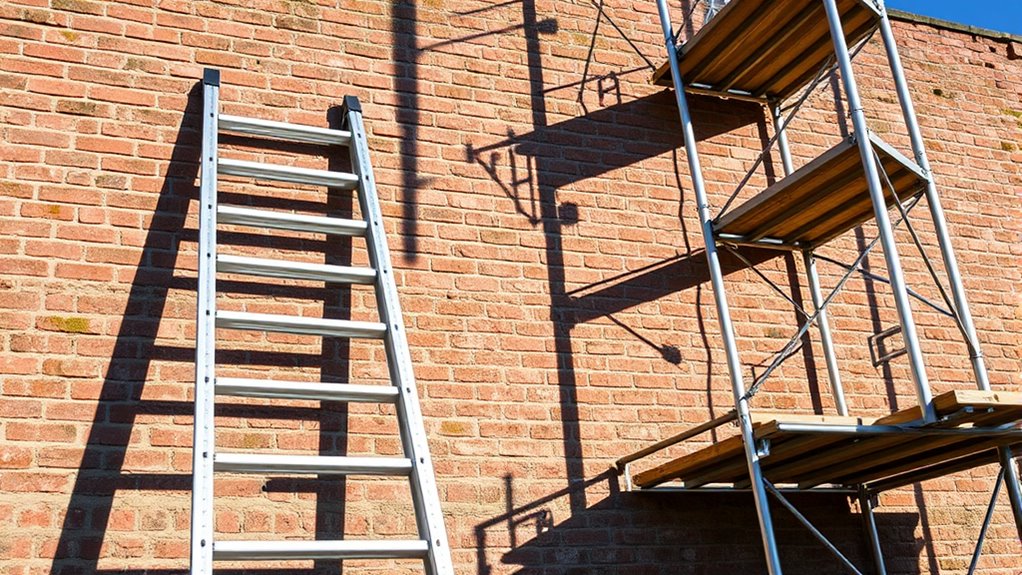

When spraying high walls, using a ladder is quick and easy for small sections or quick touch-ups, but it can be limiting and less stable for longer jobs. Scaffolds provide a safer, more stable platform for extensive work, allowing you to move comfortably and maintain consistent quality. While setup for scaffolds takes more time initially, they boost safety and efficiency over large areas. Keep going to discover which option best fits your project needs.
Key Takeaways
- Ladders are quick to set up but limit movement and coverage for large high wall spraying projects.
- Scaffolds offer a stable, extensive platform, ideal for prolonged, large-area spraying tasks.
- Safety considerations favor scaffolds for high walls, reducing fall risks during extended work.
- Using scaffolds enhances work quality by allowing better movement and reducing fatigue.
- For small sections or quick touch-ups, ladders are sufficient if safety guidelines are strictly followed.
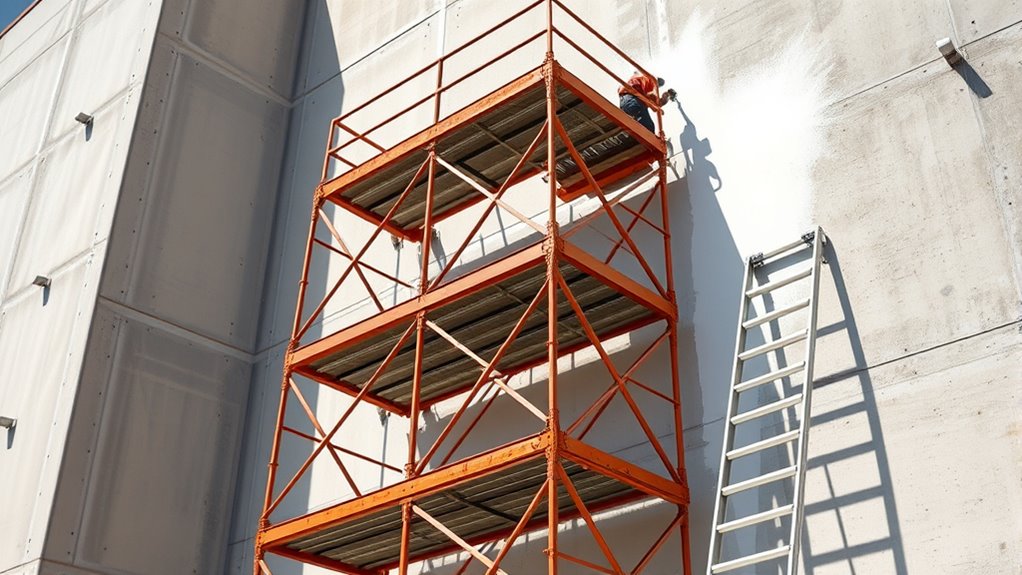
When working on high walls, choosing the right equipment is essential for safety and efficiency. Whether you’re spraying paint or applying coatings, the tools you select can considerably impact both your safety and how quickly you get the job done. Ladders and scaffolds are common options, but understanding their safety considerations and setup efficiency can help you make an informed decision.
Ladders are portable and easy to set up, making them a popular choice for quick, small-scale tasks. However, when working on high walls, safety considerations become more critical. Climbing ladders exposes you to fall risks, especially if the ladder isn’t stable or if you’re reaching too far to the side. You need to ensure the ladder is placed on firm, level ground and that it extends at least three feet above the point of access. Always maintain three points of contact—two hands and one foot, or two feet and one hand—to prevent slips. While ladders are convenient, their setup efficiency can be limited when covering large wall areas. Moving and repositioning a ladder repeatedly can slow you down and increase the risk of accidents.
On the other hand, scaffolds are designed to provide a more stable platform for prolonged work on high walls. They offer a broader work surface, allowing you to move freely and maintain steady positioning. In terms of safety considerations, scaffolds are generally safer than ladders for extensive spraying because they minimize the risk of falls and fatigue. Properly assembled scaffolds, with guardrails and toe boards, further enhance safety. However, setting up scaffolds requires more time and effort upfront. You need to ensure the ground is level, assemble the frame correctly, and inspect all components before use. While initial setup might take longer, the efficiency gained during spraying work can be substantial, as you won’t need to constantly reposition or climb.
Additionally, understanding the cultural heritage and the proper safety standards for working at heights can help prevent accidents and ensure compliance with regulations. Ultimately, your choice depends on the scope of the project. For quick touch-ups or small sections, a ladder might suffice, provided you follow safety guidelines carefully. But for larger, high-wall projects requiring extended spraying, scaffolds offer better safety considerations and setup efficiency. They allow you to work more comfortably and reduce fatigue, leading to a more consistent and high-quality finish. In either case, prioritizing safety considerations and optimizing setup efficiency ensures your work proceeds smoothly and safely, reducing the risk of accidents and boosting productivity.
Frequently Asked Questions
How Do Weather Conditions Affect Ladder and Scaffold Safety?
Weather conditions considerably impact ladder and scaffold safety, especially with wind hazards and weather impact. Strong winds can destabilize ladders, making them unsafe to climb or work on, while rain or snow can cause surfaces to become slippery, increasing fall risks. You should always assess weather forecasts before starting work, secure all equipment properly, and avoid working on ladders or scaffolds during high winds or adverse weather to prevent accidents.
What Are the Cost Differences Between Ladders and Scaffolds?
Think of your budget as the foundation of your project—scaffolds generally cost more upfront than ladders. The cost comparison shows ladders are more affordable initially, but scaffolds offer greater safety and efficiency for high walls, potentially saving you money in the long run. When considering budget considerations, weigh the higher initial expense against the benefits of safety, stability, and productivity that scaffolds provide for demanding tasks.
Which Option Offers Better Access for Detailed Wall Work?
Scaffolds offer better access for detailed wall work because they provide greater access stability and a larger working platform, making it easier to maneuver. You can move around more freely and maintain steady footing, which enhances precision and safety. Ladders, while more portable, limit your maneuverability and access stability, making them less ideal for intricate tasks on high walls. For detailed work, scaffolds are your best choice.
How Do Height Restrictions Influence Choice Between Ladders and Scaffolds?
When it comes to height restrictions, you need to weigh your options carefully. If the wall is too tall, a scaffold is usually your best bet because it offers better structural stability and allows you to work safely at greater heights. Ladders can be risky if height considerations exceed safe limits, making it a case of “playing it by ear.” Prioritize safety and choose the option that keeps you balanced and secure.
What Safety Gear Is Recommended for Each Method?
You should wear personal protective equipment like helmets, gloves, goggles, and respirators to stay safe while spraying high walls. Fall prevention measures are vital; use harnesses and secure scaffolding or ladders properly. For ladders, make sure they are stable and on level ground. For scaffolds, check for guardrails and proper assembly. Safety gear and fall prevention are essential to prevent injuries during your work at height.
Conclusion
When choosing between ladders and scaffolds for high walls, think of it as picking the right tool for the job’s dance. A ladder offers agility and quick access, but a scaffold provides stability like a sturdy bridge across a river. Your decision depends on your project’s scope and safety needs. Remember, safety isn’t just a guideline — it’s the solid ground you stand on as you conquer those high walls with confidence.

Franz came aboard the Paint Sprayer Zone team with a background in both journalism and home renovation. His articulate writing style, combined with a passion for DIY projects, makes him an invaluable asset. Franz has a knack for breaking down technical jargon into easy-to-understand content, ensuring that even the most novice of readers can grasp the complexities of paint sprayers.