
TL;DR

Get business pricing on tools and workshop supplies
- Business-only prices and quantity discounts
- Tax-exempt purchasing
- Multiple users, one account, clear invoices
A Hunker report outlines a low-cost DIY bird feeder made by turning a cleaned, empty paint can on its side and adding a perch and hanger. The project is presented as a reuse idea inspired by a classroom activity, but the report does not establish that every can is safe for bird use or provide tested results on durability and wildlife impacts.
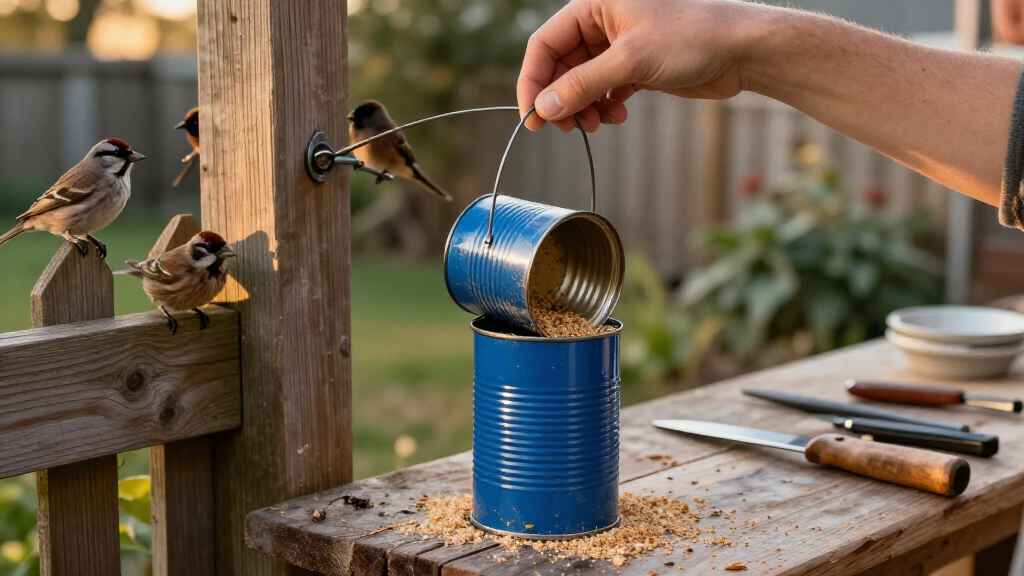
Hunker has reported on a DIY bird feeder made from an old paint can, with the can turned on its side and fitted with a perch and a hanger. The idea, inspired by a project shared by TikTok creator That STEM Guy, offers a way to reuse an empty container rather than buy a feeder, though the source does not establish that every used paint can is suitable for feeding birds.
In the design described by Hunker, the can is placed horizontally, its opening is left accessible for seed, and a thick twig or dowel is attached so it protrudes a few inches as a perch. A wide ribbon glued around the can can form a hanging loop. Hunker also describes wire wrapped around the can or mounting the can to a post, fence or board as alternatives. The article says the TikTok creator made the feeder with children in a school setting.
Hunker recommends cleaning the can with warm, soapy water, soaking it if needed and using a scouring pad or scraper on dried paint. It cautions against harsh chemicals because residue could remain where birdseed is placed. The report suggests decorating the outside with fresh paint, and says exterior paint or a sealer may help prevent peeling. It does not specify a food-safe coating or give testing results for the finished feeder.
The article also describes more involved versions: a small wooden piece near the perch to help retain seed, and a wooden roof that overhangs the opening to shield seed from rain. Multiple cans could be hung separately or attached along a board. These are presented as optional adaptations rather than requirements for the basic design.
A Low-Cost Way to Reuse a Can
The project joins two familiar backyard activities: reusing household materials and offering food to birds. For people who already have an empty paint can, the basic design may avoid the cost of a store-bought feeder and provide a small craft project for a classroom or home. Hunker also frames the idea as a way to keep a can out of the landfill, although the article does not quantify any environmental benefit.
A feeder can bring birds closer to a garden, but claims about broader benefits should be kept measured. Hunker says watching birds may support mental well-being and that birds may eat insects in the yard; it does not cite research or measure either effect for this particular feeder. The practical value depends on safe construction, suitable placement and whether local birds use it.
As an affiliate, we earn on qualifying purchases.
How the Paint-Can Design Works
The idea was inspired by a project shared by That STEM Guy on TikTok. According to Hunker, the creator made the simple feeder with a group of children at school. The activity included learning about birds through All About Birds, educational games and live nest cameras while paint on the cans dried, according to the TikTok caption reproduced in the report.
Hunker notes that paint cans come in a range of sizes, from pints to gallons, and says the opening should be large enough for a bird’s head. It gives approximate diameters for common containers: just under 4 inches for a pint, about 4¼ inches for a quart and around 6½ inches for a gallon. Those dimensions describe can sizes, not a guarantee that a particular feeder will suit local species.
The report’s main instruction is straightforward: clean the can, attach a perch, add a hanger or mount, then pour in seed. The article does not provide a detailed construction test, long-term maintenance schedule or guidance specific to different climates and bird species.
“Perfect little Earth Week STEM project.”
— That STEM Guy, in a TikTok caption reproduced by Hunker
Can Safety and Durability Questions
The source does not say how to determine whether a previously used can is safe for this purpose, or whether cleaning alone is adequate for cans that held particular paints or other coatings. It also does not specify a tested adhesive, a bird-safe finish, or whether any coating could wear or flake after outdoor exposure. Readers should not assume that all paint cans are interchangeable: use an empty can with no remaining paint or residue, and do not use a container with an unknown or hazardous former contents.
Durability and animal-safety details are also not established in the report. It gives no measurements for weight limits, weather resistance, drainage, cleaning frequency or protection from predators. The article does not report whether the feeder was tested over time, which bird species used it, or whether local wildlife guidance recommends this design. The suitability of a feeder may depend on its construction and location.
Before Hanging the Feeder
Anyone considering the project should first confirm what the can held and clean it without harsh chemicals, as Hunker advises. Let it dry fully before adding seed, and check that the perch and hanger or mount are firmly secured. If the can is painted or sealed, follow the product’s directions and allow the finish to cure before putting the feeder outdoors. The report does not identify a particular coating as safe for contact with birds or seed.
After installation, inspect the can, attachments and seed regularly, especially after rain or strong winds. Choose a location where the feeder can be monitored and cleaned. Hunker’s next-step suggestions are optional upgrades, including an overhanging roof or several cans mounted together; the source provides no schedule for future updates or independent evaluation of the design.
Key Questions
What do I need to make the basic paint-can feeder?
The design described by Hunker uses an empty, cleaned paint can, a thick twig or dowel for a perch, and a way to hang or mount the can, such as a wide ribbon, wire or screws. Birdseed is added through the can’s opening.
How should I clean the can?
Hunker recommends warm, soapy water, soaking if needed, and a scouring pad or scraper for dried paint. It advises against harsh chemicals because residue could remain where the seed goes. The report does not give separate guidance for cans that held hazardous or unknown materials.
Can I paint the feeder?
Hunker suggests painting the outside and says exterior paint or a sealer may help prevent peeling. The report does not name a product or establish that a particular finish is safe for birds, so follow the manufacturer’s directions and allow it to cure fully before use.
Does the feeder need a roof?
No roof is part of the basic design. Hunker describes an optional wooden roof with an overhang that may help keep rain out of the seed, but it does not report testing the modification or quantify its effectiveness.
Source: rss
Fall yard work Picks
leaf blowers
As an affiliate, we earn on qualifying purchases.