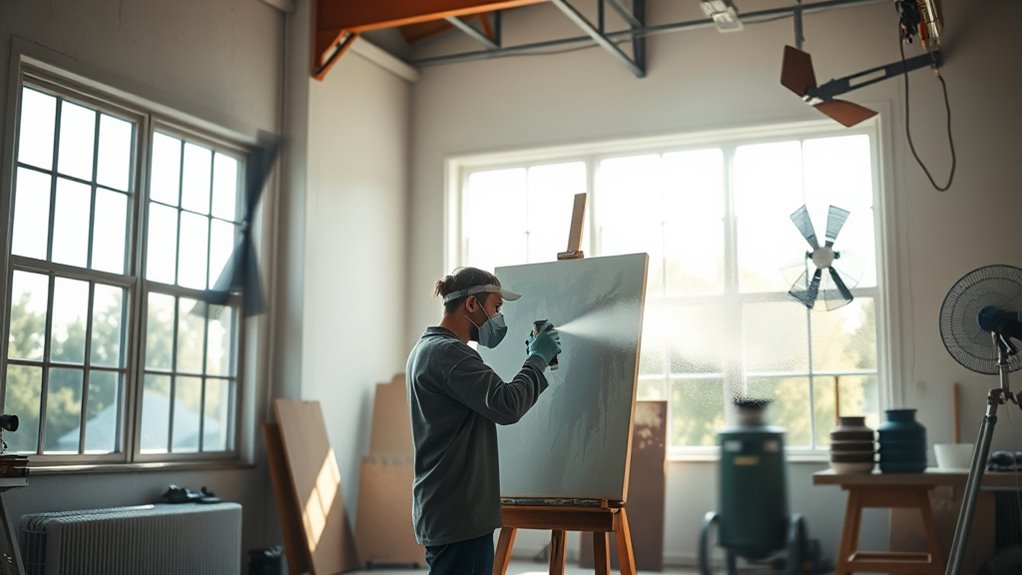

Spray painting indoors can be safe if you guarantee proper ventilation. Open windows and doors to create cross-ventilation, and use exhaust fans or portable HEPA air purifiers to actively remove fumes. Wearing masks, goggles, and gloves adds extra safety. Avoid enclosed spaces with poor airflow, and take regular breaks outside or in well-ventilated areas. Following these tips helps protect your health—learn more about creating a safe spray painting environment.
Key Takeaways
- Ensure proper ventilation with exhaust fans and open windows to remove harmful fumes during indoor spray painting.
- Use portable HEPA air purifiers to actively filter airborne pollutants and improve indoor air quality.
- Create a cross-breeze by opening multiple openings to enhance airflow and reduce fume buildup indoors.
- Wear appropriate protective gear like masks, goggles, and gloves to safeguard health alongside ventilation efforts.
- Limit the size of the painted area and take regular breaks in well-ventilated spaces to minimize inhalation risks.

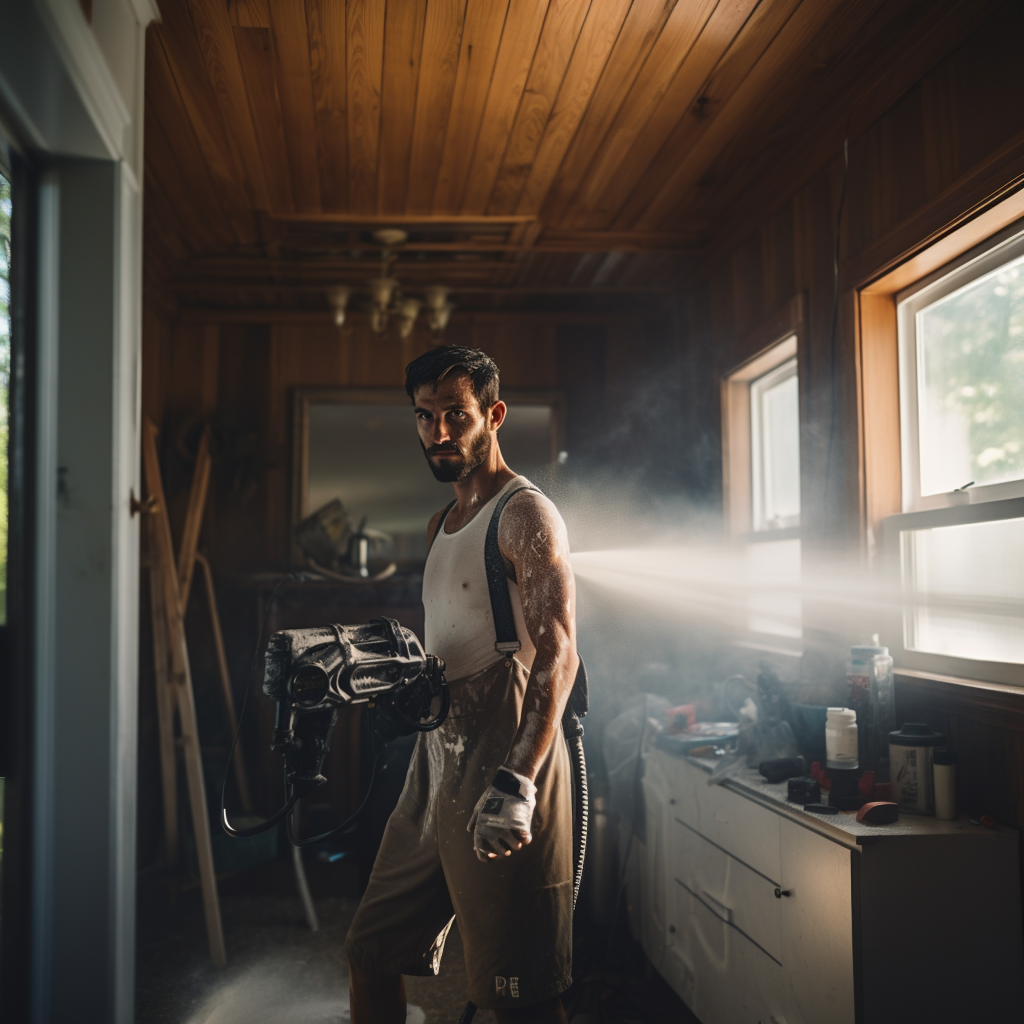
Spray painting indoors can be safe if you take the right precautions and follow proper procedures. One of the most critical aspects to guarantee safety is understanding ventilation requirements. Proper ventilation helps remove harmful fumes and overspray, reducing the risk of inhaling toxic particles. Before you start, open windows and doors to create a cross-breeze that encourages fresh air to flow through your workspace. If possible, set up exhaust fans or portable air purifiers with HEPA filters to actively pull contaminated air out of the room. These devices can considerably improve air quality and lower the concentration of airborne pollutants, giving you a safer environment to work in. Keep in mind that closed spaces trap fumes, so limiting the size of the area you paint in and taking into account continuous airflow is essential for maintaining safe levels of ventilation.
Alongside ventilation, you need to regard health precautions. Wearing a suitable mask or respirator rated for paint fumes is a must, especially when working with spray paints that emit volatile organic compounds (VOCs). These chemicals can cause headaches, dizziness, or more serious health issues with prolonged exposure. Besides respiratory protection, wear goggles to shield your eyes from overspray and gloves to prevent skin contact. It’s also wise to wear long sleeves and pants to minimize skin exposure, as some paints can irritate or stain your skin. Remember, even if you’re in a well-ventilated area, precautions like gloves and masks help create an additional layer of safety. Additionally, understanding air quality and how it impacts health can help you make better choices during your spraying projects.
Another health precaution is to avoid working in an enclosed space for extended periods. Take regular breaks outside or in a well-ventilated area to breathe fresh air and to a great extent reduce your overall exposure. Always read the paint’s label for specific safety instructions, including recommended ventilation and protective gear. If you’re using spray paints with strong fumes or high VOC content, think about doing your project outdoors or in a dedicated spray booth designed with proper ventilation systems.
Frequently Asked Questions
Can Children Be Present During Indoor Spray Painting?
You should avoid having children present during indoor spray painting because of safety concerns. Their child safety is at risk due to potential toxicity concerns from fumes and airborne particles. Even with proper ventilation, it’s best to keep children out of the area until the paint fully dries and fumes dissipate. Prioritize their health by ensuring a safe environment and allowing ample time for ventilation before re-entry.
How Long Should I Wait Before Re-Entering the Painted Room?
You might worry about re-entering too soon, but proper ventilation cut drying time considerably. Wait at least 24 hours after spray painting indoors, ensuring adequate ventilation duration to clear fumes. Keep windows and fans running to speed up this process. Rushing back too early can expose you to lingering fumes, so patience pays off. Always follow the paint manufacturer’s recommended drying time for a safe, healthy environment.
Are There Eco-Friendly Spray Paints Suitable for Indoor Use?
You’ll find eco-friendly paints that are suitable for indoor use, offering safer options for your projects. Look for paints labeled with indoor safe formulations, which minimize harmful fumes and VOCs. These eco-friendly paints are designed to reduce environmental impact while still providing good coverage. Always check the product labels and choose those specifically formulated for indoor application, ensuring your space remains healthier during and after your spray painting projects.
What Personal Protective Equipment Is Essential for Indoor Spray Painting?
Imagine you’re a knight preparing for battle; your armor keeps you safe. For indoor spray painting, you need a respirator mask to guard your lungs from harmful fumes and protective clothing to shield your skin. These essentials act as your armor, ensuring you don’t fall prey to airborne chemicals. Always wear them, and work in well-ventilated areas, to stay protected while creating your masterpiece indoors.
Does Humidity Affect the Safety of Indoor Spray Painting?
Humidity levels can considerably impact the safety of indoor spray painting. High humidity slows down paint drying, increasing the risk of fumes lingering longer and potential buildup of harmful vapors. Conversely, low humidity helps paint dry faster, reducing exposure time. You should monitor humidity levels and guarantee proper ventilation to maintain a safe environment, minimizing health risks associated with prolonged fumes and ensuring the paint cures properly.
Conclusion
Think of spray painting indoors like steering a boat through a calm, but potentially foggy, harbor—you need the right tools and precautions to navigate safely. By ensuring proper ventilation and taking safety seriously, you create a protective shield around yourself and your space. With these tips, you can confidently transform your project into a masterpiece without risking your health. Remember, a well-ventilated room is your lighthouse guiding you safely to the finish line.
Franz came aboard the Paint Sprayer Zone team with a background in both journalism and home renovation. His articulate writing style, combined with a passion for DIY projects, makes him an invaluable asset. Franz has a knack for breaking down technical jargon into easy-to-understand content, ensuring that even the most novice of readers can grasp the complexities of paint sprayers.