To spray board and batten exteriors, start by cleaning the surface thoroughly and let it dry completely. Select a high-quality primer suited for exterior siding and apply it evenly with a sprayer, ensuring proper adhesion. Use an airless or HVLP sprayer for efficient coverage, adjusting pressure and distance to prevent drips. Mask areas you don’t want painted and work in manageable sections with steady, overlapping strokes. For detailed tips, keep exploring for the best results.
Key Takeaways
- Prepare the surface by cleaning, repairing, and thoroughly drying the board and batten siding before priming.
- Apply a high-quality primer evenly using a sprayer suited for exterior surfaces to ensure proper adhesion.
- Choose an appropriate sprayer (HVLP or airless) and adjust settings for controlled, even coverage on both narrow battens and wide panels.
- Maintain a steady hand, overlapping strokes, and proper distance (12-18 inches) to avoid drips, runs, and missed spots.
- Mask non-painted areas, work in sections, and allow adequate drying time between primer and topcoat for a professional finish.
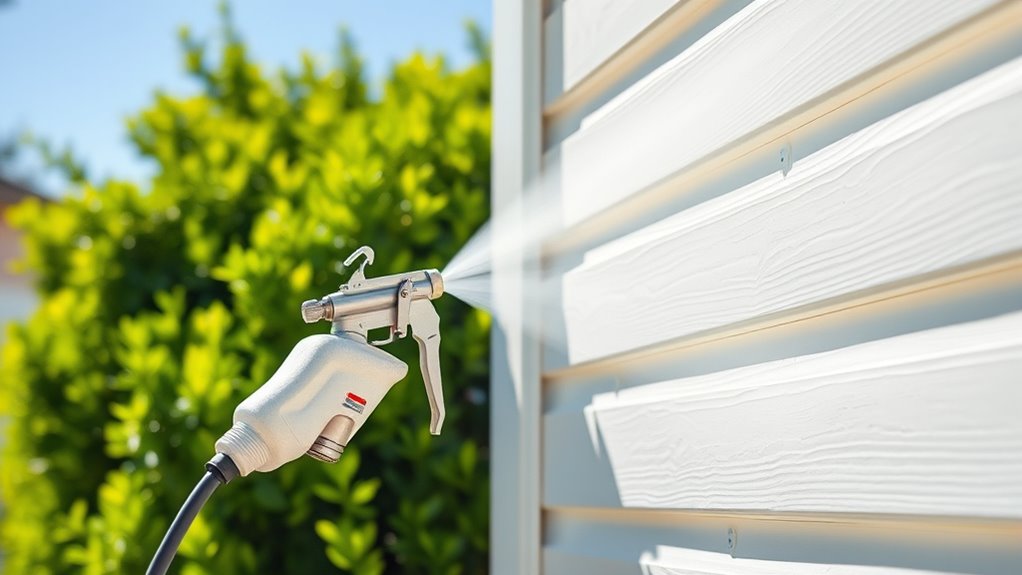
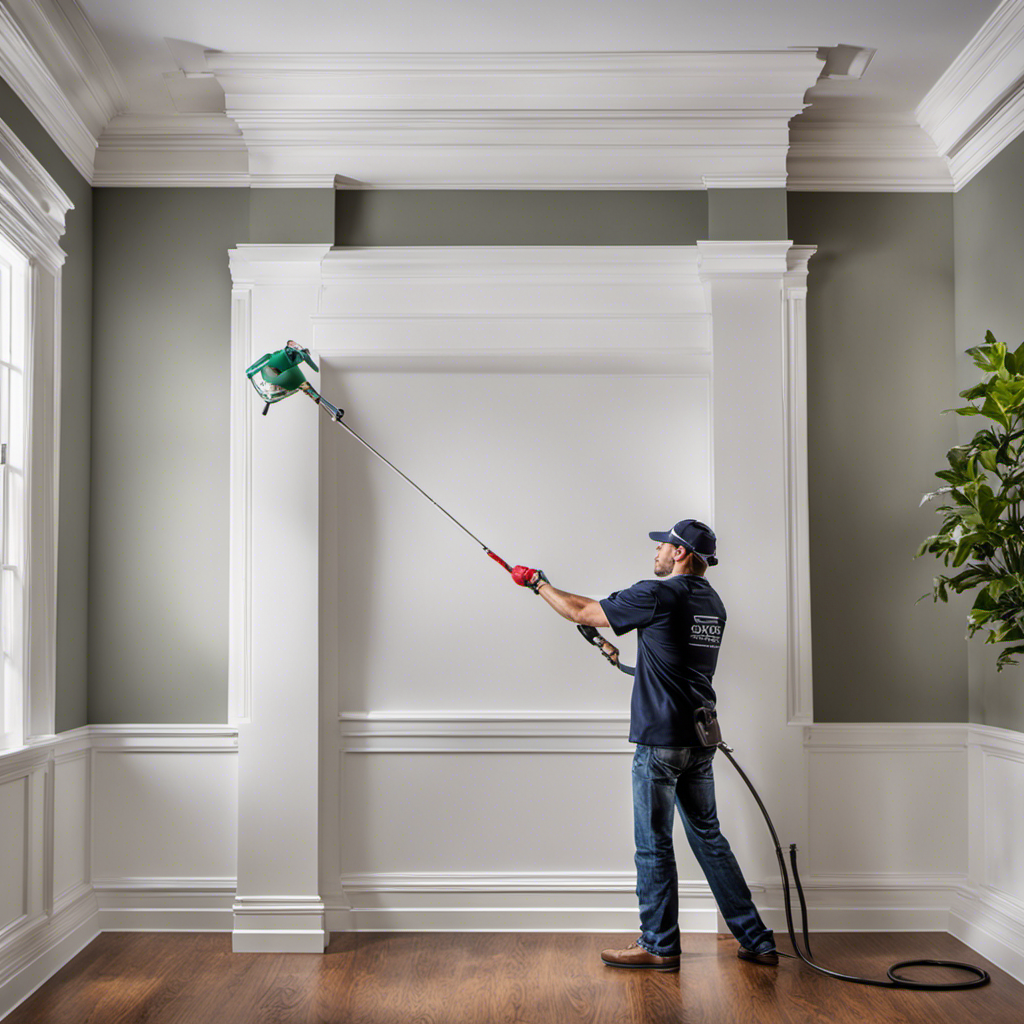
Spraying board and batten exteriors offers a fast and efficient way to achieve a smooth, even finish on your home’s siding. To get the best results, start by preparing your surface thoroughly. Clean the siding to remove dirt, dust, and loose paint, guaranteeing the primer and paint adhere properly. Once clean, you’ll want to focus on primer application. Applying a quality primer helps seal the wood, enhances paint adhesion, and provides a uniform surface for the topcoat. Use a high-quality primer suitable for exterior siding, and apply it evenly with a sprayer designed for primer application. This step is vital because it prevents uneven paint absorption, which can lead to streaks or patches after spraying. Make sure to follow the manufacturer’s instructions regarding drying times before moving on to the paint.
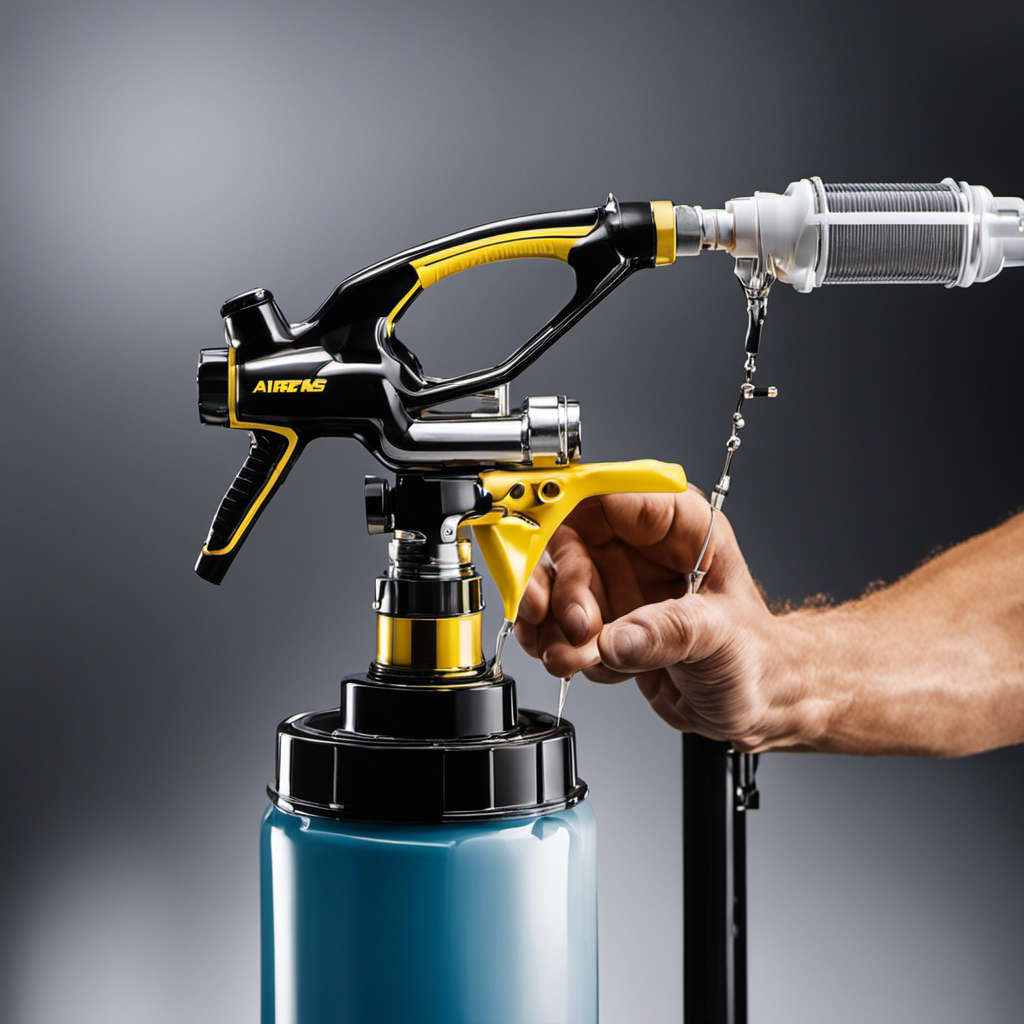
Choosing the right spray equipment is key to a professional-looking finish. For spraying board and batten exteriors, a high-volume, low-pressure (HVLP) sprayer is often recommended because it offers greater control and minimizes overspray. An airless sprayer is also a solid option, especially if you’re covering large surface areas quickly. When selecting your spray equipment, consider the type of paint or stain you’ll be using and the surface texture. Opt for a sprayer with adjustable pressure settings so you can fine-tune the spray pattern for even coverage on the narrow battens and broad panels alike. A properly maintained sprayer, with clean filters and nozzles, ensures consistent atomization and reduces the risk of uneven spray patterns.
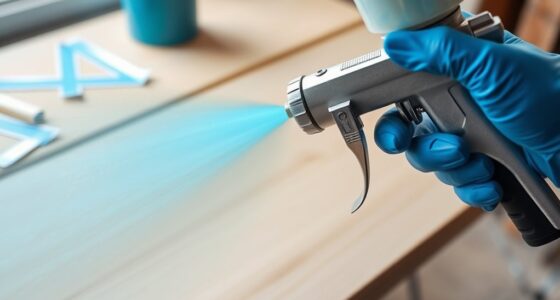
Before you start spraying, test your equipment on a scrap piece or inconspicuous section to check the spray pattern and flow. Adjust the pressure and spray distance as needed to achieve a smooth, even coat without drips or runs. When applying the primer and topcoat, keep the sprayer moving in steady, overlapping strokes to avoid streaking. Maintain a consistent distance from the surface—usually about 12 to 18 inches—and work in manageable sections to prevent missed spots or heavy buildup. Properly masking areas you don’t want painted, like windows or trim, will help you achieve clean, sharp lines.
Frequently Asked Questions
What Type of Paint Is Best for Spraying Board and Batten Exteriors?
For spraying board and batten exteriors, you should choose a high-quality acrylic latex paint. It offers excellent paint adhesion and weather resistance, guaranteeing your exterior holds up against harsh elements. Look for paints labeled for exterior use and verify they have UV protection. This will give you a durable finish that resists cracking, peeling, and fading, making your project last longer and look great over time.
How Long Does It Take for the Paint to Dry After Spraying?
After spraying, paint typically takes 2 to 4 hours to dry to the touch, but full curing can take up to a week. Keep in mind, environmental factors like humidity, temperature, and airflow greatly impact the paint drying time. Warmer, drier conditions with good ventilation speed up drying, while high humidity or low temperatures can prolong it. Monitor the surface, and avoid touching or exposing it to moisture until fully cured.
Can I Spray Over Existing Paint or Stain?
Like a painter adding delicate strokes to a masterpiece, you can spray over existing paint or stain, but only if you guarantee proper surface prep. Check the paint adhesion first—if the current coat is peeling or flaking, you’ll need to scrape and sand it. Clean the surface thoroughly to remove dirt and grease, then prime if necessary. Proper surface prep guarantees the new coat bonds well and lasts longer.
What Safety Gear Should I Wear During Spraying?
You should wear protective clothing and a respirator mask when spraying to stay safe. Protective clothing keeps paint and chemicals off your skin, while a respirator mask filters out harmful fumes and particles. Make sure your gear fits well and covers all exposed areas. Additionally, goggles help protect your eyes. Always follow safety instructions on your equipment and work in a well-ventilated area to minimize health risks.
How Do I Prevent Overspray and Paint Wastage?
To prevent overspray and paint wastage, you should use masking techniques to cover areas you don’t want painted. Additionally, make sure your sprayer is properly calibrated to control paint flow and spray pattern. Adjust the pressure settings for precision, and work slowly to maintain consistent coverage. By combining masking techniques with correct sprayer calibration, you’ll minimize waste and achieve a clean, professional finish on your board and batten exterior.
Conclusion
Spraying your board and batten exteriors not only saves time but can also deliver a smooth, professional finish. Many believe spraying leads to uneven coverage, but with proper preparation and technique, you can achieve flawless results. Actually, studies show that when done correctly, spraying can be more efficient and produce a more consistent coat than brush or roller methods. So, don’t shy away from spraying—trust the process and enjoy your beautifully finished exterior.