
To clean your airless paint sprayer, start by turning off and unplugging it, then relieve pressure by triggering the gun. Disconnect the hose and remove the spray tip and filter, soaking them in cleaning solution—water for water-based paints or thinner for oil-based. Refill the reservoir with the cleaner, reconnect everything, and run the sprayer to circulate it through the system. Finish by scrubbing stubborn spots, rinsing components, and properly storing your equipment for peak performance.
Key Takeaways
- Turn off, unplug, and relieve pressure from the sprayer before cleaning.
- Remove and soak spray tip and filter in cleaning solution to loosen paint residue.
- Flush the system with the appropriate cleaning solution by circulating it through the sprayer.
- Scrub stubborn spots, rinse all parts thoroughly, and inspect for wear or clogs.
- Dry all components, reassemble, and store in a clean, dry place with light oil to prevent rust.

Cleaning your airless paint sprayer after each use is essential to keep it functioning properly and guarantee smooth operation on your next project. Proper paint sprayer maintenance ensures your equipment lasts longer and performs reliably. To start, gather your cleaning supplies—these typically include a paint thinner or water (depending on the paint used), a cleaning brush, rags, and safety gloves. Having everything ready makes the process more efficient.
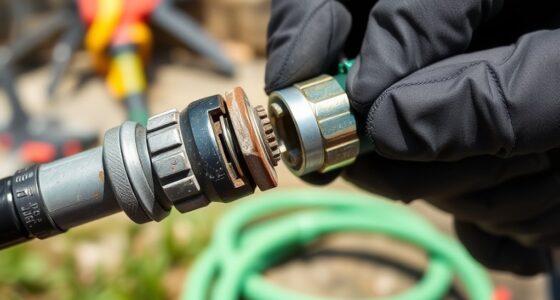
First, turn off the sprayer and unplug it from the power source. Relieve the pressure by activating the spray gun until no more paint sprays out, and then disconnect the hose. Immediately after, remove the spray tip and filter, soaking them in the appropriate cleaning solution. This prevents paint from drying and clogging these components. It’s best to rinse them thoroughly with water or solvent, depending on the type of paint used.
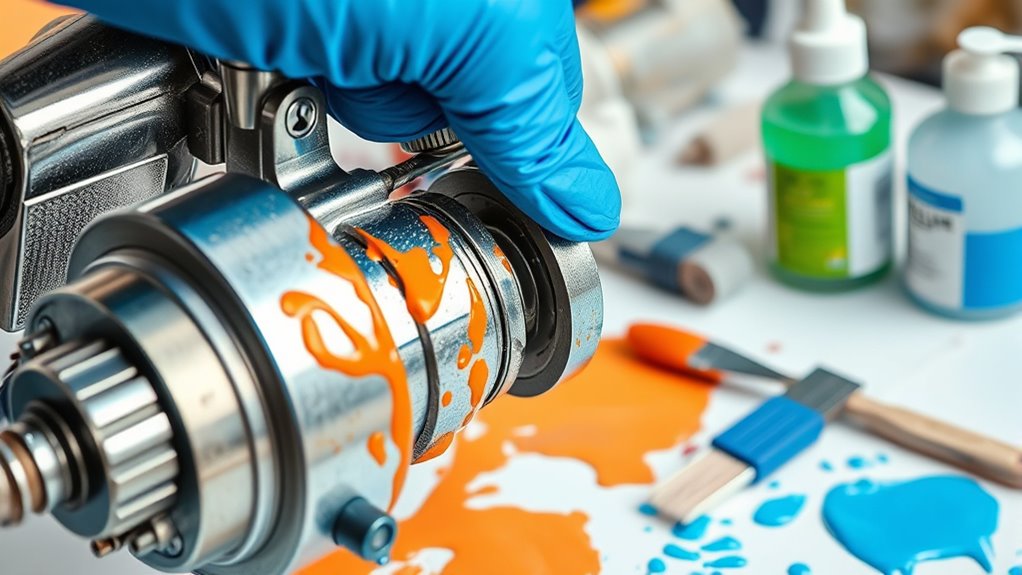
Next, prepare your cleaning solution—water for water-based paints or paint thinner for oil-based paints. Fill the sprayer’s fluid reservoir with the cleaning solution and reattach the hose and spray gun. Turn the sprayer on and trigger the gun to circulate the cleaning solution through the entire system. This process helps break down and flush out residual paint from the pump, hose, and nozzle. Follow the manufacturer’s instructions for the recommended cleaning cycle duration.
Once the cleaning solution has run through the system, turn off the sprayer and disconnect the power. Carefully remove the hose and other components, rinsing them with clean water or solvent to eliminate any remaining paint. Use a brush or rag to scrub stubborn spots on the spray tip and filter. Make sure all parts are dry before reassembling to prevent rust or damage.
For thorough maintenance, check the spray tip for wear or clogs and replace if necessary. Regularly inspecting and cleaning your equipment minimizes the risk of clogs and uneven spray patterns. Store your sprayer in a clean, dry place, and consider applying a light coat of oil to metal parts to prevent corrosion.
Frequently Asked Questions
Can I Use Water to Clean Latex Paint From the Sprayer?
Yes, you can use water for water cleaning when removing latex paint from your sprayer. Water effectively dissolves and loosens latex paint, making latex paint removal easier. Make sure to run water through the sprayer thoroughly after painting, especially if you’re switching to a different type of paint. This prevents clogs and guarantees your sprayer stays in good condition for future projects.
How Often Should I Clean the Sprayer During a Project?
Did you know that neglecting proper maintenance can cause your sprayer to clog or fail prematurely? You should clean your airless paint sprayer after every 1-2 hours of continuous use or at the end of each day. Establish a maintenance schedule with regular cleaning frequency, especially when switching between different types of paints. This keeps your equipment in top shape, ensuring smooth operation and long-lasting performance.
What Safety Precautions Are Necessary When Cleaning the Sprayer?
When cleaning your sprayer, always wear protective gear like gloves, goggles, and a mask to prevent contact with paint and fumes. Make certain good ventilation by working in a well-ventilated area or opening windows, so fumes don’t build up. Turn off the sprayer before cleaning, disconnect it from power, and follow manufacturer instructions. These safety precautions keep you safe from harmful chemicals and inhalation hazards during cleaning.
Is It Necessary to Disassemble All Parts for Cleaning?
You don’t always need to disassemble all parts for cleaning, but it depends on the cleaning complexity. If you’re dealing with stubborn paint buildup or dried material, disassembly becomes necessary to thoroughly clean each component. For routine maintenance, simple flushing might suffice without full disassembly. Always follow your sprayer’s instructions, as improper cleaning can damage parts or affect performance. When in doubt, take apart to ensure a thorough clean.
How Do I Prevent Clogs During the Cleaning Process?
Think of your sprayer as a well-oiled machine—preventive measures keep it flowing smoothly. To avoid clogs, regularly check nozzle maintenance, ensuring paint flows evenly without blockages. Keep filters clean and strain paint before spraying. Flush the system thoroughly after each use, and avoid thick or dried paint. These proactive steps maintain consistent paint flow, preventing clogs and ensuring your sprayer works flawlessly every time.
Conclusion
Now that you know how to clean your airless paint sprayer properly, you’ll keep it in top shape and ensure smooth, flawless finishes every time. Some say cleaning immediately after use prevents clogs, but recent studies suggest that occasional deep cleanings may be more effective for long-term maintenance. Either way, regular cleaning extends your sprayer’s lifespan and saves you money. So, make it a habit—your tools and projects will thank you!

Franz came aboard the Paint Sprayer Zone team with a background in both journalism and home renovation. His articulate writing style, combined with a passion for DIY projects, makes him an invaluable asset. Franz has a knack for breaking down technical jargon into easy-to-understand content, ensuring that even the most novice of readers can grasp the complexities of paint sprayers.