
TL;DR

Get business pricing on tools and workshop supplies
- Business-only prices and quantity discounts
- Tax-exempt purchasing
- Multiple users, one account, clear invoices
A TikTok user showed how one long board of reclaimed wood can be installed over open bathroom shelving, then cut into separate door panels. The project calls for careful measuring, suitable hinges and support, and finishing the cut edges; costs and fit will vary by bathroom.
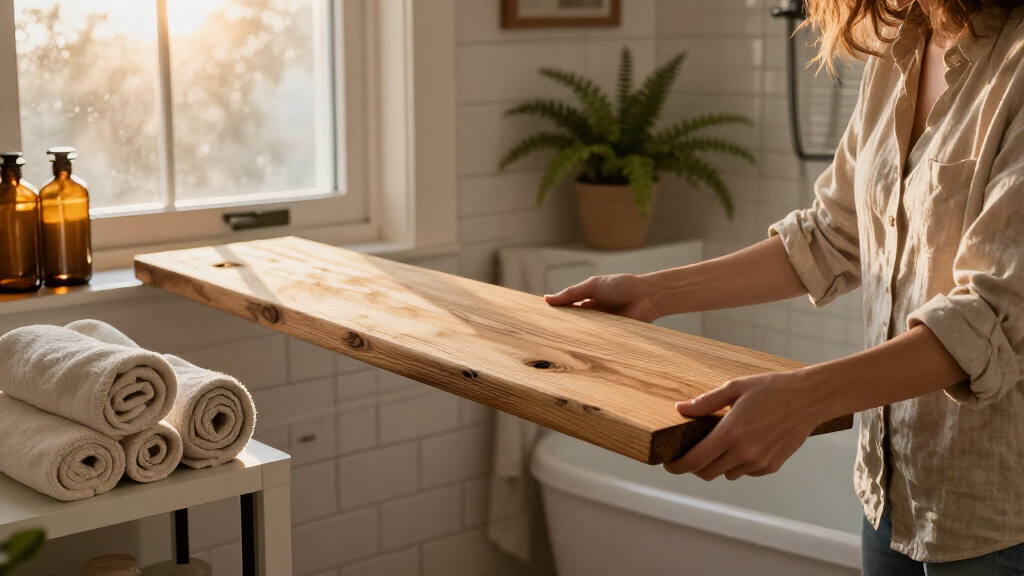
A TikTok DIY project featured in a Hunker report shows how a single piece of secondhand wood can be turned into doors that cover open bathroom shelves. The method mounts the board over the shelving before cutting it into individual panels, allowing the panels to retain a continuous grain pattern when closed.
The project was shared by TikTok user johndolechek. Hunker describes the board as appearing to be about a 1-by-16-inch board, roughly six feet long; those are estimates based on the video, not a specified requirement. The correct board dimensions depend on the shelving opening. The report suggests looking at architectural salvage stores, Habitat for Humanity retail stores, and Facebook Marketplace, or reusing wood left from another project.
Before buying or cutting lumber, measure the full opening and account for the difference between nominal and actual lumber sizes. A board sold as 1 by 16 inches is typically about 0.75 inches thick and 15.25 inches wide, according to the report. The board must be wide and long enough to cover the intended area, with panel sizes planned around any fixed shelf dividers.
The method uses European soft-close hinges, with a pair for each door panel and an additional hinge for taller doors when needed. For stained doors, Hunker recommends laying out the hinge positions and panel cuts on the full board before finishing, so the grain can line up across the closed doors. The board is first installed as one piece; the panel lines are marked, then it is removed and cut into sections.
A Continuous Grain Across Shelf Doors
The approach offers a way to cover bathroom storage without ordering a custom-made cabinet front, while making use of a reclaimed or leftover board. Its visual effect depends on keeping the panels in their original order: the long board’s grain can continue across the separate doors when they are shut, creating a more unified appearance than unrelated pieces of wood might.
The project also shows why planning matters as much as the finish. Hinge placement, panel dimensions and wall support determine whether the doors can open and close properly and whether the installation is secure. The report does not provide a tested price or a guarantee that the method will suit every bathroom, so readers will need to account for their own shelving layout, materials and tools.
European soft-close hinges for cabinet doors
As an affiliate, we earn on qualifying purchases.
As an affiliate, we earn on qualifying purchases.
Planning the Board and Panel Cuts
Hunker frames the project as a response to the practical limits of open bathroom niches, which can leave everyday supplies visible. The suggested design can be adapted: a homeowner may use separate doors for each shelf, combine several sections behind a wider door, or cover the full height with one tall panel. The right arrangement depends on the opening and how the shelves are divided.
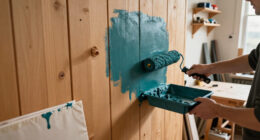
For a stained finish, the report advises installing the uncut board first, marking where the doors will divide, and cutting only after confirming the layout. For painted doors, it says the board can be marked and cut before installation. After cutting, the panels are lightly sanded and fitted with iron-on edge banding to cover the exposed edges. They can then be stained, painted to match trim or walls, or given an accent color; decorative hardware is optional.
“It’s easier to figure out the installation first before finishing the board so the doors only have to be stained once with the edge banding on.”
— Hunker, reporting on the TikTok project
Fit, Cost and Support Vary
The source does not state the board’s exact dimensions, the project’s total cost, or how long the work took. The reported size is an estimate, and the materials and labor will depend on the individual opening. It is also not clear whether the creator’s shelves had a frame suitable for mounting hinges or required attachment to a wall stud.
Hunker advises mounting hinges to the shelving’s inner frame where one exists, or checking for the vertical stud framing the niche to provide support. The report does not offer a structural assessment for particular walls or shelving systems. Readers should verify that their chosen mounting surface can carry the doors and that hinges, clearances and cuts suit their setup before proceeding.
Measure Before Buying Lumber
The next step for anyone adapting the idea is to measure the opening, check the available mounting support and decide how the shelf sections should be grouped. Then select a board that covers the planned area, map out the hinge positions and confirm that each door can swing without hitting walls, fixtures or neighboring panels.
After installation and cutting, the remaining work is to sand the edges, apply edge banding and finish the panels. The Hunker report does not announce a follow-up test or additional instructions from the TikTok creator, so there is no confirmed update on the finished installation beyond the project details described in the report.
Key Questions
Can one board cover every open bathroom shelf?
It depends on the opening’s dimensions and the board available. Measure the full area, account for actual lumber dimensions, and plan the panel layout before buying or cutting wood.
Why install the board before cutting it into doors?
For a stained finish, fitting the board as one piece lets the installer plan cuts and hinge positions while keeping the grain pattern aligned across the panels. Hunker says painting can allow the panels to be cut earlier.
What hinges does the project use?
The report calls for European soft-close hinges, generally a pair for each panel, with an extra hinge for taller doors when additional support is needed. Hinge choice and placement should match the door and mounting surface.
Where can the wood come from?
Hunker suggests architectural salvage stores, Habitat for Humanity retail stores, Facebook Marketplace, or leftover wood from another project. The board must be large enough for the planned shelf coverage.
Does the project provide a confirmed total cost?
No. The report does not give a total project cost. The final expense will depend on the board, hinges, edge banding, finish, hardware and tools needed for the particular installation.
Source: rss
Halloween Picks
halloween
As an affiliate, we earn on qualifying purchases.