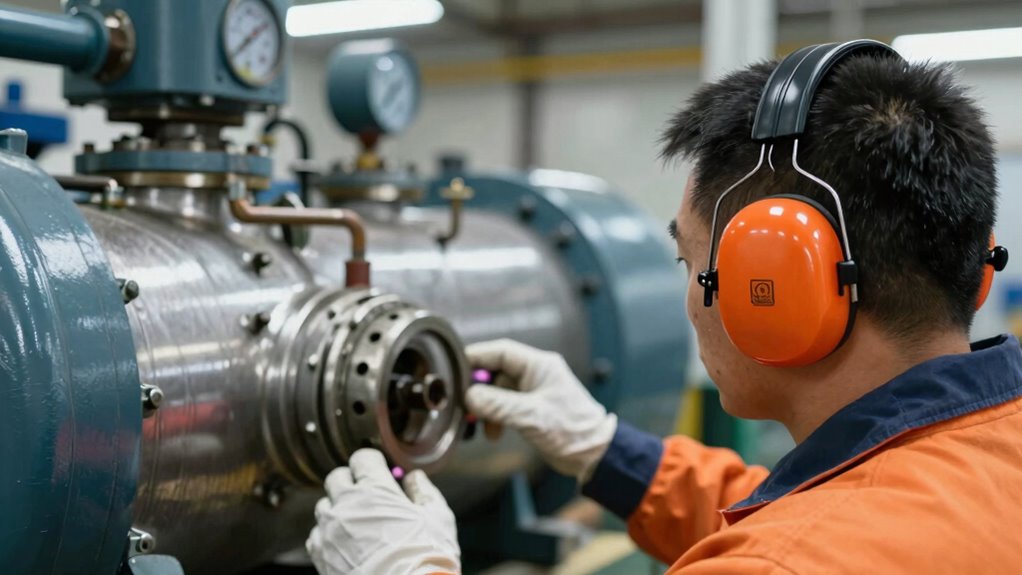
You should be aware that noise levels from compressors can reach 85 decibels or higher, which can cause hearing damage over time. To protect yourself, wear appropriate earplugs or earmuffs during operation, especially if exposure exceeds safe limits. OSHA standards recommend taking breaks or reducing exposure at levels above 85 decibels. If you want to learn more about noise thresholds and effective protection strategies, you’ll find helpful tips ahead.
Key Takeaways
- OSHA recommends hearing protection when noise exceeds 85 decibels to prevent hearing loss.
- Compressors often produce noise levels at or above 85 dB, requiring proper ear protection.
- Use earplugs or earmuffs rated for high noise reduction during compressor operation.
- Regularly inspect and replace hearing protection devices to maintain effectiveness.
- Limit exposure time in noisy environments to stay within safe hearing threshold levels.
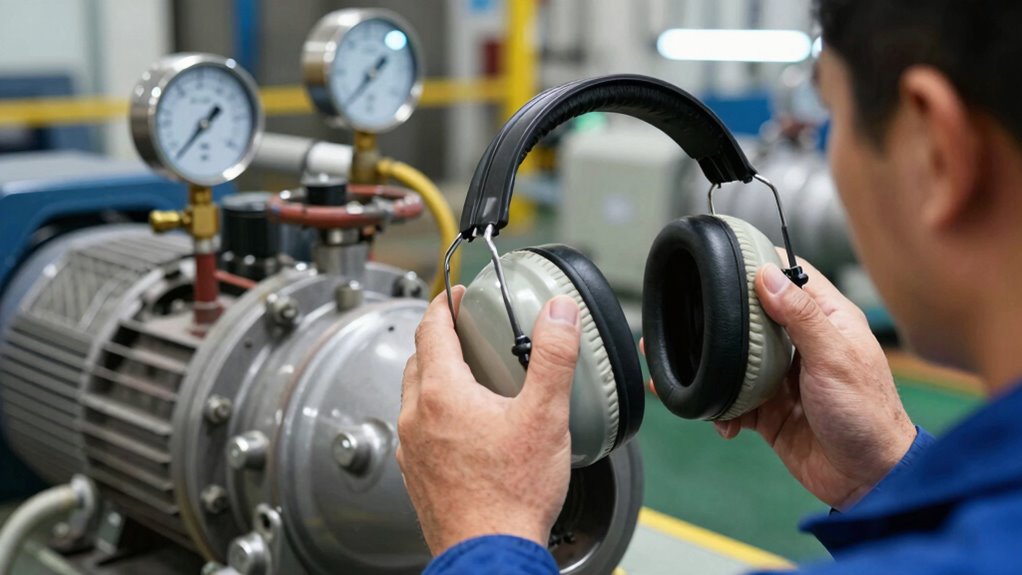
If you work near compressors, protecting your hearing should be a top priority. These machines produce significant noise levels that can cause long-term damage if you’re not careful. Noise reduction is essential to minimize the risk of hearing loss, and understanding safety standards helps you choose the right protective measures. The key is knowing the noise levels generated by compressors and how to stay within safe limits. Typically, compressor noise can reach 85 decibels or higher, and prolonged exposure without proper protection can harm your hearing health. Safety standards, such as those set by OSHA, specify permissible exposure times at various noise levels, emphasizing the importance of using appropriate hearing protection devices. When working around compressors, you need to be proactive about noise reduction strategies; this includes installing sound barriers, maintaining equipment to reduce excess noise, and opting for quieter models if possible. But the most effective way to safeguard your hearing remains wearing proper hearing protection, like earplugs or earmuffs designed for industrial use. These devices act as a barrier, diminishing the noise reaching your ears and helping you stay below the threshold where damage can occur. Making sure your gear meets safety standards is essential, as subpar protection might not effectively block high-decibel noise. Look for hearing protection rated for the specific noise levels you encounter daily. It’s also wise to regularly inspect and replace your hearing protection, since worn or damaged devices won’t provide the necessary noise reduction. Remember, hearing protection isn’t just about avoiding discomfort; it’s about preventing permanent damage. The longer you’re exposed to loud noise without adequate defense, the greater your risk of developing noise-induced hearing loss. By adhering to safety standards, you not only protect yourself but also ensure compliance with workplace regulations, which can prevent potential legal issues and fines. Educate yourself about the noise levels produced by your equipment and invest in the right protective gear. Combining noise reduction techniques with proper hearing protection creates a safer work environment and preserves your hearing health for the long term. Additionally, understanding noise exposure limits can help you better plan your work shifts and breaks to minimize risk. Don’t underestimate the importance of taking these precautions seriously—your hearing is invaluable, and safeguarding it should always be a priority when working around compressors. Ultimately, the goal is to keep your exposure within safe limits, and that starts with understanding the noise levels, following safety standards, and consistently using effective hearing protection.
Frequently Asked Questions
What Are the Latest Advancements in Hearing Protection Technology?
You’ll find that the latest advancements in hearing protection include noise canceling innovations and smart hearing devices. These technologies actively reduce harmful noise levels while allowing you to stay aware of your surroundings. Smart devices even adapt to noise environments in real-time, providing personalized protection. With these innovations, you get better comfort and safety, making it easier to protect your hearing without sacrificing awareness or communication on the job or during activities.
How Do Noise Levels Vary Between Different Types of Compressors?
The noise levels from compressors can be deafening—literally! Different compressor types, like reciprocating, rotary screw, and centrifugal, vary markedly in noise measurement. Reciprocating compressors tend to be noisier, often exceeding 85 dB, while rotary screw units are generally quieter, around 80 dB. Centrifugal compressors can range widely, but high-capacity models often produce the loudest sounds. Always measure noise levels to determine the best hearing protection for your environment.
Are There Specific Regulations for Hearing Protection in Industrial Settings?
Yes, there are specific regulations for hearing protection in industrial settings. You must follow noise regulations and safety standards set by agencies like OSHA or MSHA, which specify permissible noise exposure levels. These regulations require you to implement hearing conservation programs, provide adequate hearing protection, and conduct regular noise assessments. By adhering to these standards, you safeguard yourself and your colleagues from hearing loss and ensure a safer working environment.
How Often Should Hearing Protection Equipment Be Replaced?
You should replace your hearing protection equipment based on a regular replacement schedule, typically every 3 to 6 months, depending on durability factors. Check for signs of wear, cracks, or loss of elasticity, as these indicate it’s time for a new pair. Proper maintenance and timely replacements guarantee maximum protection, reducing your risk of hearing damage and maintaining comfort during extended use.
Can Hearing Protection Improve Overall Worker Productivity?
Yes, hearing protection can improve your overall worker productivity by reducing worker fatigue and ensuring safety compliance. When your team wears proper hearing gear, they stay alert longer, work more efficiently, and experience less stress from noise distractions. This focus boosts morale and minimizes safety risks. As a result, your workers perform better, maintain compliance standards, and contribute to a safer, more productive work environment.
Conclusion
Remember, protecting your hearing around compressors is vital. Did you know that exposure to noise levels above 85 decibels can cause hearing loss over time? By using proper hearing protection, you reduce your risk considerably. Don’t wait until it’s too late—your hearing is invaluable. Invest in quality ear protection and stay aware of your environment. Keep your ears safe so you can enjoy life’s sounds long into the future.