

When choosing gloves for solvent-based versus waterborne paints, relying only on “chemical resistant” labels can be misleading because they don’t specify which chemicals the gloves can handle. Solvent paints contain aggressive solvents like toluene or xylene, needing gloves made from resistant materials, while waterborne paints are less harsh. To stay safe, you need to check detailed compatibility info and safety standards. Keep exploring to learn more about selecting the right gloves for your project.
Key Takeaways
- “Chemical resistant” labels lack specificity, making it unclear which chemicals and concentrations gloves can withstand.
- Solvent-based paints contain aggressive chemicals requiring specialized gloves, not just general “resistant” ones.
- Compatibility charts and manufacturer data are essential to verify glove suitability for specific solvents or waterborne paints.
- Resistance duration and glove degradation under prolonged exposure vary; labels don’t specify these critical factors.
- Standards and certifications help identify gloves that meet safety requirements for handling both solvent and waterborne chemicals.
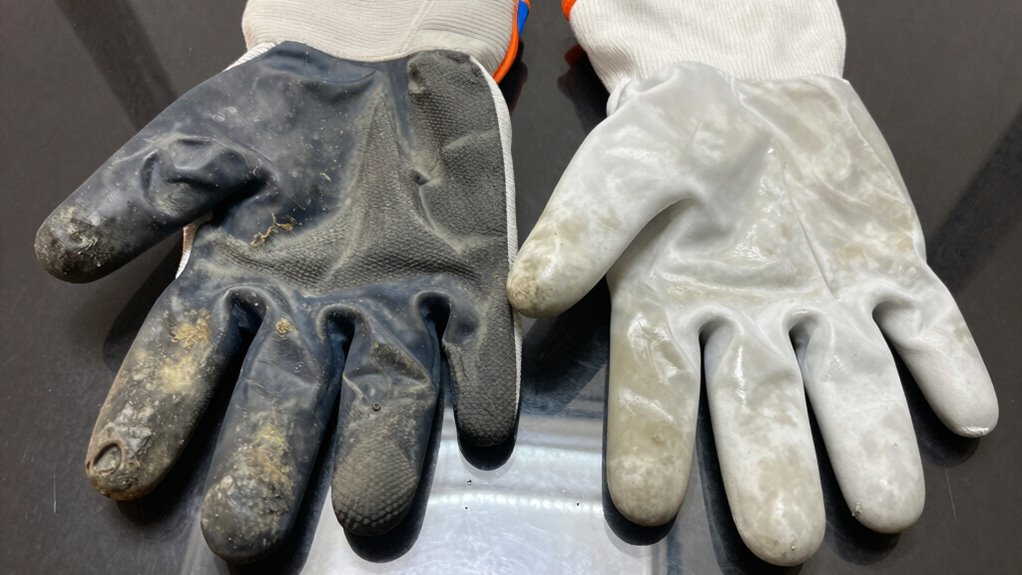
When choosing gloves for painting or coating jobs, understanding the differences between solvent and waterborne applications is essential. Not all gloves are created equal, and what works for one type of coating may not be suitable for another. The term “chemical resistant” is often used to describe gloves, but it’s a vague label that can be misleading. To guarantee your safety, you need to pay attention to chemical compatibility and safety standards when selecting protective gloves. Chemical compatibility refers to how well a glove material withstands specific chemicals without degrading or allowing penetration. Waterborne paints generally contain less aggressive solvents, so many standard nitrile or latex gloves provide sufficient protection. However, when working with solvent-based paints, which contain more volatile and aggressive chemicals like toluene or xylene, you need gloves made from materials specifically resistant to these substances, such as Viton or neoprene. Relying solely on the “chemical resistant” label can lead to dangerous misjudgments because it doesn’t specify which chemicals the glove can withstand or for how long. You should always review manufacturer data sheets and compatibility charts to confirm that the glove material suits the chemicals involved in your project. Safety standards play a pivotal role here. Reputable glove manufacturers adhere to safety standards set by organizations like ASTM International or EN standards, which specify testing protocols for chemical resistance, dexterity, and durability. These standards help you identify gloves that meet minimum safety requirements for specific applications. When selecting gloves, check for certifications or markings indicating compliance with these standards. Also, consider the duration of exposure and the nature of the task; some gloves might protect well against brief contact but fail during extended use. In waterborne applications, the chemicals are less aggressive, so standard gloves often suffice, but in solvent-based tasks, failure to select chemically compatible, standards-compliant gloves can lead to skin irritation, chemical burns, or absorption of toxic substances. Remember, no glove offers absolute protection. It’s essential to understand the specific chemicals you’re handling, consult compatibility charts, and choose gloves rated for those chemicals under recognized safety standards. Being aware of chemical resistance testing and how it applies to your gloves can significantly enhance safety. In doing so, you minimize risks and guarantee your safety during painting or coating jobs, regardless of whether you’re working with waterborne or solvent-based materials. Don’t fall for vague labels—be precise, be informed, and prioritize chemical compatibility and safety standards when selecting your protective gear.
Frequently Asked Questions
Are All Chemical-Resistant Gloves Suitable for Both Solvent and Waterborne Substances?
Not all chemical-resistant gloves are suitable for both solvents and waterborne substances. You need to take into account the glove material and its chemical compatibility with specific chemicals. For example, nitrile gloves often work well with solvents, while latex may be better for waterborne substances. Always check the manufacturer’s chemical resistance chart to ensure the gloves you choose are appropriate for your specific application.
How Often Should Chemical-Resistant Gloves Be Replaced During Use?
Imagine your gloves as shields that weaken over time; you should replace them as soon as signs of wear or damage appear. For maximum glove durability, check them frequently—ideally every hour during use. If you notice tears, thinning, or sticky residues, it’s time for replacement. Regularly evaluating your gloves ensures continued protection, prevents chemical breaches, and maintains safety during handling, whether dealing with solvents or waterborne substances.
Do Different Glove Materials Offer Varying Levels of Chemical Resistance?
Yes, different glove materials offer varying levels of chemical resistance due to material differences and chemical compatibility. For example, nitrile gloves resist solvents better than latex, while neoprene provides good protection against acids. You should always check the chemical compatibility charts for specific substances to verify your gloves are suitable. Selecting the right material depends on understanding these differences to guarantee your safety during handling.
Can Gloves Labeled “Chemical Resistant” Protect Against All Types of Chemicals?
Think of it like your trusty smartphone—”chemical resistant” gloves won’t protect against all chemicals. Their chemical efficacy varies based on material durability and specific chemicals involved. You can’t rely solely on the label; some gloves excel against solvents, others against waterborne substances. Always check a glove’s chemical resistance chart and choose the right material for your task. Remember, no glove offers absolute protection—knowledge is your best defense.
Are There Specific Storage Instructions for Maintaining Glove Integrity?
Yes, proper glove storage is essential for maintaining glove integrity. Store your gloves in a cool, dry place away from direct sunlight, chemicals, and heat sources. Keep them flat or hanging to prevent deformation. Follow maintenance tips like inspecting for tears before use and avoiding exposure to harsh environments. Proper glove storage and regular maintenance help extend their lifespan and guarantee ideal protection when you need it most.
Conclusion
So, next time you pick gloves, don’t just settle for “chemical resistant” – it’s like choosing a umbrella that claims to keep out all weather but only works in a drizzle! Whether you’re dealing with solvents or waterborne paints, know that not all gloves are equal. Think of it this way: your hands deserve armor that’s truly battle-ready, not just a fancy label. Don’t gamble with safety—choose gloves that actually mean business!