
If you spot tiny, glossy bubbles or spots on your resin surface within seconds, you’re likely seeing fish eyes, caused by surface contamination or incompatible materials. Craters look like small holes or indentations, indicating improper curing or trapped air. Pinholes are tiny holes that form from trapped air or inadequate mixing. To identify these flaws quickly, check for surface cleanliness, surface preparation, and consistent curing conditions. Keep these tips in mind to prevent or fix such defects easily. Continue to learn how to avoid them altogether.

Get business pricing on tools and workshop supplies
- Business-only prices and quantity discounts
- Tax-exempt purchasing
- Multiple users, one account, clear invoices
Key Takeaways
- Fish eyes are caused by surface contamination or incompatible resin and substrate, preventing proper adhesion.
- Craters and pinholes often result from trapped air bubbles during mixing or pouring.
- Surface flaws can stem from inconsistent curing conditions like temperature or humidity.
- Proper surface cleaning, material compatibility, and controlled environment minimize defect risks.
- Observing surface appearance and curing behavior quickly helps identify the specific defect type.
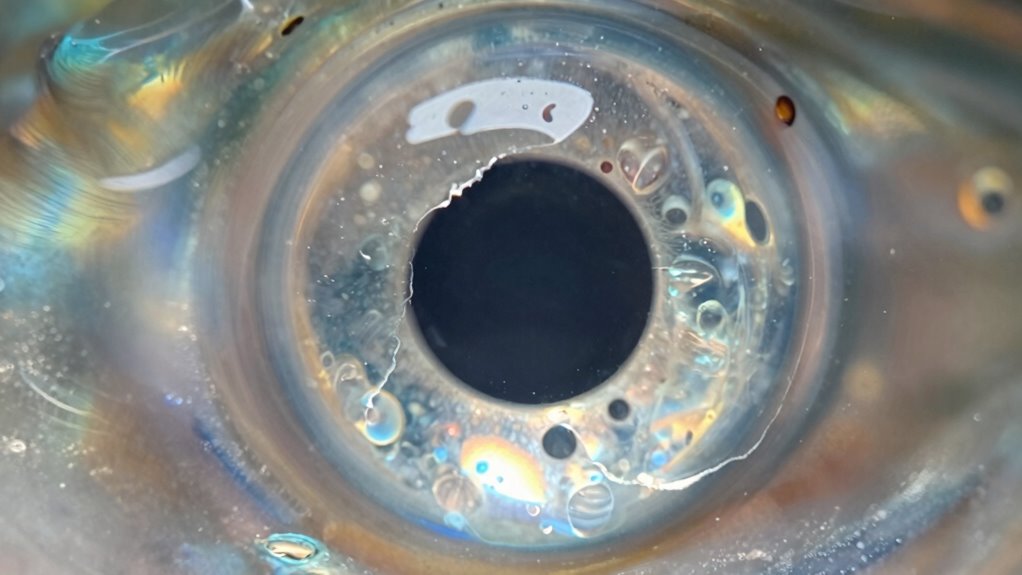
Fish eyes can develop a variety of defects that affect their health and vision. When working with resin, understanding what causes these flaws is essential to achieving a smooth, flawless finish. One common issue is the appearance of fish eyes in the resin surface, which look like small, round craters or spots. These are often caused by contamination or incompatibility between the resin and the surface it contacts. To prevent this, you must guarantee resin compatibility with the materials you’re working with. Using incompatible substrates or contaminated surfaces can interfere with the curing process, leading to these unwanted defects. Before pouring, thoroughly clean and prepare your surface, and choose a resin known for its compatibility with your project materials. This step helps promote uniform adhesion and minimizes the risk of fish eyes forming during curing.
The curing process itself plays an essential role in the development or prevention of surface defects. If the resin is exposed to inconsistent temperatures, excessive humidity, or inadequate mixing, it can cause uneven curing. These conditions can lead to surface imperfections like craters or pinholes, which compromise the resin’s clarity and strength. When you notice fish eyes or craters, it’s often a sign that the resin didn’t cure properly or that contaminants disrupted the process. For the best results, follow the manufacturer’s instructions carefully, especially regarding mixing ratios and curing conditions. Proper curing guarantees the resin forms a uniform, clear surface without defects. Additionally, understanding resin compatibility and how it influences curing outcomes is crucial for avoiding these issues.
Another factor that influences the development of fish eyes is air entrapment. During mixing or pouring, tiny air bubbles can become trapped under the surface, especially if the resin isn’t stirred correctly or if the environment isn’t free of dust and debris. These bubbles can later appear as pinholes or crater-like defects once the resin hardens. To minimize this, pour slowly and steadily, and consider degassing or using a vacuum chamber if your project requires a flawless finish. Additionally, selecting a resin with good resin compatibility and lower viscosity can improve flow and reduce air entrapment. This makes it easier for the resin to settle evenly and cure without defects.
Ultimately, recognizing the signs of resin incompatibility and guaranteeing proper curing conditions are key steps in avoiding fish eyes, craters, and pinholes. By paying close attention to surface preparation, environmental controls, and resin selection, you can considerably improve your chances of achieving a smooth, defect-free finish in less than 30 seconds of inspection. Understanding the impact of each factor allows you to troubleshoot effectively and produce high-quality results every time.
As an affiliate, we earn on qualifying purchases.
Frequently Asked Questions
Can Fish Eyes Be Repaired or Restored?
Yes, you can repair fish eyes, but it requires proper surface preparation and application techniques. First, sand the area thoroughly to remove the defect and any contaminants. Then, clean the surface with a degreaser. Apply a compatible primer or sealer to prevent future issues. Follow the manufacturer’s instructions carefully during application to guarantee a smooth, defect-free finish. Proper prep and technique are key to restoring the surface effectively.
Are Fish Eyes More Common in Specific Coatings?
Imagine tiny bubbles bursting on a glass surface—that’s what fish eyes look like. They’re more common in coatings with poor adhesion or if surface contaminants like oil or dirt aren’t properly removed. When these issues occur, the coating struggles to stick, creating these visual flaws. So, always guarantee surface cleanliness and proper surface preparation to prevent fish eyes, especially in high-viscosity or sensitive coatings.
What Environmental Factors Cause Fish Eyes to Form?
Environmental humidity and surface contamination mainly cause fish eyes to form. When you apply coatings, high humidity levels introduce moisture that gets trapped, creating bubbles. Surface contamination like oils, dirt, or grease prevents proper adhesion, also leading to fish eyes. To avoid this, make certain your surface is clean and dry before coating, and control environmental humidity during application. These steps considerably reduce the chances of fish eye formation.
Do Fish Eyes Affect the Structural Integrity of the Coating?
Fish eyes can compromise coating adhesion, but they don’t usually weaken the overall structural integrity. However, surface contamination that causes fish eyes may lead to poor adhesion, making the coating more susceptible to peeling or failure over time. Addressing surface contamination before application is essential to prevent these defects and guarantee the coating performs effectively, maintaining both its protective qualities and structural integrity.
How Can I Prevent Fish Eyes During Application?
To prevent fish eyes during application, you should focus on thorough surface preparation, ensuring it’s clean, dry, and free of contaminants like oil or grease. Use compatible materials that bond well with the surface, avoiding reactions that cause defects. Additionally, consider environmental conditions such as temperature and humidity, as they can influence film formation. Proper surface prep and material compatibility are key to achieving a smooth, defect-free coating.
Conclusion
So, next time you’re inspecting a surface and spot fish eyes, craters, or pinholes, remember it’s no coincidence—they all tell a story about your process. Spotting these defects quickly can save you time and materials, turning what feels like bad luck into a chance to improve. It’s funny how a tiny flaw can teach you so much, almost like the universe giving you a little nudge to pay closer attention.
Halloween Picks
halloween
As an affiliate, we earn on qualifying purchases.