
Garages often hide explosive vapor zones due to flammable fumes from gas, chemicals, and household products that can accumulate quickly, especially with poor ventilation. Vapors are heavier than air and settle low, making it easy for small leaks or spills to create dangerous pockets. Without proper airflow, these vapors can ignite from electrical sparks, open flames, or hot surfaces. To protect yourself, it’s essential to understand how to identify, control, and prevent vapor buildup—keep going to learn more.
Key Takeaways
- Garages often contain stored chemicals, paints, and fuels that emit flammable vapors accumulating in low, poorly ventilated areas.
- Inadequate ventilation traps vapors, increasing their concentration and the risk of ignition from electrical sparks or heat sources.
- Vapors are heavier than air, settling in corners and low spots, creating hidden explosion hazards.
- Faulty wiring, open flames, and static sparks in garages can ignite accumulated vapors unexpectedly.
- Lack of safety devices like gas detectors and proper storage increases the danger of unnoticed vapor buildup and explosions.
What Are Explosive Vapor Zones in Your Garage?
Explosive vapor zones in your garage are areas where flammable vapors accumulate to dangerous levels. These zones often develop near sources of vapors, such as gasoline containers, chemicals, or poorly ventilated spaces. Proper garage insulation can help prevent vapor buildup by controlling temperature fluctuations that cause vapors to condense or vaporize. Using fire resistant materials for walls, floors, and ceilings further reduces the risk of ignition. These materials slow down or block the spread of fire if vapors ignite, creating a safer environment. Recognizing these zones is essential because even small leaks or spills can lead to dangerous vapor concentrations. Implementing energy-efficient cloud solutions can also assist in monitoring and managing environmental factors that influence vapor buildup. Additionally, ensuring proper ventilation systems are in place is critical for dispersing accumulated vapors and preventing dangerous concentrations. Upgrading insulation and installing fire resistant materials not only enhances safety but also aligns with industry standards for hazardous environment management, helping to markedly reduce the risk of explosive vapor accumulation in your garage.
How Do Gasoline and Household Chemicals Create Flammable Vapors?
Gasoline and household chemicals release flammable vapors because their volatile compounds easily evaporate at room temperature. When you open a can of gasoline or use cleaning products, they emit gasoline fumes and chemical vapors that linger in the air. These vapors are lightweight and can quickly disperse throughout your garage, creating a hazardous environment. Household chemicals like paint thinners, solvents, and disinfectants contain volatile ingredients that evaporate even when not in use. As these vapors accumulate, they form a flammable mixture with air, increasing the risk of ignition. Understanding how these substances release vapors helps you recognize the importance of proper storage and handling to prevent vapor buildup and potential explosions. volatile compounds are responsible for the rapid evaporation process that creates these hazardous vapors. Additionally, proper ventilation can significantly reduce the buildup of flammable vapors, decreasing the risk of ignition. Recognizing the flammability characteristics of these substances is crucial for safety. Being aware of fire hazards associated with chemical vapors can help you implement safety measures to protect your property and loved ones.
Why Poor Ventilation Makes Vapor Buildup Dangerous?
When your garage lacks proper ventilation, air doesn’t circulate well, causing vapors to concentrate. This buildup increases the risk of fire or health hazards if flammable gases accumulate. Without enough airflow, dangerous vapors can reach unsafe levels quickly. Ensuring proper ventilation systems are in place can significantly reduce these dangers by promoting better air exchange. Additionally, installing appropriate air filtration can help trap and remove harmful vapors before they build up to dangerous levels. Regular maintenance of ventilation equipment is essential to sustain effective airflow and prevent vapor accumulation. Understanding the net worth of individuals involved in related industries can also help identify the importance of safety investments in high-risk environments. Moreover, implementing safety protocols can further mitigate potential hazards associated with vapor buildup.
Limited Air Circulation
Poor air circulation in your garage can quickly lead to dangerous vapor buildup because stagnant air traps fumes and moisture. Without proper ventilation systems, these vapors can accumulate unnoticed, creating a hazardous environment. When chemicals are stored improperly or ventilation isn’t maintained, fumes linger longer, increasing the risk of ignition. Limited air movement prevents vapors from dispersing, allowing them to concentrate near the ground or in corners. This buildup enhances the likelihood of reaching explosive concentrations, especially if sparks or heat sources are present. Ensuring good airflow by installing effective ventilation systems and correctly storing chemicals helps prevent vapor stagnation. Regularly checking and maintaining ventilation is essential to keep the air fresh, reducing the potential for dangerous vapor zones to develop.
Gas Accumulation Risks
Without proper ventilation, vapors can quickly reach dangerous levels because they are unable to disperse. Poor airflow causes vapor buildup, increasing explosion risks, especially if you store chemicals or fuels in your garage. Ventilation systems are vital for maintaining safe air quality and preventing hazardous concentrations. When vapors accumulate, you risk:
- Ignition from static or sparks
- Breathing hazards from toxic fumes
- Long-term chemical exposure risks
If you store chemicals or fuels, inadequate ventilation can cause vapors to linger and concentrate, raising the chance of a fire or explosion. Ensuring proper ventilation design helps disperse vapors and reduces these dangers, making your garage a safer environment for both storage and daily activities. Remember, good airflow is your first line of defense against vapor zone hazards. Proper indoor air quality management is essential for maintaining safe conditions and preventing vapor accumulation. Additionally, monitoring airflow rates can help identify areas where ventilation may be insufficient and needs improvement. Regularly inspecting and maintaining your ventilation system ensures continuous safe operation and reduces buildup risks. Developing a ventilation plan tailored to your space can further enhance safety by addressing specific airflow needs.
What Items and Conditions Increase Vapor Accumulation in Your Garage?
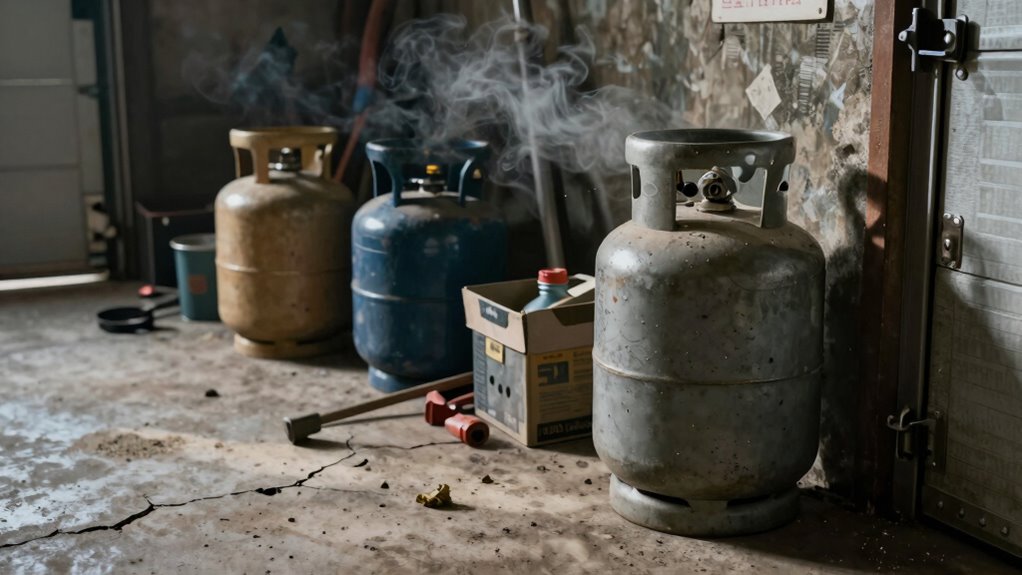
Certain items and conditions in your garage can substantially increase vapor accumulation. Poor garage insulation allows fumes from fuels, paints, and chemicals to linger longer, raising vapor levels. Faulty or exposed electrical wiring also plays a role; sparks or malfunctions can ignite vapors, creating dangerous situations. Additionally, cluttered spaces with stored chemicals or aerosols can emit vapors that build up over time. An unventilated garage traps these fumes, further escalating risk. Using airtight containers for chemicals and ensuring proper insulation can help reduce vapor buildup. Regularly inspecting electrical wiring for damage and maintaining good ventilation are essential steps to prevent dangerous vapor concentrations. Implementing safety measures like vapor detectors and proper storage practices can greatly minimize hazards. Proper air circulation is vital to dispersing accumulated vapors and reducing overall risk. To further mitigate these dangers, installing ventilation systems designed specifically for garages can enhance air flow and vapor dispersal. Incorporating air quality monitoring devices can also provide real-time alerts when vapor levels become unsafe.
How Can You Recognize Signs of Dangerous Vapor Buildup?
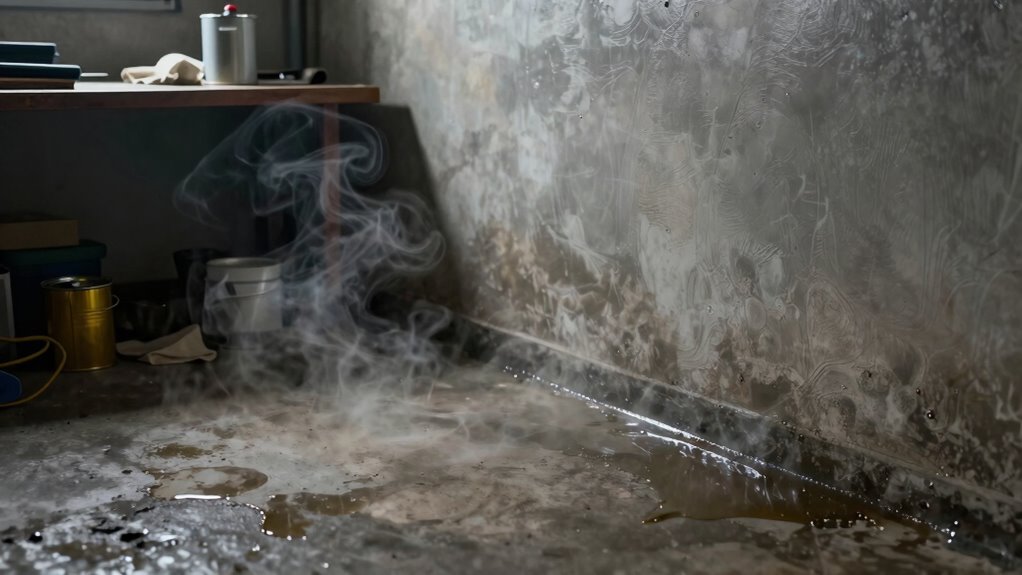
Recognizing signs of dangerous vapor buildup is essential for maintaining a safe garage environment. You should pay close attention to unusual odors, as strong or persistent smells of gasoline, diesel, or chemicals can indicate vapor accumulation. Installing chemical sensors can help detect even low levels of vapors before they become hazardous. Also, be alert for physical signs like foggy or hazy air, which may suggest vapor presence. Regularly check for:
Watch for strong odors and foggy air to detect dangerous vapor buildup early.
- Unusual or persistent chemical odors
- Alerts from chemical sensors
- Foggy or hazy air conditions
If you notice any of these signs, take immediate action to ventilate the space and reduce vapor sources. Early detection is key to preventing dangerous vapor buildup and potential explosions. Being aware of free floating vapors can help you better understand how vapors can disperse and accumulate unnoticed.
Can Sparks or Static Electricity Ignite Vapor Clouds?
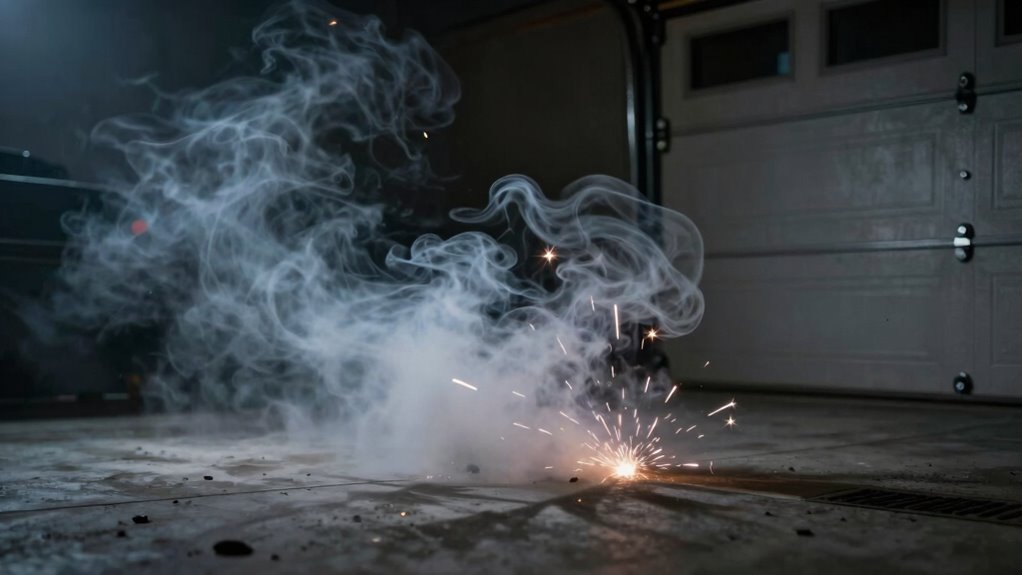
Vapor buildup in garages poses significant safety risks, especially when ignition sources are present. Sparks from electrical devices or static sparks from clothing or tools can trigger a spark ignition. Even tiny static discharges are enough to ignite vapor clouds, causing dangerous explosions. Understanding how static sparks and sparks from machinery can ignite vapors is vital. Here’s a visual overview:
| Source Type | Explanation | Potential Risk |
|---|---|---|
| Electrical sparks | Short circuits or faulty wiring | High |
| Static sparks | Friction from clothing or tools | Moderate to high |
| Open flames | Matches or pilot lights | Very high |
| Hot surfaces | Engines or equipment near vapors | High |
| Lightning strikes | External static charge events | Severe |
Static electricity can accumulate quickly in garages, especially with certain materials, increasing the static buildup risk. Additionally, electrical safety measures are essential to prevent accidental ignitions caused by static or electrical faults.
Easy Ways to Reduce Vapor Risks in Your Garage
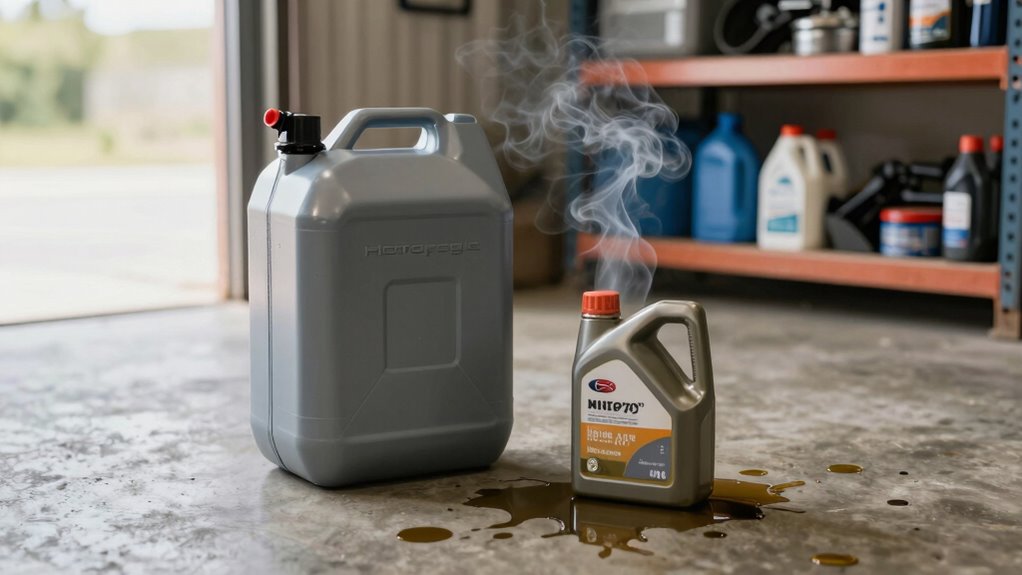
To reduce vapor risks in your garage, start by improving your ventilation systems to keep fumes from building up. Store flammable liquids safely, away from ignition sources, and check regularly for leaks that could release vapors. These simple steps can make your garage much safer and less prone to dangerous vapor hazards.
Improve Ventilation Systems
Improving your garage’s ventilation system is one of the simplest and most effective ways to reduce vapor buildup. Proper ventilation design guarantees that fumes don’t accumulate, lowering explosion risks. To optimize airflow, consider these actions:
- Install exhaust fans to actively remove vapors and improve air exchange
- Use intake vents to bring in fresh air and promote circulation
- Ensure windows or vents are unobstructed for natural airflow, especially during work activities
Focusing on airflow optimization helps disperse hazardous vapors quickly. Regularly inspect and maintain your ventilation system to keep it functioning efficiently. Remember, a well-designed ventilation setup minimizes vapor concentration, making your garage safer. Prioritizing these steps creates a safer environment by reducing vapor hazards and enhancing overall safety.
Store Flammable Liquids Safely
Properly storing flammable liquids is key to minimizing vapor risks in your garage. Use fire-resistant storage containers designed specifically for flammable chemicals to reduce the chance of ignition. Keep these containers in well-ventilated areas away from sources of heat or sparks. Always store liquids in their original containers with secure lids, and avoid transferring chemicals into unmarked or makeshift containers. Practicing good chemical safety means placing these storage units on sturdy shelves away from living spaces and out of reach of children or pets. Regularly inspect containers for leaks or damage, and dispose of expired or unused liquids properly. By following these simple steps, you decrease the risk of vapor buildup and help keep your garage a safer environment.
Regularly Check for Leaks
Regularly inspecting your garage for leaks is one of the simplest ways to reduce vapor risks. Gas leaks or chemical spills can silently create dangerous vapor zones if left unchecked. Detecting leaks early can prevent the buildup of flammable vapors that could ignite unexpectedly.
To stay safe, watch for:
- Unusual smells indicating a potential gas leak
- Stains or puddles from chemical spills
- Corrosion or damage on pipes and containers
Best Practices for Ventilating and Securing Your Garage

To guarantee your garage remains safe and comfortable, you need to prioritize effective ventilation and security measures. Proper airflow reduces vapor buildup, lowering fire safety risks and chemical hazards. Use exhaust fans or vents to promote continuous air circulation, especially during and after working with chemicals. Keep garage doors and windows open when possible, and install sealed, fire-resistant doors to prevent vapor leaks. Consider adding a carbon monoxide detector for extra safety. Regularly inspect ventilation systems for blockages or damage, and ensure chemicals are stored securely away from heat sources. Use the table below to optimize your garage’s safety:
| Action | Purpose | Tips |
|---|---|---|
| Install exhaust fans | Improve airflow | Use high-capacity fans for best results |
| Seal windows and doors | Prevent vapor leaks | Use weatherstripping and fire-resistant seals |
| Store chemicals securely | Reduce chemical hazards | Keep chemicals in labeled, fire-safe containers |
What Safety Devices Help Prevent Explosions in Garages?
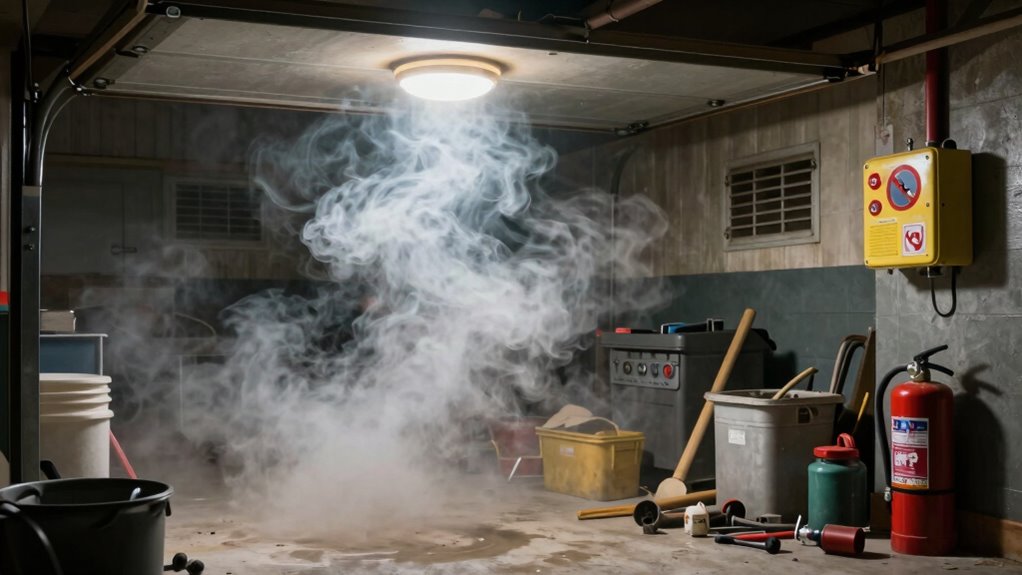
Safety devices are crucial for preventing explosions in garages by detecting hazards early and minimizing risks. Gas detectors play a critical role, alerting you to dangerous fumes before they reach explosive levels. Sprinkler systems provide automatic fire suppression, reducing the chance of an ignition turning into a disaster. Installing these devices ensures quick response to potential threats.
Safety devices like gas detectors and sprinkler systems are essential for preventing garage explosions and ensuring quick threat response.
Consider adding:
- Gas detectors that monitor for gasoline, propane, and other flammable vapors
- Automatic sprinkler systems designed for garage environments
- Ventilation alarms that trigger when vapor levels are unsafe
Together, these safety devices create a layered defense, helping you avoid dangerous vapor buildup and potential explosions. Regular maintenance and proper installation are key to maximizing their effectiveness in safeguarding your garage.
How Can You Keep Your Garage Safe From Vapor Hazards?
Keeping your garage safe from vapor hazards requires proactive measures to prevent fumes from reaching dangerous levels. Start with good garage organization; store flammable materials in proper containers away from heat sources and ensure they’re clearly labeled. Regularly clean and declutter to eliminate potential ignition sources and reduce vapor buildup. Implement thorough fire safety planning by installing smoke detectors and ensuring good ventilation. Use exhaust fans or open windows during activities that produce fumes, like painting or using chemicals. Keep a fire extinguisher nearby and educate everyone about safety procedures. By maintaining a tidy garage, managing vapors effectively, and planning for emergencies, you considerably lower the risk of vapor-related accidents or explosions. Prevention is your best defense against garage vapor hazards.
Frequently Asked Questions
How Often Should I Inspect My Garage for Vapor Hazards?
You should inspect your garage for vapor hazards at least once a month. During these checks, guarantee proper ventilation maintenance to prevent buildup of flammable vapors. Look for signs of spills or leaks and make sure hazard signage is visible and up-to-date. Regular inspections help identify potential dangers early, reducing the risk of accidents. Stay vigilant, and don’t forget to keep the area well-ventilated and clearly marked.
Are There Specific Garage Materials That Reduce Vapor Accumulation?
Your garage’s safety depends on materials that minimize vapor buildup—think of vapor barriers as your fortress against unseen threats. Opt for sealed concrete or treated wood, which work with proper garage ventilation to drastically reduce vapor accumulation. These materials act like an armor, preventing harmful vapors from seeping in and accumulating. Combining vapor barriers with excellent ventilation creates a protective shield, ensuring your garage remains a safe zone rather than a hidden hazard.
Can Natural Disasters Increase Vapor Risks in Garages?
Yes, natural disasters can increase vapor risks in your garage. Floods or earthquakes may damage gas lines, leading to leaks. To prevent accidents, you should focus on gas leak prevention and improve ventilation techniques, such as installing exhaust fans or vents. These measures help disperse accumulated vapors quickly, reducing the risk of explosions or fires during and after disasters. Stay vigilant and regularly inspect your garage for potential hazards.
What Are the Legal Regulations for Garage Vapor Safety?
You need to follow local safety standards and regulations to manage garage vapor risks legally. These rules are designed to minimize liability concerns and protect you and others from potential hazards. Regularly inspect your garage for vapor accumulation, make sure proper ventilation is maintained, and use approved containers for flammable materials. Staying compliant with safety standards not only reduces legal risks but also keeps your garage environment safe and secure for everyone.
How Does Temperature Fluctuation Affect Vapor Buildup Risk?
Temperature fluctuations can increase vapor buildup risk in your garage by causing vapors to expand and contract, making leaks more likely. To reduce this danger, you should implement ventilation improvements and maintain temperature stability. Consistent temperatures prevent vapor accumulation, lowering the risk of explosive hazards. Regularly monitor and control garage temperatures, ensuring proper airflow and ventilation, so vapors don’t reach dangerous levels and compromise safety.
Conclusion
Did you know that garages account for nearly 50% of household fires caused by flammable vapors? Staying vigilant about proper ventilation, storing chemicals safely, and using safety devices can considerably reduce your risk. Regularly inspecting your garage for signs of vapor buildup and following best practices keeps you and your loved ones safe. Don’t wait for an incident—take action today to prevent dangerous vapor zones from turning into disasters.