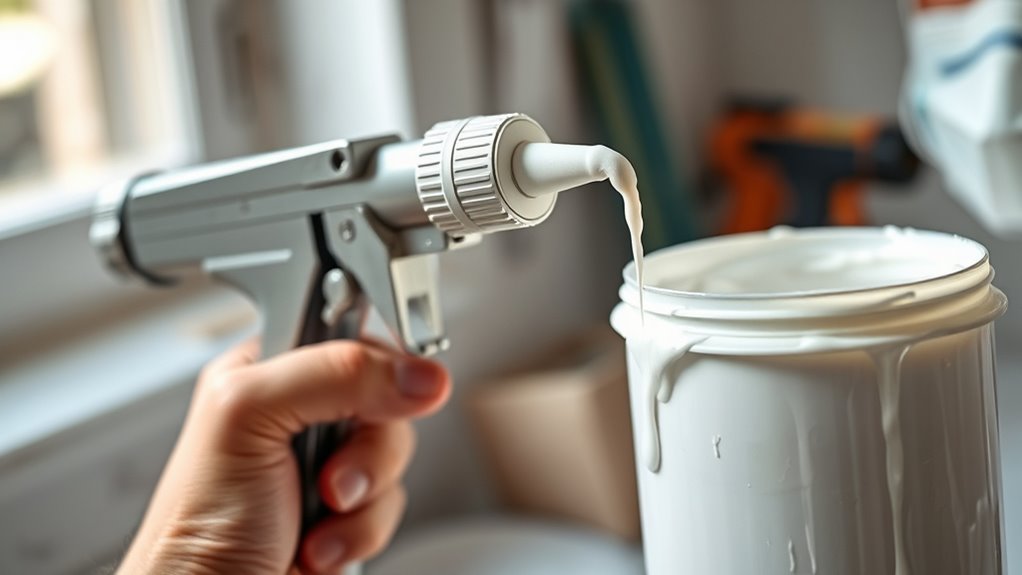
Yes, you often need to thin paint for a sprayer to guarantee smooth, even application and prevent clogs. Thick paint can cause uneven coverage, drips, and force the sprayer to work harder, while paint that’s too thin may lead to runs and a less professional finish. The right consistency usually resembles heavy cream and flows easily off a stir stick. To learn how to achieve the perfect mix, keep exploring these tips.
Key Takeaways
- Check the paint’s consistency; it should flow smoothly like heavy cream, not be too thick or thin.
- Refer to the manufacturer’s recommended thinning ratios and adjust accordingly.
- Use a stir stick test: slow drip indicates proper viscosity; thick or fast drips suggest the need to thin or thicken.
- Latex paints generally need water thinning, while oil-based paints require mineral spirits; add gradually.
- Practice on scrap surfaces to verify spray pattern and adjust viscosity before starting your project.
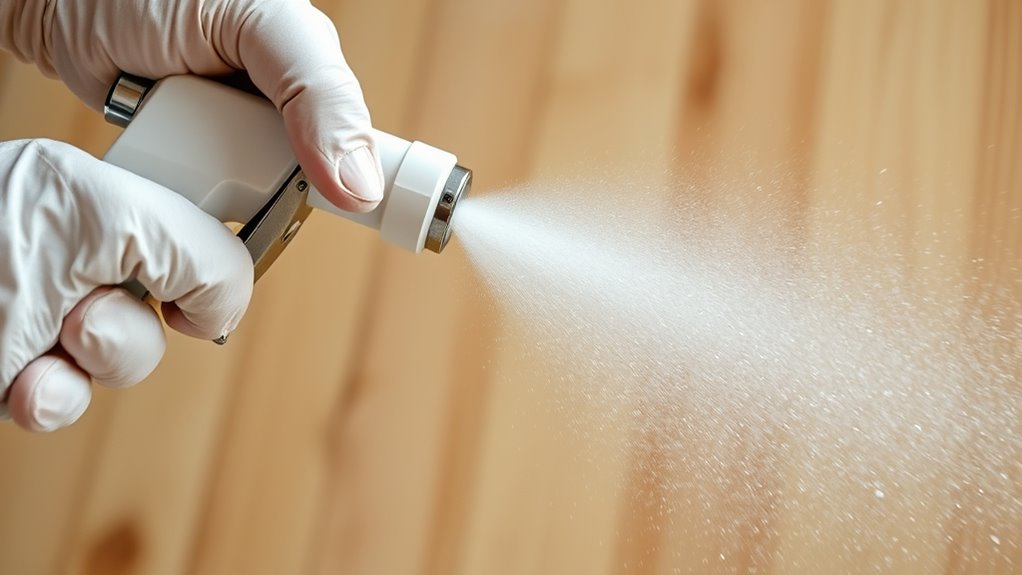
Do you need to thin paint for a sprayer? It’s a common question because the success of your project depends heavily on getting the right paint consistency. If the paint is too thick, it won’t flow smoothly through the sprayer, leading to uneven coverage, clogs, and drips. Conversely, if it’s too thin, you risk paint runs and a finish that looks less professional. The key lies in understanding how to achieve the ideal consistency for your specific spray technique.
To determine if your paint needs thinning, start by checking its current viscosity. Most manufacturers provide recommended settings or thinning ratios on their labels. Generally, for spray applications, paint should resemble the consistency of heavy cream—smooth, free-flowing, but not runny. If you dip a stir stick into the paint and it drips off slowly without dripping excessively, that’s a good sign. If it’s too thick and clings to the stick, it’s time to thin it out. Conversely, if it drips quickly and splatters, it’s probably too thin.
Check if your paint drips slowly from a stir stick; it should be smooth and not too thick or thin.
When you’re ready to thin the paint, use the appropriate thinner—usually water for latex paints or a solvent like mineral spirits for oil-based paints. Always add thinner gradually, about 10% at a time, and mix thoroughly. This gradual approach helps you fine-tune the paint’s consistency without over-thinning. Keep testing the viscosity by running the paint through a strainer or pouring it into a container and observing how it flows. Additionally, understanding the ideal viscosity for your specific sprayer can help you achieve the best results.
Getting the right paint consistency is vital for mastering your spray technique. If the paint is too thick, you’ll need to apply more coats, and the spray pattern may become uneven with visible brush marks. Too thin, and the paint may produce a fine mist, resulting in overspray and wasted material. Adjusting the viscosity ensures you maintain control and achieve a smooth, even finish. Practice on a scrap surface if you’re unsure, watching how the paint sprays out and adjusting your technique accordingly.
Frequently Asked Questions
Can I Spray Unthinned Latex Paint Without Issues?
You can spray unthinned latex paint, but it might cause issues like clogging or uneven coverage. Check your sprayer’s compatibility and verify the paint has the right consistency—usually a bit thinned for smooth spraying. Thick paint can clog the nozzle or result in a rough finish. To get the best results, adjust the paint consistency as needed, and test spray before starting your project.
How Does Paint Viscosity Affect Spray Gun Performance?
Think of paint viscosity like the flow of honey versus water—thicker paint can clog your spray gun, making it less efficient. When your paint’s consistency is too thick, it causes nozzle clogging and uneven spray patterns. Properly thinning your paint ensures smooth atomization, reduces clogging, and improves finish quality. So, maintaining ideal paint viscosity is key to a flawless spray job, preventing frustration and saving time.
What Are the Signs of Improper Thinning During Spraying?
If your spray pattern is uneven or drips appear, you’re likely experiencing improper thinning. Watch for inconsistent paint flow, which indicates poor paint consistency. Nozzle clogging is another sign, often caused by thick paint or unmixed material. You might also notice splattering or sputtering, suggesting the paint isn’t flowing smoothly. Adjust the paint’s thinning ratio to improve spray quality, ensuring a smoother finish and preventing nozzle blockages.
Is There a Difference Between Thinning for Interior and Exterior Paints?
Yes, there is a difference between thinning interior and exterior paints. You should adjust the paint consistency based on application techniques, as exterior paints often require a slightly thinner mix to handle outdoor conditions and spray more smoothly. Interior paints might need less thinning to ensure a smooth finish on walls. Always test the consistency first, aiming for a fluid, pourable mixture that sprays evenly without clogging your sprayer.
How Do Temperature and Humidity Influence Thinning Requirements?
You’ll notice that high temperatures and humidity make paint thicker and more difficult to spray smoothly. To maintain the right paint consistency for application techniques, you should thin your paint slightly more in hot, humid conditions. Cooler, dry weather requires less thinning. By adjusting your paint’s consistency based on temperature and humidity, you’ll guarantee even application and a professional finish, no matter the weather.
Conclusion
In most cases, you’ll need to thin paint for your sprayer to achieve a smooth, even finish. For example, a homeowner trying to repaint their porch discovered that diluting the paint with water improved spray flow and reduced clogging. Without thinning, you risk uneven coverage or damaging your equipment. So, always check your sprayer’s instructions and test the consistency beforehand. Properly thinned paint ensures a professional look and extends your sprayer’s lifespan.

Franz came aboard the Paint Sprayer Zone team with a background in both journalism and home renovation. His articulate writing style, combined with a passion for DIY projects, makes him an invaluable asset. Franz has a knack for breaking down technical jargon into easy-to-understand content, ensuring that even the most novice of readers can grasp the complexities of paint sprayers.