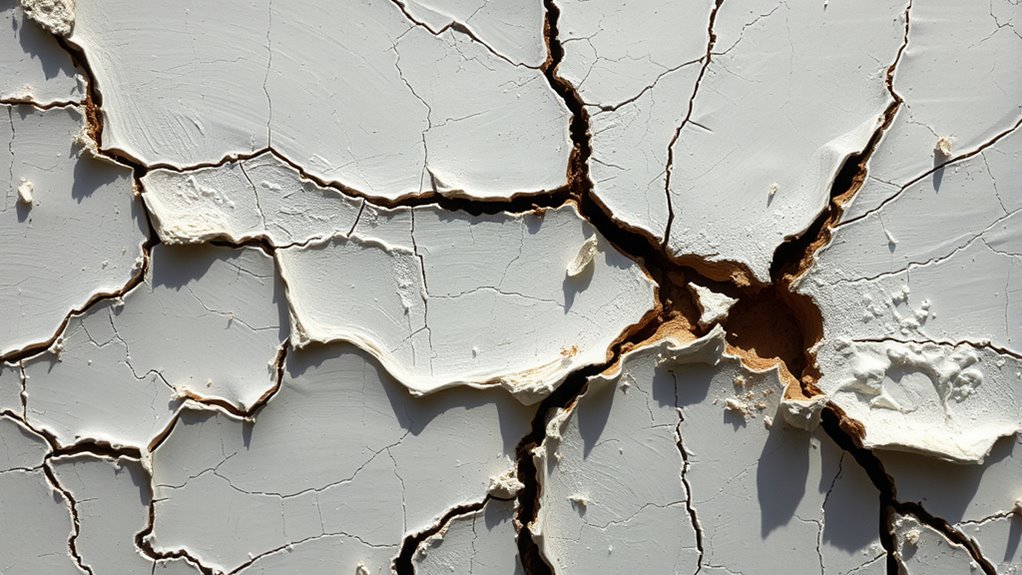

Cracking and peeling after spraying often happen because the surface wasn’t properly prepared, like not cleaning or sanding it first. Using incompatible paints or applying thick coats can also cause issues, especially if environmental conditions like humidity or temperature aren’t ideal. These problems prevent proper adhesion, leading to future cracks or peeling. If you want to learn how to prevent these issues from happening, there’s more to contemplate that can help you get a smooth finish.
Key Takeaways
- Insufficient surface preparation, like dirt or old paint residues, hinders proper adhesion and causes peeling.
- Applying paint too thick or in unsuitable environmental conditions delays drying and leads to cracks.
- Using incompatible paints or coatings can react negatively, resulting in peeling and cracking.
- Poor surface sanding or cleaning creates a weak bond, making the coating prone to cracking over time.
- Rushing application without proper primer or multiple thin coats increases stress and causes peeling.
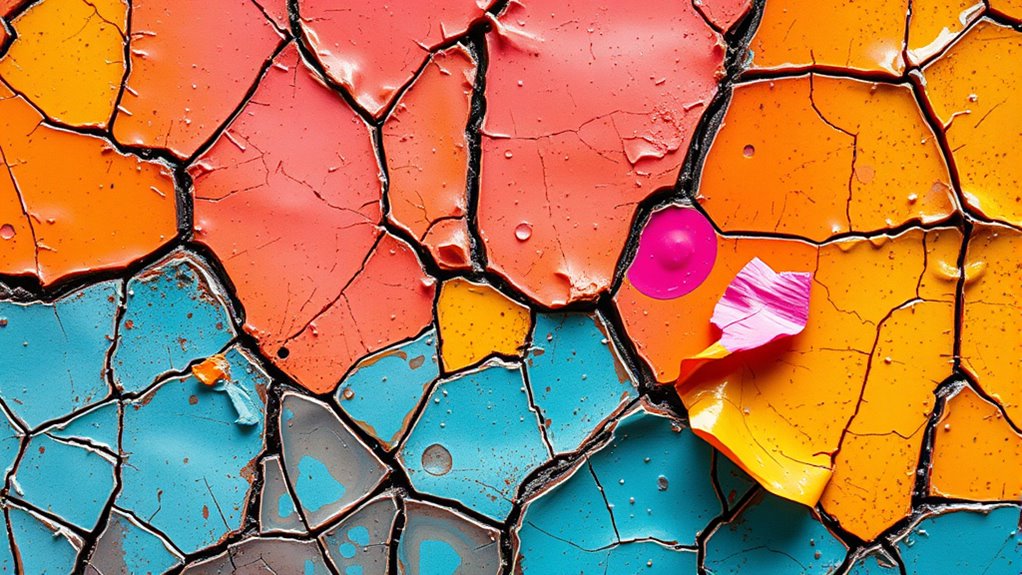
If you’ve recently sprayed a coating and notice it cracking or peeling, you’re not alone. These issues are common and often frustrating, but understanding their causes can help you fix the problem and prevent it from happening again. One of the most vital factors affecting the durability of your paint job is paint adhesion—the ability of the paint to stick properly to the surface. Poor adhesion usually results from insufficient surface preparation or applying paint over incompatible surfaces. When the surface isn’t clean, smooth, or properly prepared, the coating struggles to bond, leading to peeling or cracking over time.
Surface preparation is absolutely essential before you spray any coating. If you skip or rush this step, you’ll increase the likelihood of adhesion problems. For example, if the surface is dirty, greasy, or dusty, the paint won’t adhere correctly. Similarly, if the surface has loose or flaky material, the new coating won’t bond well, resulting in cracks or peeling. Sanding or cleaning the surface thoroughly removes debris, oils, and old paint residues, creating a clean and receptive foundation for the new coating. Applying a primer suitable for the material you’re working with can further enhance adhesion, especially on problematic surfaces like metal, plastic, or previously painted areas.
Proper surface prep and primer application are key to ensuring strong paint adhesion and lasting results.
Another common cause of cracking and peeling is applying the coating too thick or in unfavorable conditions. If you spray too much at once or in high humidity or extreme temperatures, the paint can dry unevenly or too slowly. This slow drying can cause stress within the coating, leading to cracks as it cures. It’s vital to follow the manufacturer’s recommendations on application thickness and environmental conditions. Multiple thin coats often produce better results than a single thick one, allowing each layer to cure properly and bond securely.
Incompatible paints or coatings can also cause peeling and cracking. If you apply a new layer of paint over an existing one without verifying compatibility, the solvents in the new paint might react with the old layer, causing poor adhesion and eventual failure. Always check the product labels and, if necessary, do a test patch before committing to a full spray job.
Ultimately, addressing surface preparation issues, ensuring proper application techniques, and choosing compatible products are key to preventing cracking and peeling after spraying. When you get these fundamentals right, your coating will last longer, look better, and stand up to the elements more effectively. Remember, a little extra time spent on preparation and following the right procedures can save you from costly repairs and touch-ups down the line.
Frequently Asked Questions
Can Environmental Factors Worsen Cracking After Spraying?
Yes, environmental factors can worsen cracking after spraying. When you expose your surface to moisture exposure or temperature fluctuations, it stresses the coating, making cracks more likely. Sudden changes in temperature cause expansion and contraction, which weakens the sprayed layer. To prevent this, guarantee proper curing conditions and avoid spraying in extreme weather. Managing environmental conditions helps maintain the integrity of the coating and reduces cracking risks.
How Long Should I Wait Before Reapplying Spray Paint?
You should wait at least 24 hours before reapplying spray paint to guarantee proper paint adhesion. Make sure the first coat is fully dry, and if you used primer, it has properly cured. Rushing the reapplication can cause cracking or peeling. For best results, follow the manufacturer’s instructions on drying times, and consider applying a second coat after the initial layer is completely dry to achieve a smooth, durable finish.
Does Surface Preparation Affect Peeling Severity?
Did you know that surface preparation directly impacts peeling severity? If you skip cleaning or use low-quality primer, the paint won’t stick well and might peel or crack. Ensuring the surface is clean and applying a good primer creates a strong bond, preventing peeling. Take the time to prep properly—your paint job will last longer and look smoother, saving you time and money in the long run.
Are Certain Paint Brands More Prone to Cracking?
Yes, some paint brands are more prone to cracking because of differences in their paint adhesion and chemical composition. You might notice that lower-quality paints or those with incompatible ingredients don’t stick well, leading to cracking over time. Always choose reputable brands and check their formulation details. Proper surface prep and application also help guarantee good adhesion, reducing the risk of cracking regardless of the brand you pick.
What Tools Are Best for Fixing Peeling Paint?
Think of fixing peeling paint as mending a broken bridge—you need the right tools to restore strength. Use a sturdy putty knife or scraper to gently remove loose paint, then select a high-quality brush suited for your paint type. Don’t forget the primer; it’s the foundation that guarantees your new coat adheres tightly. Proper brush selection and thorough priming are your secret weapons for a flawless, lasting finish.
Conclusion
Now that you know the common causes behind cracking and peeling after spraying, you’ll want to act quickly. But what if the real culprit is something you overlooked? Could a simple mistake be leading to this frustrating problem? Stay alert and keep a close eye on your next project. The answers might surprise you — and fixing the issue could be easier than you think, if you catch it early enough. Don’t let it slip away.
Franz came aboard the Paint Sprayer Zone team with a background in both journalism and home renovation. His articulate writing style, combined with a passion for DIY projects, makes him an invaluable asset. Franz has a knack for breaking down technical jargon into easy-to-understand content, ensuring that even the most novice of readers can grasp the complexities of paint sprayers.