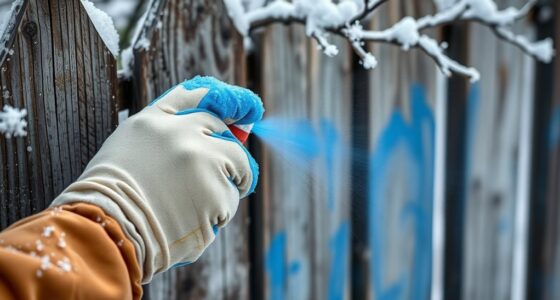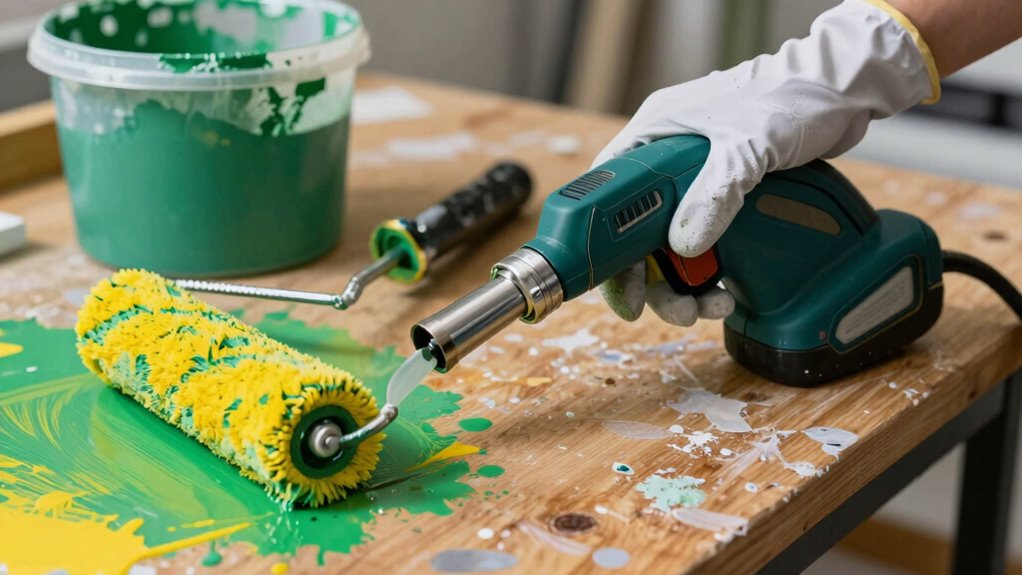
Before using your battery sprayer with thick paint, you need to thin the paint properly to avoid clogs and uneven coverage. Start by adding the manufacturer-recommended water or thinning agents, then thoroughly blend the paint to achieve the right consistency. Testing the spray pattern on a scrap surface helps you fine-tune the mixture. If you keep these steps in mind, you’ll guarantee a smooth application and long-lasting results. Keep going to learn more tips for ideal spraying.
Key Takeaways
- Test and thin thick paint with water or recommended agents before spraying to ensure proper flow.
- Mix paint thoroughly with a stir stick to achieve uniform consistency.
- Inspect and clean the sprayer’s nozzle, spray tip, and filters to prevent clogs.
- Adjust paint thinning based on spray pattern tests for optimal application.
- Maintain the sprayer by cleaning, lubricating, and checking battery connections before use.
Battery sprayers have become a popular choice for applying thick paints because they offer portable convenience and consistent coverage. When working with thick paints, maintaining the right paint consistency is essential. If the paint is too thick, it can clog the sprayer, cause uneven application, and put unnecessary strain on the machine. Conversely, if it’s too thin, you’ll end up with drips, runs, and a less durable finish. Before you start, you need to carefully prepare your paint by thinning it to the right consistency. Usually, manufacturers recommend adding a specific amount of water or a compatible thinning agent. Use a stir stick to blend thoroughly and test the spray pattern on a scrap surface. If the paint flows smoothly and evenly, you’re good to go. If it’s still too thick or too thin, adjust your mixture accordingly. Achieving ideal paint consistency not only impacts the quality of your finish but also helps prevent clogs and other sprayer issues.
Once your paint is properly thinned, focusing on sprayer maintenance is essential. Regular maintenance ensures your battery sprayer functions reliably and prolongs its lifespan. Before starting, inspect the nozzle and spray tip for any blockages or dried paint buildup. Clean these parts with warm water or a recommended cleaning solution, especially if you’ve been working with thick paint. Properly cleaning the sprayer after each use prevents paint from drying inside the system, which can lead to clogs or damage over time. Additionally, check the filter and replace it if it shows signs of wear or debris. Don’t forget to inspect the battery connections and ensure they’re secure and free of corrosion. Proper maintenance includes lubricating moving parts as specified in the user manual, which keeps everything working smoothly. Equipment care is vital for maintaining optimal sprayer performance.
When you’re finished, thoroughly clean the entire sprayer, including the paint reservoir, hoses, and nozzles. Store the sprayer in a dry, safe place, and keep the battery charged for the next use. Taking these steps might seem simple, but they’re essential to ensuring your sprayer performs well with thick paint. Remember, a well-maintained sprayer with the right paint consistency leads to better coverage, fewer interruptions, and a cleaner finish. Prioritize these preparations before you begin your project, and you’ll ensure a smoother, more efficient painting experience. So, always start by adjusting your paint to the proper consistency and maintaining your sprayer properly—these are the first steps to success with battery sprayers and thick paint.
Frequently Asked Questions
Can All Battery Sprayers Handle Thick Paint?
Not all battery sprayers can handle thick paint. You need to take into account paint viscosity before starting, as high-viscosity paints require more powerful sprayers or thinning. Using the right spray technique, like adjusting pressure or thinning paint properly, ensures smooth application. If your sprayer isn’t built for thick paint, it may clog or underperform. Always check the manufacturer’s guidelines and perform a test spray to ensure compatibility with your paint’s viscosity.
What Safety Gear Is Recommended When Spraying Thick Paint?
When spraying thick paint, you should wear proper personal protective equipment, including gloves, goggles, and a respirator or mask for respiratory protection. This gear shields your skin, eyes, and lungs from harmful fumes and splatters. Make certain your respirator is rated for paint fumes, and always follow safety guidelines. Proper safety gear helps prevent health issues and keeps you safe while working with challenging, thick coatings.
How to Prevent Clogs in a Battery Sprayer?
Think of your sprayer like a well-tuned orchestra; to avoid clogs, you need proper nozzle selection and consistent paint. Always strain thick paint before filling, ensuring it’s smooth and free of chunks. Use the right nozzle for the material, and avoid overloading the tank. This way, your sprayer performs seamlessly, just like a harmonious symphony, leaving a flawless finish without interruptions.
Is Thinning Paint Necessary Before Spraying With a Battery Sprayer?
Yes, thinning paint is often necessary to guarantee proper spray performance. You should check the paint consistency to match your sprayer’s recommended thickness, as thicker paint can clog the nozzle or damage the equipment. Always verify sprayer compatibility with the type of paint you’re using. If the paint is too thick, dilute it gradually with water or a suitable thinning agent until it flows smoothly, ensuring an even coating.
How Long Does It Take for a Battery Sprayer to Charge?
Think of charging your battery sprayer as waiting for a vintage radio to tune in—patience is key. Typically, charging time varies between 2 to 4 hours, depending on the battery capacity. Larger capacity batteries take longer to charge, so you should plan accordingly. To avoid delays, always check the manufacturer’s guidelines for best charging times, ensuring your sprayer’s ready when you need it.
Conclusion
Now, before diving into your project, consider the common myth that thick paint always clogs battery sprayers. The truth is, with the right preparation—thinning the paint properly and cleaning your equipment—you can avoid most issues. Don’t believe everything you hear; a little research and proper technique make all the difference. So, next time, trust your prep work and keep that paint flowing smoothly. Your project will thank you for it!