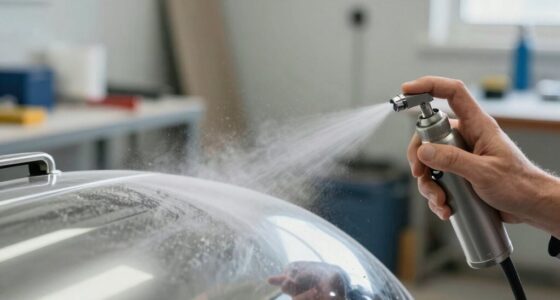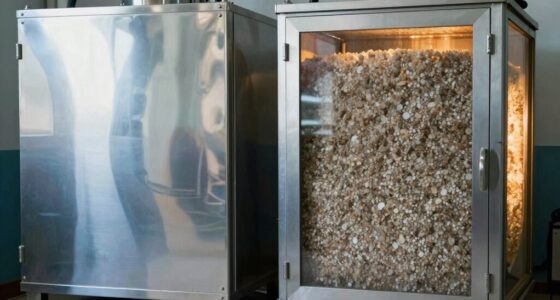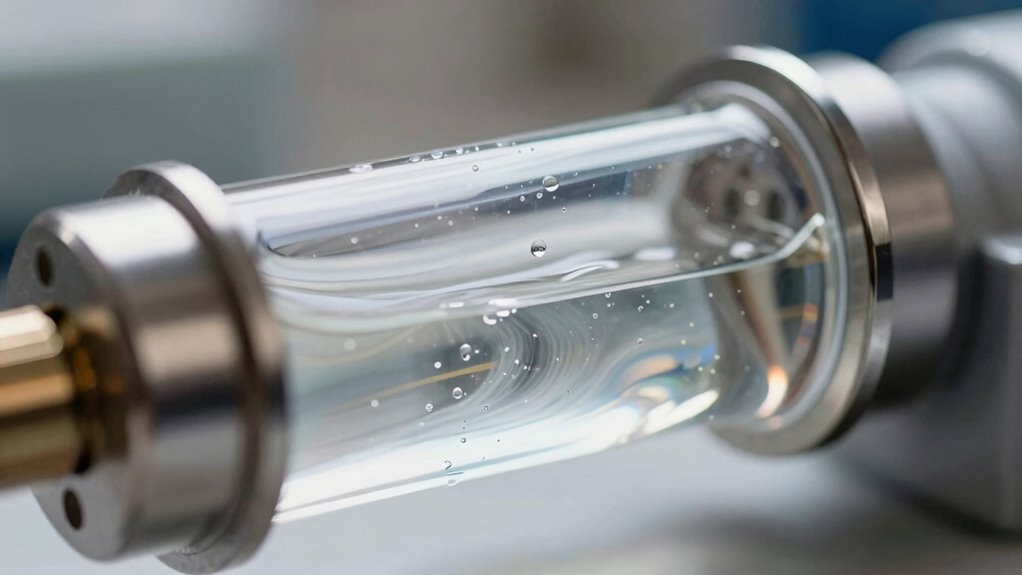
Coalescing filters are essential because they remove water droplets and oil aerosols from compressed air, preventing water contamination that can cause issues like fish eyes on painted surfaces. They use fine fibers to trap tiny water and oil particles, causing them to merge into larger droplets that drain away, ensuring the air stays clean and dry. Proper use and maintenance of these filters help protect your equipment and improve product quality—discover more about their role and benefits.
Key Takeaways
- Coalescing filters remove water droplets from compressed air, preventing water-related defects like fish eyes in painted surfaces.
- They trap microscopic water aerosols, encouraging their coalescence into larger droplets for easy removal.
- Properly maintained filters ensure minimal water carryover, reducing water contamination in the final product.
- Using high-quality coalescing filters enhances air purity, preventing water-induced surface imperfections such as fish eyes.
- Regular filter replacement maintains optimal water separation, safeguarding against water-related defects in manufacturing processes.
Have you ever wondered how to effectively remove oil and water from compressed air or liquids? If so, you’re not alone. Many industries rely on precise, clean air and liquids to keep their operations running smoothly. That’s where coalescing filters come into play. These filters are essential for ensuring your systems stay free of water droplets and oil aerosols, which can cause serious issues like fish eyes in painted surfaces or equipment corrosion. The key functions of coalescing filters are oil removal and particulate separation, making them critical components in maintaining high-quality output.
Coalescing filters remove water and oil, ensuring clean, high-quality compressed air and liquids.
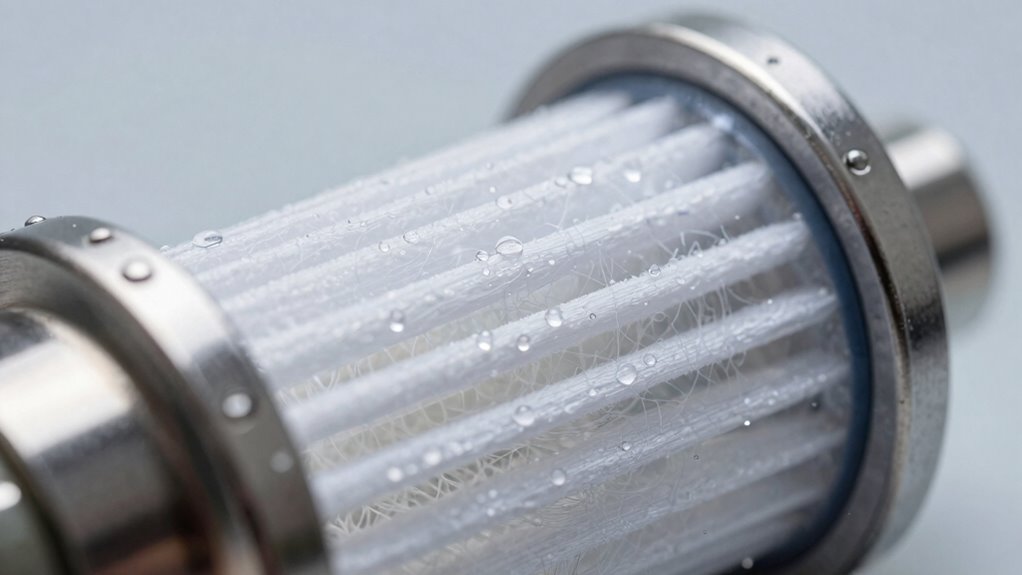
When you install a coalescing filter, you’re essentially adding a barrier that captures tiny droplets of oil and water before they reach your machinery or end products. The filter works by encouraging the small water and oil particles to merge into larger droplets, which then fall out of the airstream or liquid flow. This process, known as particulate separation, is highly effective because it targets those microscopic contaminants that traditional filters might miss. It’s particularly valuable in compressed air systems, where even small amounts of water or oil can cause rust, mold, or other damage. Additionally, the design of coalescing filters often incorporates specialized filtration media that enhances their ability to remove these contaminants efficiently.
In practical terms, a coalescing filter’s design is focused on maximizing oil removal. It contains a series of fine, densely packed fibers that act like tiny sieves. As the contaminated air or liquid passes through, the fibers trap the water and oil aerosols, causing them to coalesce into larger droplets. These droplets then drain away or are collected in a sump, leaving cleaner, drier air or liquid behind. This process not only improves product quality but also extends the lifespan of your equipment by reducing corrosion and wear caused by moisture and oil residues.
Choosing the right coalescing filter depends on your specific needs—flow rate, contamination levels, and operating conditions all matter. Proper maintenance is also crucial; regular replacement of the filter elements ensures consistent oil removal and particulate separation performance. When properly used, coalescing filters dramatically reduce the chances of water and oil contamination, helping you avoid costly repairs and product defects. They’re an investment in efficiency, quality, and reliability, making them indispensable for any system where clean, dry air or liquids are non-negotiable. In short, by understanding and leveraging the power of coalescing filters, you’re taking a significant step toward eliminating fish eyes and other water-related issues from your processes.
Frequently Asked Questions
How Often Should Coalescing Filters Be Replaced?
You should replace coalescing filters during regular filter maintenance, typically every 6 to 12 months, depending on usage and water quality. Keep an eye on your system’s replacement schedule, and check for signs of clogging or reduced performance. Regular inspections help prevent water contamination and guarantee peak operation. Always follow the manufacturer’s recommendations for your specific filter model to maintain effective water separation and avoid costly repairs.
Can Coalescing Filters Remove Oil-Based Contaminants?
Think of your coalescing filter as a guardian, protecting your system from unseen threats. Yes, it can remove oil-based contaminants, thanks to its specialized design. This enhances oil removal and maintains filter efficiency, preventing damage downstream. Regularly check and replace your filter to make certain it continues to act as an effective barrier, safeguarding your equipment from the harmful effects of oil and water contamination.
What Are the Signs of a Failing Coalescing Filter?
You’ll notice your coalescing filter is failing when its filtration efficiency drops, and contamination indicators like water or oil start to bypass the filter. Watch for increased pressure drop, unusual noises, or visible water accumulation in downstream equipment. If you observe these signs, it’s likely your filter’s lifespan has ended, and it’s time to replace or service it to prevent water contamination and maintain ideal system performance.
Are Coalescing Filters Suitable for High-Pressure Systems?
Think of coalescing filters as a tightrope walker—delicate but capable. They can be suitable for high-pressure systems if you check their pressure rating and guarantee filter compatibility with your specific setup. Always verify the manufacturer’s specifications to avoid overloading or damage. Properly rated filters handle high pressures, but ignoring this can cause failures, so select a filter designed for your system’s pressure needs for peak performance.
How Do Temperature Variations Affect Filter Performance?
Temperature variations can impact your filter’s performance by affecting temperature stability and the filter material. When temperatures fluctuate, the filter material may expand or contract, potentially reducing filtration efficiency or causing leaks. Keep an eye on operating conditions, and choose filters designed to handle temperature changes. Properly managing temperature stability ensures your coalescing filters effectively prevent water contamination, maintaining excellent system performance and protecting your equipment.
Conclusion
Think of coalescing filters as the unsung heroes of water systems, quietly catching tiny droplets before they cause chaos. I once saw a factory’s water contamination drop by 90% after installing these filters—like finally plugging a leak that had been slowly sinking the ship. Just as a small but sturdy dam stops a flood, coalescing filters prevent water contamination and protect your equipment, keeping everything running smoothly—because even the tiniest particles can make the biggest mess.