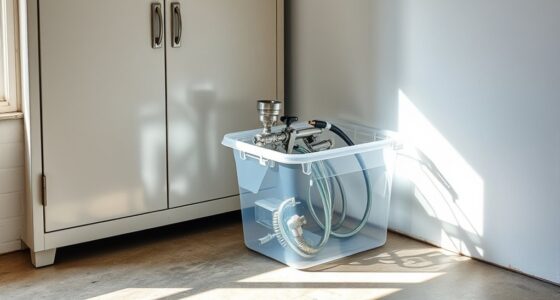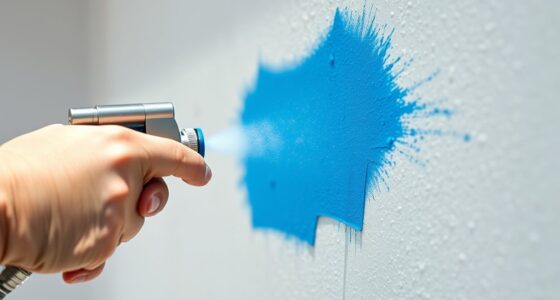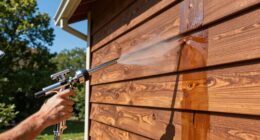
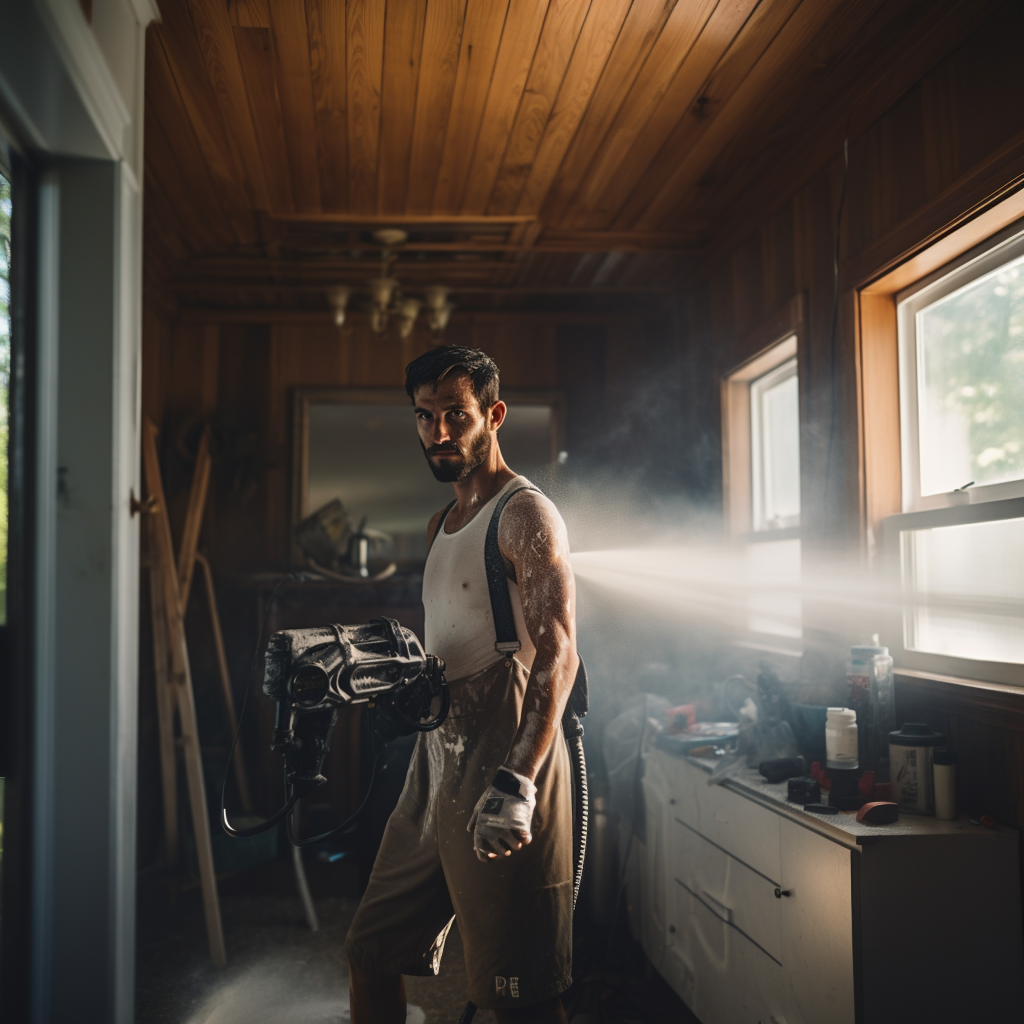
Before every spray session, you should inspect your equipment for damage, clean everything thoroughly, and make sure the spray gun, hoses, and compressor are working correctly. Wear proper safety gear like respirators, goggles, gloves, and protective clothing to stay safe. Set up your workspace with good ventilation and protective coverings, and gather all necessary materials. Confirm your equipment’s functioning, adjust settings as needed, and review safety protocols—stick with the checklist for professional, safe results.
Key Takeaways
- Inspect and clean all spray equipment components, including nozzles, filters, hoses, and gun, ensuring proper assembly and settings.
- Wear appropriate safety gear such as respirators, goggles, gloves, and protective clothing, verifying fit and condition.
- Prepare the workspace by clearing clutter, ensuring ventilation, and covering surfaces with drop cloths or plastic sheeting.
- Test and adjust the compressor and spray gun to confirm proper pressure, airflow, and equipment functionality.
- Review safety procedures, organize materials, and ensure environment is hazard-free to promote safety and efficiency.
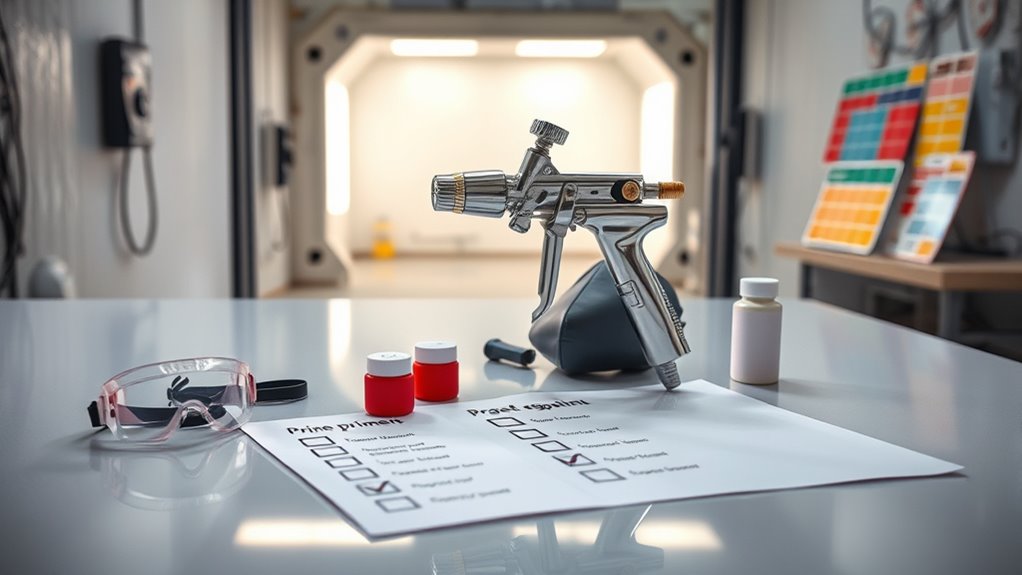
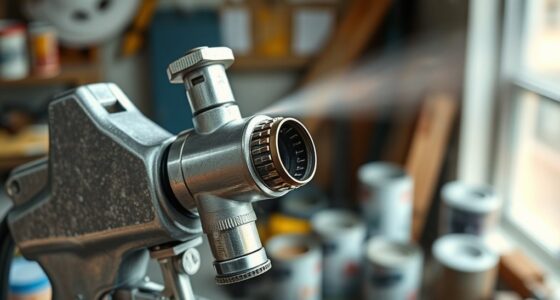
Preparing properly before your spray session guarantees a smooth and successful experience. The first step is to guarantee your spray equipment is in top condition. Check all components, including the nozzle, filters, hoses, and gun, for any signs of damage or wear. Cleaning your spray equipment thoroughly before use helps prevent clogs and guarantees an even, professional finish. Make sure the spray gun is properly assembled and that the settings are adjusted according to your project requirements. Inspect the air supply lines for leaks or blockages, and confirm that your compressor is functioning correctly and providing the right pressure. Having your spray equipment ready and in ideal condition reduces the risk of interruptions during the session and leads to a more consistent application.
Equally important is donning your safety gear. Before starting, put on a high-quality respirator or mask designed for spray painting to protect your lungs from harmful fumes and airborne particles. Safety goggles or goggles with side shields shield your eyes from overspray and potential splashes. Wear gloves to safeguard your hands from chemicals and to improve grip on your spray gun. Coveralls or protective clothing are essential to prevent paint from settling on your skin and clothing. Proper safety gear not only keeps you safe but also helps you work more efficiently because you’re less distracted by the risk of exposure or injury. Double-check that your safety equipment fits well and is in good condition before beginning.
In addition to checking your equipment and safety gear, prepare your workspace. Clear the area of any unnecessary objects that could interfere with your spray pattern or cause accidents. Ensure adequate ventilation to disperse fumes and overspray, which is crucial for both safety and quality results. Set up drop cloths or plastic sheeting to protect surrounding surfaces from overspray. Gather all necessary materials, including paint or coating, reducers, and cleaning supplies, so you’re not scrambling mid-session. It’s also wise to review your project plan, including the desired finish, spray technique, and number of coats needed, to stay focused and organized. Incorporating proper ventilation not only helps with safety but also maintains a consistent drying environment, enhancing the final appearance of your spray finish.
Frequently Asked Questions
What Safety Gear Is Essential for Spray Sessions?
You need essential safety gear for spray sessions, including protective clothing to shield your skin and eyes from chemicals. A properly fitted respirator is vital to prevent inhaling harmful fumes, so always check the respirator fit before starting. Wearing gloves and a face shield enhances your safety. Make sure all gear is secure and in good condition to protect yourself effectively during each spray session.
How Do I Choose the Right Spray Equipment?
You choose the right spray equipment by considering the types of nozzles suitable for your project, such as adjustable or fan nozzles, to control spray pattern and coverage. You also set the spray pressure according to the material you’re using, ensuring smooth application without overspray or runs. Test different nozzles and pressure settings on scrap material first, and select equipment that offers precision, comfort, and efficiency for your specific task.
Can I Prepare the Area Myself?
You can definitely prepare the area yourself; it’s like laying a solid foundation. Start with thorough surface inspection to identify any issues like cracks or debris. Then, clean and mask surrounding surfaces to make certain a smooth spray job. Proper area preparation helps prevent problems down the line and makes your work look professional. Just follow safety guidelines and take your time—you’re the master of your own project!
What Are Common Troubleshooting Tips?
If you encounter issues during spraying, start by checking the paint consistency—thin it if it’s too thick. Verify you’ve chosen the right nozzle for your project; a nozzle too small or large can cause uneven coverage. Clean the nozzle thoroughly to prevent clogs, and adjust your pressure settings if the spray pattern is inconsistent. These troubleshooting tips help improve your results and make your spray sessions smoother.
How Often Should I Clean Spray Equipment?
Think of your spray equipment as your trusted partner; it deserves regular care. You should clean your spray equipment after every use to guarantee ideal performance and longevity. Follow a consistent cleaning schedule, especially if you’re switching between different materials or colors. Proper equipment maintenance not only prevents clogs and defects but also extends its lifespan. Don’t neglect this essential step—your equipment’s health directly impacts your spray results and efficiency.
Conclusion
As you step into the moment, imagine the smooth glide of the spray, the crisp scent filling the air, and the confidence radiating from knowing you’ve prepared perfectly. With each item checked, you create a seamless experience, like painting a canvas with precision. Feel the anticipation and pride build as you finish, knowing you’re ready for a flawless session. Embrace this calm before the spray, and let your confidence shine through every application.
Franz came aboard the Paint Sprayer Zone team with a background in both journalism and home renovation. His articulate writing style, combined with a passion for DIY projects, makes him an invaluable asset. Franz has a knack for breaking down technical jargon into easy-to-understand content, ensuring that even the most novice of readers can grasp the complexities of paint sprayers.