Cavitation creates that familiar “marbles in the pump” sound when vapor bubbles form and collapse inside your pump, causing noise, vibration, and damage. This happens when inlet pressure drops below the fluid’s vapor pressure, leading to bubble formation near impeller blades. Over time, these bubbles cause erosion, reducing efficiency and increasing wear. To prevent or fix cavitation, you need to verify system pressure, avoid running the pump at excessive speeds, and ensure proper maintenance. Keep exploring to learn how to protect your pump effectively.
Key Takeaways
- The ‘marbles in the pump’ sound indicates vapor bubble collapse caused by cavitation.
- Cavitation occurs when inlet pressure drops below vapor pressure, forming vapor bubbles.
- These collapsing bubbles generate shockwaves, leading to noise, vibration, and equipment damage.
- Fix cavitation by increasing inlet pressure, reducing pump speed, or ensuring proper system maintenance.
- Regular monitoring and proper pump selection help prevent cavitation-related noise and damage.
What Is Cavitation and Why Does It Make That Marbles-In-The-Pump Noise?

Have you ever noticed a strange marbles-in-the-pump noise coming from your water pump or similar equipment? This noise often indicates cavitation, which causes excessive pump vibration and fluid aeration. When the pump’s inlet pressure drops below the vapor pressure of the fluid, tiny vapor bubbles form inside the pump. As these bubbles move to higher-pressure areas, they collapse violently, creating the marbles-in-the-pump sound. This collapse also leads to fluid aeration, introducing air into the liquid. The resulting vibration can damage pump components over time and reduce efficiency. Understanding that cavitation stems from these vapor bubbles helps you identify the problem. Recognizing the connection between pump vibration, fluid aeration, and cavitation is key to addressing the issue before costly damage occurs. Proper pump calibration and maintenance can help prevent cavitation from developing. Additionally, using proper pump selection ensures the pump operates within optimal parameters, reducing cavitation risk.
How Can I Tell If My Pump Is Cavitating? Signs to Watch For

Recognizing cavitation early can save your pump from serious damage, so it’s important to notice the signs. One common indicator is unusual pump noise, often described as a knocking or marbles-in-the-pump sound, caused by fluid aeration. You might also see inconsistent flow or a drop in pressure, signaling that bubbles are forming and collapsing inside the pump. Additionally, excessive vibration or overheating can occur as cavitation worsens. Fluid aeration, with tiny bubbles present in the fluid, often leads to these symptoms. If you notice these signs—strange noises, erratic operation, or increased vibration—it’s a clear warning that cavitation is happening. Addressing it promptly can prevent further damage and restore your pump’s proper function.
How Do Bubbles Form and Cause Cavitation in Pumps?
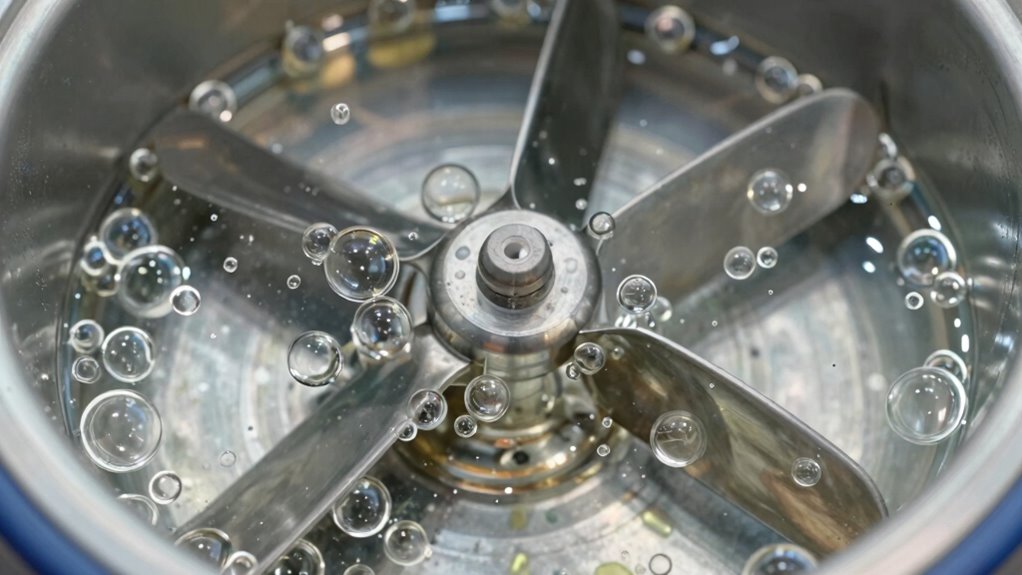
Bubbles form in pumps when the pressure of the fluid drops below its vapor pressure, causing the liquid to vaporize locally. This typically occurs near impeller blades or other pump components made from specific pump materials that can influence flow patterns. As the fluid’s pressure drops, tiny vapor bubbles develop, especially if the fluid has low viscosity, making it easier for vapor pockets to form. These bubbles can be carried through the pump with the flow, and when they enter higher-pressure zones, they collapse violently. This collapse causes shockwaves that damage pump surfaces and generate the familiar cavitation noise. Understanding how bubbles form helps you identify early signs of cavitation, preventing damage and maintaining pump efficiency. Monitoring flow patterns can help detect early cavitation signs before significant damage occurs, and implementing proper fluid management strategies can further reduce cavitation risks. Additionally, material selection plays a crucial role in minimizing cavitation effects by influencing flow dynamics within the pump.
What Causes Pump Cavitation? Main Factors and Triggers

You might cause cavitation if the system pressure drops too low, making it easier for bubbles to form. Running the pump at excessive speeds can also create conditions that trigger cavitation. Additionally, having insufficient fluid levels reduces the pressure and increases the risk of bubble formation. Using the correct oil for airless sprayers and maintaining proper fluid flow can help prevent cavitation issues. Proper maintenance practices are also essential to identify early signs of cavitation and address potential problems before they escalate. Incorporating professional services that specialize in pump diagnostics can further help in early detection and prevention of cavitation-related damage. Understanding auditory processing skills may also improve troubleshooting techniques for pump issues, ensuring more effective maintenance strategies.
Low System Pressure
Low system pressure is a primary factor that can lead to pump cavitation because it diminishes the pressure at the pump inlet, making it easier for vapor bubbles to form. When system pressure drops, you might notice increased pump noise as cavitation begins. Low pressure can result from leaks, clogged filters, or insufficient system fill. These issues cause the inlet pressure to fall below vapor pressure, triggering cavitation. To prevent this, monitor system pressure regularly and ensure it stays within recommended ranges. Staying vigilant about pressure levels helps maintain pump efficiency and avoid damage. Remember, low system pressure is a common culprit behind cavitation, so addressing it promptly is key to keeping your pump running smoothly and quietly. Additionally, maintaining proper system maintenance can help prevent unexpected pressure drops and extend the lifespan of your pump. Regular inspections and prompt repairs of leaks or blockages are essential in maintaining optimal pressure levels and ensuring the longevity of your system. Properly managing fluid dynamics within the system can further reduce the risk of cavitation and improve overall system performance. Understanding the causes of cavitation can aid in implementing effective preventative measures and optimizing pump operation. Being aware of inlet pressure fluctuations is essential for early detection of potential cavitation issues before they escalate.
Excessive Pump Speed
Excessive pump speed is a common trigger for cavitation because running the pump faster increases the pressure differential at the inlet, making vapor bubble formation more likely. When you operate a pump at too high a speed, system pressure drops, especially near the inlet, which can cause bubbles to form. These vapor pockets collapse as they move into higher-pressure areas, creating the familiar pump noise—like marbles rattling inside. The increased cavitation not only causes noise but also damages the pump components over time. To prevent this, you should monitor your system pressure closely and avoid running the pump beyond its recommended speed range. Maintaining ideal pump speed helps reduce cavitation, preserves system integrity, and keeps noise levels in check.
Insufficient Fluid Levels
When a pump doesn’t have enough fluid to draw in, it can create a vacuum that leads to cavitation. Low fluid levels cause the pump to struggle with proper suction, resulting in vapor bubbles forming and collapsing. To prevent this, guarantee the fluid level stays above the minimum required for efficient pump priming. Here are some key points:
- Maintain adequate fluid levels to avoid dry running
- Regularly check the fluid level in the reservoir
- Proper pump priming is essential for smooth operation
- Avoid operating the pump at low fluid levels for extended periods
- Address leaks or evaporation that reduce fluid volume
How Does Cavitation Damage Your Pump Over Time?

When cavitation occurs, bubbles form and collapse violently, causing tiny explosions inside your pump. Over time, this process erodes the material surfaces and weakens components, which can also lead to increased wear and potential mechanical failure. As a result, your pump’s efficiency drops, and it becomes more prone to failure. Proper maintenance and understanding of pump operation can help prevent cavitation damage. Additionally, monitoring smart appliance performance can identify early signs of inefficiency caused by cavitation-related issues, especially when considering water chemistry and flow conditions that influence pump performance. Being aware of everyday safety practices related to pump operation can also help prevent accidents or further damage.
Bubble Formation and Collapse
Have you ever wondered how tiny bubbles form and suddenly collapse inside a pump? It all comes down to bubble dynamics and cavitation physics. When pressure drops below vapor pressure, vapor bubbles form rapidly. These bubbles then travel to higher-pressure zones, where they collapse violently. This collapse releases energy that can cause significant damage over time. Understanding these processes is crucial for diagnosing and preventing cavitation damage effectively. Here’s what happens during bubble formation and collapse:
- Bubbles grow quickly in low-pressure areas
- They drift with the flow to higher-pressure zones
- Collapse occurs suddenly, releasing shockwaves
- These shockwaves erode surfaces over time
- Repeated cycles weaken pump components
Understanding these processes helps you grasp how cavitation physically damages your pump, leading to noise, vibration, and eventual failure if unchecked.
Material Erosion Effects
Cavitation causes significant material erosion in pump components by repeatedly exposing surfaces to the violent collapse of vapor bubbles. This process leads to surface pitting, cracks, and gradual thinning of pump material, weakening its structural integrity over time. Erosion patterns often appear as irregular pits or grooves, indicating areas most affected by cavitation. The damage depends on the pump material; softer metals erode faster, while harder materials resist longer. Understanding erosion patterns helps you identify vulnerable components and plan maintenance. Recognizing material erosion effects is essential for effective pump upkeep and preventing failure. Incorporating smart monitoring techniques can help detect early signs of cavitation damage and facilitate timely interventions. Additionally, research into sound healing science suggests that understanding vibrational impacts could inform future noise mitigation strategies for pumps.
Reduced Pump Efficiency
Material erosion caused by cavitation gradually hampers your pump’s ability to operate efficiently. As erosion worsens, fluid dynamics inside the pump become less ideal, leading to reduced flow rates and pressure. You’ll notice increased pump noise, which signals declining performance. Cavitation disrupts smooth fluid movement, causing turbulence and vibration that strain your equipment. Over time, these effects lower your pump’s overall efficiency, forcing it to work harder for the same output. This inefficiency can lead to higher energy costs and increased wear. To keep your pump running smoothly, it’s essential to address cavitation early on. Monitoring for unusual pump noise and inspecting flow patterns can help you identify problems before they escalate and compromise your system’s performance.
How Can I Confirm Cavitation Is Occurring? Diagnosis Tips

To confirm cavitation is happening, start by listening for unusual noises like knocking or hammering sounds from the pump or hydraulic system. These sounds often indicate cavitation, but you can also use vibration analysis to detect irregular vibrations caused by collapsing vapor bubbles. Additionally, understanding fluid dynamics helps you recognize abnormal pressure fluctuations or flow patterns that suggest cavitation. Monitoring the system’s noise levels and vibrations provides immediate clues, especially when combined with visual inspections for cavitation damage. If you notice increased vibration or hear knocking sounds during operation, it’s a strong sign cavitation may be occurring. Using these diagnosis tips, you can identify cavitation early and avoid further damage or efficiency loss in your pump system.
How Can I Prevent Cavitation Before It Starts? Proactive Strategies

Preventing cavitation before it starts requires careful system design and proactive maintenance. By understanding fluid dynamics, you can avoid conditions that cause excessive pump noise and damage. To stay ahead, consider these strategies:
- Ensure proper pump sizing and selection for your flow needs
- Maintain consistent inlet pressure to prevent low-pressure zones
- Regularly inspect and clean inlet screens and filters
- Use variable frequency drives to control flow and reduce stress
- Monitor pump performance with sensors to detect early signs of cavitation
Implementing these measures helps maintain ideal fluid flow, reducing the risk of cavitation. Recognizing how fluid dynamics influence pump noise allows you to fine-tune your system, preventing cavitation from developing and extending pump life.
What Are the Best Ways to Fix Cavitation When It Happens? Repair Methods

When cavitation occurs despite preventive efforts, addressing the issue promptly is vital to minimize damage and restore system efficiency. The first step is to reduce pump noise caused by cavitation, which indicates turbulent fluid dynamics within the pump. You can do this by adjusting the system’s operating conditions, such as increasing fluid pressure or lowering the pump’s speed, to stabilize flow. Inspect and clean the pump impeller and inlet screen to remove blockages that worsen cavitation. If damage is evident, replacing worn or damaged components is necessary. Installing anti-cavitation valves or modifying piping to improve fluid flow can also help. These methods directly target the fluid dynamics issues, reducing noise and preventing further cavitation damage.
Maintenance Tips to Prevent Cavitation and Extend Pump Life

To prevent cavitation and prolong your pump’s lifespan, start by establishing a regular inspection routine to catch issues early. Make sure your pump is properly lubricated, as this reduces wear and maintains peak performance. Consistent maintenance like this keeps your pump running smoothly and helps avoid costly damage.
Regular Inspection Routine
Regular inspection of your pump is essential for catching early signs of cavitation and maintaining ideal performance. By routinely checking key components, you can prevent damage caused by issues like improper pump material selection or changes in fluid viscosity. Regular inspections help identify wear, vibration, or unusual noises that signal cavitation risk. Focus on these aspects during your routine:
- Check for corrosion or erosion on pump parts
- Monitor fluid viscosity levels and consistency
- Inspect impeller and wear rings for damage
- Ensure seals and gaskets fit properly
- Observe vibration patterns and noise levels
Consistent inspections allow you to address problems early, optimize pump efficiency, and extend its lifespan. Making this routine a habit helps you stay ahead of cavitation issues and keeps your pump running smoothly.
Proper Pump Lubrication
Proper pump lubrication is essential for preventing cavitation and ensuring smooth operation. Proper lubrication importance cannot be overstated—it reduces friction, minimizes wear, and delays pump failure. Regular pump maintenance includes checking oil levels, ensuring the right lubricant type, and replacing lubricants at recommended intervals. Neglecting lubrication can cause increased heat, vibration, and uneven wear, all of which contribute to cavitation risks. Use the following table to understand key lubrication aspects:
| Lubrication Type | Frequency | Benefits |
|---|---|---|
| Oil-based | Monthly | Reduces friction |
| Grease | Quarterly | Seals components, lubrication |
| Synthetic | Annually | High temperature stability |
| Mineral oil | Every 6 months | Cost-effective lubrication |
| Special lubricants | As needed | Critical for specific pumps |
When Should I Call a Professional for Cavitation Problems?

If you notice persistent or severe cavitation issues that don’t improve with basic troubleshooting, it’s time to contact a professional. Signs include ongoing pump noise, irregular fluid leaks, or decreased system performance. You should seek expert help if cavitation causes damage to pump components or if the noise becomes louder over time. Additionally, if fluid leaks around seals or fittings seem connected to cavitation, a professional can diagnose and fix underlying issues. Don’t ignore these warning signs, as delaying repairs can lead to costly damage. Professionals can perform detailed inspections, replace worn parts, and optimize pump operation. Prompt action ensures your pump stays efficient and prevents long-term damage.
Seek professional help for persistent cavitation issues to prevent costly damage and ensure optimal pump performance.
- Persistent pump noise or fluid leaks
- Increasing noise or leaks over time
- Reduced pump efficiency
- Visible damage or corrosion
- Unresolved cavitation after troubleshooting
Frequently Asked Questions
Can Cavitation Occur in All Types of Pumps?
Cavitation can occur in all types of pumps, but its likelihood depends on factors like pump material and operating conditions. You should focus on cavitation prevention by maintaining proper inlet pressure, avoiding dry running, and selecting pumps with durable materials suited to your fluid’s properties. Regular inspections help detect early signs, ensuring your pump operates efficiently and reduces the risk of damage caused by cavitation.
What Are the Long-Term Effects of Cavitation on Pump Performance?
You might not notice it right away, but cavitation can silently chip away at your pump’s performance over time. It causes material degradation, weakening pump components and leading to efficiency loss. Long-term effects include increased energy consumption, costly repairs, and eventual failure. If you ignore cavitation, your pump’s lifespan shortens, and maintenance costs skyrocket, making it vital to address the issue early before it becomes a bigger headache.
How Does Fluid Temperature Influence Cavitation Risk?
You should know that higher fluid temperatures decrease viscosity, making cavitation more likely because the fluid vaporizes more easily under lower pressure. Conversely, lower temperatures increase viscosity, reducing cavitation risk but potentially causing flow issues. Temperature fluctuations can cause inconsistent cavitation risks, stressing your pump and leading to damage over time. Maintaining a stable, ideal temperature helps control fluid viscosity and minimizes cavitation, ensuring better pump performance and longevity.
Are There Specific Pump Designs That Resist Cavitation Better?
Did you know that some pump designs reduce cavitation risk by up to 50%? You’ll want to look for pumps with advanced impeller designs, which improve flow and pressure stability. Additionally, anti-cavitation coatings help prevent vapor bubbles from forming and collapsing. These features work together to make pumps more resistant to cavitation, ensuring smoother operation and longer lifespan. So, choosing a pump with these enhancements can save you maintenance costs and downtime.
What Safety Precautions Should Be Taken During Pump Repairs?
During pump repairs, you should always wear protective gear like gloves, goggles, and hearing protection to prevent injuries. Make sure to turn off the pump and release pressure before starting work. Stay alert to hazard awareness, such as leaks or electrical issues, which can pose risks. Keep the work area clean and organized to avoid slips or accidents. Following these precautions guarantees your safety during maintenance.
Conclusion
To keep your pump running smoothly and avoid that marbles-in-the-pump noise, stay vigilant for signs of cavitation and follow proactive maintenance tips. Address issues early, just like a wise scholar would fix a faltering quill before it ruins the parchment. Remember, prevention is your best ally—so don’t wait for your pump to sound like a clattering alchemist’s experiment. With proper care, you’ll keep your system humming like a well-oiled clock, even in these modern times.