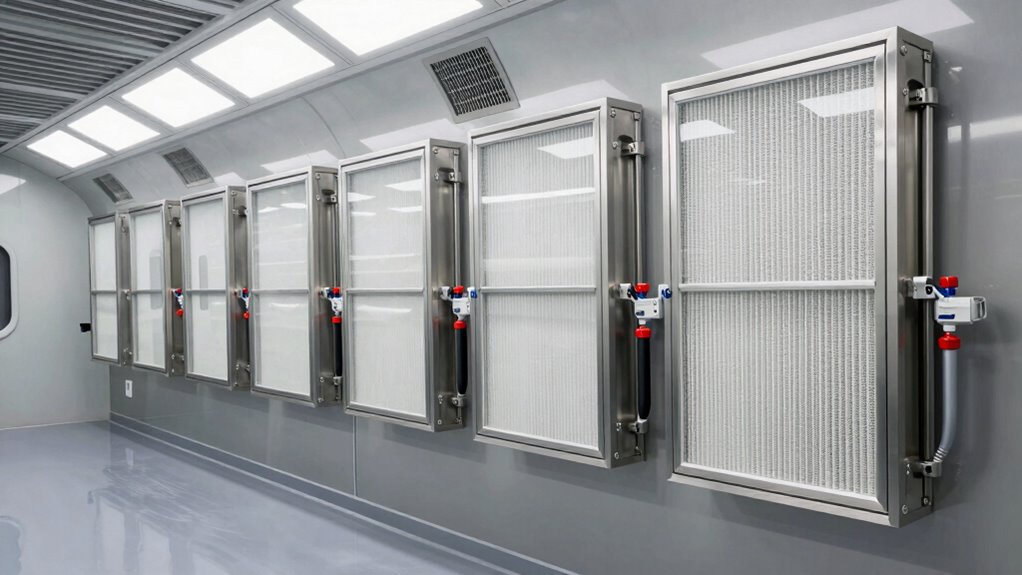
A paint booth filter system keeps overspray out of your finish and harmful particulates out of the air, and the right setup depends on whether you need intake filtration, exhaust filtration, or both. For most shops, the Master Elite Paint Spray Booth Exhaust Filter Roll (20.5 in x 100 ft) is the best overall pick because it balances high paint-loading capacity with the lowest cost per square foot of any option here. If you run a smaller booth, the Wioboy 50-Pack Exhaust Filter Pads deliver pre-cut convenience, while the OZIS Inflatable Spray Paint Booth with Air Filter System suits hobbyists and mobile painters who need filtration and containment in one package. The main tradeoff in this category is rolls versus pre-cut pads — rolls cost less over time but demand cutting labor, while pads save time at a higher per-unit price. Read on for the full breakdown of all eleven options.

Get business pricing on tools and workshop supplies
- Business-only prices and quantity discounts
- Tax-exempt purchasing
- Multiple users, one account, clear invoices
Complete the kit


Key Takeaways
- Exhaust filter rolls (Master Elite 20.5 in x 100 ft and Maxdot 36 in x 100 ft) offer the lowest long-term cost for high-volume shops, but require cutting to size on every change-out.
- Pre-cut 20 x 20 pads (Wioboy 50-Pack, Master Elite 100-box) trade a higher per-pad cost for faster change-outs and consistent sizing — the better choice for small booths and weekend painters.
- Intake and exhaust filtration serve different jobs: the AUC and Master Elite tacky intake filters protect finish quality, while fiberglass exhaust filters capture overspray — a complete system needs both.
- The two OZIS inflatable booths are the only turnkey options here, bundling containment, airflow, and filtration in one purchase — but they can’t match the durability of a permanent booth’s filter media.
- Gram weight is the key hidden spec: 15 g filters suit light hobby spraying, while 18 g media (Wioboy roll, Maxdot) holds more paint before loading up and needing replacement.
| AUC Series 55 Paint Booth Tacky Intake Filter Pad, 20″ x 20″ (20 per Case) |  | Best Overall Intake Filtration | Dimensions: 20″ x 20″ | Quantity: 20 pads per case | Material: 100% polyester with non-migrating tackifiers | VIEW ON AMAZON | See Our Full Breakdown |
| Master Elite Paint Spray Booth Exhaust Filter Roll, 20.5 in x 100 ft |  | Best Value for High-Volume Shops | Dimensions: 20.5 in x 100 ft | Material: Blue fiberglass media | Media weight: 18 grams | VIEW ON AMAZON | See Our Full Breakdown |
| Wioboy Paint Booth Exhaust Filter Pad, 20.5 × 20.5 in, 15 g Fiberglass, 50-Pack |  | Best Budget Exhaust Pads | Material: Fiberglass | Density: 15 grams | Dimensions: 20.5 × 20.5 inches | VIEW ON AMAZON | See Our Full Breakdown |
| Master Elite Tacky Paint Spray Booth Intake Filter Panels, 20 × 20 in, Box of 20 |  | Best for Balanced Airflow | Product type: Tacky intake filter panels | Dimensions: 20 × 20 in per panel | Quantity: 20 panels | VIEW ON AMAZON | See Our Full Breakdown |
| Paint Spray Booth Tacky Intake Filter 20″x20″ (20 Pack) |  | Best for Easy Installation | Brand: FilterAUC | Model: FA-1 | Dimensions: 20 in x 20 in | VIEW ON AMAZON | See Our Full Breakdown |
| Maxdot Fiberglass Paint Booth Exhaust Filter Roll, 36 in x 100 ft, 18 Gram |  | Best Heavy-Duty Roll for Wide Exhaust Walls | Material: Fiberglass | Dimensions: 36 in x 100 ft (91 cm x 30 m) | Density: 18 gram | VIEW ON AMAZON | See Our Full Breakdown |
| Fanfanwin Paint Booth Exhaust Filters, 20 x 20 x 15 Inches, 10-Pack |  | Best Pocket-Style Pads for Heavy Overspray | Material: High-density polyester | Color: Green | Dimensions: 20 x 20 x 15 inches | VIEW ON AMAZON | See Our Full Breakdown |
| wioboy Paint Booth Exhaust Filter Roll (25″ x 200ft), 18 Gram Fiberglass Spray Booth Paint Arrestor |  | Best Value for Long-Run Supply | Brand: wioboy | Dimensions: 25″ x 200 ft | Density: 18 gram | VIEW ON AMAZON | See Our Full Breakdown |
| OZIS Inflatable Spray Paint Booth with Air Filter System, 10.8 × 8.2 × 7.2 ft |  | Best Portable Booth for Parts and Furniture | External dimensions: 10.8 × 8.2 × 7.2 ft | Internal dimensions: 8.74 × 6 × 6.07 ft | Weight: 29.54 lb | VIEW ON AMAZON | See Our Full Breakdown |
| OZIS Inflatable Paint Booth with Blower and Air Filter System |  | Best Premium Portable Setup | Exterior dimensions: 10.8 × 8.2 × 7.2 ft | Interior workspace: Approximately 8.74 × 6 × 6.07 ft | Blower: 480 W, 110 V, 60 Hz | VIEW ON AMAZON | See Our Full Breakdown |
| Master Elite Paint Spray Booth Exhaust Filter Pads, 20 in x 20 in, Box of 100 |  | Best Bulk Exhaust Pad Supply | Product Type: Paint spray booth exhaust filter pad | Size: 20 in x 20 in | Quantity: 100 pads | VIEW ON AMAZON | See Our Full Breakdown |
| paint booth filter system | Material | Dimensions |
|---|---|---|
| AUC Series 55 Paint Booth Tack | 100% polyester with non-migrating tackifiers | 20" x 20" |
| Master Elite Paint Spray Booth | Blue fiberglass media | 20.5 in x 100 ft |
| Wioboy Paint Booth Exhaust Fil | Fiberglass | 20.5 × 20.5 inches |
| Master Elite Tacky Paint Spray | — | 20 × 20 in per panel |
| Paint Spray Booth Tacky Intake | 100% polyester, two-layer construction | 20 in x 20 in |
| Maxdot Fiberglass Paint Booth | Fiberglass | 36 in x 100 ft (91 cm x 30 m) |
| Fanfanwin Paint Booth Exhaust | High-density polyester | 20 x 20 x 15 inches |
| wioboy Paint Booth Exhaust Fil | Fiberglass | 25" x 200 ft |
| OZIS Inflatable Spray Paint Bo | 210D Oxford fabric with transparent PVC windows | — |
| OZIS Inflatable Paint Booth wi | — | — |
| Master Elite Paint Spray Booth | Fiberglass | — |
More Details on Our Top Picks
AUC Series 55 Paint Booth Tacky Intake Filter Pad, 20″ x 20″ (20 per Case)
The AUC Series 55 stands out as the strongest intake-side option in this lineup because of its 2-ply staged media: the porous first ply knocks down large particles while the tackified second ply holds onto the fine stuff. Compared with the FilterAUC FA-1, which uses a similar wire frame and gasket, the Series 55’s explicit two-stage design gives it better dust-loading capacity for shops running high-volume production. The self-sealing panels slide in without tape, which cuts change-out time and eliminates the dirty air bypass that ruins finishes. The tradeoff is simple but real: a single 20″ x 20″ size means anyone with wider intake plenums will need to look at rolls or custom cuts instead.
Pros:- 2-ply staged media captures both large and small particles
- Internal 11-gauge wire frame makes installation tool-free and tape-free
- Self-sealing panels eliminate dirty air bypass
- Tackifier-impregnated media extends service life between change-outs
Cons:- Only available in one size (20″ x 20″)
- Higher per-pad cost than generic tacky pads like the FilterAUC FA-1
Best for: Production shops with standard 20×20 intake housings that change filters frequently and want staged filtration
Not ideal for: Booths with non-standard or oversized intake openings, since this pad only comes in one size
- Dimensions:20″ x 20″
- Quantity:20 pads per case
- Material:100% polyester with non-migrating tackifiers
- Frame:11-gauge internal wire support
- Ply:2-ply
- Installation:Self-sealing panels, no tape required
Our verdict“This is the intake pad to buy if your booth takes a standard 20-inch square and finish quality is non-negotiable.”
Master Elite Paint Spray Booth Exhaust Filter Roll, 20.5 in x 100 ft
Buying exhaust filtration by the roll is where the economics work out, and 100 feet of 18-gram fiberglass goes a long way compared with precut pads like the Wioboy 50-pack. If your exhaust plenum uses continuous media tracks rather than individual frames, this roll lets you cut exactly what you need with far less waste. The 18-gram media weight is the same density as the Maxdot 36-inch roll, but this narrower 20.5-inch width suits smaller crossdraft booths where a 36-inch roll would need trimming down. It’s also stated to exceed the EPA 98% efficiency requirement. The catch: you’re doing the cutting yourself, and fiberglass media demands gloves and careful handling during install.
Pros:- 100 ft roll allows custom-length cuts with minimal waste
- 18-gram media traps overspray and protects fans and ducts
- Stated to exceed EPA 98% efficiency requirement
- Compatible with most crossdraft and downdraft booth exhaust systems
Cons:- Requires manual cutting to size, adding labor to every change-out
- Fiberglass media is itchy and needs careful handling
Best for: High-volume shops that want to cut custom lengths and minimize per-square-foot filtration cost
Not ideal for: Hobbyists or low-frequency painters who won’t use 100 feet before it’s time to stock up again
- Dimensions:20.5 in x 100 ft
- Material:Blue fiberglass media
- Media weight:18 grams
- Efficiency:Exceeds EPA Title 40 CFR Part 63 98% requirement
- Compatibility:Most crossdraft and downdraft automotive/industrial exhaust systems
- Format:Continuous roll, cut to fit
Our verdict“The smart buy for busy booths that burn through exhaust media and want the lowest cost per cut.”
Wioboy Paint Booth Exhaust Filter Pad, 20.5 × 20.5 in, 15 g Fiberglass, 50-Pack
The Wioboy pads are the economy play on the exhaust side. At 15 grams versus the 18-gram media in the Master Elite roll, these pads trade some overspray holding capacity for a lower buy-in, which makes sense for shops doing light-duty spraying or frequent change-outs on low-volume booths. Where the Master Elite roll requires cutting to length, these precut 20.5-inch squares drop straight into standard exhaust frames — faster swaps, no measuring. Compared with the heavier Master Elite 100-pad box, the lighter density here means you’ll swap pads more often during heavy clears or high-solids work, so the savings depend entirely on how much overspray your booth actually generates.
Pros:- Precut 20.5-inch squares drop in without measuring or cutting
- 50 pads per case keeps a long supply on hand
- Balances holding capacity with economy for light-duty spraying
- Works in both crossdraft and downdraft exhaust systems
Cons:- 15-gram density holds less overspray than 18-gram alternatives like Master Elite
- Only available in one size
Best for: Small shops and hobbyist painters who want precut pads at a low cost per change-out
Not ideal for: Heavy production booths running high-solids coatings, where 15-gram media loads up too fast
- Material:Fiberglass
- Density:15 grams
- Dimensions:20.5 × 20.5 inches
- Pack size:50 pads
- Application:Crossdraft and downdraft exhaust systems
- Format:Precut pads
Our verdict“A practical pick for light-duty booths where filter cost matters more than maximum holding capacity.”
Master Elite Tacky Paint Spray Booth Intake Filter Panels, 20 × 20 in, Box of 20
What separates the Master Elite intake panels from cheaper tacky pads is the engineering around pressure drop. A tacky intake filter that’s too dense chokes booth airflow and throws off your spray pattern; Master Elite explicitly designs these panels to balance capture efficiency against resistance, with a stated 90% capture rate on 10-micron particles. The self-sealing gasket and wire frame prevent the flutter and bypass that plague loose-cut intake media — a real advantage over cutting intake filtration from rolls. Compared with the AUC Series 55, this panel is the better choice when maintaining consistent booth air velocity matters more than maximum dust-loading capacity. The honest caveat: crossdraft fitment covers “most” booths, not all, so measure before ordering.
Pros:- Designed to balance filtration efficiency with low pressure drop
- Self-sealing gasket and wire frame prevent air bypass and flutter
- Tackified air-leaving layer retains captured dirt
- 90% capture rate on 10-micron particles
Cons:- Only fits most crossdraft booths — verify housing dimensions first
- Less dust-loading capacity than 2-ply options like the AUC Series 55
Best for: Shops that prioritize consistent booth airflow and even spray patterns over maximum filter life
Not ideal for: Booths with unusual intake dimensions, since fit is described as most — not all — crossdraft systems
- Product type:Tacky intake filter panels
- Dimensions:20 × 20 in per panel
- Quantity:20 panels
- Media:100% polyester
- Frame:Internal wire support, heat sealed between media layers
- Gasket:Self-sealing
- Capture rate:90% on 10-micron particles
- Application:Crossdraft automotive and industrial booths
Our verdict“The intake panel to choose when consistent airflow and finish quality outweigh raw filter longevity.”
Paint Spray Booth Tacky Intake Filter 20″x20″ (20 Pack)
The FilterAUC FA-1 makes this list for pure install convenience: every pad arrives fully pre-framed with an 11-gauge wire support and self-sealing gasket, so a full intake change-out takes minutes with no cutting, taping, or retrofitting. Compared with the AUC Series 55, the FA-1’s simpler two-layer construction makes it the more economical choice for shops that don’t need staged filtration, while retaining the same tacky capture that locks dust in place rather than letting it re-entrain. It covers both crossdraft and downdraft booths, where the Master Elite panels are aimed mainly at crossdraft systems. Like everything in this price bracket, the fixed 20-inch square size is the limiting factor — non-standard housings need a different solution entirely.
Pros:- Fully pre-framed with self-sealing gasket for instant installation
- Tacky construction locks captured dust in place
- Compatible with both crossdraft and downdraft booths
- Heat-sealed bonding to the wire frame holds up over the service life
Cons:- Fixed 20″ x 20″ size limits booth compatibility
- Simpler two-layer media captures less than the AUC Series 55’s 2-ply design
Best for: Budget-conscious operators who want drop-in intake filters with zero installation fuss
Not ideal for: Booths with intake openings larger or smaller than 20 inches square
- Brand:FilterAUC
- Model:FA-1
- Dimensions:20 in x 20 in
- Quantity:20-pack
- Material:100% polyester, two-layer construction
- Frame:11-gauge internal wire support with self-sealing gasket
- Compatibility:Most crossdraft and downdraft paint spray booths
Our verdict“The easiest way to keep clean air flowing into a standard booth when you’d rather not fuss with cutting or taping.”
Maxdot Fiberglass Paint Booth Exhaust Filter Roll, 36 in x 100 ft, 18 Gram
This Maxdot roll stands out for booths with wider exhaust plenums, where a 36-inch width means fewer seams and less cutting waste than narrower rolls like the wioboy 25-inch x 200 ft option. The 18-gram density translates to noticeably better overspray holding than standard 15-gram fiberglass, which matters if you’re running high-volume automotive work and don’t want to swap filters mid-job. The dry tackifier is the quiet advantage here: captured particles stay locked in place instead of shaking loose into your ductwork when the fans kick on.
The tradeoff is inherent to fiberglass — it demands careful handling with gloves, and you’ll want to measure your exhaust wall before ordering, since booth widths vary and a wrong cut wastes material fast.
Pros:- 18-gram density holds more overspray than standard 15-gram filters
- 36-inch width covers wide exhaust walls with fewer seams
- Dry tackifier keeps captured particles locked in place
- Works in both cross-draft and downdraft configurations
Cons:- Fiberglass requires gloves and careful handling during installation
- Roll format demands precise measurement and cutting to fit your booth
Best for: Automotive and industrial shops with cross-draft or downdraft booths and 36-inch-wide exhaust filter banks
Not ideal for: Small hobby booths or shops that only need a few pre-cut pads — the roll format means cutting and fitting yourself
- Material:Fiberglass
- Dimensions:36 in x 100 ft (91 cm x 30 m)
- Density:18 gram
- Quantity:1 roll
- Application:Automotive and industrial spray booth exhaust filtration
- Compatible systems:Cross-draft and downdraft
- Tackifier:Dry
Our verdict“Buy this if your booth’s exhaust wall is roughly 36 inches wide and you want maximum overspray capacity per filter change.”
Fanfanwin Paint Booth Exhaust Filters, 20 x 20 x 15 Inches, 10-Pack
Most pads in this roundup — like the Master Elite 20 x 20 exhaust pads — are flat panels, but the Fanfanwin filters use an extended double-pocket design that roughly doubles the filtration surface in the same frame. Why does that matter? More surface area means slower loading, which means longer intervals between changes and steadier airflow through the booth while you’re mid-spray. The high-density polyester also sidesteps the itching and fragility of fiberglass rolls such as the Maxdot 18-gram.
Because the pockets hold their shape, these install without a supporting net — a genuine time-saver over roll material. The honest caveat: the listed dimensions can run slightly off from manual measurement, so a snug-framed booth may need a trim or a lo frame check before committing to a full pack.
Pros:- Double-pocket design doubles filtration area in the same footprint
- Polyester construction avoids fiberglass handling issues
- Handles both wet and powder spraying
- Installs without additional supporting nets
Cons:- Dimensions may vary slightly from listed measurements
- Fewer size options than roll material for non-standard booth widths
Best for: Shops doing wet or powder spraying who want drop-in pads that load slowly and install without support nets
Not ideal for: Booths with roll-style filter tracks — the pad format won’t fit continuous-roll holders
- Material:High-density polyester
- Color:Green
- Dimensions:20 x 20 x 15 inches
- Package quantity:10 filters
- Design:Extended double-pocket
- Compatible spraying:Wet and powder spraying
Our verdict“This is the pick for operators who hate frequent filter swaps and want drop-in convenience over roll-and-cut flexibility.”
wioboy Paint Booth Exhaust Filter Roll (25″ x 200ft), 18 Gram Fiberglass Spray Booth Paint Arrestor
If the Maxdot roll is the wide-booth answer, the wioboy 25-inch x 200 ft roll is the bulk-buy play. The math is simple: 200 feet of continuous material means you cut exactly what your booth needs, whether that’s standard 20-inch pads or odd lengths that pre-cut options like the Master Elite box of 100 can’t accommodate. Like the Maxdot, it carries 18-gram density, so you get the same superior overspray holding compared with the 15-gram fiberglass found in the wioboy 50-pack pads elsewhere in this guide.
The compromise is the narrower width — booths with 30-plus-inch exhaust walls will need overlapping seams — plus all the usual fiberglass handling precautions. For a small-to-mid shop that sprays regularly, though, this roll amortizes filter costs better than anything else here.
Pros:- 200 ft of continuous material offers the lowest cost per filter change
- 18-gram density outperforms standard 15-gram filters
- Cut-to-fit format handles non-standard booth dimensions
- Compatible with cross draft and down draft systems
Cons:- 25-inch width forces overlapping seams on wider exhaust walls
- Fiberglass demands gloves and careful cutting
Best for: High-volume small and mid-size shops that want to cut custom pad sizes and minimize cost per change
Not ideal for: Wide exhaust plenums above 25 inches — you’ll be dealing with seams — or infrequent painters who won’t use 200 feet
- Brand:wioboy
- Dimensions:25″ x 200 ft
- Density:18 gram
- Material:Fiberglass
- Model number:WB-18G200FT
- Compatible systems:Cross draft and down draft exhaust
Our verdict“The smart buy for shops that spray often and want to stop paying a premium for pre-cut pads.”
OZIS Inflatable Spray Paint Booth with Air Filter System, 10.8 × 8.2 × 7.2 ft
Everything else in this roundup assumes you already have a booth — the OZIS inflatable is the booth. That reframes the buying decision entirely: instead of upgrading filtration in a fixed structure, you’re getting a self-contained spray environment with activated carbon filters on the top, bottom, and side windows that address overspray, dust, and odors together, something fiberglass rolls like the Maxdot can’t touch. The transparent PVC windows bring in daylight so you can see color accuracy while spraying.
But know the limits before buying. The listing is explicit that it’s not suitable for cars, the 480 W blower must run continuously to keep it inflated, and indoor use demands real ventilation. Think of it as a parts-and-furniture enclosure, not a replacement for a hard-sided booth.
Pros:- Carbon filters capture dust, paint mist, and odors, not just overspray
- Transparent windows provide natural light for color work
- Includes anchoring stakes, ropes, sandbags, and repair supplies
- Packable at under 30 lb for jobsite portability
Cons:- Not designed for painting full cars
- Blower must stay running the entire session
- May need a supplementary blower for adequate indoor ventilation
Best for: Hobbyists and small shops spraying automotive parts, furniture, and crafts without a permanent booth
Not ideal for: Anyone expecting to paint a full vehicle, or indoor users without strong existing ventilation
- External dimensions:10.8 × 8.2 × 7.2 ft
- Internal dimensions:8.74 × 6 × 6.07 ft
- Weight:29.54 lb
- Material:210D Oxford fabric with transparent PVC windows
- Blower:480 W, 110 V, 60 Hz
- Filtration:Activated carbon filters on top, bottom, and side windows
- Included accessories:Storage bag, 4 stakes, 4 ropes, 4 sandbags, 2 patches, repair kit
Our verdict“This makes sense for mobile part and furniture painting where a fixed booth isn’t practical — skip it for whole-vehicle work.”
OZIS Inflatable Paint Booth with Blower and Air Filter System
On paper this OZIS booth shares dimensions and filtration with the OZIS 10.8 × 8.2 × 7.2 ft model above, but the details push it toward more production-minded use. The front and rear access doors mean you can feed work through one end and out the other instead of working around a single opening, and the 5–10 minute inflation time plus two rear ventilation ports make repeat setup-and-teardown cycles genuinely practical. Like its sibling, the activated carbon filtration across top, bottom, and side windows handles overspray and odor control in one pass.
The demands are real, though: you need a 110 V power supply within reach, and the footprint means a cramped driveway or garage corner won’t work. It’s a commitment, but a fair one for a through-flow workflow.
Pros:- Dual access doors support a through-flow work process
- Two rear ventilation ports improve airflow management
- Inflates in roughly 5–10 minutes for quick turnaround
- Carbon filtration targets overspray and odors simultaneously
Cons:- Requires continuous access to a 110 V outlet
- Large footprint demands a spacious, flat setup area
Best for: Small operations painting vehicle parts and furniture regularly who benefit from a pass-through workflow
Not ideal for: Users without reliable 110 V power or adequate flat setup space for the full footprint
- Exterior dimensions:10.8 × 8.2 × 7.2 ft
- Interior workspace:Approximately 8.74 × 6 × 6.07 ft
- Blower:480 W, 110 V, 60 Hz
- Filter type:Activated carbon
- Ventilation ports:2 at the back
- Setup time:Approximately 5–10 minutes
- Model number:OZ-JBPB-6X3X2.6m
Our verdict“Choose this over the standard OZIS model if your workflow depends on moving parts through the booth rather than working from one side.”
Master Elite Paint Spray Booth Exhaust Filter Pads, 20 in x 20 in, Box of 100
I place the Master Elite Paint Spray Booth Exhaust Filter Pads as the Best Bulk Exhaust Pad Supply for shops that replace filters often. The 18-gram fiberglass media gives me a clearer reason to choose these over the lighter Wioboy Paint Booth Exhaust Filter Pad, which uses 15-gram media, because heavier media can hold more overspray before airflow suffers. Compared with cutting from a Master Elite Paint Spray Booth Exhaust Filter Roll, these pre-cut 20 in x 20 in pads reduce waste and speed up changes. The box of 100 suits busy benches, but I would avoid them if my booth needs a different footprint or I want a complete booth kit. They protect fans and ducts, yet careful handling matters because fiberglass can shed.
Pros:- High-efficiency fiberglass media traps overspray
- Heavy-duty 18-gram media supports longer service intervals
- Pre-cut 20 in x 20 in pads speed replacement
- Box of 100 reduces frequent reorders
Cons:- Only fits systems that accept 20 in x 20 in pads
- Fiberglass media needs careful handling
- Does not include fans, ducts, or booth hardware
Best for: Busy automotive or industrial spray booths that use 20 in x 20 in exhaust pads and want a large replacement supply
Not ideal for: Booths that need custom-cut rolls or non-20-inch pads, and buyers who want an all-in-one booth system
- Product Type:Paint spray booth exhaust filter pad
- Size:20 in x 20 in
- Quantity:100 pads
- Material:Fiberglass
- Media Weight:18-gram
- Color:Blue
- Compatibility:Many crossdraft and downdraft automotive and industrial paint spray booths
- Efficiency:Exceeds EPA Title 40 CFR Part 63 98% Efficiency Rule
Our verdict“This pick makes the most sense for high-volume booths that want ready-to-install 20 in x 20 in exhaust pads in a large supply.”

How We Picked
I evaluated every option against four criteria: filtration performance (gram weight, tacky coating, and paint-loading capacity), cost efficiency over time (cost per square foot and replacement frequency rather than package price alone), installation convenience (pre-cut versus roll format, sizing flexibility), and fit for the buyer’s booth type (permanent booth, small cabinet, or portable inflatable). Media construction mattered most — fiberglass exhaust media with higher gram weight captures more overspray before saturating, which directly reduces how often you spend money and time on change-outs.
The ranking favors options that solve a specific buyer problem rather than universal picks. Rolls rank high for shops because they scale; pre-cut pads rank high for consistency and speed; and the inflatable booths earn their spots as complete entry-level systems rather than as filter media competitors. Where two products share a format, the tiebreaker was package quantity flexibility and documented media spec.
Factors to Consider When Choosing Paint Booth Filter System
Choosing a filter system comes down to matching media format and spec to your booth, your spray volume, and how much maintenance labor you’re willing to trade for material savings.Intake vs. Exhaust Filtration: You Need Both
A common mistake is treating booth filtration as one product when it’s actually two separate jobs. Intake filters (tacky panels like the AUC and Master Elite panels) clean the air entering your booth so dust and lint never land on your finish — this is what determines gloss and clarity. Exhaust filters capture overspray before air leaves the booth, protecting your health, your shop, and often your code compliance. Buying only exhaust media is the single most frequent error I see among first-time booth owners, and it shows up immediately as trash in the clear coat. Budget for both sides from day one, and expect to replace intake panels more often than you’d guess in dusty shops.
Rolls vs. Pre-Cut Pads: Labor Versus Cost
Rolls like the Master Elite and Wioboy 200 ft options have a much lower cost per square foot, but every change-out requires measuring, cutting, and fitting — which adds real labor if you’re swapping filters weekly. Pre-cut 20 x 20 pads cost more per unit yet install in under a minute with consistent sizing, making them the practical choice for smaller booths and anyone who values shop time over material savings. The math flips at volume: a shop running multiple booths will almost always come out ahead on rolls. A useful middle path is buying pads for tight or odd-sized frames and a roll for your standard openings.
Gram Weight and Media Density
Fiberglass exhaust media is graded by weight, and the difference between 15 g and 18 g matters more than most buyers realize. Heavier media holds more paint before it loads up, which means fewer change-outs, better airflow consistency mid-job, and lower effective cost even at a higher sticker price. Lighter media suits hobby spraying and low-volume work where saturation is rarely an issue. A related trap: running filters past saturation doesn’t just hurt capture — loaded media restricts airflow, degrades finish quality, and can strain your exhaust fan. Weight spec is usually printed on the product listing, and if it isn’t, that’s a reason to be cautious.
Booth Type and Sizing Accuracy
Measure your filter frames before ordering, not after — 20 x 20 and 20.5 x 20.5 are both common industry sizes and they are not interchangeable without gaps or forcing. Permanent booth owners should match their manufacturer’s spec exactly to maintain rated airflow. If you don’t have a booth at all yet, an inflatable unit with a built-in filter system (like the OZIS models) bundles containment and filtration, though you give up the longevity and airflow control of a hard-sided booth. Portable painters and hobbyists often underestimate this tradeoff and end up upgrading within a year.
Replacement Cadence and Stocking Strategy
Filters are consumables, so the real question is what your ongoing consumption looks like. High-volume shops should buy in case quantities (50- or 100-count) because running out mid-week stalls production; hobbyists can start with a 20-pack and adjust. A practical habit is logging how many hours each filter bank lasts — most shooters find exhaust media needs replacement every 40-80 spray hours depending on product volume, and intake panels on a dust-dependent schedule. That data tells you whether roll or pad economics win for your specific operation, rather than guessing from package prices.
Airflow and Compliance Considerations
Filter choice affects booth airflow, and restricted airflow causes more finish defects than most painters attribute to it. Overly dense media on an underpowered fan starves the booth of air changes, while neglected saturated filters do the same over time. If you operate commercially, check what your local codes require for overspray capture — many jurisdictions specify a minimum capture efficiency that cheap ungraded media may not meet. Keeping records of your filter schedule also helps with insurance requirements in some shops. These constraints are worth confirming before committing to a bulk purchase of any single media type.
Frequently Asked Questions
How often should I change paint booth exhaust filters?
Most booths need exhaust filter changes every 40 to 80 spray hours, but your actual cadence depends on how much product you’re laying down and what you’re spraying. Heavy clears and primers load fiberglass media much faster than light base coats. The visual cue is media that’s lost its loft or shows heavy color saturation across the face — at that point airflow is already restricted and finish quality is suffering. Compared with guessing on a calendar, tracking spray hours between change-outs gives you a far more reliable schedule and helps you decide whether bulk rolls or pre-cut pads make economic sense for your volume.
Can I use one type of filter for both intake and exhaust?
No — the two jobs require different media, and substituting one for the other creates real problems. Exhaust fiberglass is built to trap wet overspray particles, while tacky intake media is designed to hold back dry dust with an adhesive surface that stays clean-side-down for your finish. Putting exhaust fiberglass on the intake side lets fine dust pass through and straight onto your work. Similarly, tacky intake panels will saturate almost immediately when hit with overspray. Every complete system in this roundup pairs tacky intake panels with fiberglass exhaust media for exactly this reason.
Are filter rolls really cheaper than pre-cut pads?
On a pure cost-per-square-foot basis, rolls win almost every time — a 100 ft roll yields dozens of pad equivalents from a single purchase. But the honest comparison includes your labor: cutting and fitting roll media adds five to ten minutes per change-out, which matters if you’re swapping filters weekly across multiple openings. Pre-cut pads also eliminate sizing errors and edge fraying from hand-cutting. The general rule I’d apply: shops running steady volume should be on rolls, while small-booth owners and hobbyists will rarely recoup the labor difference and should stick with pads.
Is an inflatable booth with a built-in filter system a real alternative to a permanent booth?
For hobbyists, mobile detailers, and occasional home projects, an inflatable unit like the OZIS models is a legitimate solution — you get overspray containment, filtered airflow, and portability in one purchase. What you give up is consistent airflow control, durability under daily use, and the ability to run heated, code-compliant production work. The onboard filtration also can’t match a multi-stage permanent system for capture efficiency. If you’re spraying more than a few times a month or doing customer work, a permanent booth with proper intake and exhaust filtration will outperform and outlast an inflatable setup.
What does 15 g versus 18 g fiberglass media actually mean for me?
The gram rating refers to the density of fiberglass per unit area, and heavier media provides more depth and surface area for paint to collect. In practice, an 18 g filter holds noticeably more overspray before it saturates, which stretches your change-out intervals and keeps airflow steadier through long spray sessions. A 15 g filter is perfectly adequate for light hobby use and low-volume clear coats, and it costs less upfront. If you spray primers or high-solids products regularly, the heavier media pays for itself in fewer change-outs; if you spray a few panels a month, the lighter media is money saved.
Conclusion
The right pick depends entirely on what you’re spraying and how often. For best overall, the Master Elite Exhaust Filter Roll (20.5 in x 100 ft) delivers the best combination of paint-holding capacity, proven media spec, and long-term cost efficiency for anyone with a permanent booth. The best value goes to the Wioboy 50-Pack of pre-cut exhaust pads, which keeps per-change costs reasonable while sparing you cutting labor. For premium buyers running wide or multi-bank booths, the Maxdot 36 in x 100 ft roll offers the greatest total media volume in the lineup. Beginners should start with the Master Elite Tacky Intake Panels paired with a modest pad pack — a complete two-side system without overwhelming commitment. And for the specific need of portable or boothless spraying, the OZIS inflatable booths bundle filtration and containment in a way no roll or pad can. Whatever your setup, remember that a complete system means tacky intake media plus fiberglass exhaust media — buying only one side is the costliest mistake in this category.
Fall yard work Picks
leaf blowers
As an affiliate, we earn on qualifying purchases.