
To avoid lap marks when spraying a deck stain, work quickly along sections while maintaining a wet edge. Keep the spray consistent and blend areas immediately with a brush or back-brushing technique. Stay at a steady distance and move steadily to prevent uneven coverage. Properly thinning your stain and adjusting your sprayer can also help. Mastering these steps will give you a smooth, streak-free finish—continue on to discover the key to perfect results.
Key Takeaways
- Keep a consistent, steady speed and distance (10-12 inches) from the surface to ensure even coverage.
- Work in manageable sections with slight overlaps to maintain a wet edge and prevent lap marks.
- Regularly check and adjust your sprayer to maintain a uniform spray pattern and flow.
- Immediately blend or back-brush spray areas to eliminate uneven spots and lap lines.
- Maintain a smooth, paint-like stain consistency to promote even application and reduce streaks.
Ever wondered if staining your deck with a sprayer is the easiest way to achieve a smooth, even finish? It’s a common thought among DIYers, and the good news is that, with the right techniques, you can do just that. The key lies in mastering your brush techniques and managing stain consistency. While a sprayer speeds things up, it also introduces the risk of lap marks if you’re not careful. The secret to avoiding these marks is a simple trick that guarantees even coverage, no matter the application method.
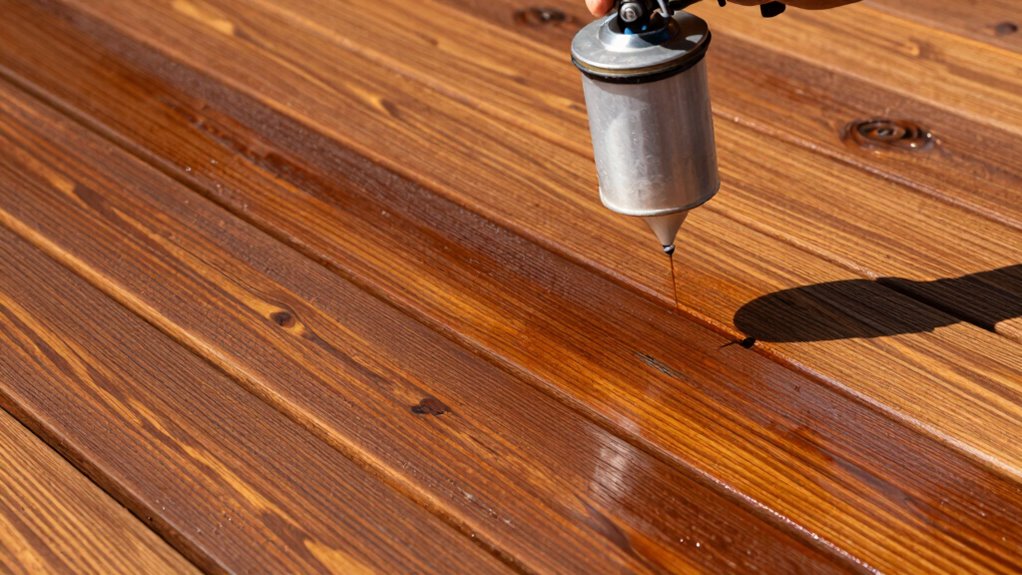
First, focus on your stain consistency. You want your stain to be neither too thick nor too thin. If it’s too thick, it may result in uneven application and lap marks, especially when using a sprayer. Conversely, if it’s too thin, it might not provide enough pigment for proper coverage. Aim for a smooth, paint-like consistency, which allows the stain to flow evenly from your sprayer and brush. Before you start, stir the stain thoroughly—don’t shake it, as that can introduce bubbles. Test the stain on a scrap piece or an inconspicuous area to check the flow and adjust if necessary with a small amount of water or stain thinner. This step guarantees your stain is ready for a consistent application.
Achieve even stain application by maintaining a smooth, paint-like consistency and thoroughly stirring before use.
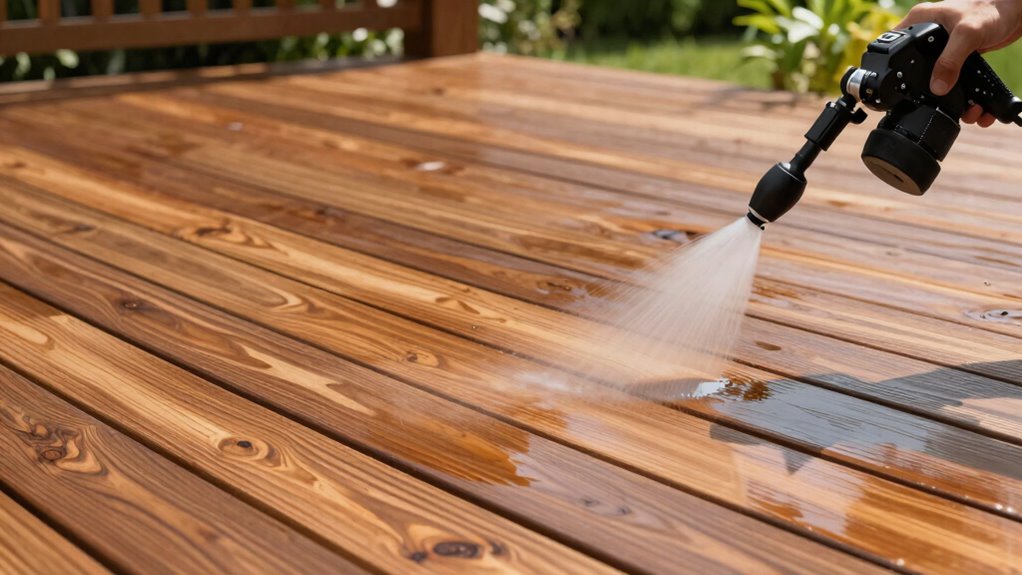
Next, your brush techniques play a vital role in achieving a flawless finish. When using a sprayer, it’s wise to have a high-quality brush nearby to back-brush or “lay down” the stain in areas where the spray may be uneven. This technique helps blend the stain seamlessly, smoothing out any lap marks that might form. Always work in manageable sections, overlapping slightly to maintain a wet edge. Keep a consistent distance from the surface—usually about 10 to 12 inches—to prevent overspray and uneven coverage. As you spray, move your arm steadily, maintaining a uniform pace, and avoid stopping or pausing in the same spot for too long, which can cause drips or build-up.
Additionally, using a high-quality sprayer with adjustable settings can significantly improve your control and reduce the risk of lap marks. The real trick to avoiding lap marks with a sprayer is to work quickly and efficiently, keeping the stain wet at the edges and immediately blending or brushing those areas. Regularly check your progress, and don’t hesitate to go back over sections with a brush if you notice unevenness. By controlling the stain’s consistency and employing proper brush techniques, you’ll achieve a professional-looking finish. Remember, patience and preparation are your best tools in creating a smooth, streak-free deck, whether you’re using a sprayer or a brush.
Frequently Asked Questions
Can I Use a Sprayer on All Types of Deck Stains?
Yes, you can use a sprayer on most deck stains, but consider the stain type and your brush techniques for best results. Oil-based stains work well with sprayers, while water-based stains might need more careful application. When choosing stain colors, lighter shades tend to hide lap marks better. Always prep your deck properly, and use a consistent spraying technique to avoid streaks or uneven coverage.
How Long Should I Wait Between Coats When Spraying?
They say, “Patience is a virtue,” and it’s true when waiting between coats. You should wait about 4-6 hours after spraying, depending on stain type and weather. Use proper brush techniques to blend edges and avoid lap marks. When choosing stain color, give each coat enough time to dry, ensuring a smooth finish. Rushing can compromise results, so take your time for a professional look.
Is It Necessary to Sand the Deck Before Applying Stain?
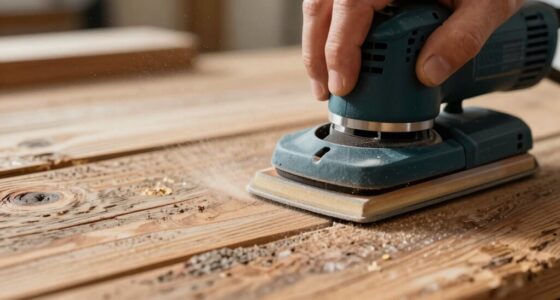
You should sand your deck before applying stain to guarantee proper deck preparation. Sanding smooths rough spots and removes any old, peeling stain, promoting better stain adhesion and color consistency. It’s especially important if your previous stain isn’t compatible with the new one. Proper sanding creates a clean, even surface, which helps prevent lap marks and uneven finish, ensuring your deck looks great and lasts longer.
What Safety Gear Is Recommended When Spraying Stain?
When spraying stain, you should wear protective eyewear to shield your eyes from splatters and a respiratory mask to prevent inhaling fumes and overspray. These safety gears keep you safe from harmful chemicals and debris. Always guarantee your mask fits snugly, and choose goggles that provide full eye coverage. Prioritizing safety gear helps you work confidently and reduces health risks during your staining project.
How Do Environmental Factors Affect Spray Stain Application?
Did you know that over 60% of stain application issues come from ignoring weather effects? When you spray stain, wind interference can cause uneven coverage and overspray, ruining your finish. High humidity slows drying, leading to streaks, while rain can wash away fresh stain. To get a perfect finish, always check weather forecasts and avoid spraying during windy, humid, or rainy conditions. This way, your deck looks flawless and lasts longer.
Conclusion
Using a sprayer for your deck stain saves time, but without proper technique, lap marks can mar your finish. Think of it like painting a wall — smooth, even strokes matter. The trick? Keep a wet edge and work quickly. It’s the difference between a flawless, uniform look and a streaky mess. So, embrace this simple tip, and your deck will look stunning, free of lap marks, just like a professional did it—fast and flawless.