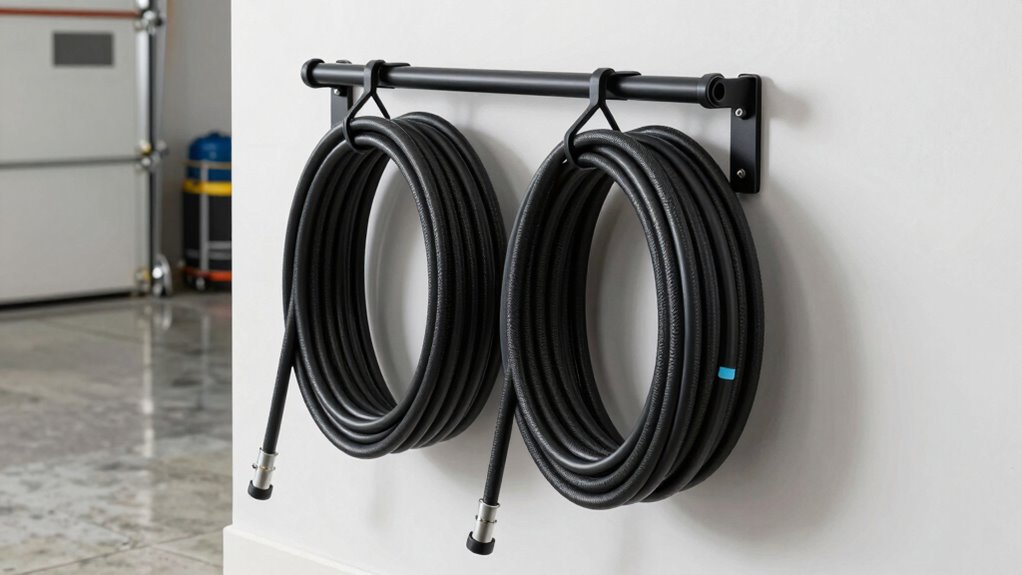

To prevent hose ‘memory’ and coils that cause kinks, store your hose properly by coiling it loosely in large loops or hanging it on a sturdy, weather-resistant hose hanger or reel. Always release water before storing and avoid sharp bends or tight wraps. Use wall-mounted brackets or retractable reels to keep your hose straight and off the ground. For more effective tips on maintaining your hose’s flexibility and longevity, keep exploring ways to optimize your storage methods.
Key Takeaways
- Store hoses in large, loose loops or on reels to prevent sharp bends that cause memory.
- Use wall-mounted brackets or hose reels to keep hoses off the ground and minimize coiling stress.
- Coil hoses in the same direction regularly to maintain flexibility and reduce kinks.
- Keep hoses in shaded, cool areas away from sunlight to prevent material degradation and memory formation.
- Regularly inspect and rinse hoses to remove debris, ensuring flexibility and preventing damage from coiling.
As an affiliate, we earn on qualifying purchases.
Why Hose ‘Memory’ Causes Kinks and Damage
Hose ‘memory’ refers to the hose’s tendency to retain the shape or curl it was stored in, which can lead to kinks and damage over time. The hose material plays a significant role in this. Flexible hoses made from rubber or vinyl are more prone to developing memory, especially if stored improperly. When you coil a hose tightly or leave it in a bent position, it retains those bends, making kinks more likely when you use it again. High water pressure can exacerbate this issue, pushing against existing kinks and weakening the hose’s structure. Over time, these stress points can cause cracks or leaks, especially when combined with material fatigue. Additionally, understanding how water pressure interacts with hose material can inform better storage practices and maintenance routines. Proper storage techniques, such as hanging the hose or storing it loosely, help prevent hose deformation and extend its lifespan. Using appropriate hose materials designed to resist kinking and memory can significantly enhance durability. To prevent damage, understanding how hose material and water pressure interact is essential for proper storage and maintenance. Recognizing the importance of hose quality can also make a significant difference in durability and performance.
How Proper Storage Prevents Hose ‘Memory’ and Extends Lifespan

Using proper coiling techniques keeps your hose flexible and prevents it from developing memory. Store it in a cool, dry place away from direct sunlight to avoid damage and deterioration. When you follow these practices, you’ll extend your hose’s lifespan and keep it working smoothly. Additionally, incorporating free floating methods in your storage approach can help prevent kinks and tangles, ensuring the hose remains in optimal condition. Proper storage methods aligned with sustainable practices can also contribute to environmental conservation and resource efficiency. Regularly inspecting your hose for signs of wear can further prevent damage and ensure safety during use.
Proper Coiling Techniques
Proper coiling techniques are essential to prevent hose ‘memory’ and extend its lifespan. When you coil your hose correctly, you avoid kinks and damage, ensuring it works smoothly with your hose reel or garden spray. Start by releasing any water, then lay the hose flat. Coil it in large, loose loops, avoiding sharp bends. Use the table below to guide your method:
| Step | Action | Tip |
|---|---|---|
| Loop Size | Make large, even loops | Prevents kinks and stress |
| Direction | Coil in the same direction each time | Maintains flexibility |
| Storage Spot | Use a hose reel or designated area | Keeps hose organized & safe |
Adopting these techniques helps your hose last longer and performs better every time you use it. Proper storage can also prevent hose ‘memory’, which can cause coils to set and make unwinding difficult over time. Additionally, using the correct coiling method reduces the risk of damaging the hose’s internal structure, ensuring durability.
Suitable Storage Conditions
Storing your hose in the right conditions is key to preventing ‘memory’ and prolonging its lifespan. The storage environment should be suitable for your hose material to avoid damage and deformation. Keep your hose in a cool, dry place away from direct sunlight, which can weaken materials over time. Avoid storing it in areas with extreme temperatures or exposure to chemicals that could degrade the hose. Proper storage also means keeping it off the ground and hanging or coiled neatly to prevent kinks. By paying attention to these factors, you help maintain flexibility and prevent ‘memory’ from developing. Here are some tips: 1. Store in a shaded, cool spot 2. Keep it dry and clean 3. Avoid sharp bends or kinks 4. Use proper hanging or coiling methods. Additionally, understanding hose material properties can help you choose the best storage practices for your specific hose type. Properly storing your hose according to material flexibility also supports its longevity and performance.
Choosing the Best Hose Storage Solutions for Long-Lasting Flexibility
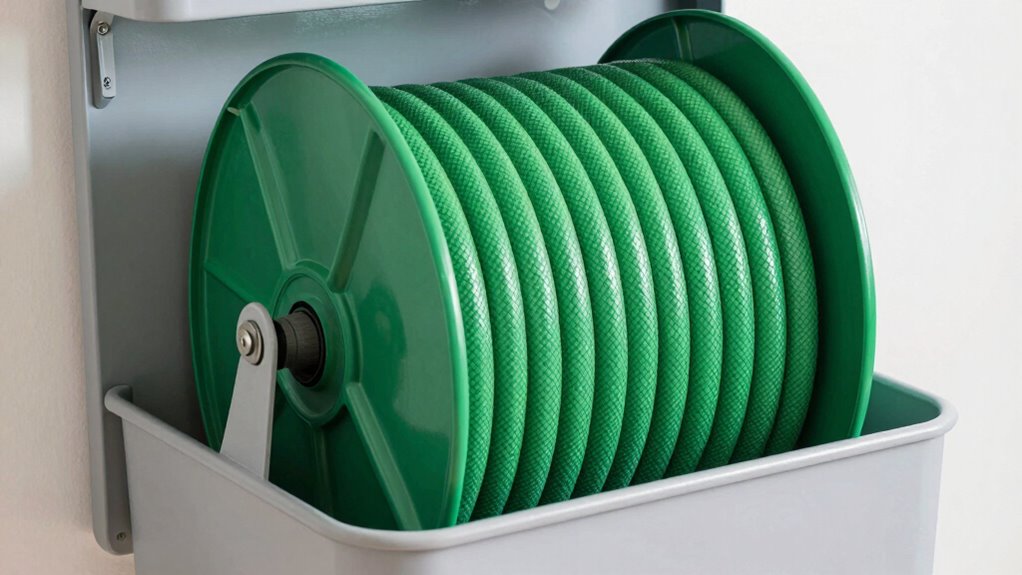
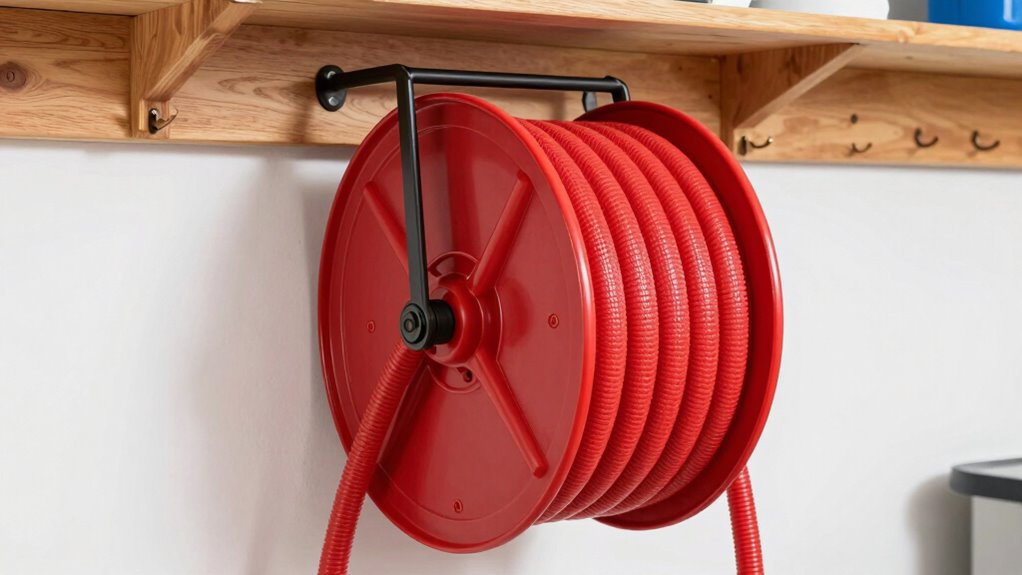
Choosing the right hose storage solution is essential for maintaining flexibility and preventing damage over time. A quality hose reel is a top option, as it keeps your hose organized, prevents kinks, and protects it from weather. Consider a garden storage unit with a built-in reel or hooks that allow you to coil the hose properly. Look for materials like durable plastic or metal that resist rust and wear. Wall-mounted reels save space and keep hoses accessible, while freestanding options offer portability. Avoid storing hoses in direct sunlight or tight coils that can cause memory and cracking. Proper storage not only extends your hose’s lifespan but also ensures easy use whenever you need it. Selecting a durable storage solution that suits your space and gardening habits for long-lasting flexibility. Using proper hose storage practices helps prevent damage and ensure your hose stays flexible and functional over time. Additionally, appropriate storage methods can reduce stress on the hose and improve its longevity.
Easy Techniques for Coiling and Hanging Hoses Without Kinks
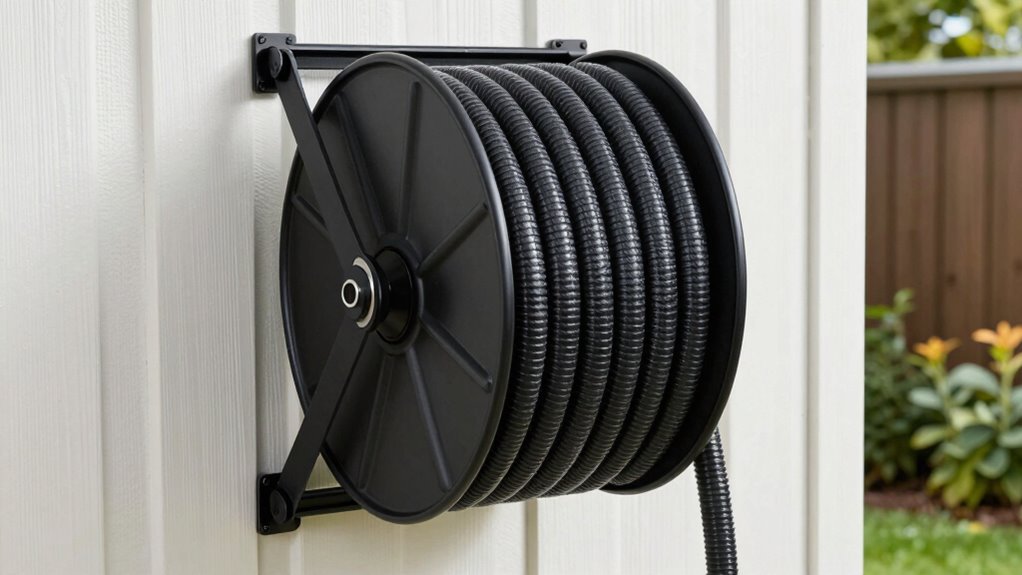
Coiling and hanging your garden hose correctly can prevent kinks and damage, making watering easier and prolonging its lifespan. Proper techniques save you time and reduce hose wear. Use these simple tips for hassle-free storage: 1. Start by attaching hose accessories like a nozzle or connector, then drain excess water to avoid stretching. 2. Coil your hose in large, loose loops to prevent sharp bends that cause kinks. 3. Hang it on a sturdy hook or reel, keeping the hose elevated and straight. 4. During watering, use gentle, steady pressure to avoid twisting or kinking the hose. 5. Regularly inspecting your hose for signs of wear can help prevent damage and leaks before they become serious. Maintaining proper hose storage techniques also helps prevent the formation of permanent bends, which can impair water flow. Using high-quality, flexible hoses made from durable materials can further enhance your hose management efforts. These watering tips help maintain flexibility and prevent memory (permanent bends). Additionally, choosing hoses with enhanced durability is essential for long-term performance. Proper coiling techniques not only extend the lifespan of your hose but also help prevent kinks and twists, ensuring consistent water flow and reducing the need for repairs. Following proper coiling techniques guarantees your hose stays in good shape longer and is ready to use whenever you need it.
Creative Storage Ideas to Keep Your Garden Hoses Straight and Ready

To keep your garden hoses straight and ready, consider innovative coil-free storage options that eliminate kinks and tangles. Durable hose hangars offer a simple and effective way to organize your hoses while preventing damage. Exploring these creative solutions helps guarantee your hoses stay functional and easily accessible whenever you need them. Using waterproofing techniques can further extend the lifespan of your hoses in wet conditions. Being aware of hose weight is also important to ensure safe installation and handling. Additionally, selecting the right hose storage options tailored to your space can improve durability and ease of use.
Innovative Coil-Free Solutions
Innovative coil-free storage solutions can transform the way you keep your garden hoses organized and ready for use. These methods help prevent coiling issues like memory and kinks, ensuring your hose stays straight and functional. You can choose from various options based on hose material and water pressure needs. For example, flexible hose reels accommodate different hose types and reduce strain during winding. Wall-mounted brackets keep hoses off the ground and prevent coiling, especially with high water pressure. Retractable hose reels automatically extend and retract, minimizing coils and twists. Finally, using quick-connect fittings simplifies setup and disconnection, reducing unnecessary bending. These solutions keep your hose straight, extend its lifespan, and make outdoor watering more efficient and hassle-free.
Durable Hose Hangars
Hose hangers offer a practical and durable solution to keep your garden hoses organized and ready for use. A sturdy hose reel or hose rack prevents kinks, coils, and memory buildup by supporting your hose properly. Choose a weather-resistant material like metal or heavy-duty plastic to guarantee longevity. Mount the hose reel or rack at a convenient height to make winding and unwinding easy, reducing strain on the hose. A well-designed hose rack keeps your hose off the ground, protecting it from damage and dirt. These durable hangers help maintain hose shape, making future use smoother and preventing tangles. Investing in quality, long-lasting hose storage solutions ensures your garden hoses remain functional and ready whenever you need them.
Maintenance Tips to Keep Your Stored Hoses in Top Condition
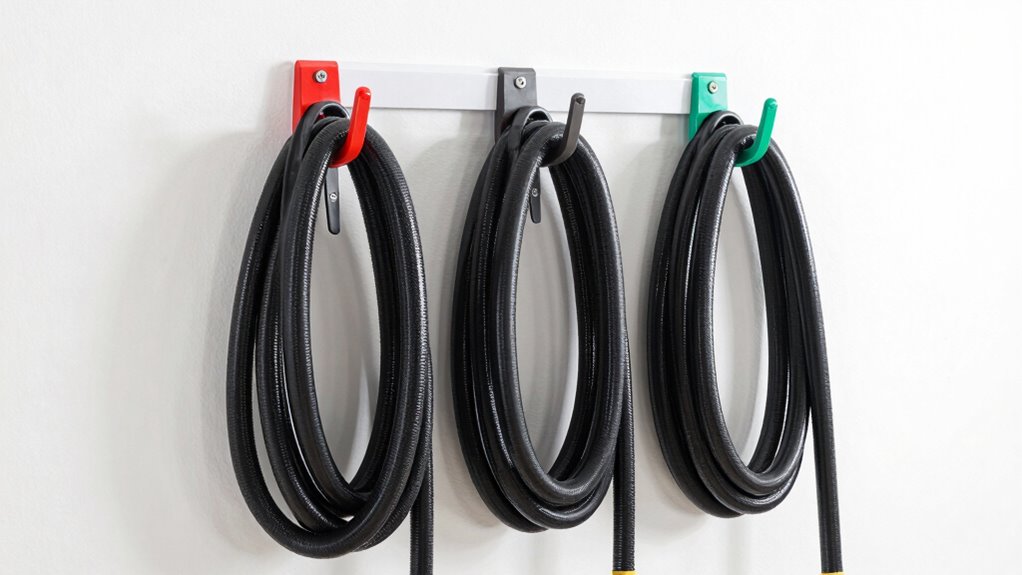
Regular maintenance is essential to keep your stored hoses in top condition and ready for use whenever you need them. Proper care depends on understanding your hose material and environmental factors. To maintain your hoses, consider these tips:
- Inspect regularly for cracks, leaks, or damage caused by weather conditions.
- Rinse hoses with clean water after use to remove dirt and debris.
- Store hoses in a cool, shaded area to minimize damage from sun exposure and temperature fluctuations.
- Avoid kinks and sharp bends that can weaken the hose material over time, promoting even coil storage.
How to Organize Your Garden or Workshop for Easy Hose Access
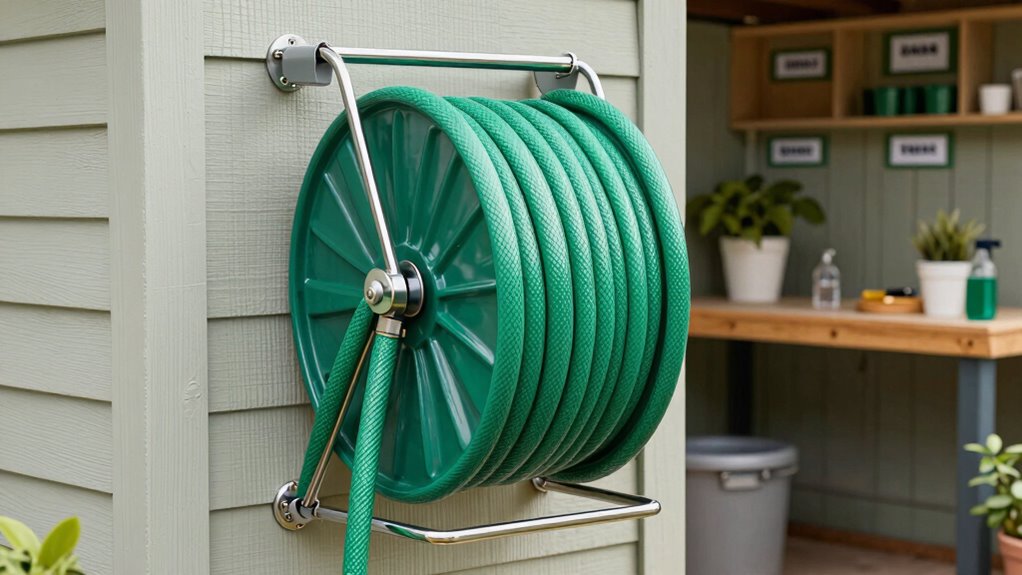
Organizing your garden or workshop for easy hose access can save time and prevent damage to your hoses. Start by creating dedicated storage spaces that blend functionality with garden art. Use attractive hose reels or decorative racks that add visual appeal while keeping hoses tidy. Arrange hoses near your watering stations to streamline watering schedules, so you don’t waste time searching for them. Group hoses by length or purpose to make retrieval effortless. Label storage areas clearly, especially if you have multiple hoses for different tasks. Incorporate hooks or wall mounts that keep hoses off the ground and prevent kinks. Thoughtful organization not only improves efficiency but also preserves your hoses’ longevity, ensuring they remain flexible and ready whenever you need them.
Frequently Asked Questions
How Often Should I Inspect My Stored Hoses for Damage?
You should inspect your stored hoses every three to six months for damage. Check the hose material for cracks, leaks, or signs of wear, especially if stored in a harsh environment. Make certain your storage environment is clean, dry, and away from direct sunlight, which can degrade the hose. Regular inspections help identify issues early, preventing costly repairs or replacements and ensuring your hoses stay functional when you need them.
Can Temperature Fluctuations Affect Hose Memory and Flexibility?
Temperature fluctuations can definitely affect hose memory and flexibility. When temperatures vary, especially with hose material that isn’t temperature-stable, hoses can become stiff, kinked, or develop memory. To keep your hoses flexible and in good shape, store them in a cool, stable environment, avoid extreme temperature changes, and use storage solutions designed to maintain temperature stability. This way, your hoses stay pliable and ready for use whenever you need them.
Are There Specific Materials Better at Resisting Hose Kinks?
Yes, certain hose materials offer better kink resistance. Rubber hoses, especially those reinforced with mesh, tend to resist kinking better than traditional plastics. Latex hoses are flexible but may kink more easily if not reinforced. Consider hoses made from hybrid materials with kink-resistant coatings or fabrics. These materials help maintain flexibility while preventing sharp bends, making your hose easier to handle and reducing the risk of damaging kinks during use.
What Are the Best Practices for Storing Hoses in Winter?
Imagine your hose cozy inside, wrapped in winter protection to guard against freezing temperatures. Store it in a dry, sheltered spot, ideally hanging or coiled loosely to prevent kinks. Use hose insulation if needed, especially in colder climates. Drain all water before storing, and avoid direct contact with snow or ice. Proper winter storage keeps your hose flexible and ready for use when spring arrives.
How Does Hose Diameter Influence Storage and Kink Prevention?
Your hose diameter directly impacts storage efficiency and kink prevention. Smaller diameters are easier to coil and store compactly, reducing the risk of kinks, while larger diameters may require more space and careful handling. Choosing the right diameter for your needs helps guarantee smoother storage and easier deployment, preventing hose memory and coils. Always coil hoses properly, matching diameter to storage method, to keep them in ideal condition.
Conclusion
By storing your hose properly, you prevent unwanted kinks and damage that can turn your garden into a tangled mess. Picture your hose lying smoothly in a dedicated reel or neatly coiled, ready to unfurl easily when you need it. With a little effort, you keep it flexible and ready to serve, avoiding the frustration of fighting stubborn coils. Well-organized storage transforms your outdoor space into a tidy oasis where your hose is always primed for action.