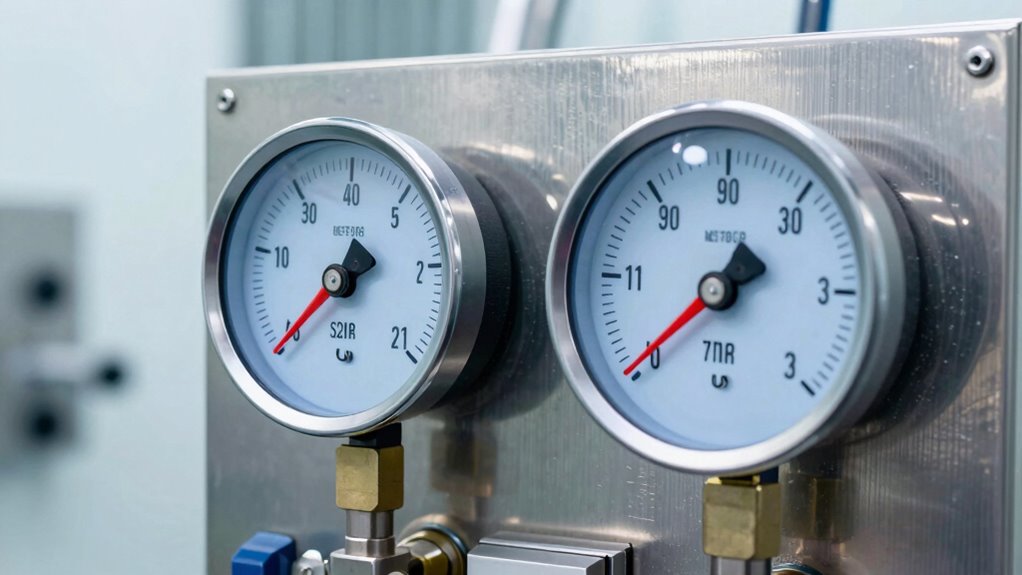

To know if your paint booth is properly contained, regularly check your pressure gauges for consistent readings, guaranteeing they stay within safe ranges. Look for needle fluttering or fluctuating measurements, which can indicate leaks or faulty gauges. Make certain that your gauges are clean and calibrated correctly, and repair or replace any that show signs of damage. Proper pressure monitoring is key; continue exploring ways to keep your booth secure and functioning at its best.
Key Takeaways
- Ensure pressure gauges are properly calibrated and regularly verified against standard references for accuracy.
- Check for consistent, steady needle readings without flutter or fluctuation during operation.
- Inspect gauges for physical damage, corrosion, leaks, or debris that could affect performance.
- Confirm that pressure differentials stay within specified safe ranges for proper booth containment.
- Perform routine cleaning and maintenance to keep gauges functioning correctly and prevent false readings.
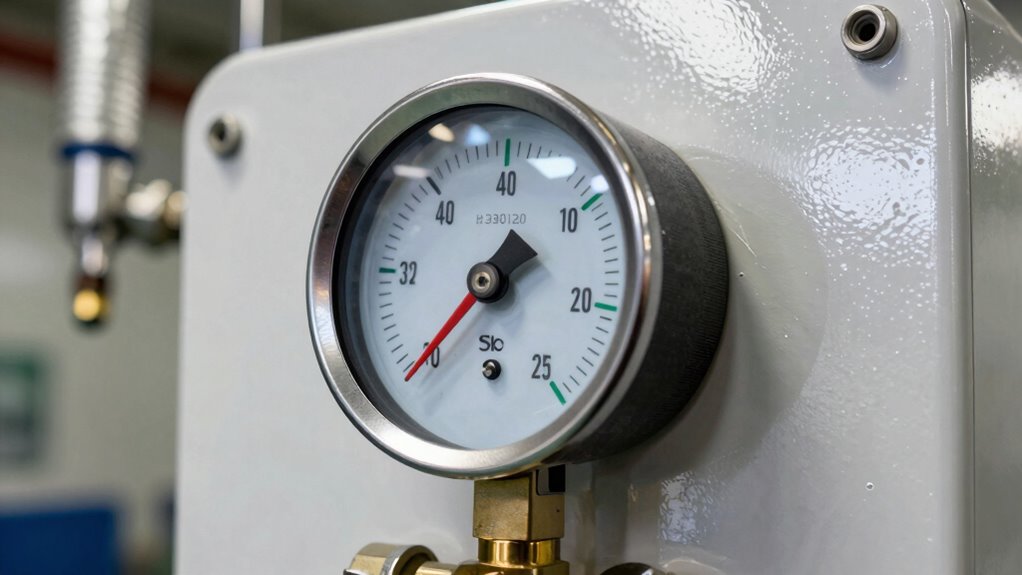
Paint booth pressure gauges are fundamental tools that help you monitor and maintain the correct airflow within your spray booth. When your gauges are functioning properly, they provide critical information about the pressure differentials that keep your booth contained and safe. Proper airflow calibration is essential because it ensures the gauges give accurate readings, which directly impacts your ability to control overspray, fumes, and contamination. If your gauges are off, you might think your booth is operating correctly when it’s actually compromised. That’s why regular gauge maintenance isn’t just recommended—it’s indispensable. Maintaining your pressure gauges involves more than just occasional checks; it requires a consistent routine to prevent inaccuracies that could lead to poor paint finishes or health hazards.
You should start by inspecting your gauges regularly for signs of damage or wear. Cracks, leaks, or corrosion can distort readings, so it’s important to address these issues immediately. Calibration is also key; over time, gauges can drift from their original settings, giving you false readings. To keep things accurate, you need to perform airflow calibration periodically, ideally following the manufacturer’s guidelines or industry best practices. Calibration involves comparing your gauge readings against a standard reference and adjusting them as needed. Doing this ensures your pressure readings are precise, giving you confidence that your booth’s airflow remains within safe and effective parameters. Regularly testing your gauges with pressure calibration tools helps verify their accuracy and reliability.
Gauge maintenance extends beyond calibration. Keeping your gauges clean prevents dust, paint, or debris from interfering with their operation. Use appropriate cleaning solutions and avoid harsh chemicals that could damage sensitive components. Check that all fittings and connections are tight and secure—loose fittings can cause inaccurate pressure readings or leaks, undermining your entire containment system. Additionally, if you notice the gauge’s needle fluttering or fluctuating wildly, it might be time to replace it or consider servicing it to restore reliable performance. Don’t forget, a well-maintained gauge system reduces downtime and improves your overall spray booth efficiency.
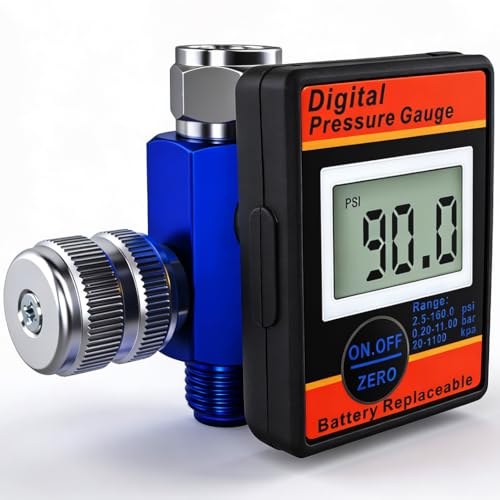
LE LEMATEC Digital Paint Gun Air Regulator with LED Gauge, 1/4 NPT
Precision Measurement: Ensures accurate readings in PSI, BAR, and KPA for painting, woodworking, and inflating tasks.
As an affiliate, we earn on qualifying purchases.
As an affiliate, we earn on qualifying purchases.
Frequently Asked Questions
How Often Should Pressure Gauges Be Calibrated?
You should calibrate your pressure gauges at least once every 6 to 12 months, depending on usage and manufacturer recommendations. Regular calibration ensures accurate readings and reliable containment. Incorporate calibration frequency into your maintenance tips to prevent inaccuracies that could compromise safety. Always follow the manufacturer’s guidelines and schedule calibrations proactively, especially if you notice inconsistent readings or after any gauge repairs, to maintain peak performance and safety standards.
What Are Common Signs of Gauge Failure?
Like a watch that’s lost its tick, a gauge showing inconsistent readings signals failure. Common signs include erratic or stuck needles, sudden drops or spikes, and readings that don’t match calibration records. These issues suggest the gauge’s lifespan is nearing its end or it needs recalibration. Regular calibration frequency helps prevent surprises, but if signs appear early, it’s time to replace or service the gauge to guarantee safety and accuracy.
Can Digital Gauges Replace Analog Ones Entirely?
Digital gauges can replace analog ones, but consider gauge durability first. Digital sensors often provide more precise readings and easier calibration, making them appealing. However, they may be more sensitive to environmental factors like moisture or temperature fluctuations. If you prioritize durability and simplicity, analog gauges might still be better. Ultimately, choose based on your operational needs, ensuring the gauge type suits your paint booth environment for reliable containment monitoring.
What Safety Precautions Are Needed When Inspecting Gauges?
When inspecting gauges, you need to prioritize safety by wearing appropriate safety gear like gloves and eye protection. Follow proper inspection procedures, guaranteeing the gauges are depressurized before opening or adjusting them. Keep your workspace clear of hazards, and handle tools carefully. Always verify that the gauges are functioning correctly before use, and if you’re unsure, consult a supervisor. These precautions help prevent accidents and ensure accurate readings.
How Do Environmental Factors Affect Gauge Accuracy?
Environmental factors like temperature drift and humidity effects can greatly impact your gauge accuracy. When temperatures fluctuate, the gauge’s materials expand or contract, causing readings to drift. High humidity can introduce moisture, leading to corrosion or sensor interference. You need to regularly calibrate your gauges and monitor environmental conditions to guarantee accurate readings. Keeping your gauges in a controlled environment helps maintain their precision and ensures your containment remains reliable.

ETENWOLF T300 Digital Tire Pressure Gauge 3-200 PSI, Industrial Tire Gauge Calibrated to ANSI B40.7 Grade 2A(Plus-Minus 0.5%), Replaceable AAA Batteries (Vivid Orange)
PROCESS LEVEL ACCURACY: Each ETENWOLF’s digital tire pressure gauge is calibrated manually to ANSI B40.7 Grade 2A(plus-minus 1…
As an affiliate, we earn on qualifying purchases.
As an affiliate, we earn on qualifying purchases.
Conclusion
Just like a ship’s captain relies on gauges to navigate treacherous waters, your paint booth pressure gauges guide you to safety and quality. When you keep a close eye on those readings, you’re steering clear of costly overspray and contamination, ensuring your workspace remains contained. Remember, a steady hand on the dial is your lighthouse in the dark—trust it to keep your projects on course and your environment secure.

Motanar Shotgun Cleaning Kit for 12, 20, 410 Gauge Bronze Brushes, Brass Adaptor, Cotton Mops, Cleaning Pick, Patch Holder, Patches, Nylon Brush Head, Empty Oil Bottle
28.5 Inch brass rods with a aluminum handle, 5/16-27 female to 8/32 male adapter
As an affiliate, we earn on qualifying purchases.
As an affiliate, we earn on qualifying purchases.

Vaneometer Swing Vane Anemometer. Measure Horizontal Air Flow from 25 to 400 FPM in Fume Hoods, Paint Booths, Hospital AII Isolation Rooms and More.
Measure horizintal air flow from 25 to 400 ft/min.
As an affiliate, we earn on qualifying purchases.
As an affiliate, we earn on qualifying purchases.