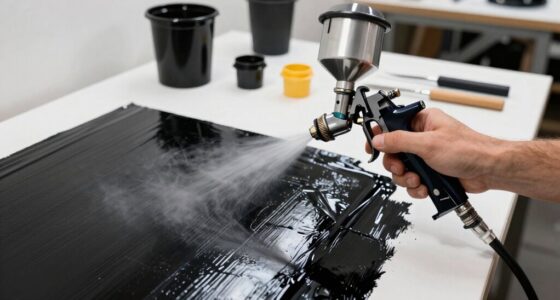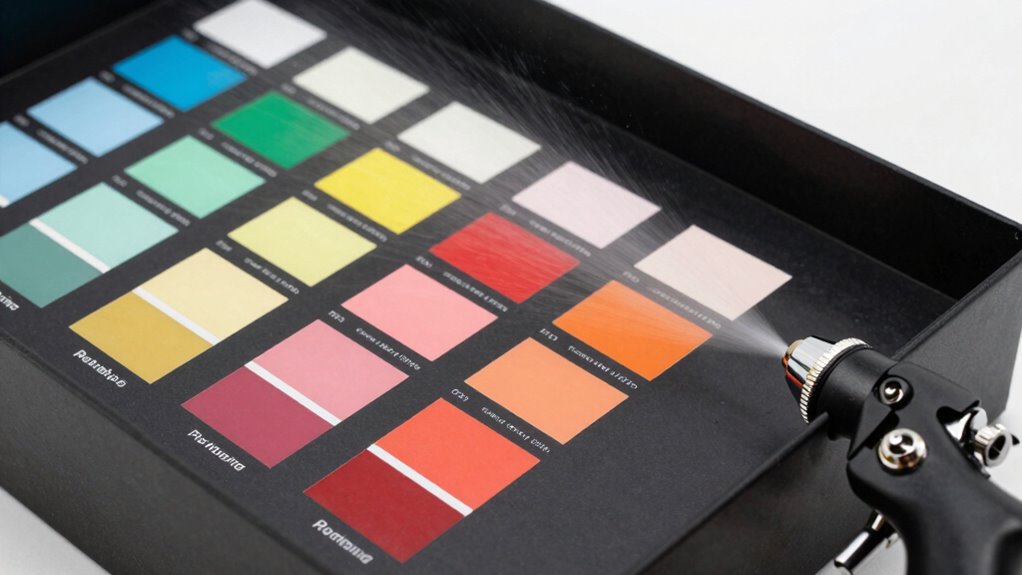

Boxing paint before spraying is the easiest way to prevent color shifts. By thoroughly mixing the paint in its original container and pouring it into a clean, sealed container, you guarantee uniform color. Proper storage, labeling, and regular stirring help maintain consistency over time. Avoid common mistakes like insufficient mixing or debris. Keep your paint well-stored and prepared to achieve even, professional finishes—continue on to learn the best tips for flawless results.

Get business pricing on tools and workshop supplies
- Business-only prices and quantity discounts
- Tax-exempt purchasing
- Multiple users, one account, clear invoices
Key Takeaways
- Mix paint thoroughly in the original container before pouring to ensure uniform color and consistency.
- Use a clean, sealed container with minimal air space for boxing to prevent separation.
- Strain the paint to remove lumps and debris that can cause spray gun blockages and uneven flow.
- Store boxed paint in a cool, dark place to prevent color shifts caused by environmental factors.
- Regularly stir and inspect stored paint for separation or discoloration, re-blending as needed before spraying.
paint mixing and boxing containers
As an affiliate, we earn on qualifying purchases.
As an affiliate, we earn on qualifying purchases.
What Is Boxing Paint and Why Is It Key to Prevent Color Shifts When Spraying?

Have you ever noticed color inconsistencies after spraying paint? That’s often due to poor paint compatibility or improper color matching. Boxing paint involves combining all the mixed paint into a single container before spraying. This process guarantees uniformity, helping you achieve consistent color results. When you box your paint, you blend all the components thoroughly, reducing the risk of color shifts caused by settling or separation. It’s especially vital when working with multiple batches or different color shades, as it guarantees each spray maintains the same hue. Proper boxing prevents uneven color application and saves you time on touch-ups. Additionally, understanding paint formulation helps you select compatible paints that will respond predictably during spraying. Overall, understanding what boxing paint is and why it’s indispensable helps you maintain color consistency and achieve professional-looking finishes. Additionally, using proper mixing techniques ensures your paint’s uniformity and longevity across your project.
How to Box Your Paint for Consistent, Even Color Results
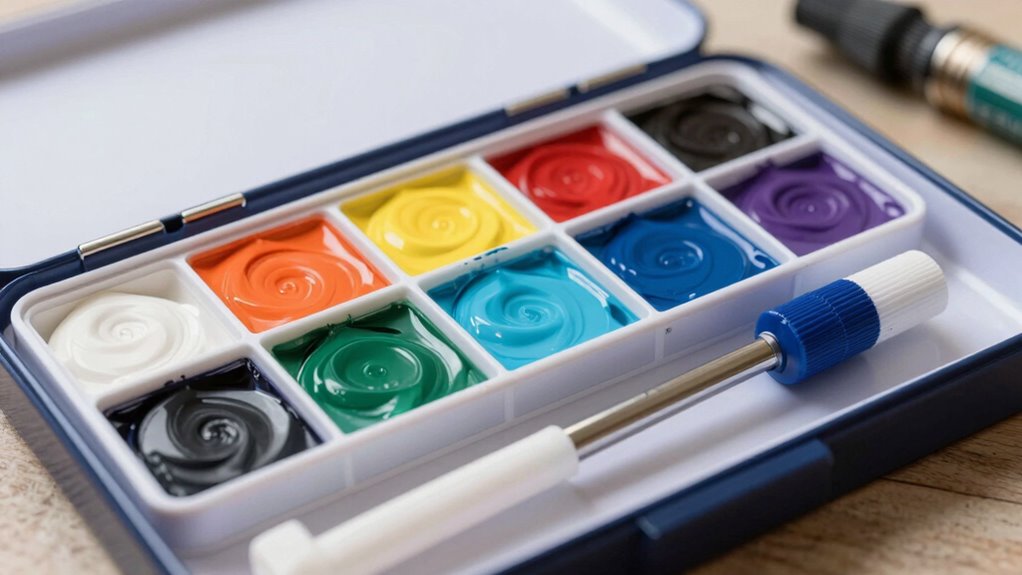
To guarantee your paint is properly boxed for consistent color results, start by thoroughly mixing the paint in its original container. This ensures uniform paint consistency, which is vital for accurate color matching. Once mixed, pour the paint into a clean, sealed container, leaving minimal air space to prevent oxidation. Use a paint strainer if needed to remove any lumps. Label the container with the color name, code, and date. Store it in a cool, dark place to maintain quality. Proper storage conditions can also help prevent color shifts over time. To visualize the process:
| Step | Key Point |
|---|---|
| Mix thoroughly | Achieve uniform paint consistency |
| Pour into container | Prevent air and contamination |
| Seal tightly | Maintain paint quality |
| Label clearly | Easy identification and color matching |
| Store properly | Preserve consistency for future use |
Common Mistakes When Boxing Paint and How to Avoid Them
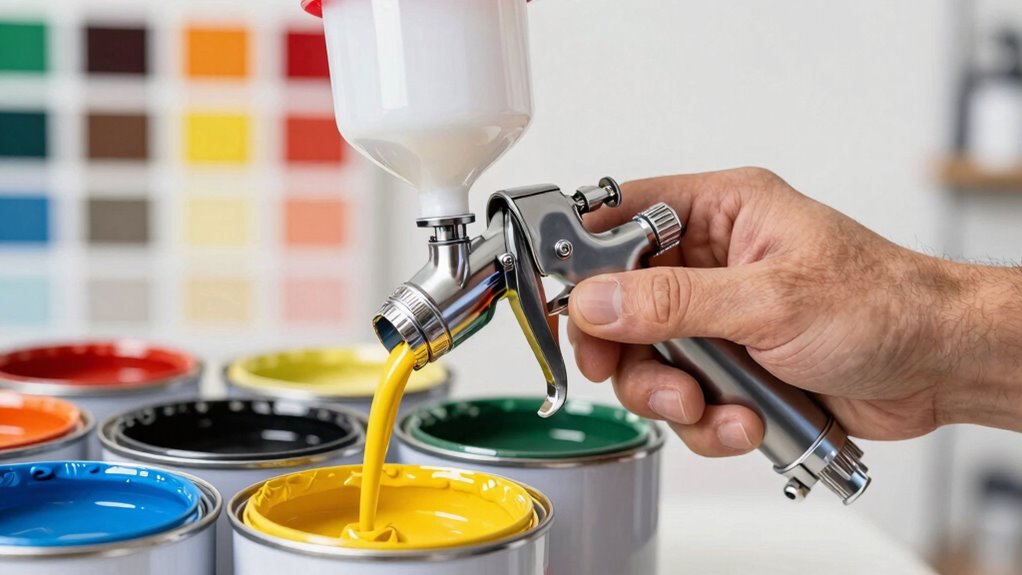
One common mistake when boxing paint is failing to mix it thoroughly before pouring, which can lead to inconsistent color and texture. This oversight often causes a color mismatch during spraying, resulting in uneven coverage or visible streaks. Additionally, improper mixing increases the risk of application errors, such as clogs or uneven flow from the spray gun. To avoid these issues, ensure you stir the paint well, blending all layers for a uniform color. Take extra care to check for settled pigments or debris that could cause blockages. Proper mixing helps maintain consistent color and smooth application, preventing costly rework. Remember, rushing this step can compromise your finish, so always allocate enough time to mix thoroughly before boxing your paint. Paying attention to piercing care and hygiene can also help prevent contamination of your supplies, ensuring a cleaner application process.
Best Practices for Storing and Mixing Boxed Paint to Maintain Color

Proper storage and mixing are essential for maintaining the original color and consistency of boxed paint. To guarantee ideal color matching, keep your paint in a cool, airtight container to prevent drying and separation. Stir thoroughly before use, incorporating paint additives if needed, to restore uniformity and vibrancy. Proper mixing helps avoid uneven color shifts during spraying. Store paint upright in a stable environment, away from direct sunlight or temperature fluctuations. Use a clean stir stick and avoid over-agitating, which can introduce air bubbles. Regularly check stored paint for separation or changes. Incorporating UV filters into your paint can also help protect against sun damage that causes color fading over time. Additionally, understanding paint storage best practices can extend the lifespan and quality of your paint. For added protection, consider using color stabilizers, which can further preserve hue consistency during storage. Maintaining consistent storage conditions and handling techniques is crucial for preventing color shifts and achieving a professional finish. By following these best practices, you preserve the integrity of your color and simplify your spraying process, reducing the risk of unwanted color shifts and ensuring professional results. Also, using proper mixing techniques ensures even application and color uniformity throughout your project.
What to Do If Your Paint Color Still Shifts After Boxing?
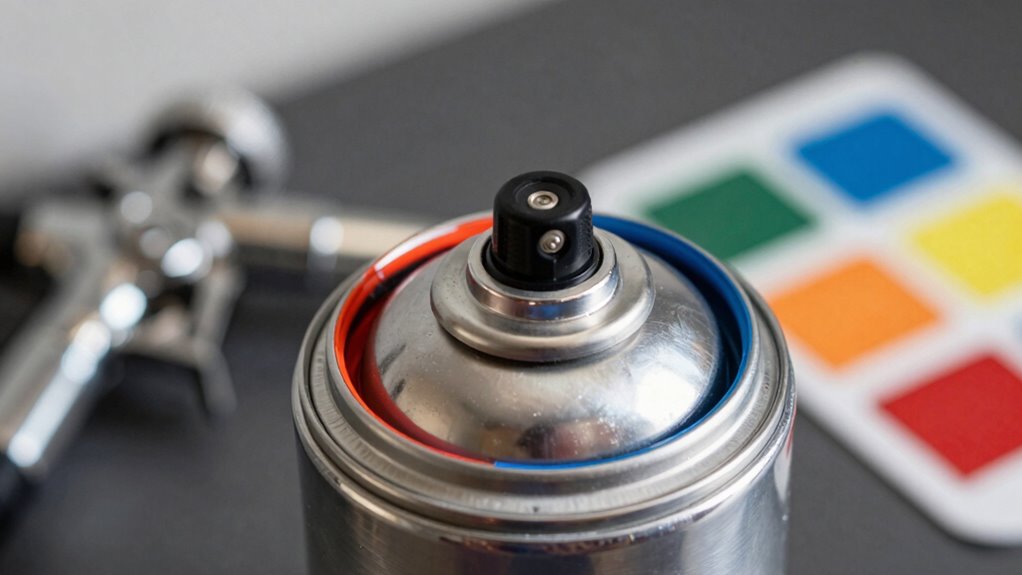
Even after carefully boxing your paint, you might notice the color shifts when you’re ready to use it. If that happens, try repainting with accurate paint color matching. First, apply a primer to the surface; this helps even out color inconsistencies. If the color still isn’t right, stir the paint thoroughly or add small amounts of colorant to adjust the shade. To visualize, consider this table:
| Surface prep | Mixing | Color correction | Final coat |
|---|---|---|---|
| Clean surface | Stir thoroughly | Add tiny amounts of tint | Apply evenly |
| Use primer | Blend well | Test on scrap | Check color match |
| Smooth surface | Re-mix | Repeat if needed | Finish with a clear coat |
| Ensure proper drying | Use consistent technique | Adjust until satisfied | Seal for longevity |
This process guarantees your paint matches perfectly, avoiding unsightly color shifts. Additionally, regularly monitor paint consistency during storage and application to prevent unexpected color variations later. Proper storage conditions can also help maintain paint color stability, ensuring your project remains flawless over time. Being aware of color shift causes can help you take proactive steps to prevent issues before they arise. Furthermore, understanding how environmental factors like temperature and humidity influence paint drying and curing can contribute to more consistent results.
Frequently Asked Questions
How Long Should I Let Boxed Paint Sit Before Spraying?
You should let the boxed paint sit for about 10 to 15 minutes after mixing to allow the paint to settle and blend properly. During this time, gently stir or shake the container to guarantee even consistency, preventing color shifts when spraying. This step helps the paint’s pigments and components mix thoroughly, giving you a smooth, uniform finish and avoiding unwanted color variations in your project.
Can Boxing Paint Fix Existing Color Inconsistencies in a Project?
Boxing paint can help fix existing color inconsistencies in your project if you thoroughly mix it first. This process improves color matching and promotes finish uniformity by blending any settled pigments. Just make certain you stir the paint well before spraying, as it helps achieve a consistent color and smooth finish. Keep in mind, boxing isn’t a miracle fix—proper preparation and application are key to seamless results.
Is There a Difference Between Boxing Paint for Spraying and for Brushing?
Yes, there is a difference between boxing paint for spraying and for brushing. When boxing for spraying, you focus on maintaining paint consistency and use specific container types designed for easy mixing and agitation. For brushing, you might not need as much attention to consistency or container type. Boxing guarantees uniform color and texture, so choose the method that matches your application to avoid color shifts and achieve smooth results.
What Tools Are Best for Boxing Large Quantities of Paint?
Imagine a well-oiled engine, each part working seamlessly. For boxing large quantities of paint, you’ll want sturdy, food-grade storage containers or large plastic drums. Use proper paint mixing techniques to guarantee consistency, then transfer the paint into these durable containers. This setup keeps your paint well-sealed, prevents contamination, and streamlines your workflow, making it easier to handle big batches without color shifts or quality loss.
How Often Should I Remix Boxed Paint During a Project?
You should remix your boxed paint every time you stop working for a while, ideally every few hours to maintain color uniformity. Use proper paint mixing techniques like stirring thoroughly or shaking the container to make certain the pigment and binder stay evenly distributed. Regular remixing prevents color shifts and inconsistency, so your spray job remains smooth and uniform throughout the project. Don’t forget, consistent stirring is key to achieving professional results.
Conclusion
By boxing your paint properly, you make certain your color stays true, like a steady compass guiding your project. It’s a simple step that prevents frustrating color shifts and guarantees smooth, consistent results. Think of boxing as your secret weapon against uneven tones—like a skilled conductor keeping every instrument in harmony. So, take the time to box your paint carefully; it’s worth it for a flawless finish that truly shines.
Fall yard work Picks
leaf blowers
As an affiliate, we earn on qualifying purchases.