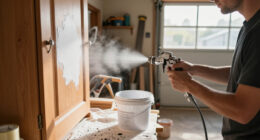

Negative pressure is a key technique that helps you keep overspray and airborne contaminants safely contained. It works by creating a lower pressure inside a space compared to the outside atmosphere, ensuring air flows inward rather than escapes. Proper airflow management and specialized ventilation systems help maintain this pressure difference, preventing leaks. If you want to understand how negative pressure effectively controls contamination and keeps environments safe, there’s more to discover beyond this overview.

Get business pricing on tools and workshop supplies
- Business-only prices and quantity discounts
- Tax-exempt purchasing
- Multiple users, one account, clear invoices
Key Takeaways
- Negative pressure occurs when internal air pressure is lower than atmospheric pressure, directing airflow into the space.
- Maintaining negative pressure prevents overspray and airborne contaminants from escaping into surrounding areas.
- Ventilation and exhaust systems are designed to create and sustain negative pressure environments.
- Proper airflow management ensures contaminants are contained and do not leak out.
- Physical barriers and filtration systems enhance containment in negatively pressurized spaces.
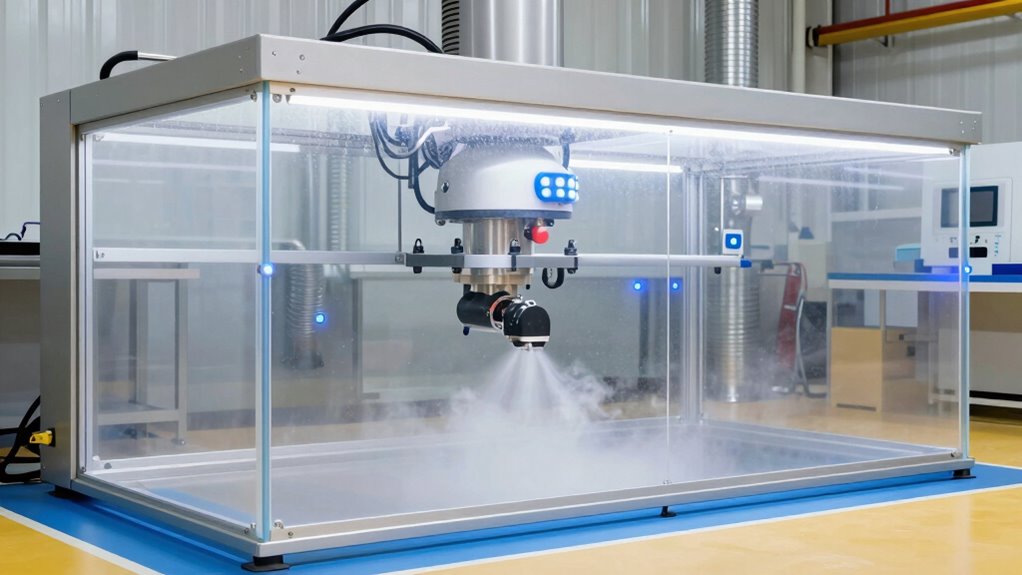
Negative pressure occurs when the pressure inside a space is lower than the surrounding atmosphere. This difference in pressure plays a pivotal role in controlling airflow, especially when you need to contain overspray or airborne contaminants. By creating a negative pressure environment, you guarantee that air flows into the space rather than out of it, which is essential for effective containment strategies. When you manage airflow properly, you prevent overspray from escaping into adjacent areas, protecting both workers and the environment. This principle is essential in industries like painting, pharmaceuticals, and healthcare, where maintaining a clean, controlled environment is non-negotiable.
To achieve and maintain negative pressure, you need to implement proper airflow management techniques. These involve carefully designing ventilation systems that continuously draw air into the space while exhausting an equal or greater amount of air from it. An effective exhaust system is key—by pulling air out of the space at a steady rate, you create a slight negative pressure. This setup prevents contaminants or overspray from leaking out, as the inward flow of air keeps unwanted particles contained within the designated area. You should regularly monitor pressure differentials to guarantee that the negative pressure is consistent and adequate for your specific needs. Installing pressure gauges and alarms can help you maintain the right balance, avoiding situations where pressure might fluctuate and compromise containment. Proper airflow management ensures the integrity of the negative pressure environment over time.
Containment strategies are the backbone of working within negative pressure environments. They include physical barriers like sealed doors, walls, and negative pressure rooms, which help direct airflow and prevent leaks. When designing these strategies, you should consider the size of the space, the volume of air being moved, and the nature of the contaminants or overspray you’re trying to contain. Properly sealed entry points and controlled airflow pathways ensure that air flows where you want it to go—into the room—rather than out into other areas. In addition, you might incorporate HEPA filters or other filtration systems to trap airborne particles, maximizing containment efficiency.
negative pressure ventilation system
As an affiliate, we earn on qualifying purchases.
As an affiliate, we earn on qualifying purchases.
Frequently Asked Questions
How Does Negative Pressure Differ From Positive Pressure in Containment?
Negative pressure differs from positive pressure in containment by controlling airflow dynamics to prevent overspray from escaping. In negative pressure setups, you create a lower pressure inside the containment area than outside, drawing contaminants inward and enhancing containment effectiveness. Conversely, positive pressure pushes air outward, risking leaks. You should use negative pressure to guarantee overspray stays contained, protecting surrounding areas and maintaining a safer, cleaner environment.
Can Negative Pressure Be Used in Residential Painting Projects?
Yes, you can use negative pressure in residential painting projects. It helps with dust control and odor containment, making your space cleaner and more comfortable. By creating a controlled environment, negative pressure systems prevent overspray and fumes from escaping, protecting your home’s air quality. Just guarantee you have the right equipment and setup, and you’ll achieve professional results while keeping your indoor air safe and odor-free.
What Safety Precautions Are Necessary When Implementing Negative Pressure Systems?
Did you know improper ventilation safety can lead to health risks for 87% of painters? When implementing negative pressure systems, you must regularly calibrate equipment to guarantee proper airflow. Always wear protective gear, maintain clear ventilation pathways, and check that filters are functioning correctly. Properly calibrated equipment prevents overspray leaks, keeping your workspace safe. Prioritize safety precautions to protect yourself and others during residential painting projects.
How Does Negative Pressure Impact Air Quality During and After Painting?
Negative pressure improves air quality control during and after painting by containing airborne particles and fumes. It creates a sealed environment where contaminants are directed away from your workspace, reducing exposure. This containment efficiency guarantees harmful overspray stays within the controlled area, minimizing lingering pollutants. As a result, you enjoy safer air quality, protecting yourself and others, and maintaining a cleaner, healthier environment throughout the painting process.
Are There Specific Equipment Requirements for Creating Negative Pressure Environments?
You can’t build a castle on sand, so make certain your negative pressure environment uses proper equipment. You’ll need a reliable ventilation system that maintains consistent airflow and filtration methods like HEPA filters to trap overspray particles. Ensure your exhaust fans are powerful enough to create and sustain negative pressure, preventing contaminants from escaping. Proper equipment guarantees a safe, controlled space for painting, keeping overspray where it belongs.
Conclusion
Now that you understand negative pressure, you hold the secret weapon to conquering overspray like a superhero! With this simple trick, you could contain even the wildest paint storms, transforming chaos into perfection in seconds. Imagine a world where overspray is nothing but a distant memory—thanks to your newfound knowledge, you’re the master of pristine finishes. So go ahead, release your power, and turn every project into a flawless masterpiece!
Fall Picks
fall essentials
As an affiliate, we earn on qualifying purchases.