
The key factor to choose between refrigerated and desiccant dryers is your moisture removal needs and environment. If you need to remove standard moisture levels in warm, stable conditions, a refrigerated dryer is cost-effective and energy-efficient. But if your application demands ultra-dry air, especially in colder or variable environments, a desiccant dryer is more reliable, ensuring low dew points. Keep exploring to find the best match for your specific requirements.
Key Takeaways
- Energy efficiency is a primary factor; refrigerated dryers consume less power but are less effective in cold environments.
- Maintenance needs differ; refrigerated dryers require minimal upkeep, while desiccant dryers need regular desiccant replacement or regeneration.
- Performance varies with ambient temperature; refrigerated dryers work well above freezing, desiccant dryers perform consistently in all conditions.
- Long-term operational costs favor refrigerated dryers due to lower energy use and maintenance expenses.
- Application requirements, especially dew point levels, determine whether efficiency or ultra-dry air is the key factor.

When choosing a dryer for your compressed air system, understanding the differences between refrigerated and desiccant dryers is crucial. The primary factor that influences your decision is often how these dryers perform in terms of energy efficiency and maintenance requirements. Refrigerated dryers are generally more energy-efficient for most applications because they use a refrigeration cycle to cool the compressed air and remove moisture. They consume less power, making them a cost-effective option over time, especially when you need continuous, high-volume drying. However, their energy efficiency can decline in colder environments, as the refrigeration process becomes less effective when ambient temperatures drop.
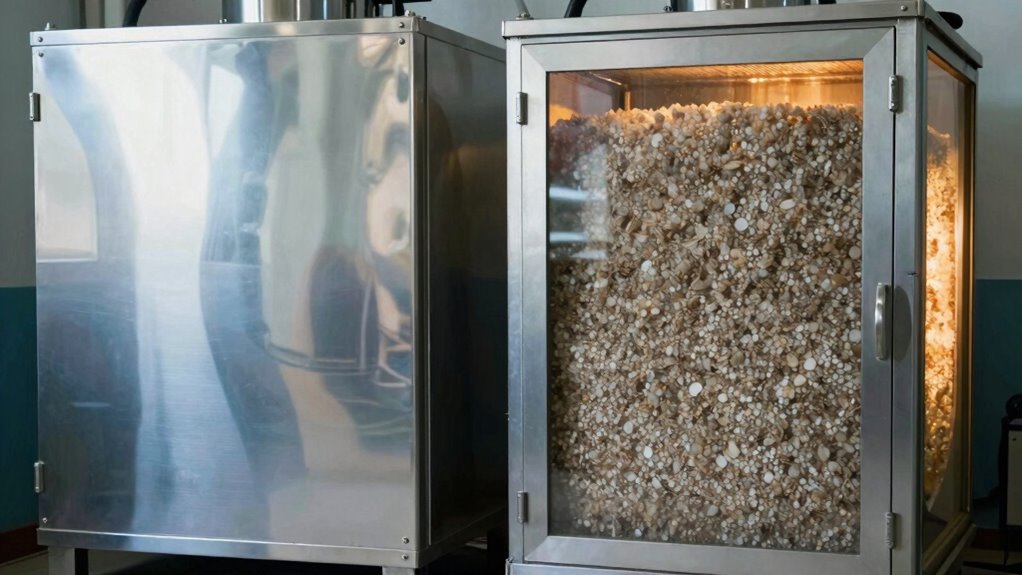
On the other hand, desiccant dryers rely on the adsorption of moisture onto a desiccant material, which is typically regenerated using heat or pressure. While they tend to be less energy-efficient than refrigerated dryers, especially in larger systems, they excel in environments where extremely dry air is required regardless of ambient conditions. The trade-off is that desiccant dryers usually demand more maintenance. The desiccant material needs regular replacement or regeneration, and the system’s components, such as filters and valves, require ongoing inspection to avoid contamination or clogging. This extra maintenance can lead to higher operational costs and more downtime if not properly managed.
Additionally, understanding the drying process involved can help you select the most suitable dryer for your needs. Your choice should consider not only immediate costs but also long-term operational expenses. Refrigerated dryers usually have lower maintenance requirements because their components are more straightforward and less subject to wear. They’re ideal if your application doesn’t require ultra-dry air and if you want a system that’s easy to operate with minimal intervention. Conversely, if your process demands very low dew points—such as in pharmaceutical or electronics manufacturing—you might need a desiccant dryer despite its higher maintenance needs. These dryers can provide consistent dryness regardless of ambient conditions, but you’ll need to plan for the regular replacement of the desiccant and potentially more frequent system checks.

VEVOR Compressed Air Dryer, 85CFM Refrigerated Air Dryer, 110-120V Industrial Refrigerated Air-Drying System for 15HP & 20HP Compressors – with Color Screen Control Panel and Automatic Drainage
- Voltage: 110-120V 60Hz
- Flow Rate: 85 CFM
- Working Pressure: 87-232 PSI
As an affiliate, we earn on qualifying purchases.
As an affiliate, we earn on qualifying purchases.
Frequently Asked Questions
How Do Operating Costs Compare Between Refrigerated and Desiccant Dryers?
Refrigerated dryers generally have lower operating costs because they’re more energy-efficient and require less maintenance, making them cheaper over time. Desiccant dryers, on the other hand, tend to have higher energy consumption due to their regeneration process, increasing operating expenses. While their initial investment might be higher, refrigerated dryers save you money in the long run through lower energy use, making them a more cost-effective choice for many applications.
Which Dryer Type Is More Environmentally Friendly?
You’ll find that desiccant dryers are more eco-friendly than refrigerated ones. They often have better energy efficiency for high dew point applications, reducing electricity use considerably. Plus, they typically require less chemical usage, minimizing environmental impact. While refrigerated dryers consume more energy and may use refrigerants with high global warming potential, desiccant dryers’ lower chemical footprint makes them a greener choice overall.
Can Both Dryer Types Handle the Same Moisture Removal Levels?
Yes, both dryer types can handle similar moisture removal capacities, but their drying efficiency varies. Refrigerated dryers excel at removing moderate moisture levels, making them suitable for general applications, while desiccant dryers achieve higher moisture removal levels, ideal for sensitive processes. Your choice depends on your required moisture removal capacity and drying efficiency, ensuring your system operates reliably and cost-effectively.
How Does Maintenance Differ Between Refrigerated and Desiccant Dryers?
Maintaining your dryers is like tending a garden—regular care keeps everything thriving. With refrigerated dryers, you mainly replace filters and monitor energy use since they’re simpler. Desiccant dryers require more frequent filter replacements and sometimes recharging or replacing desiccant material. They also tend to consume more energy. So, you’ll find that desiccant units demand more hands-on upkeep, while refrigerated models are more straightforward and energy-efficient.
Are There Specific Industries That Prefer One Dryer Type Over the Other?
You’ll find that certain industries prefer specific dryer types based on their application needs. For example, manufacturing and automotive industries often choose refrigerated dryers for general air drying due to affordability and efficiency. Meanwhile, industries like pharmaceuticals and electronics require ultra-dry, contaminant-free air, making desiccant dryers the preferred choice. Your industry’s application suitability and moisture sensitivity largely influence whether you opt for a refrigerated or desiccant dryer.
Conclusion
Ultimately, choosing between refrigerated and desiccant dryers hinges on one key factor: your specific air quality needs. While some believe that desiccant dryers always deliver purer air, recent studies show that refrigerated dryers can be just as effective for many applications, saving you money. Don’t assume one size fits all—test your requirements carefully. The truth is, understanding your unique environment might just reveal that a refrigerated dryer is all you need, or maybe desiccant is the better choice.