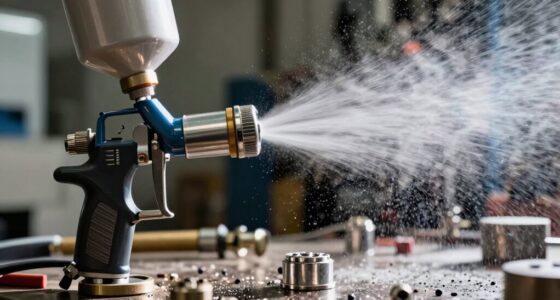
Choosing oil-free compressors means you get contaminant-free air, ideal for sensitive industries like food, pharma, and electronics. They reduce maintenance, eliminate oil carryover risks, and guarantee cleaner outputs, saving your time and money. However, they can have higher upfront costs and require specific attention to operational limits. If you keep exploring, you’ll discover how to maximize benefits and avoid potential pitfalls of oil-free compressor use.
Key Takeaways
- Gain contamination-free compressed air ideal for sensitive industries like food, pharma, and electronics.
- Reduce maintenance costs with fewer moving parts and no oil filtration or changes needed.
- Risk of higher initial investment costs compared to oil-lubricated compressors.
- Ensure compliance with strict safety and cleanliness standards, minimizing contamination-related issues.
- Be aware of potential limitations in capacity or performance in certain high-demand applications.

Are oil-free compressors the right choice for your needs? If you’re focused on maintaining high-quality air, you’ll find that these systems can offer significant advantages in contamination control. Unlike traditional oil-lubricated compressors, oil-free models eliminate the risk of oil carryover, which can contaminate your compressed air. This is especially critical in industries such as food processing, pharmaceuticals, or electronics manufacturing, where even tiny oil traces can compromise product safety or quality. With oil-free compressors, you can achieve cleaner, purer air without the need for extensive filtration, reducing the chances of contamination that might otherwise require costly cleanup or product recalls. This cleaner output also means less worry about residual oil particles settling in your equipment or contaminating sensitive processes, giving you peace of mind and ensuring your products meet strict standards.
Oil-free compressors ensure pure, contaminant-free air for sensitive industries like food, pharmaceuticals, and electronics.
In addition to contamination control, maintenance simplicity is another compelling reason to consider oil-free compressors. These units typically have fewer moving parts related to lubrication, which means less wear and tear over time. Without the need for oil changes or filter replacements associated with oil-lubricated systems, your maintenance routines become more straightforward and less time-consuming. You won’t have to worry about oil leaks, sludge buildup, or the complexities of managing oil disposal, all of which can reduce downtime and lower maintenance costs. The simplified design often translates into easier inspections and quicker troubleshooting, so you spend less time maintaining your equipment and more time focusing on your core operations. Additionally, vetted information on compressor options can help guide informed purchasing decisions that best suit your operational demands.

ECOMAX Air Compressor 6 Gallon 150 PSI Pancake Portable Oil-free Tank with 10 PCS Accessories Kit
[Inclusions]: This ECOMAX air compressor come with 1*1/4 in x 25 ft pvc air hose, 1* thread seal…
As an affiliate, we earn on qualifying purchases.
As an affiliate, we earn on qualifying purchases.
Frequently Asked Questions
How Long Do Oil-Free Compressors Typically Last?
Oil-free compressors typically last around 10,000 to 20,000 hours of operation, depending on usage and maintenance. Since they have minimal lubrication requirements, you won’t need to worry about oil leaks or regular oil changes, which helps reduce maintenance costs. They also tend to operate more quietly, aiding noise control. However, staying on top of routine checks guarantees you get the most lifespan out of your compressor.
Are Oil-Free Compressors Suitable for All Industrial Applications?
You can’t fit a square peg into a round hole, and oil-free compressors aren’t suitable for all industrial applications. They work well where clean air matters but face application restrictions due to cost limitations and lower durability in heavy-duty settings. To decide if they’re right for you, consider your specific needs, budget, and whether the benefits outweigh the potential risks in your operational environment.
What Maintenance Is Required for Oil-Free Compressors?
You need to regularly check and replace filters to guarantee ideal air quality, and keep an eye on lubrication requirements, even if oil-free compressors need minimal lubrication. Clean or replace air intake filters as recommended by the manufacturer to prevent dust buildup. Additionally, inspect for leaks and unusual noises, and follow scheduled maintenance to keep your compressor running efficiently and prolong its lifespan.
How Do Initial Costs Compare to Traditional Oil-Lubricated Models?
Your initial investment in oil-free compressors is typically higher than traditional oil-lubricated models due to advanced technology and materials. However, when you do a cost comparison, you’ll notice savings over time because oil-free units require less maintenance and have fewer downtime issues. This means that although the upfront cost is steeper, the long-term operational costs tend to be lower, making them a smart choice for many applications.
Are There Environmental Benefits to Using Oil-Free Compressors?
Switching to oil-free compressors is like planting a green seed in your operation’s future. You’ll enjoy eco-friendly operation, reducing your carbon footprint with lower emissions, which helps protect the planet. These compressors emit fewer pollutants, making your business more sustainable. By choosing oil-free options, you actively contribute to a cleaner environment while maintaining efficient performance—proving that good business and good environmental stewardship can go hand in hand.

AIOLITH AI30 Plus Dry Ice Blasting Machine Kit, 2-in-1 Set with 26ft Extended Hose (2X Longer) – 44lbs Hopper Dry Ice Blaster for Auto, Food, and Industrial Cleaning
2-in-1 Set with 26ft Hose (2X Longer): Upgraded dry ice blaster kit includes the machine and an extended…
As an affiliate, we earn on qualifying purchases.
As an affiliate, we earn on qualifying purchases.
Conclusion
Choosing an oil-free compressor means you’re playing with fire—you gain cleaner air and lower maintenance, but risk higher upfront costs and potential reliability issues. Weigh the pros and cons carefully, because rushing in blind could leave you in a jam down the road. Remember, every coin has two sides, so make sure you’re clear on what you’re willing to accept in exchange for the benefits. Make an informed decision, and you’ll steer clear of rough waters.

California Air Tools 8010 1.0 HP Ultra Quiet and Oil-Free Air Compressor, 8 Gallon Steel Tank, Lightweight with Wheels, 60 dBA Noise Level
ULTRA QUIET PERFORMANCE: The California Air Tools Ultra Quiet & Oil-Free Air Compressor operates at only 60 decibels,…
As an affiliate, we earn on qualifying purchases.
As an affiliate, we earn on qualifying purchases.

DEWALT Pancake Air Compressor with 165 Max PSI and 2.6 CFM @ 90 PSI and 18 Gauge Brad Nailer Combo Kit
Air Compressor Professional-Grade Output: 2.6 SCFM @ 90 PSI pump, 6 gallon tank and 165 max PSI for…
As an affiliate, we earn on qualifying purchases.
As an affiliate, we earn on qualifying purchases.