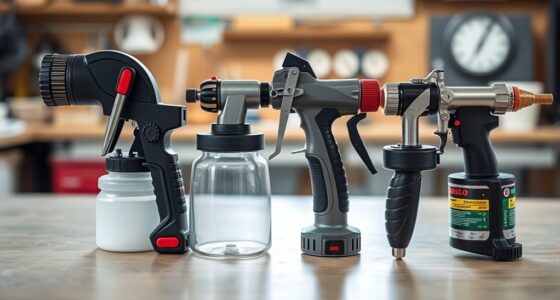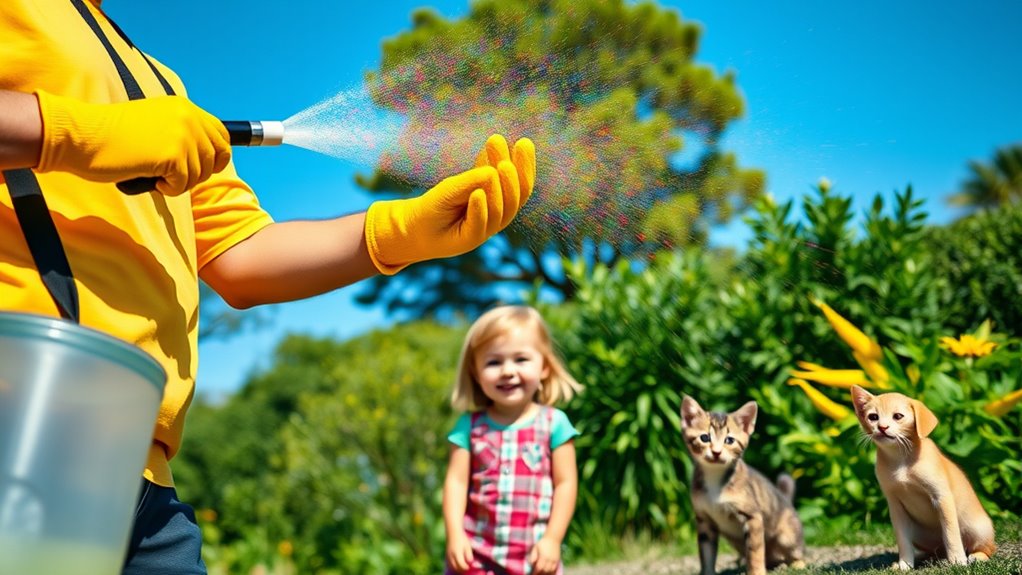

Spraying pesticides or chemicals around your home can be safe if you follow proper guidelines. Always use products approved for residential use, apply them away from children and pets, and wait the recommended time before re-entering. Regularly maintaining your spray equipment and storing chemicals securely also help reduce risks. By staying informed and practicing responsible application, you can protect your loved ones. Keep going to discover essential tips for safer spraying practices around your family.
Key Takeaways
- Follow pesticide regulations to ensure products are approved for residential use and used safely around children and pets.
- Properly maintain spray equipment to prevent leaks, uneven dispensing, and chemical buildup.
- Always read and follow label instructions, including recommended application distances and waiting periods before re-entry.
- Store pesticides securely out of reach of children and pets to prevent accidental ingestion or exposure.
- Apply pesticides during times when children and pets are not in the area, and use protective gear for added safety.
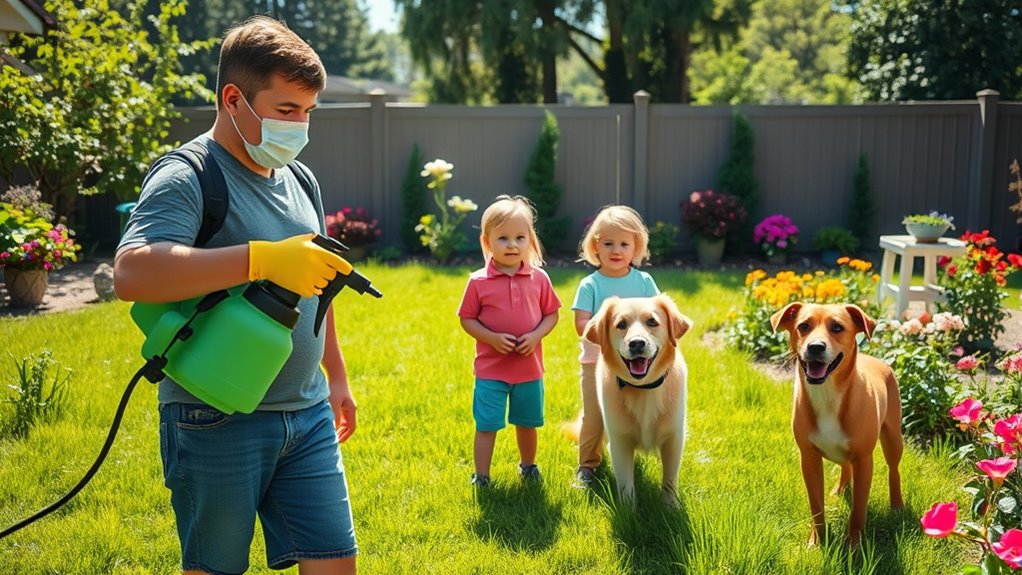
Have you ever wondered how to protect your pets and children from the potential dangers of spraying chemicals around your home? The truth is, understanding pesticide regulations and practicing proper spray equipment maintenance are essential steps. Pesticide regulations are designed to keep you and your loved ones safe by controlling what chemicals are used indoors and outdoors. These laws specify which products are approved for residential use, safe application methods, and required waiting periods before children or pets can re-enter treated areas. Staying informed about these regulations ensures you choose the right products and follow legal guidelines, reducing the risk of accidental poisoning or exposure.
Equally important is maintaining your spray equipment correctly. If your sprayer isn’t functioning properly, it may leak or dispense uneven amounts of chemicals, increasing the chance of accidental over-application. Regularly inspect hoses, seals, and nozzles to ensure they’re in good condition. Clean your equipment thoroughly after each use to prevent clogs and buildup that could lead to faulty spraying. Proper maintenance helps you apply pesticides accurately, minimizing unnecessary exposure for your pets and kids. When your equipment is well-kept, you’re more likely to use the correct amount of pesticide, reducing the risk of runoff or residual chemicals lingering in your home environment. Additionally, using self-watering planters can help maintain consistent moisture levels with less frequent intervention, further reducing potential chemical exposure for indoor plants.
Before you spray, always read the label carefully. Pesticide labels contain critical information about safe application practices, including the recommended distance from children and pets, protective gear requirements, and whether it’s safe to re-enter the treated area after a certain period. Following these instructions helps ensure that your spraying efforts remain safe and effective. Also, consider applying pesticides during times when your children and pets are least likely to be in the treated areas, such as early mornings or late evenings when they’re outside or in another room.
In addition, always store pesticides securely out of reach of children and pets. Proper storage not only prevents accidental ingestion but also preserves the integrity of the chemicals, ensuring they don’t degrade or leak. Combining good storage habits with adherence to pesticide regulations and meticulous spray equipment maintenance creates a safer environment for everyone in your home. Being proactive about these steps helps you manage pest problems effectively while prioritizing the health and safety of your loved ones. Ultimately, responsible spraying means staying informed, maintaining your equipment, and respecting all safety guidelines—because protecting your pets and children begins with informed, careful practices.
As an affiliate, we earn on qualifying purchases.
Frequently Asked Questions
Can Spraying Cause Long-Term Health Issues for Pets and Children?
Spraying can cause long-term health issues for pets and children if they experience prolonged exposure. Repeated or chronic exposure to certain chemicals in sprays may lead to respiratory problems, allergies, or other chronic health conditions. To protect your loved ones, always follow safety guidelines, keep pets and kids away during application, and guarantee proper ventilation. Reducing exposure minimizes the risk of long-term health effects from spraying products.
Are Natural or Organic Sprays Safer for Use Around Kids and Pets?
Natural or organic sprays are generally safer for use around kids and pets because they often use plant-based solutions and chemical alternatives that reduce harmful toxins. You should always read labels carefully, but opting for these safer options minimizes health risks. By choosing plant-based solutions, you guarantee effective pest control without exposing your loved ones to potentially dangerous chemicals, making your home a safer environment for everyone.
How Long Should I Keep Pets and Children Away After Spraying?
You should keep pets and children away for at least 24 hours after spraying to guarantee proper ventilation and effective post spray safety. Follow the product’s timing precautions closely, as some sprays may require longer periods before re-entry. Always read the label for specific instructions, and ventilate the area thoroughly before allowing kids and pets back in. Prioritizing these precautions helps keep everyone safe and healthy.
What Signs Indicate Poisoning or Adverse Reactions Post-Spraying?
If your pet or child shows symptoms like drooling, vomiting, difficulty breathing, or lethargy after spraying, recognize these as signs of poisoning or adverse reactions. Act quickly by removing them from the area and contacting emergency response services or your veterinarian immediately. Keep a record of symptoms and any exposure details, as this information helps professionals provide prompt, effective care. Always monitor closely after spraying to make certain of safety.
Are There Specific Sprays That Are Completely Safe for All Pets and Children?
No spray is completely safe for all pets and children, but you can choose chemical alternatives with pet-friendly ingredients. Always look for products labeled as non-toxic or specifically designed for use around kids and animals. Read labels carefully, avoid harsh chemicals, and opt for natural, plant-based sprays. Even with safer options, monitor your pets and children after spraying to make certain they don’t ingest or come into contact with the product.
Conclusion
So, next time you reach for that spray, remember—what you don’t see could harm your loved ones. Are you prepared to protect your pets and kids from hidden dangers? The truth might surprise you, and the choices you make now could make all the difference. Don’t let a simple spray turn into an unexpected risk. Stay vigilant, stay informed, and keep your home safe—because the real safety question is what you’ll do next.