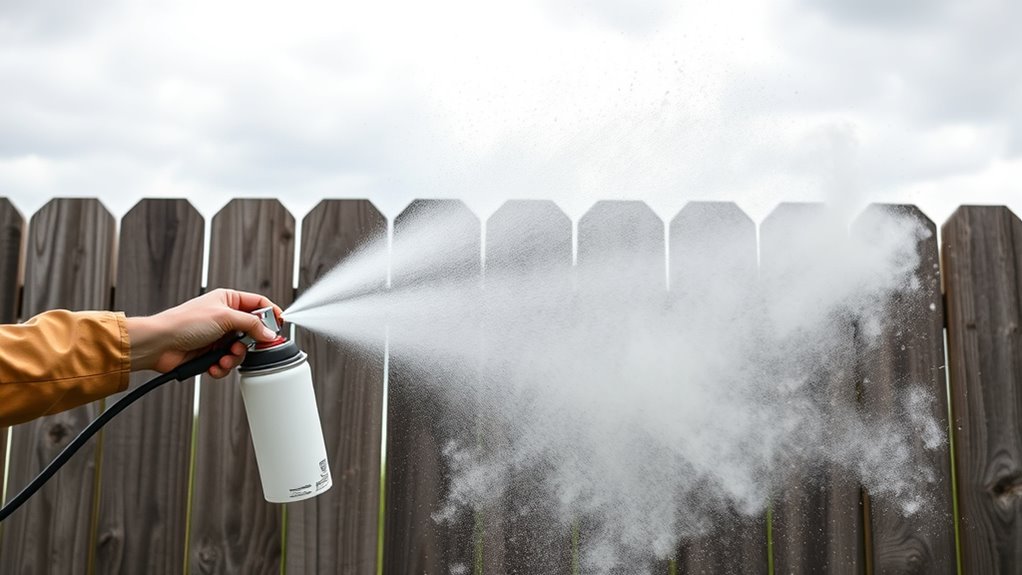

Spraying exteriors in wind isn’t recommended because it disrupts the spray pattern, causing uneven coverage and waste. Wind can lead to overspray and debris settling on your freshly painted surfaces, risking damage or less-than-ideal results. If the breeze is strong, it’s best to wait for calmer conditions or plan your project during early mornings or late afternoons when wind speeds are lower. Keep going to discover tips on tackling windy days effectively.
Key Takeaways
- Wind speeds below 10 mph are preferable for exterior spraying to minimize drift.
- High wind conditions cause uneven coverage, overspray, and material waste.
- It’s safest to spray during calm weather, early morning, or late afternoon when wind is minimal.
- Using barriers, masking, and protective gear helps reduce contamination and health risks in windy conditions.
- Always check weather forecasts and avoid spraying during gusty or unpredictable wind periods.
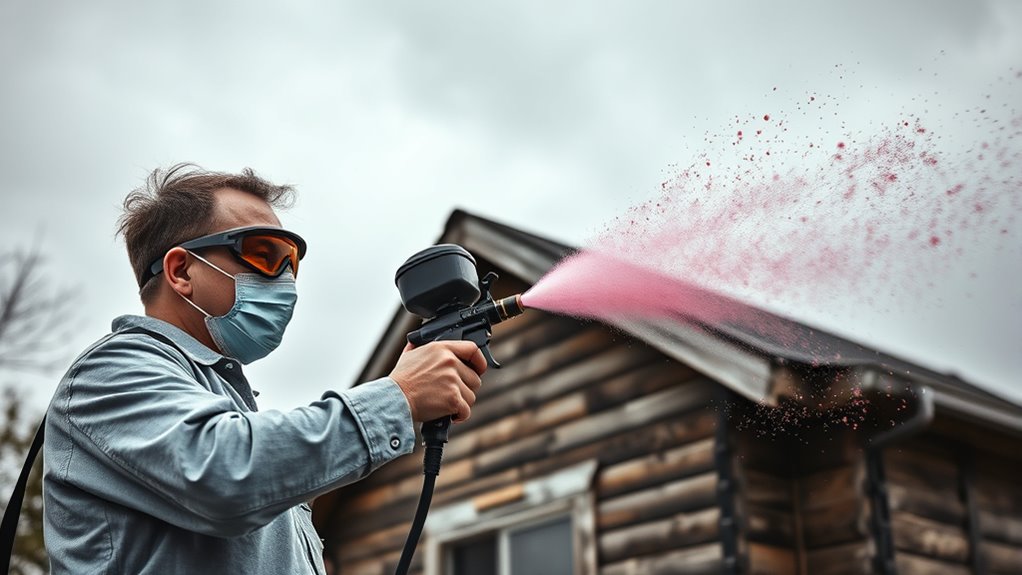
Spraying the exterior of a building in windy conditions can be challenging, but with the right precautions, you can achieve a clean, even finish. Wind disrupts the spray pattern, causes overspray, and increases the risk of debris contaminating your work. To guarantee safety and quality, it’s vital to evaluate the conditions carefully before starting. First, check the weather forecast and observe the current wind speed. Ideally, you want wind speeds below 10 mph; anything higher can make controlling the spray difficult. When wind is too strong, the paint or coating can drift onto unintended surfaces, creating uneven coverage and waste.
Windy conditions can disrupt spray patterns and cause overspray; always check weather forecasts before painting outdoors.
Before you begin, take safety precautions seriously. Wear protective gear such as masks, goggles, and coveralls to shield yourself from overspray and fumes. Wind can carry particles into your eyes or lungs unexpectedly, so safety gear helps minimize health risks. Also, set up barriers or masking tape around areas you want to protect, which can help contain overspray caused by gusts. If possible, choose early mornings or late afternoons when wind tends to be calmer, providing ideal conditions for spraying.
In addition to evaluating the wind, consider other environmental factors. High humidity or sudden temperature drops can affect how the coating dries and adheres, impacting the final finish. For best results, aim for dry, still days with moderate temperatures—these conditions support proper drying and bonding. If you must spray in moderate wind, consider adjusting your technique. Use lower pressure settings to reduce overspray and apply thinner coats to prevent runs or drips caused by wind disturbance.
Timing is vital. Don’t rush to spray during gusty conditions, as doing so risks uneven coverage, streaks, and paint wastage. Instead, wait for a lull in the wind or periods of consistently light breeze. When you do spray, maintain steady movement and keep a consistent distance from the surface to avoid uneven layering. Keep an eye on the wind direction to prevent paint from drifting onto nearby objects or neighboring properties.
Ultimately, spraying exterior surfaces in wind isn’t ideal, but with proper precautions, it can be done successfully. Prioritize safety precautions and aim for perfect conditions to guarantee a quality finish. If the weather isn’t cooperating, it’s better to wait rather than risk poor results or safety hazards. Remember, patience and preparation are your best tools for achieving a professional-looking exterior, even when facing less-than-perfect weather. Additionally, understanding frictional unemployment can help you better adapt your scheduling and resource management when weather conditions delay projects.
As an affiliate, we earn on qualifying purchases.
Frequently Asked Questions
How Does Wind Speed Affect Paint Drying Time?
Wind speed markedly impacts paint drying time by increasing evaporation rates, which can lead to uneven paint adhesion. If the wind is strong, your paint might dry too quickly, causing cracking or poor adhesion. To avoid this, always check weather forecasting before painting outdoors. Moderate wind is preferable; too much can compromise your finish, while too little may prolong drying. Adjust your painting schedule based on wind conditions for the best results.
Can Wind Cause Uneven Paint Application?
Wind can definitely cause uneven paint application, so don’t throw caution to the wind. When you spray in strong gusts, it disrupts the paint’s ability to adhere properly, risking poor paint adhesion. To combat this, you need to adjust your equipment settings, like spray pressure and nozzle size, to compensate for wind. Otherwise, your finish might look patchy, and you’ll have to redo the work, wasting time and materials.
What Safety Precautions Should I Take in Windy Conditions?
When working in windy conditions, you should always check a wind gauge to make certain it’s safe to paint. Wear protective gear like goggles, masks, and gloves to shield yourself from debris and fumes. Secure your equipment properly to prevent accidents, and avoid spraying if wind speeds are too high, as it can cause uneven application and overspray. Prioritize safety to get a quality finish without risking injury or mess.
Is There a Preferred Time of Day for Spraying in Wind?
You should spray exterior surfaces during times with minimal wind resistance, typically early mornings or late evenings when winds are calmer. This ideal timing helps guarantee your spray is even and reduces drift. Avoid spraying during peak wind hours, usually midday, to prevent uneven coverage and potential hazards. By choosing the right time of day, you maximize effectiveness and safety, making your exterior spray job more efficient and successful.
How Can I Protect Surrounding Areas From Overspray in Wind?
Like a knight shielding a castle, you can protect surrounding areas from overspray in wind by setting up wind barriers such as plastic sheeting or fencing around your spray zone. Use your spray equipment carefully, aiming away from sensitive areas. Position barriers strategically, and consider timing your spraying when wind speeds are low. This way, you control overspray and keep nearby surfaces safe from unintended paint or chemicals.
Conclusion
While spraying your exterior in the wind might seem tempting for quick coverage, it’s a risky gamble. The breeze can carry your paint or sealant away, wasting material and risking uneven application. Yet, it’s also a reminder that sometimes, patience and calm are more powerful than rushing. In the dance between effort and error, choosing a windless day balances the desire for efficiency with the need for quality. After all, smooth results often come from gentle conditions.