Sprayers tend to use more paint than rollers because of overspray and wider dispersion, which can lead to waste. While you might cover large areas faster with a sprayer, you’ll likely need to buy extra paint upfront. Rollers are more economical since they use less paint and offer better control, especially for detailed work. If you want to understand how to minimize waste and get the best results, keep exploring these details further.
Key Takeaways
- Sprayers generally consume more paint due to overspray and bounce-back, increasing overall material use.
- Rolling is more paint-efficient, applying less paint with greater control and less waste.
- Modern spray technology reduces waste, narrowing the paint usage gap between sprayers and rollers.
- Large surface areas are faster to paint with sprayers but may lead to higher paint consumption.
- Precise control with rollers results in less paint waste compared to broad dispersion from spray nozzles.

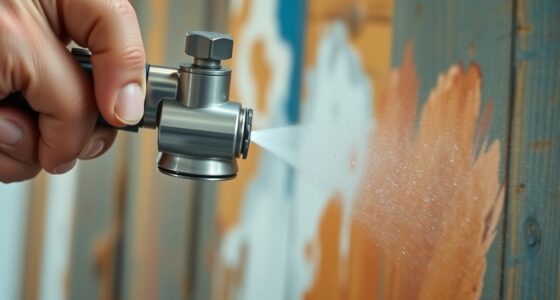
When deciding between a paint sprayer and traditional rolling, understanding the strengths and limitations of each method can help you achieve the best results. One key difference lies in paint efficiency and application speed. Paint sprayers tend to use more paint overall, but their speed can make up for it. With a sprayer, you can cover large surfaces quickly, which often results in faster project completion. However, the increased paint usage means you might need to buy more paint upfront. Sprayers deliver paint in a fine mist, allowing for rapid coverage of surfaces. This high application speed means you can finish large areas in a fraction of the time it would take to roll. The process is straightforward once you get the hang of it, and it’s especially effective for ceilings, walls, or textured surfaces. However, because spray nozzles disperse paint more broadly, some overspray and bounce-back are common, which can lead to higher paint consumption. You might find yourself using more paint than you initially expected, especially if you’re not precise with masking or if you’re working in a tight space. Despite that, the overall time saved can outweigh the extra paint used, especially on big projects. Additionally, modern paint technology has improved spray efficiency, reducing waste and overspray in many models. Rolling is more economical with paint. You dip the roller into a tray and apply paint systematically, which means less waste. It’s easier to control the amount of paint used, and you can focus on detailed areas more precisely. While it takes longer to cover the same area, you’re likely to use less paint overall, making it a more cost-effective option if you’re working on smaller projects or want to minimize material costs. Plus, rolling doesn’t produce as much overspray, which reduces mess and cleanup time. But keep in mind, the slower pace can extend your project timeline and reduce your overall application speed.
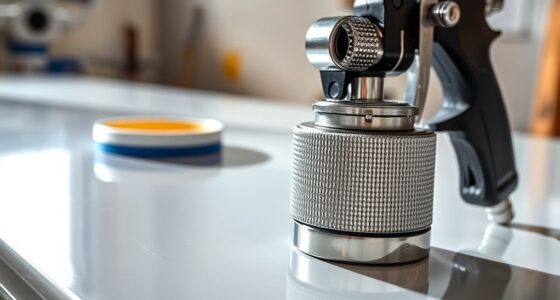
paint sprayer with low overspray
As an affiliate, we earn on qualifying purchases.
As an affiliate, we earn on qualifying purchases.
Frequently Asked Questions
How Does Paint Viscosity Affect Sprayer Efficiency?
Paint viscosity greatly impacts sprayer efficiency by affecting paint flow. If the paint’s too thick, it clogs the sprayer and reduces coverage; if too thin, it drips and creates uneven coats. You can improve results by adjusting viscosity control, thinning paint as needed for smoother application. Proper viscosity ensures consistent paint flow, minimizes waste, and enhances spray performance, making your project faster and cleaner.
Are There Specific Paints Better Suited for Sprayers?
A wise man once said, “Know your tools.” When choosing paint for sprayers, you need to take into account paint compatibility and sprayer types. Oil-based paints work well with high-pressure sprayers, while water-based paints suit airless or HVLP sprayers. Always check manufacturer recommendations to make sure your paint matches your sprayer. Using the right paint not only improves finish quality but also prolongs your equipment’s lifespan.
How Do Environmental Factors Impact Paint Consumption?
Environmental factors, like temperature, humidity, and ventilation, directly impact your paint consumption. High humidity or cold temperatures can cause paint absorption issues, making you use more paint to get an even coat. Poor ventilation may also slow drying, leading to repeated coats. To minimize waste, guarantee ideal environmental conditions, like moderate humidity and good airflow, so the paint applies smoothly and spreads evenly, reducing excess consumption.
What Maintenance Practices Conserve Paint When Using Sprayers?
To conserve paint when using sprayers, you should prioritize proper maintenance practices. Regularly clean your nozzle to prevent clogs and guarantee even spray patterns. Additionally, maintain your brushes and seals, replacing worn parts promptly. These steps help in reducing paint waste, improving efficiency, and achieving a smooth finish. Consistent brush maintenance and nozzle cleaning are essential for maximizing paint coverage and minimizing unnecessary consumption.
Can Different Spray Gun Types Alter Paint Usage?
Different spray gun types can markedly alter your paint usage. For example, HVLP sprayers tend to be more efficient, reducing overspray and paint waste. When you adjust spray patterns and use proper brush techniques for corners and edges, you’ll minimize excess paint. Choosing the right gun and mastering spray patterns helps you control the amount of paint used, ensuring a more economical and consistent application with less waste.
Conclusion
Overall, sprayers tend to use about 20% more paint than rollers, mainly because they often overspray to ensure even coverage. Remarkably, if you’re painting a large area, that extra paint can add up quickly—potentially saving you time but costing a bit more. So, weigh your options based on your project size and budget. Remember, choosing the right method can make your painting job more efficient and enjoyable!

Franz came aboard the Paint Sprayer Zone team with a background in both journalism and home renovation. His articulate writing style, combined with a passion for DIY projects, makes him an invaluable asset. Franz has a knack for breaking down technical jargon into easy-to-understand content, ensuring that even the most novice of readers can grasp the complexities of paint sprayers.