Spray tip sizes affect both fan width and orifice diameter, which in turn control how much material you spray and how wide the spray pattern is. A smaller tip produces a finer, more precise spray ideal for detail work, while a larger tip covers more surface area faster but may be less precise. Adjusting your tip size allows you to tailor the spray pattern to your project needs. Keep exploring to learn how to select the perfect tip for any job.
Key Takeaways
- Spray tip size determines the orifice diameter, affecting the volume of material delivered and spray pattern density.
- Larger tips with bigger orifices produce wider fan widths and faster coverage for broad surfaces.
- Smaller tips create narrower fans with finer, detailed spray patterns ideal for precision work.
- Adjusting air pressure influences fan width and atomization, working in tandem with tip size for optimal results.
- Matching tip size and pressure settings ensures a balanced spray pattern, proper coverage, and high-quality finishes.
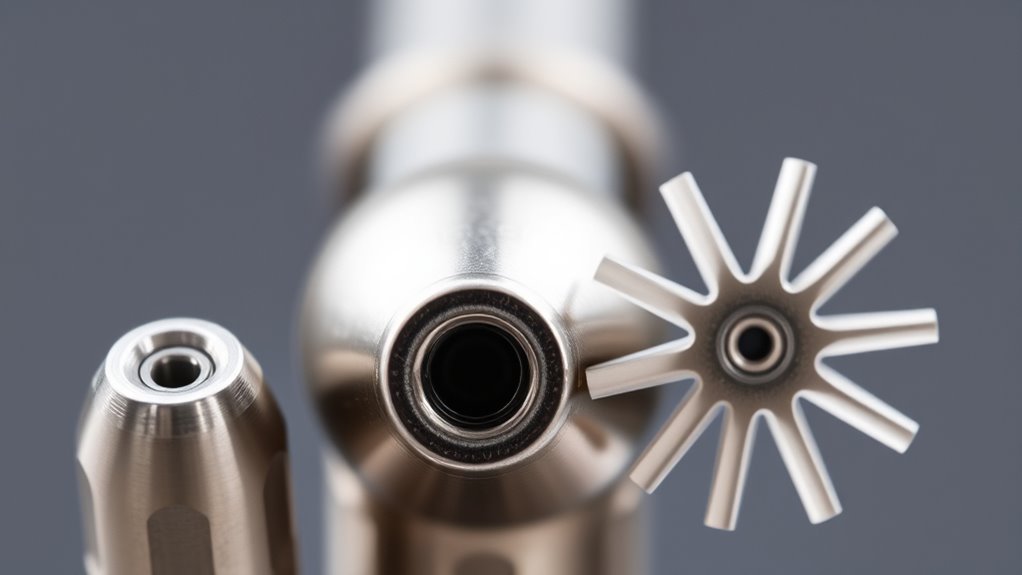
Have you ever wondered how spray tip sizes affect your painting or coating projects? It all comes down to understanding how different tip sizes influence your application techniques and spray pattern control. When you choose a spray tip, you’re fundamentally selecting the size of the orifice through which the paint or coating flows. This choice impacts not only how much material is delivered but also how evenly it’s applied across your surface. The orifice size determines the volume of material sprayed per pass, which is vital for achieving the desired coverage and finish quality. Smaller tip sizes produce finer, more detailed patterns suitable for touch-ups or delicate work, while larger tips handle broader coverage and thicker coatings more efficiently.
Additionally, adjusting spray pressure plays a crucial role in controlling fan width and spray atomization, affecting overall application quality. The fan width, which is the spray pattern’s width, is directly affected by both the tip size and the air pressure you use. A wider fan spreads the material over a larger area, making it ideal for big surfaces, but it also requires careful spray pattern control to prevent overspray or uneven coverage. Conversely, narrower fan patterns give you more precision, allowing you to target specific areas without wasting material or creating drips. As you adjust your spray tip, you’ll find that application techniques vary depending on the task. For detailed work, you might opt for a smaller orifice with a narrower fan, moving your gun slowly to maintain control. For large surfaces, a larger orifice with a wider fan can speed up the process while still maintaining a smooth finish.
Choosing the right spray tip size is vital for optimizing spray pattern control. If your tip size is too small for the material you’re applying, you’ll struggle to achieve adequate coverage, and the finish may look uneven or patchy. On the other hand, a tip that’s too large can cause excessive material flow, leading to runs, drips, or overspray. Correctly matching the tip size with your coating type and project scope allows you to master your application techniques, ensuring a consistent and professional finish. It’s also important to adjust your air pressure accordingly—higher pressure can increase fan width and atomization, while lower pressure gives you more control.
Understanding how spray tip sizes influence application techniques and spray pattern control helps you work more efficiently and produce better results. Experimenting with different tip sizes and pressure settings allows you to find the perfect balance for each project, whether you’re doing fine detail work or covering large surfaces. Mastery of these factors ensures your coating is smooth, even, and professional-looking every time.
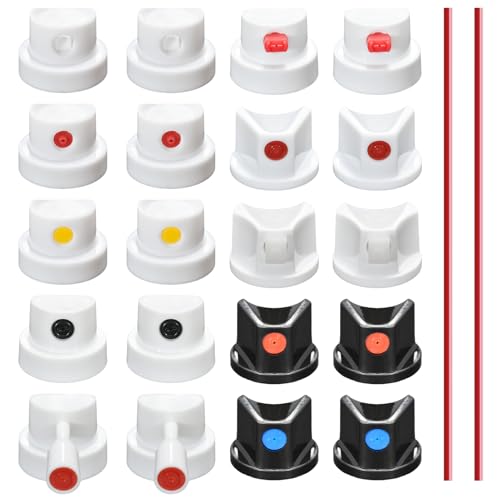
Universal Spray Can Nozzle Kit for Montana/Different Spray Cans – 20 Assorted Caps & Tips – Graffiti, Auto Repair, DIY Projects – High-Efficiency Paint Saver & Handle Attachments
Precision Control for Graffiti & DIY Projects: Master spray art with 20 assorted nozzles- Create crisp lines for…
As an affiliate, we earn on qualifying purchases.
As an affiliate, we earn on qualifying purchases.
Frequently Asked Questions
How Do I Choose the Right Spray Tip for Different Chemicals?
You should choose a spray tip based on chemical compatibility and tip durability. Check the chemical’s properties to verify it won’t corrode or damage the tip, and select a material that withstands the chemical’s nature. For harsher chemicals, opt for durable tips like stainless steel. Test the tip with your specific chemicals to avoid clogging or degradation, ensuring effective and safe spraying every time.
Can I Switch Spray Tips Without Cleaning the System?
Switching spray tips without cleaning your system is like trying to fit a square peg in a round hole—it’s risky! You need to verify system compatibility, so always check the tip’s specifications. Before switching, store your tips properly to avoid mix-ups. For best results, clean your system thoroughly to prevent cross-contamination and clogging, especially when changing between chemicals. This keeps your spray job flawless and your equipment in top shape.
What’s the Impact of Spray Tip Size on Spray Pattern Quality?
Choosing the right spray tip size directly impacts spray pattern quality. A properly sized tip guarantees uniform spray pattern, avoiding uneven coverage and drips. Smaller tips can improve fine detail but may clog easily, reducing pattern consistency. Larger tips cover more area but risk uneven spray. Always match your tip size to your project’s needs to maintain spray pattern uniformity, and monitor for nozzle clogging risk to keep your application smooth.
How Do Weather Conditions Affect Spray Tip Performance?
Weather conditions can substantially impact your spray tip performance. High humidity effects might cause the spray to drift or settle unevenly, reducing coverage. Wind influence can divert the spray pattern, leading to overspray or missed spots. To guarantee ideal results, monitor weather forecasts, avoid spraying during high wind or humidity, and choose spray tips designed for specific conditions. This approach helps maintain consistent coverage and efficiency.
Are There Tips Designed for Eco-Friendly or Low-Drift Spraying?
Did you know that using eco-friendly tips can reduce drift by up to 75%? Yes, there are specially designed low drift nozzles that help you spray more precisely, minimizing environmental impact. These low drift nozzles and eco-friendly tips are perfect if you want to protect nearby plants, water sources, and wildlife while maintaining effective coverage. Switching to these options makes your spraying safer and more sustainable without sacrificing performance.
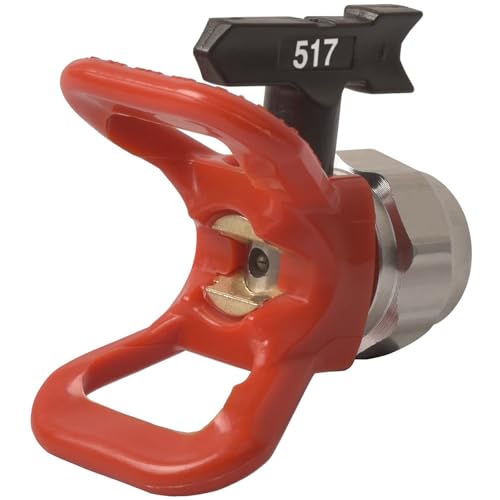
GDHXW 7/8 Guard Combo 517 Airless Spray Tip for Standard Airless Paint Spray Guns
Matching model of nozzle base: 243611 Nozzle model:517
As an affiliate, we earn on qualifying purchases.
As an affiliate, we earn on qualifying purchases.
Conclusion
Now that you understand spray tip sizes, fan width, and orifice, you’re equipped to choose the perfect tip for your project. Remember, selecting the right size isn’t just a choice—it’s a key to flawless results. Think of your spray tip as the brush of a master artist; with the right touch, you’ll transform every surface with precision and ease. So, trust your instincts and let your craftsmanship shine through every spray.

1.4mm/1.7mm/2.0mm Nozzle Replacement Kit for HVLP Spray Gun – Stainless Steel Air Cap & Nozzle Set for H-827 & Compatible Spray Guns – Sturdy Spray Paint Repair Accessories Kit
✅ STURDY HIGH-QUALITY MATERIALS – Crafted from premium stainless steel, these nozzles offer exceptional durability and corrosion resistance….
As an affiliate, we earn on qualifying purchases.
As an affiliate, we earn on qualifying purchases.

JWGJW Airless Spray Gun Guide Accessory Tool w/ 517 Tip 10 Inch Airless Extension Pole,Spray Guide Painting Tool for Graco Titan Airless Paint Sprayer Gun.
One ✅【 Universal Spray Guide】: JWGJW professional-grade airless spray gun guide,7/8-inch inlet fitting,Compatible with many brands of airless…
As an affiliate, we earn on qualifying purchases.
As an affiliate, we earn on qualifying purchases.

Franz came aboard the Paint Sprayer Zone team with a background in both journalism and home renovation. His articulate writing style, combined with a passion for DIY projects, makes him an invaluable asset. Franz has a knack for breaking down technical jargon into easy-to-understand content, ensuring that even the most novice of readers can grasp the complexities of paint sprayers.