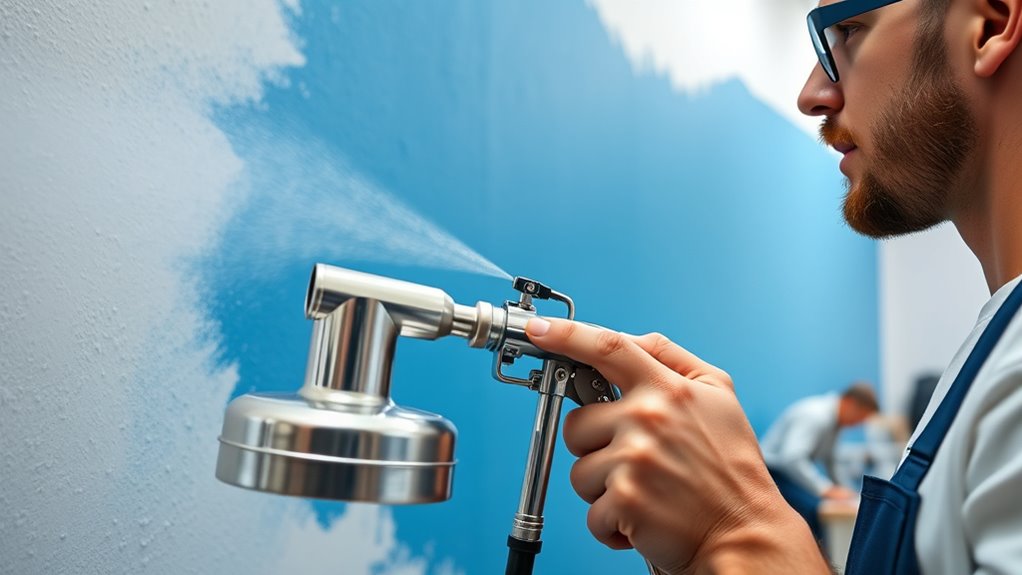

Air-assisted airless sprayers combine high-pressure fluid delivery with compressed air to give you a more controlled and finer finish. They’re perfect when you want smooth, professional results quickly on large projects or detailed surfaces. These sprayers reduce overspray, waste, and mess while offering adjustable settings for different jobs. If you want to learn more about how and when to use them effectively, keep exploring the benefits and applications.

Get business pricing on tools and workshop supplies
- Business-only prices and quantity discounts
- Tax-exempt purchasing
- Multiple users, one account, clear invoices
Key Takeaways
- Air-assisted airless sprayers combine high pressure and compressed air for precise, fine atomization and consistent spray patterns.
- They are ideal for large surfaces, detailed cabinetry, or projects requiring high-quality, smooth finishes.
- Use them when you need efficient coverage with minimal overspray, reducing paint waste and cleanup time.
- These sprayers are suitable for both professional contractors and serious DIYers seeking professional results.
- They offer adjustable air and fluid controls, allowing customization for different materials and surface types.

Air-assisted airless sprayers combine the best features of traditional airless and air spray systems, offering a powerful and efficient way to apply paint and coatings. With these sprayers, you get a more controlled spray pattern, which helps you achieve a consistent finish. The spray pattern is vital because it determines how evenly the paint is distributed across surfaces, reducing overspray and minimizing waste. When you use an air-assisted airless sprayer, you benefit from better atomization—meaning the paint breaks into finer particles—resulting in a smoother, more professional-looking coat. This improved atomization not only enhances the quality of your finish but also boosts application efficiency, allowing you to cover large areas quickly without sacrificing detail or uniformity.
One of the key advantages of these sprayers is their versatility. They are ideal for projects requiring a high-quality finish but with less setup and cleanup compared to traditional air spray systems. Because they combine high pressure with a small amount of compressed air, you get a spray that feels more controlled and less messy. This control over the spray pattern translates directly into improved application efficiency; you can cover surfaces faster while maintaining precision, even on complex shapes or irregular surfaces. The adjustable air pressure and fluid flow mean you can fine-tune the spray to match your project’s specific needs. Whether you’re working on furniture, cabinetry, or large exterior surfaces, this versatility helps you conserve paint and reduce waste.
Furthermore, air-assisted airless sprayers excel in reducing overspray and bounce-back, common issues with conventional airless systems. Their design allows for a finer atomization that produces a more consistent spray pattern, which means fewer drips and runs. This not only saves you time during cleanup but also ensures that your work looks professional and clean. Because the spray pattern is easier to control and more uniform, your application becomes more efficient, especially on detailed or delicate work where precision is critical. Plus, these sprayers are generally easier to operate and require less physical effort, making them suitable for prolonged use without fatigue. Additionally, knowing about resources and tools, such as proper maintenance and safety equipment, can further enhance your spraying experience and outcomes.
air-assisted airless paint sprayer
As an affiliate, we earn on qualifying purchases.
As an affiliate, we earn on qualifying purchases.
Frequently Asked Questions
Can Air-Assisted Airless Sprayers Be Used for Automotive Painting?
You might wonder if air-assisted airless sprayers are suitable for automotive painting. They can be automotive compatible, but they’re typically better for larger, less detailed surfaces. Keep in mind, paint adhesion might not be ideal compared to specialized car paint sprayers. If you’re aiming for a smooth, high-quality finish, consider tools designed specifically for automotive work. Use air-assisted airless sprayers for quick coverage on broader areas when precision isn’t critical.
What Is the Maintenance Routine for Air-Assisted Airless Sprayers?
Imagine your sprayer running smoothly—here’s your maintenance checklist. You’ll want to clean the fluid passages, check filters, and inspect the needle regularly. Don’t forget to lubricate moving parts and tighten fittings. Troubleshooting tips like clearing blockages and replacing worn seals keep it in top shape. Consistent maintenance guarantees flawless finishes and extends your sprayer’s lifespan, so you stay productive and avoid unexpected downtime.
Are Air-Assisted Airless Sprayers Suitable for Small-Scale Projects?
You might wonder if air-assisted airless sprayers suit small-scale projects. They can be a good choice because they offer smooth, professional finishes quickly. However, consider cost considerations, as these sprayers are typically more expensive than handheld options. If your project is small and budget-focused, a simpler sprayer might be better. But if quality and efficiency matter, an air-assisted airless sprayer could be a worthwhile investment.
How Do Weather Conditions Affect Spray Quality With These Sprayers?
Weather conditions substantially impact spray quality. High humidity can cause humidity effects like slower drying and uneven finish, while low humidity helps the paint dry faster and improves adhesion. Temperature considerations are also essential; too cold can lead to poor atomization, and too hot might cause overspray or quick drying. To achieve ideal results, spray in moderate weather, avoiding extreme temperatures and high humidity.
What Safety Precautions Should I Take When Operating Them?
Think of operating a sprayer like handling a fire hose—safety matters. You should always wear proper personal protective equipment, including masks, goggles, and gloves, to shield against fumes and overspray. Make certain adequate ventilation precautions to avoid inhaling harmful vapors. Before starting, check for leaks and maintain a safe distance from others. Following these steps keeps you safe and ensures a smooth, accident-free spraying experience.
Conclusion
Air-assisted airless sprayers are versatile tools perfect for achieving smooth, professional finishes efficiently. Imagine you’re painting a large fence; using one can cut your work time in half while delivering an even coat. For example, a homeowner used an air-assisted airless sprayer for their siding project and loved the flawless look it provided. If you’re tackling big or detailed jobs, this sprayer can make your project easier, faster, and more impressive.
Halloween Picks
halloween
As an affiliate, we earn on qualifying purchases.