Reversible spray tips make clearing clogs faster and easier because you can simply rotate or reverse the tip to dislodge any blockage, saving time and effort. Standard tips usually require disassembly and manual cleaning to remove stubborn build-up, which can be more time-consuming. If you prioritize quick troubleshooting and minimal downtime, reversible tips are the better choice. To understand how each type can improve your spraying experience, here’s what you need to know.
Key Takeaways
- Reversible tips allow quick clearing of clogs by rotating or reversing, reducing downtime.
- Standard tips require manual disassembly and cleaning to remove blockages, which can be time-consuming.
- Reversible tips help maintain consistent spray patterns and improve efficiency during projects.
- Proper cleaning and filtering prevent clogs in both tip types, but reversible tips simplify troubleshooting.
- Choosing the right tip based on paint type and project needs minimizes clogging issues overall.

Ever wonder what to do when your spray tips start clogging? Clogged spray tips are a common headache, but the good news is that with proper paint sprayer maintenance and the right spray tip selection, you can tackle this issue efficiently. The first step is understanding what causes clogs in the first place. Over time, paint particles can dry inside the tip, especially if you don’t clean your sprayer thoroughly after each use. Thick or poorly filtered paint also contributes to blockages. Regular maintenance prevents buildup, *guaranteeing* your spray tips work smoothly and last longer.
When your spray tip becomes clogged, you have a couple of options. If you’re using a reversible spray tip, you’re in luck. These designs allow you to quickly clear blockages by simply rotating or reversing the tip, pushing out any debris lodged inside. Reversible tips are a game-changer because they minimize downtime and save you from the hassle of disassembling your spray gun. To keep your spray tip functioning *effectively*, it’s *imperative* to choose the right spray tip for your project. The selection process involves considering the type of paint, the spray pattern desired, and the thickness of the material. A good spray tip selection not only improves efficiency but also makes maintenance easier because you’re reducing the likelihood of clogs from incompatible tips. Additionally, understanding the types of spray tips available can help you select the most suitable one for your needs, further reducing clogging issues.
Standard spray tips, on the other hand, don’t have the reversible feature. When they clog, you’ll need to remove and clean them manually. This process can be time-consuming, especially if you’re working on a large project. To prevent clogs with standard tips, regular cleaning is *essential*—flush out the tip with solvent or water, depending on your paint type, and use a brush or needle to clear any residual paint. Proper paint filtering before spraying also plays a *crucial* role in avoiding blockages. Always ensure your paint is well-mixed and strained to catch any debris or thick chunks before it reaches the tip.
In terms of paint sprayer maintenance, keeping your equipment clean after each use is *fundamental*. Disassemble the spray tip and soak it in cleaning solution if necessary, then dry thoroughly before storing. This routine helps prevent paint from drying inside and clogging the tip in the future. Whether you’re using reversible or standard tips, knowing how to select the right one for your project and maintaining it properly can save you time, money, and frustration. With diligent maintenance and thoughtful spray tip selection, you’ll keep your sprayer running smoothly and achieve professional-looking results every time.

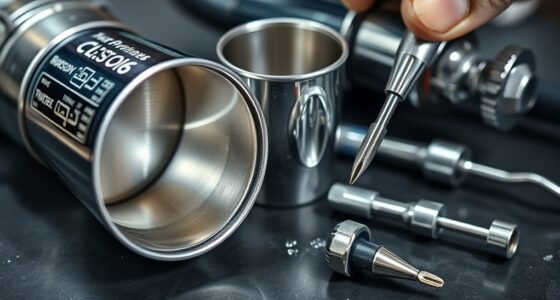
Spray tip Reversible Sprayer Tips Airless Paint Sprayer Nozzle Tips
- Model Compatibility: Includes 5 nozzle sizes for various needs
- Different Spray Ranges: Spray range from 4 to 12 inches
- Durable Material: Made of wear-resistant Tungsten steel
As an affiliate, we earn on qualifying purchases.
As an affiliate, we earn on qualifying purchases.
Frequently Asked Questions
Can Reversible Tips Be Used With All Spray Guns?
Reversible tips aren’t compatible with all spray guns. You need to verify tip compatibility with your spray gun types before using a reversible tip. Many spray guns are designed for standard tips, so reversible ones might not fit or function properly. Always consult your spray gun’s manual or manufacturer to ensure you select the right tip type, ensuring smooth operation and avoiding damage or clogs.
How Often Should I Check for Clogs?
You should check for clogs after every few uses as part of your maintenance routines. Regular inspections help prevent buildup that can block spray tips, ensuring smooth operation. By staying proactive and cleaning your spray tip frequently, you minimize the chances of clogs developing. This simple habit keeps your spray gun functioning efficiently, reduces downtime, and extends the lifespan of your equipment. Make clog prevention a priority in your maintenance routine.
Are There Specific Cleaning Tools Recommended?
You should use specific cleaning tools like fine cleaning brushes to reach small or stubborn clogs and solvent solutions for dissolving paint or debris. While brushes help physically remove buildup, solvent solutions break down stubborn blockages. Combining these tools guarantees thorough cleaning. Avoid generic tools—opt for dedicated spray tip cleaners and appropriate brushes to prevent damage. Regular maintenance with these tools keeps your spray tips clear and functioning smoothly.
Do Reversible Tips Cost More Than Standard Tips?
Reversible spray tips generally cost more than standard tips due to material differences and added functionality. Their reversible design allows you to quickly clear clogs, which adds to manufacturing costs. You might pay a few extra dollars upfront, but it often saves you time and effort in the long run. Overall, the cost comparison favors reversible tips if you’re seeking durability and convenience, especially for frequent use.
Can I Prevent Clogs With Regular Maintenance?
Yes, you can prevent clogs with regular maintenance routines. To do this, follow preventive measures like cleaning your spray tip after each use, soaking it in solvent if needed, and inspecting it for debris. Regularly unclogging your spray tip helps ensure smooth operation and extends its lifespan. Implementing consistent maintenance routines keeps clogs at bay, saving you time and hassle during painting projects.
Conclusion
To keep your spray tips flowing smoothly, choosing between reversible and standard tips matters. Reversible tips can save you time since you can quickly clear clogs by flipping them, reducing downtime. Did you know that nearly 60% of painters prefer reversible tips for their convenience? Next time your spray tip clogs, remember that a simple flip can save you effort and keep your project on track. Stay proactive, and your finish will look flawless every time.